



Early Victorian Side Chairs
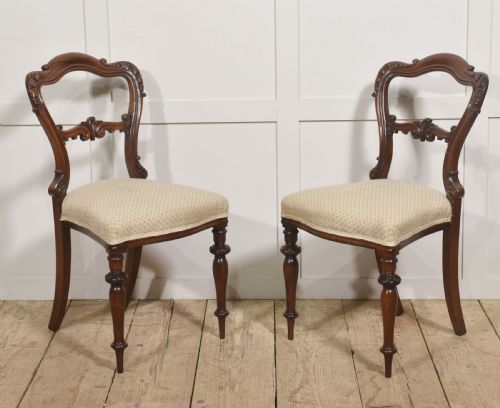
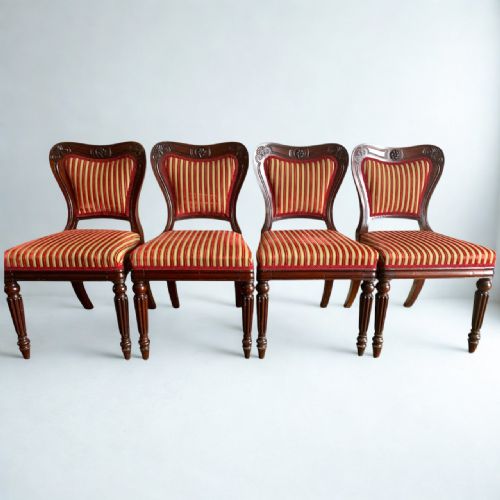
Early victorian side chairs bring robust nineteenth-century character to domestic interiors through handsome timber frames and period upholstery.
Early Victorian Side Chairs
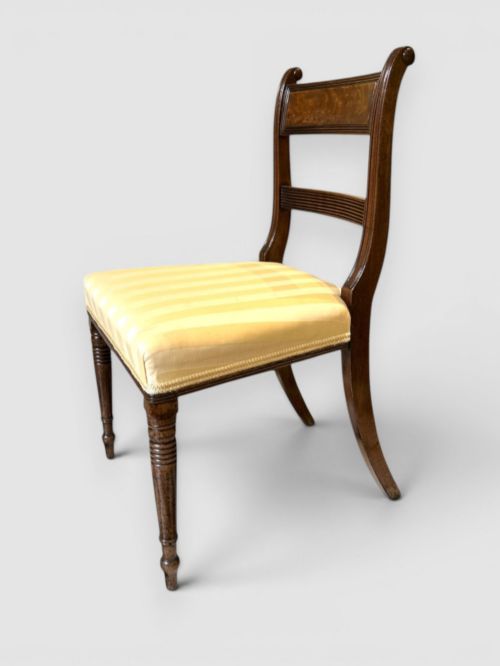
Early victorian side chairs encompass dining, hall, and bedroom seating produced across the nineteenth century, including specific influences from the regency and william iv periods. You will frequently encounter sets of mahogany dining chairs alongside smaller pairs intended for bedrooms or halls.
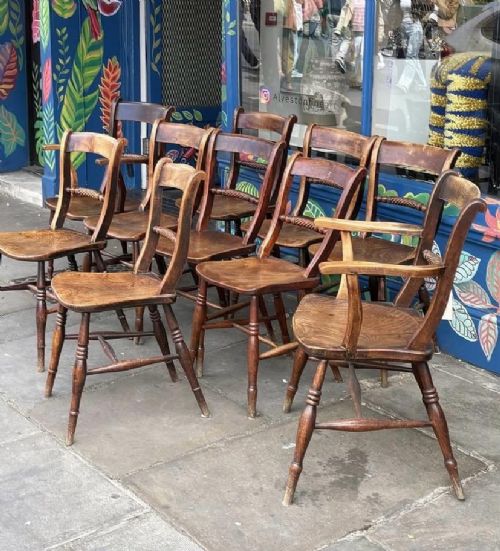
The selection ranges from utilitarian farmhouse kitchen models in oak to grand rosewood drawing room seating. Makers often drew upon gothic revival styles and classical forms when shaping these functional domestic items.
Distinctions in Execution
Quality rests on the crispness of the timber carving and the weight of the solid rosewood or mahogany stock. Finer examples display harmonious proportions and careful turning that elevate them above simple utility.
The integrity of the frame construction and the preservation of original timber surfaces define the better specimens. Sets that retain matching grain patterns and cohesive design details command greater attention.
One enthusiastic Victorian beast-carver apparently decided a standard furniture leg simply needed the fierce countenance of a lion.
C Hindley and Sons·Richard Bridgens·Angerstein
The Early Victorian Side Chairs Glossary
- Balloon-back
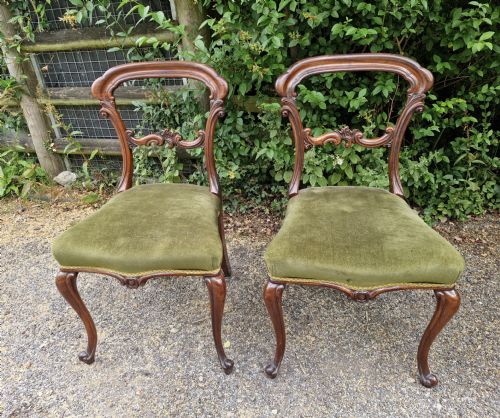
- A chair back shaped in a continuous curve resembling the outline of a hot-air balloon. This design became immensely popular during the nineteenth century.
- Rosewood
- A dense, heavily figured dark timber frequently utilised for high-status nineteenth-century dining and drawing room seating. Its rich grain adds natural decorative appeal.
- Hall chair
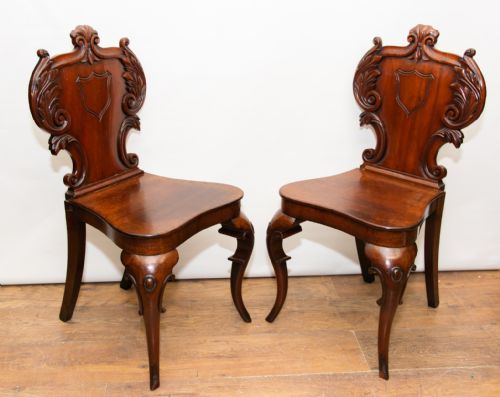
- A rigid wooden seat lacking upholstered padding, often featuring a carved or painted shield on the back. These items stood in entrance halls for brief use.
- Prie-dieu
- A low-seated devotional chair designed for kneeling and prayer, usually featuring an upper rest. Nineteenth-century versions often utilised rosewood frames.
- William IV
- A transitional design period spanning the 1830s that bridged regency elegance and early victorian heaviness. Pieces from this era often display bold architectural turning.
Early Victorian Side Chairs: Frequently Asked Questions
How do I spot an early victorian side chair?
Look for the characteristic proportions and timber choices typical of the mid-nineteenth century, such as rosewood and mahogany frames. Details like balloon backs and turned legs often point directly to the era.
Examine the construction methods beneath the seat to confirm age-appropriate joinery. Comparing the styling to regency or william iv precedents helps clarify the exact period.
Where should I place these chairs at home?
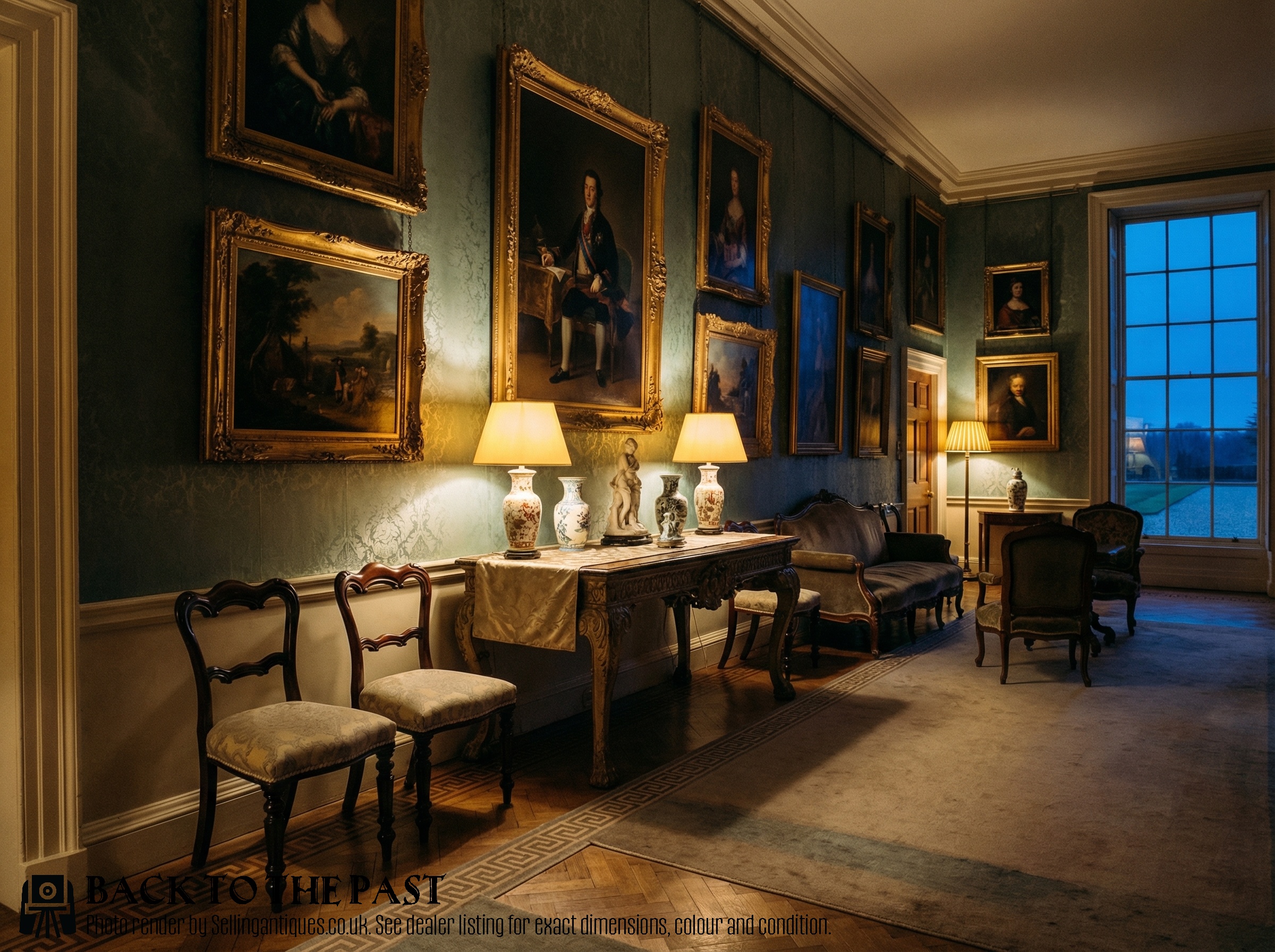
Dining chairs integrate naturally around a period or contemporary table where their timber frames add warmth. Smaller side chairs and hall chairs suit alcoves or entrance spaces.
Bedroom and nursing chairs fit comfortably in domestic sleeping quarters or studies. Their modest scale allows them to function as accent seating without dominating a room.
Were all these chairs originally used for dining?
Not at all, because the evidence records a wide variety of specific forms including hall chairs, nursing chairs, and slipper chairs. Each type served a distinct domestic function within the nineteenth-century household.
Dining sets were built in quantities for formal meals, whereas hall chairs stood near entrances. Prie-dieu and bedroom chairs fulfilled entirely different private uses upstairs.
What woods were commonly used for framing?
Mahogany and rosewood appear most frequently in the listings, prized for their rich colour and ability to hold crisp carved details. Walnut and oak also feature prominently across specific regional and utilitarian designs.
Timber selection usually dictated the status of the chair within the home. Dark hardwoods provided both the necessary structural strength and the desired aesthetic elegance.