
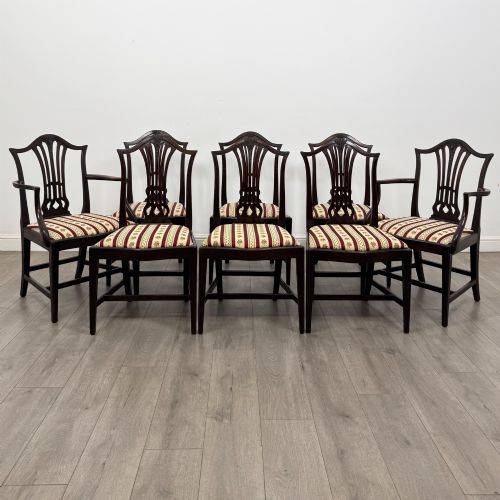
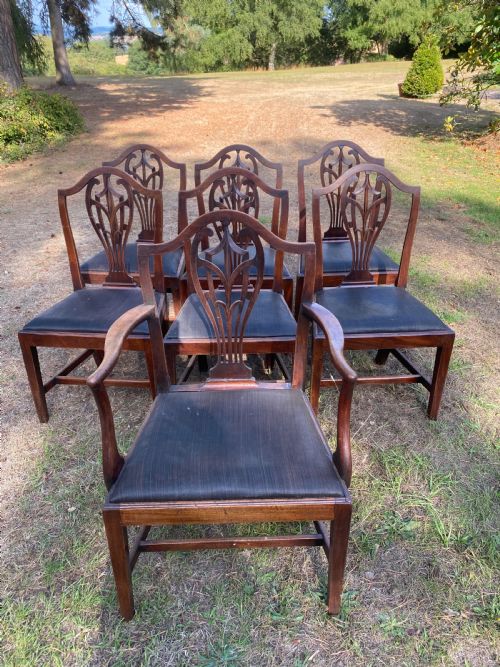
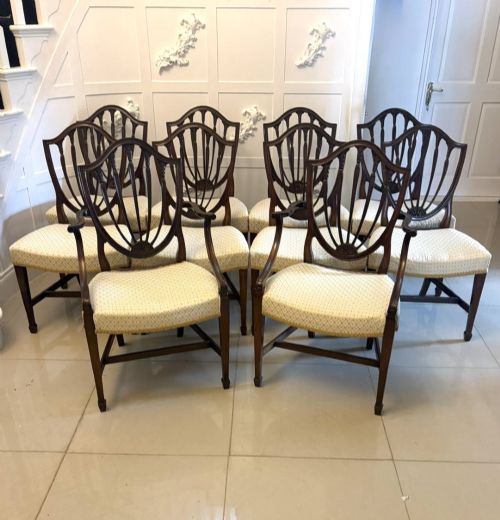
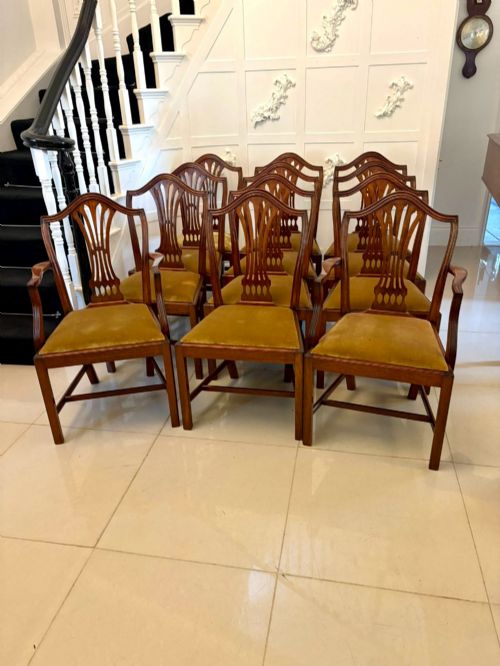
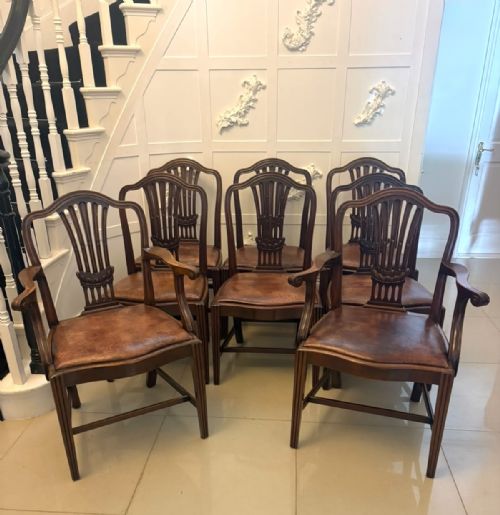
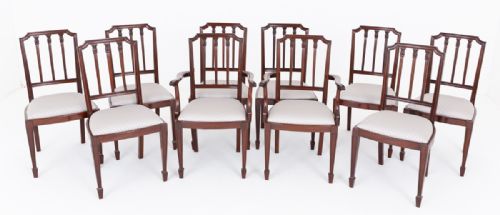
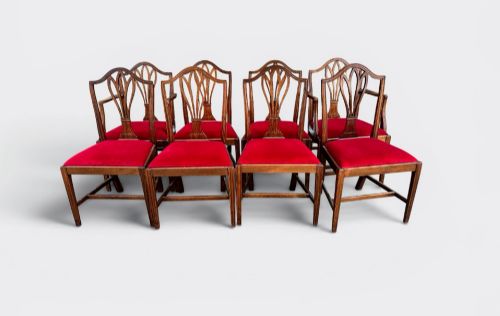
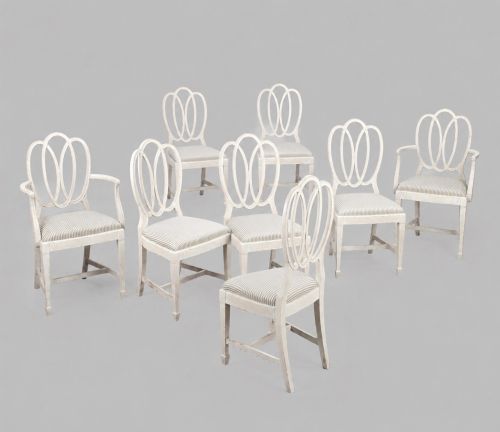
Hepplewhite Style Side Chairs
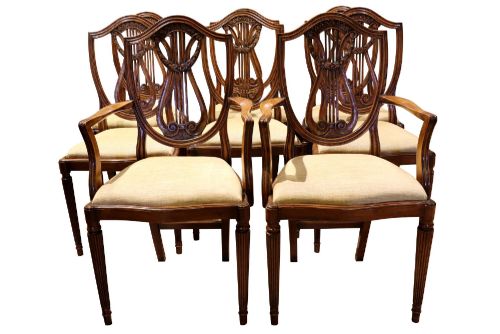
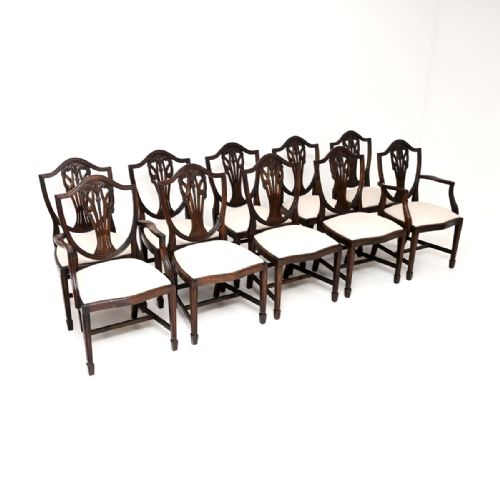
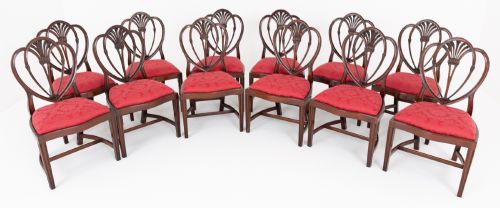
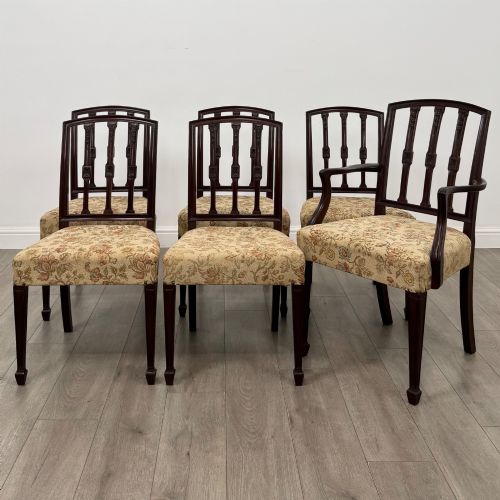
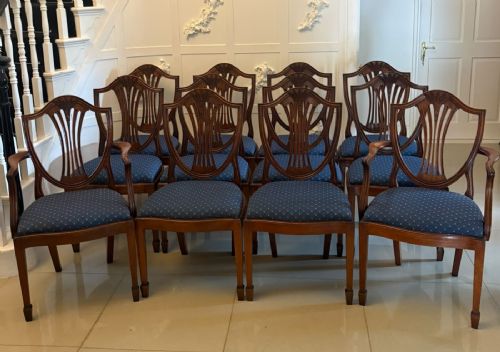
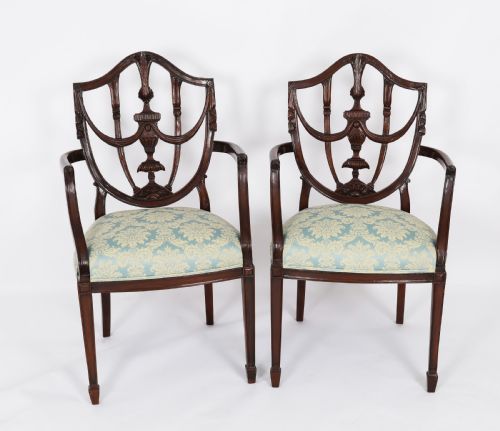
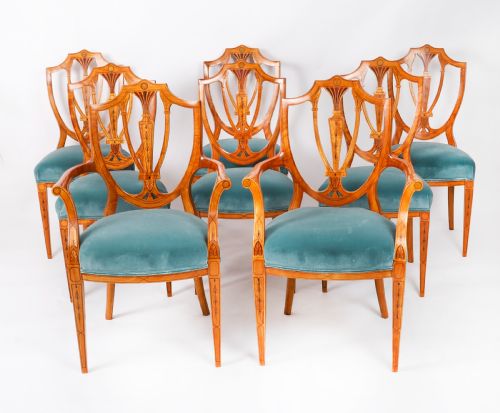
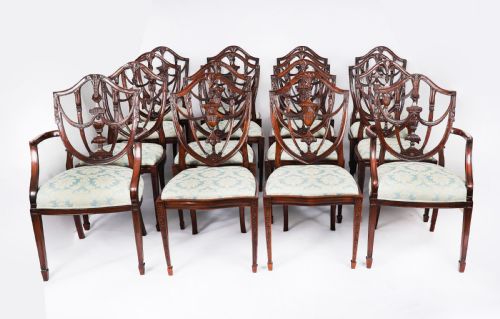
Hepplewhite style side chairs bring the elegance of shield backs and carved mahogany into a room.
Hepplewhite Style Side Chairs
When you search for hepplewhite style side chairs, you are looking at seating defined by its iconic shield-shaped backrest. The examples on this page span several eras, from genuine Georgian periods through to Victorian, Edwardian, and later twentieth-century revivals.
You will most commonly meet sets of dining chairs fashioned in mahogany, alongside occasional pairs and individual armchairs. The forms range from simple shield backs to elaborate lyre backs and Prince of Wales motifs.
Makers drew heavily on eighteenth-century design traditions, producing revival pieces in the nineteenth and twentieth centuries. These later interpretations often retain the classic proportions and carved splats of the originals.
How they were made
Makers relied principally on solid mahogany and occasional satinwood, shaping the timber to form the characteristic curved shield backs. Inlaid details and delicate carving define the splats, demonstrating disciplined cabinet-making techniques.
Seats were constructed using upholstery fabric, velvet, leather, or horsehair fabric, often secured over brass tacks. Wool work also appears on surviving examples, adding texture to the wooden frames.
Hepplewhite Style Side Chairs Retail Price Guide 2026
Typical asking prices for hepplewhite style side chairs among the pieces listed under this phrase on Sellingantiques today, from the lower quarter to the upper quarter. They describe what is for sale here now, not the wider market.
Several sets include matching carvers, ensuring the table head stays properly bossed around.
What varies in quality
The standard of carving on the shield back splat separates everyday workshop output from finer productions. Crisp, deep relief work requires skilled hand labour and holds the eye better than shallow or pressed decoration.
Timber selection and grain figure dictate visual depth across the mahogany frame. Closely matched sets with rich patination outclass mismatched groupings assembled at a later date.
Maple and Co·Cowtan and Sons·J Yorke
The Hepplewhite Style Side Chairs Glossary
- Shield back
- A chair back shaped in the outline of a heraldic shield, commonly pierced with carved splats. This is the defining visual characteristic of the style.
- Carver
- An armchair designed with armrests, traditionally placed at the heads of a dining table alongside matching side chairs. These often formed part of larger matched suites.
- Splat
- The vertical wooden strip down the middle of a chair back connecting the top rail to the seat. It bears the primary carved ornamentation.
- Horsehair fabric
- A traditional woven upholstery material made from horse tail hair, valued for its durability and firm texture. It frequently appears on period seating.
- Prince of Wales
- A decorative motif featuring three ostrich feathers tied with a ribbon, frequently carved into the centre of shield back splats.
Hepplewhite Style Side Chairs: Frequently Asked Questions
How do I spot a revival chair?
Revival pieces usually date from the Victorian, Edwardian, or twentieth-century periods rather than the eighteenth century. Look closely at the timber colour, tool marks, and construction methods to gauge the age.
Many makers reproduced these designs with great skill during the late nineteenth and early twentieth centuries. Examining the underside of the seat frame often reveals clues about the actual period of manufacture.
Were these chairs used at dining tables?
These chairs served primarily as formal dining seat furniture. Larger matching sets accommodated guests around grand dining tables.
Smaller pairs and individual pieces also functioned as hall chairs or desk accessories in libraries and studies.
What is a carver chair?
A carver is an armchair designed to match a set of side chairs. They were traditionally positioned at the ends of a dining table.
The added armrests required slightly wider proportions while maintaining the same shield back design as the surrounding chairs.
How do I care for mahogany frames?
Keep mahogany furniture away from direct sunlight and heat sources to prevent the wood from drying out. Gentle dusting with a dry cloth maintains the surface finish.
Avoid using silicone-based polishes, as they build up over time and dull the natural grain patination.