

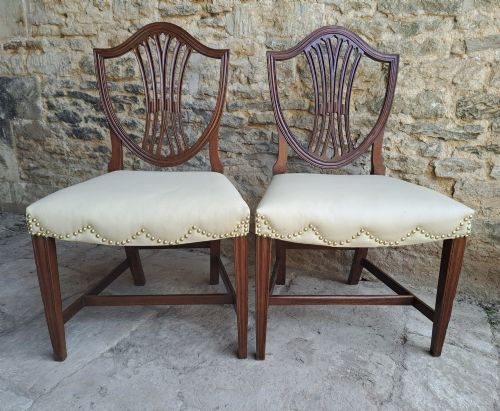
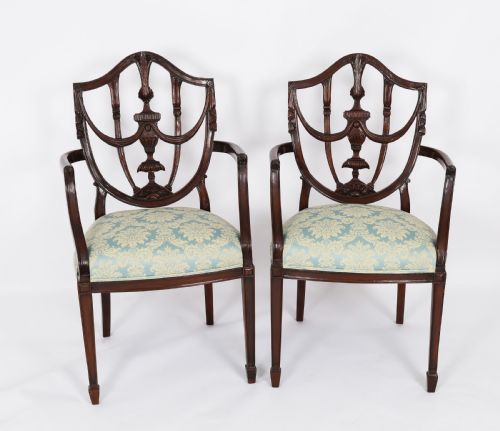

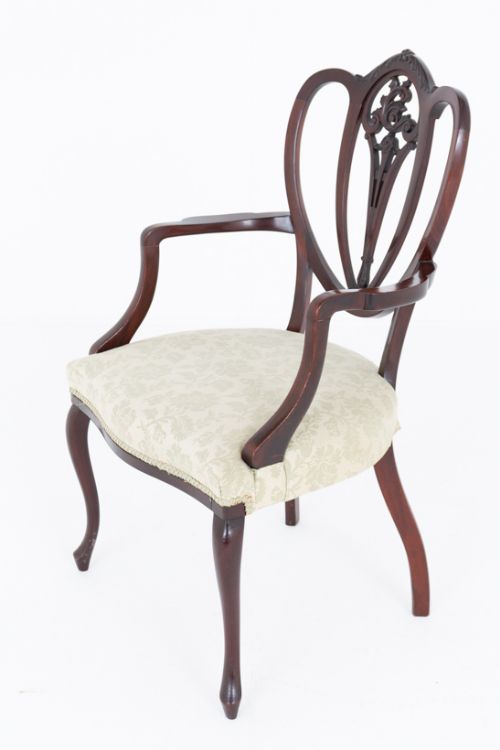
Hepplewhite Shield Back Chairs
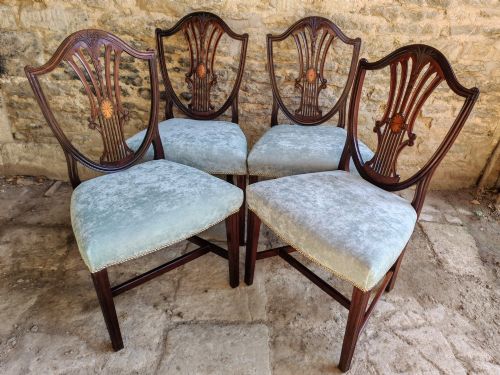
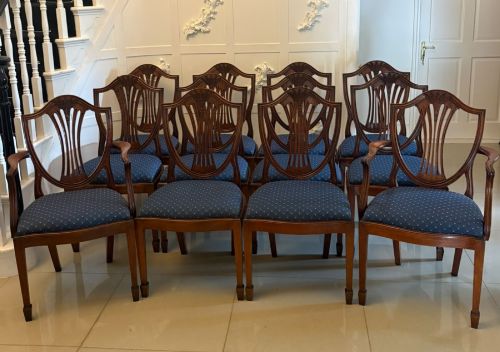
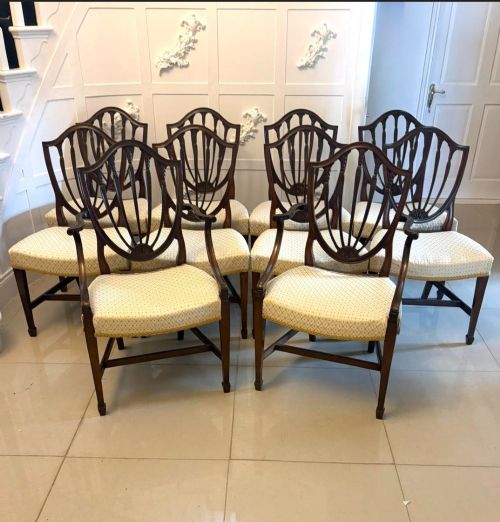
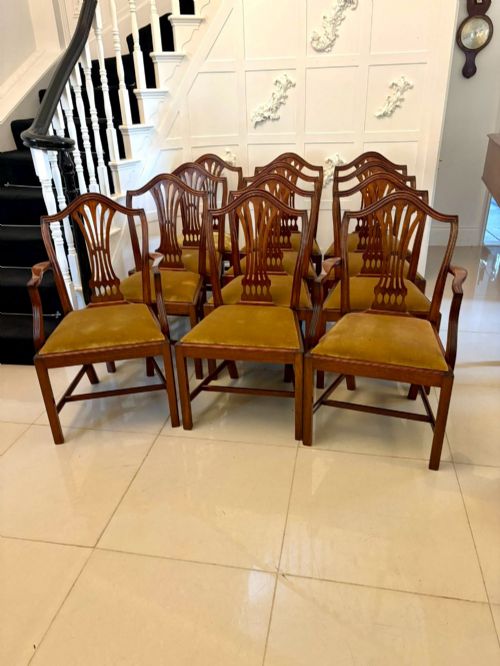
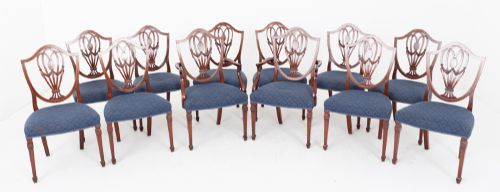
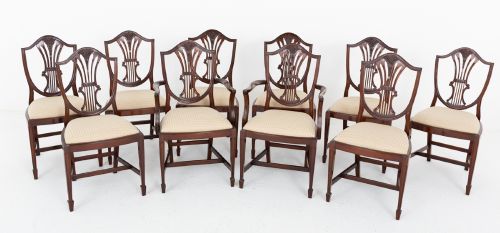
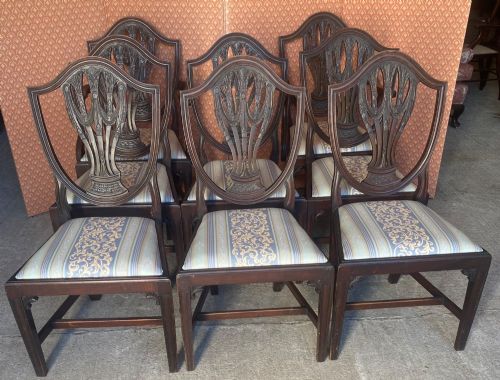
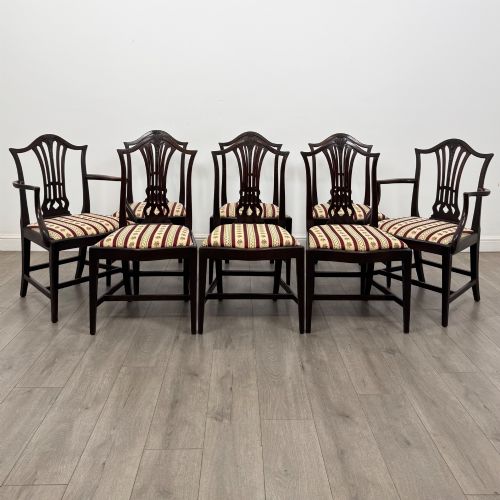
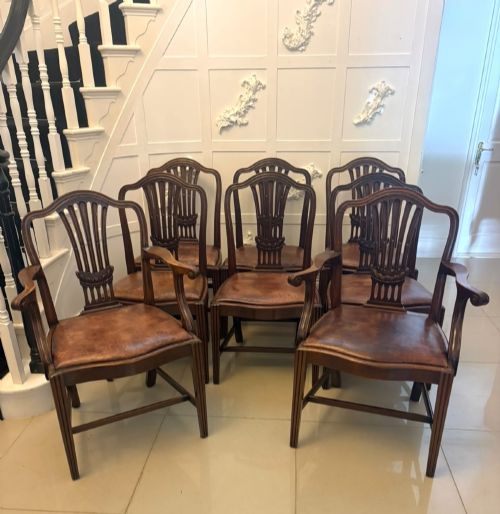
Hepplewhite shield back chairs bring the refined grace of the late eighteenth century into modern rooms with carved frames and distinctive open shield splats.
Hepplewhite Shield Back Chairs
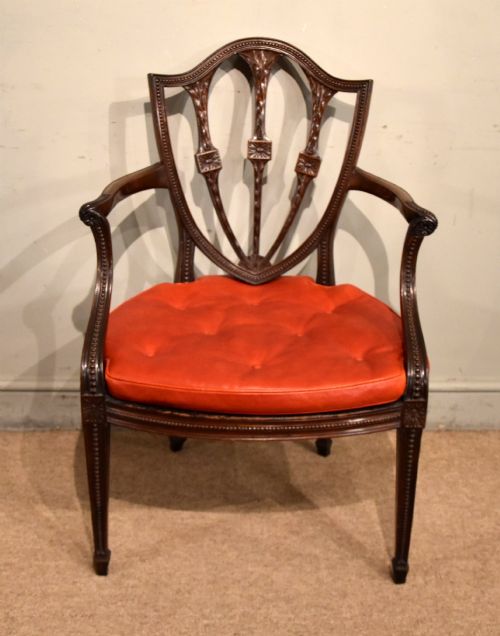
When searching for hepplewhite shield back chairs, buyers encounter dining chairs, armchairs, and side chairs spanning the eighteenth century through to later revival periods. These seats take their name from the design vocabulary associated with cabinetmaker George Hepplewhite, defined by a curved shield-shaped backrest.
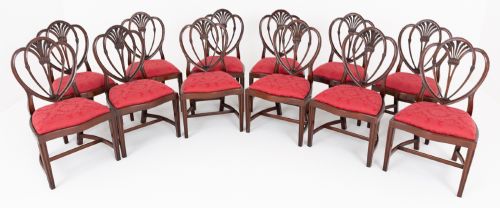
The most common version met on this page is the revival suite, particularly sets originating from the Edwardian era, the Victorian period, and the 1920s. These later interpretations adopt the classic shield profile and mahogany frames of original Georgian pieces while offering larger numbers suitable for contemporary dining tables.
How they were made
Timbers dictate the structural integrity of these seats, with mahogany serving as the primary wood across both eighteenth-century originals and later revivals, occasionally supplemented by maple or walnut. Joinery relies on traditional methods to support the intricate piercing and curving of the shield splat.
Seating areas incorporate upholstery supported by fabric, leather, velvet, or brass detailing. Artisans integrated carved motifs such as anthemion, Prince of Wales feathers, and drapery directly into the wood grain of the backrest.
Hepplewhite Shield Back Chairs Retail Price Guide 2026
Typical asking prices for hepplewhite shield back chairs among the pieces listed under this phrase on Sellingantiques today, from the lower quarter to the upper quarter. They describe what is for sale here now, not the wider market.
Listings on this page span the Georgian, Victorian, Edwardian, and 1920s periods, featuring mahogany, leather, velvet, and brass.
What varies in quality
The distinction between standard production and superior craftsmanship rests in the depth and crispness of the wood carving. Fine examples display sharply defined pierced splats and integrated arm supports, whereas lesser versions rely on shallow surface incisions.
Completeness and scale also govern worth, particularly when considering large matched dining sets rather than isolated pairs. Uniformity across a suite of ten or twelve chairs requires careful preservation of the original timber colour and structural rigidity.
Maple and Company·Gillows
The Hepplewhite Shield Back Chairs Glossary
- Carver
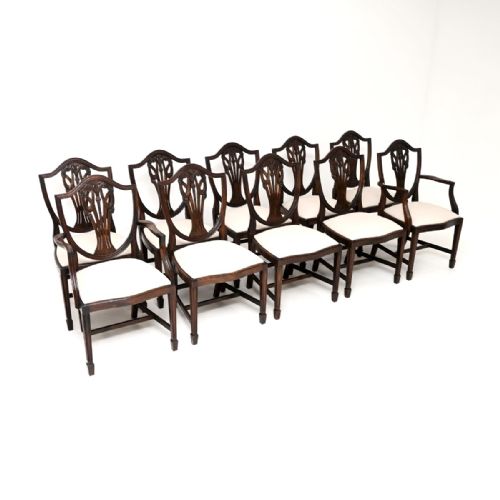
- An armchair, usually featuring open arms, designed to match a set of dining side chairs. These often stood at the head of the dining table.
- Splat
- The central upright slat of wood connecting the seat to the top rail of a chair back. In these pieces, it takes the characteristic form of a carved shield.
- Anthemion
- A decorative ornament based on the stylized, radiating cluster of honeysuckle flowers. This motif frequently appears carved onto the upper section of the shield back.
- Revival
- A later period of design that reinterprets historical aesthetics. Edwardian and 1920s iterations reproduce eighteenth-century proportions using contemporary workshop standards.
Hepplewhite Shield Back Chairs: Frequently Asked Questions
How do I spot an 18th-century original?
Original pieces from the seventeen-eighties or nineties display hand-cut joinery, patinated mahogany surfaces, and subtle variations inherent in manual woodworking. Examination of the underside often reveals the structural wear of prolonged domestic use.
Revival pieces made during the Victorian or Edwardian eras generally exhibit machine-planed consistency and standardised dimensions across larger sets. Comparing the construction methods of the seat frame to known Georgian techniques clarifies the date of manufacture.
Can I mix carvers and side chairs?
Traditional dining suites frequently combined two armed carvers with a larger number of armless side chairs. This arrangement placed the carvers at the head and foot of the table while maintaining a unified aesthetic through identical shield back designs.
Matching disparate chairs requires careful attention to timber tone, particularly with mahogany, which deepens in colour over centuries. Ensuring consistent height and back proportions preserves the visual harmony of the dining setting.
What upholstery materials are correct?
Original seating surfaces typically utilised drop-in pads covered in leather, horsehair fabric, or woven textiles secured with brass tacks. These allowed easy removal for reupholstery or seasonal adjustment.
Later Victorian and Edwardian interpretations often introduced velvet or modern upholstery fabric fixed directly to the frame. Selecting replacement coverings that respect the period style maintains the historical integrity of the chair.
How do I care for antique mahogany frames?
Maintenance requires avoiding direct sunlight and extreme humidity fluctuations to prevent the mahogany timber from splitting or warping. Regular dusting with a soft, dry cloth preserves the polished surface without building up chemical residues.
Leather and fabric seats benefit from specialist cleaning appropriate to the specific textile. Treating the wooden frame with traditional wax feeds the grain and maintains the natural lustre acquired over generations.