

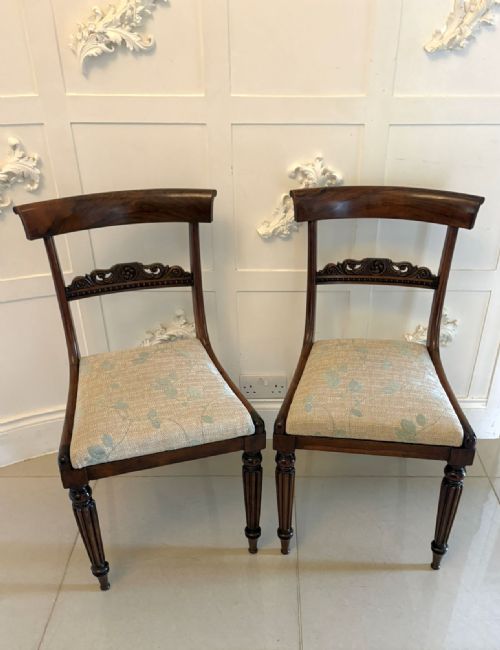
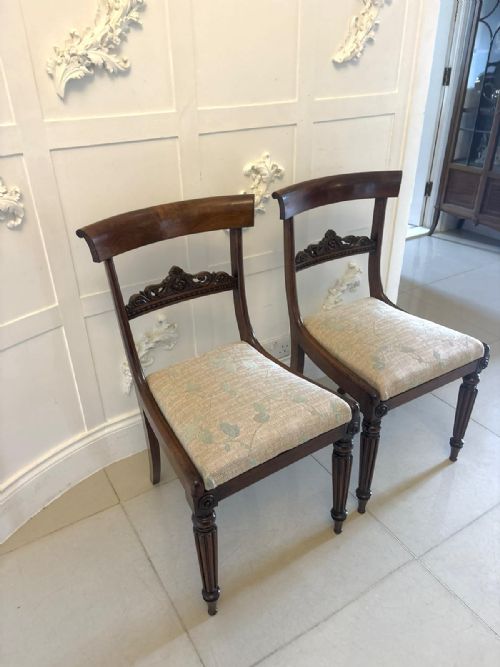


Georgian Rosewood Dining Chairs
Georgian rosewood dining chairs bring dark timber warmth and Regency poise to a dining room, offering serious presence at the table.
The Nature of Georgian Rosewood Dining Chairs
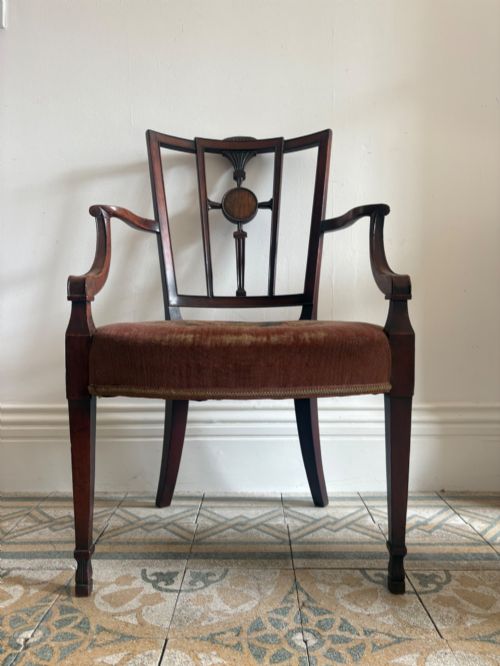
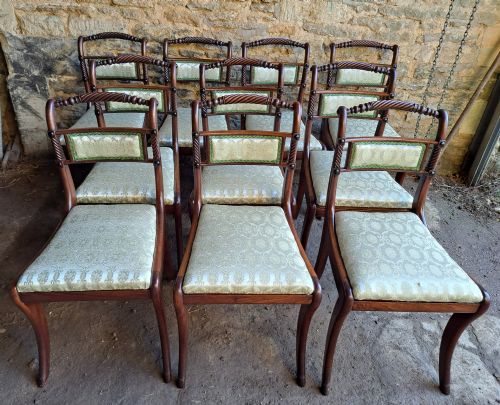
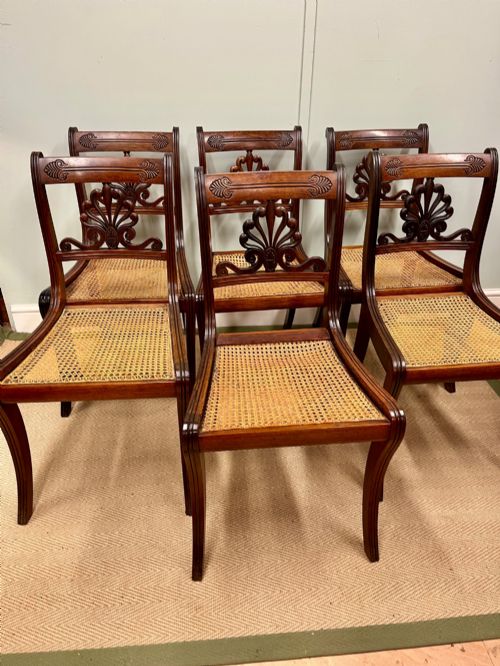
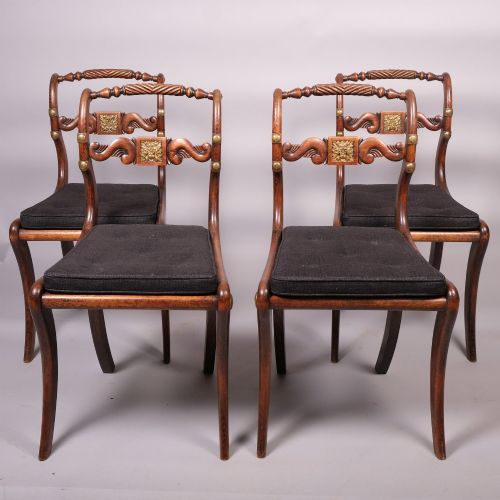
These georgian rosewood dining chairs encompass substantial sets from the Regency period, often built around eighteen thirty. The forms include bar back designs and grand Regency seating intended for formal dining rooms.
The evidence shows sets numbering four, five, six, eight, ten, and twelve chairs, suggesting substantial original commissions for large dining spaces. Surviving examples date predominantly from the nineteenth century up to eighteen fifty.
Originating in England, these pieces bridge the Georgian and Regency eras, displaying the characteristic dark grain of rosewood combined with period upholstery.
Materials and Construction
Makers utilised dense rosewood timber for frames, capitalising on its rich grain and deep colour. Brass inlay and mounts frequently accent the woodwork, reflecting the Regency taste for contrasting metallic details.
Seating portions incorporate upholstery and upholstery fabric, alongside needlepoint textile variants recorded in period pieces. Frames are constructed to withstand the rigours of dining use while maintaining sculptural silhouettes.
Retail Price Guide 2026
Typical UK retail prices for georgian rosewood dining chairs, calculated from the Sellingantiques database of over a million retail prices indexed since 2003. This retail price guide relies exclusively on Sellingantiques data; no external sources or auction records are used, so the figures do not describe the wider market.
Recorded set sizes range from four chairs up to twelve matching examples designed for formal nineteenth-century dining rooms.
Distinguishing Quality in the Range
Quality reveals itself in the scale and completeness of the matching sets, particularly when twelve or ten uniform chairs survive together. The calibre of the timber selection and the precision of brass detailing separate standard seating from exceptional commissions.
Attribution to documented makers such as John Gee or Munro elevates certain sets above anonymous workshop production. The retention of original upholstery textiles and needlepoint work further distinguishes superior survivals.
John Gee·Munro
The Georgian Rosewood Dining Chairs Glossary
- Bar Back
- A chair design featuring a horizontal top rail shaped like a bar, typical of Regency seating. This form provides sturdy back support while displaying the grain of the rosewood.
- Regency
- An English design period spanning the early nineteenth century, characterised by classical revival motifs and refined proportions. Pieces from this era often incorporate brass inlay and dark tropical timbers.
- Needlepoint Textile
- A stitched canvas work used for upholstery on period chair seats. It provides a textured, decorative surface that complements the polished wood frame.
- Rosewood
- A heavy, dark timber with distinct figuring, favoured for high-end furniture during the Georgian and Victorian eras. The wood takes a high polish and anchors the visual weight of dining sets.
Frequently Asked Questions
What periods do these chairs date from?
The listed items span the Regency era and the nineteenth century, with specific dates extending to eighteen fifty. Many examples originate around eighteen thirty.
Construction styles align with Georgian and Regency traditions, reflecting the transition of British cabinet making during these decades.
How large are the surviving sets?
Sets vary significantly in size, ranging from smaller groupings of four or five chairs up to substantial dining sets of ten or twelve.
Larger sets of ten or twelve chairs indicate original commissions for grand dining rooms and are less commonly encountered intact.
What materials are used in their construction?
Rosewood forms the primary timber structure, valued for its dark grain and dense weight. Brass details often accent the frames.
Upholstery includes various fabrics and needlepoint textiles, providing cushioned seating tailored to the specific chair design.
Are specific makers associated with these chairs?
Certain sets carry attribution to known makers such as John Gee and Munro, reflecting documented workshop output from the period.
Most pieces, however, demonstrate the high standard of anonymous English cabinet makers working within the Regency style.