


Brown Rosewood Chairs
Brown rosewood chairs bring deep grain and rich colour to a room, spanning formal dining sets and comfortable library seating.
Brown Rosewood Chairs
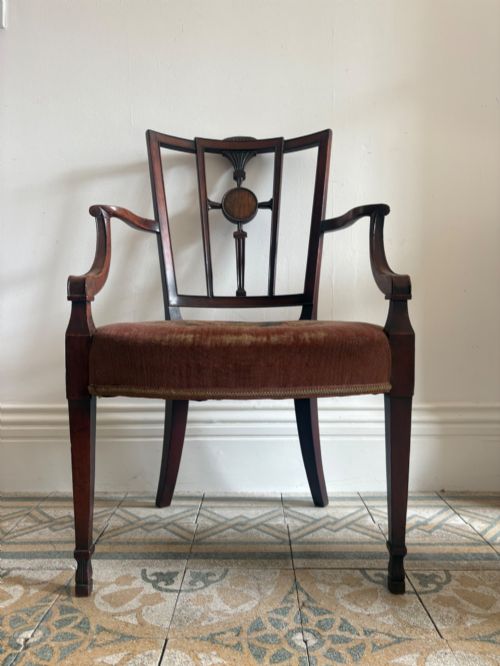
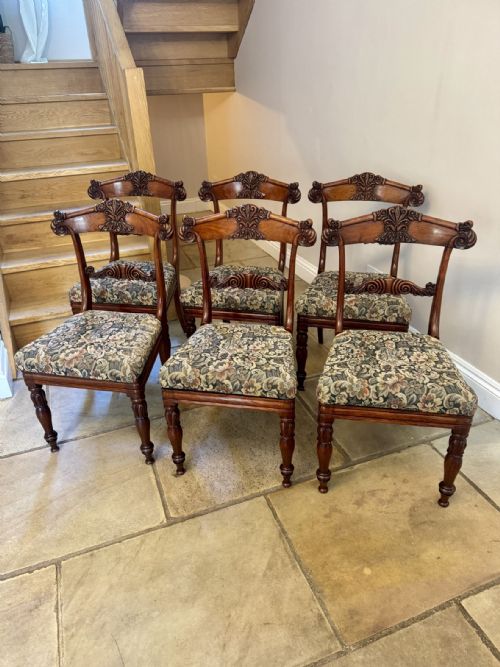
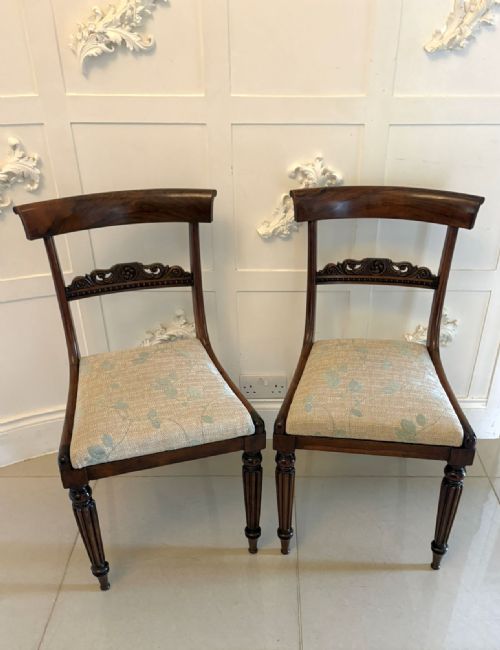
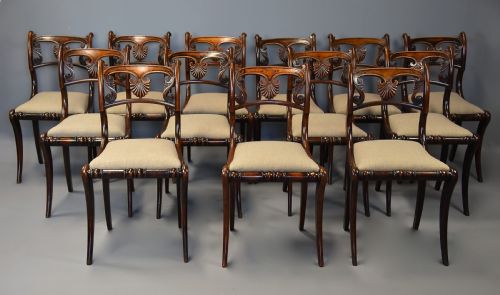
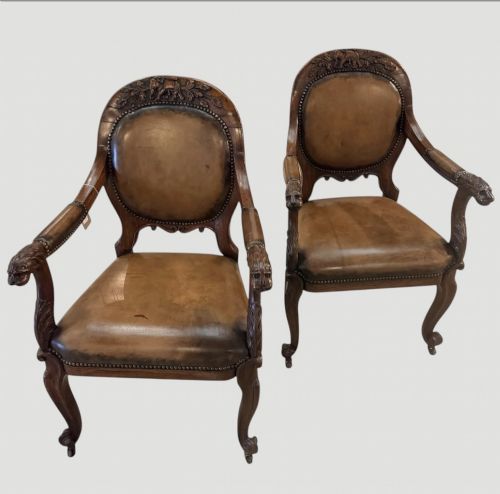
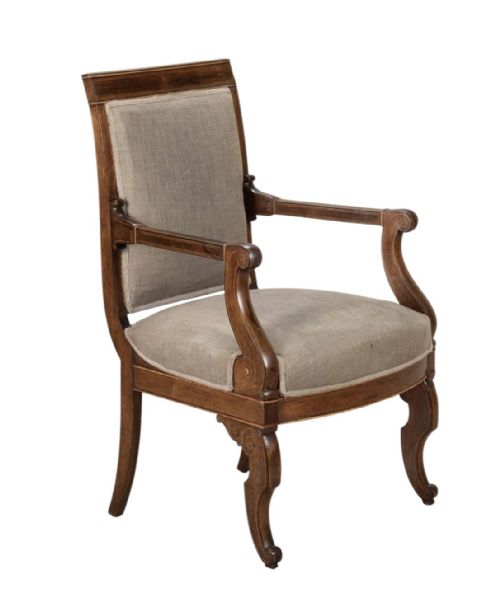
Brown rosewood chairs encompass a wide variety of seating forms, from sets of dining chairs and side chairs to individual armchairs, desk chairs, and music stools. The pieces span multiple centuries and stylistic periods, appearing in Georgian, Regency, William IV, Victorian, Edwardian, and French Charles X designs.
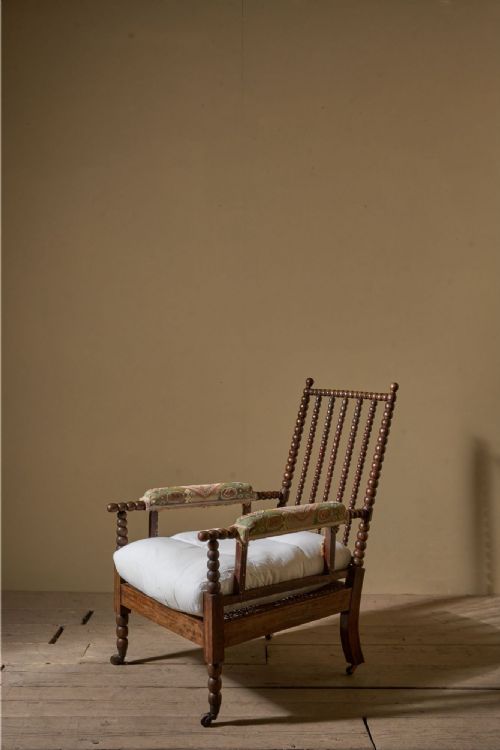
The most common examples on this page are dining chairs, often found in matching sets of four, six, or more, alongside occasional library armchairs and piano stools. Makers and workshops from different regions utilised the dense timber, leading to distinct variations including Anglo-Indian carvings and simulated finishes.
How they were made
Craftsmen utilised solid rosewood or applied decorative veneers over secondary timbers like beech, alongside simulated or faux rosewood finishes painted to mimic the grain. Brass inlay, carved details, and turned elements frequently adorned the frames.
Seating portions incorporated traditional materials such as cane, leather, fabric, and button-backed upholstery. Adjustable mechanisms also appeared in specialised pieces like music chairs and revolving piano stools.
Brown Rosewood Chairs Retail Price Guide 2026
Typical asking prices for brown rosewood chairs among the pieces listed under this phrase on Sellingantiques today, from the lower quarter to the upper quarter. They describe what is for sale here now, not the wider market.
Listings feature 19th century, Regency, Victorian, and Edwardian periods, utilising rosewood, brass, cane, leather, and beech.
What varies in quality
Quality rests in the crispness of the carving, the integrity of the timber framing, and the cohesion of matched dining sets. Pieces bearing maker attribution or stamps display higher craftsmanship in joinery and detailing.
The preservation of original elements, such as brass inlay, cane work, and turned bobbin framing, separates standard production items from finer workshop output.
Gillows·Robert Daws·James Shoolbred
The Brown Rosewood Chairs Glossary
- Simulated rosewood
- Timber painted or finished to imitate the characteristic grain and dark colour of genuine rosewood. This alternative was common in Regency dining and side chairs.
- Balloon back
- An upholstered chair back shaped in a continuous curved outline resembling a balloon. This form is frequently seen on mid-19th century Victorian examples.
- Anglo-Indian
- Furniture produced in India by local craftsmen for British residents or export, typically featuring dense rosewood and intricate carved decoration.
- Rope twist
- A carved wooden detail shaped like a twisted rope, often found on the top rails of Regency period chairs.
Brown Rosewood Chairs: Frequently Asked Questions
Are brown rosewood chairs sturdy enough for daily use?
Rosewood is a dense and heavy hardwood, which makes these frames naturally durable. Many examples retain solid structural integrity after generations of use.
Care should be taken with upholstered seats, cane panels, and delicate brass inlay during everyday dining or sitting.
How do I identify a Regency dining chair?
Regency chairs typically feature classical influences, such as saber legs, rope twist top rails, or brass inlay. The proportions tend to be neat and refined.
Simulated rosewood finishes were also popular during this period to achieve a uniform look across large dining sets.
What is simulated rosewood?
Simulated rosewood is a painted or stained finish applied to a lighter timber, such as beech, to replicate the dark grain of genuine rosewood. This technique was widely utilised in the 19th century.
Pieces with this finish offer the visual appeal of tropical hardwood while utilising alternative woods.
How should I care for antique rosewood furniture?
Keep wooden surfaces away from direct sunlight and excessive heat sources to prevent the timber and veneer from drying out. Routine dusting with a soft, dry cloth preserves the finish.
Avoid using harsh chemical polishes that can damage antique French polish or wax coatings.