

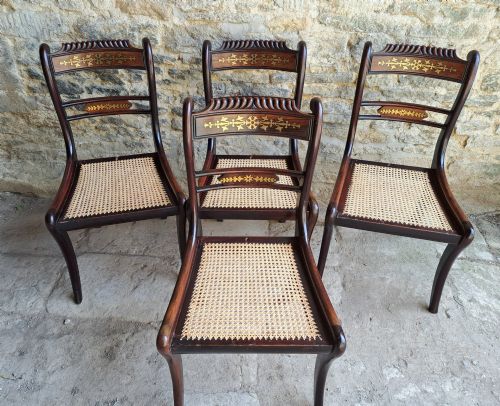
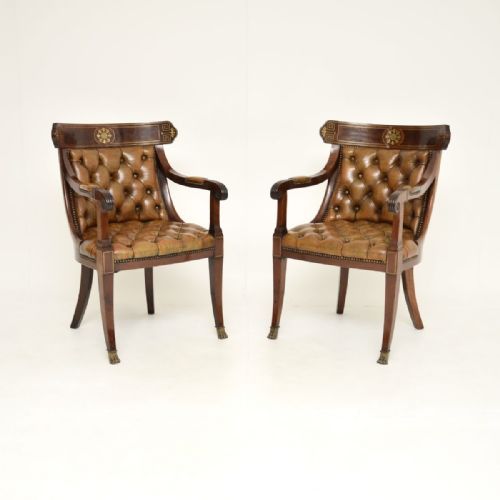


Regency Brass Inlay Chairs
Regency brass inlay chairs bring distinct classical lines and gleaming metalwork into a room, offering elegance that collectors prize.
Regency Brass Inlay Chairs
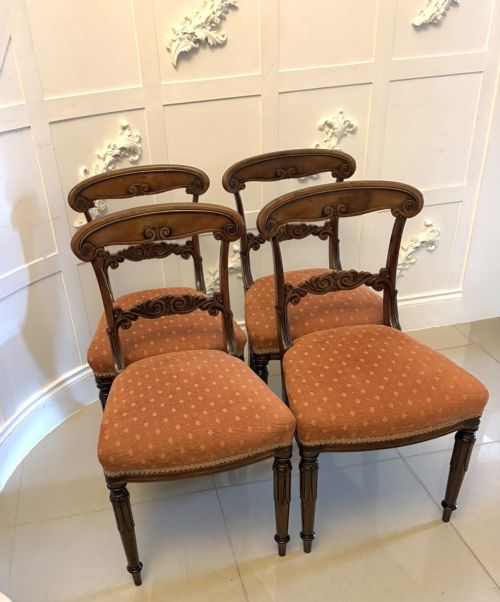
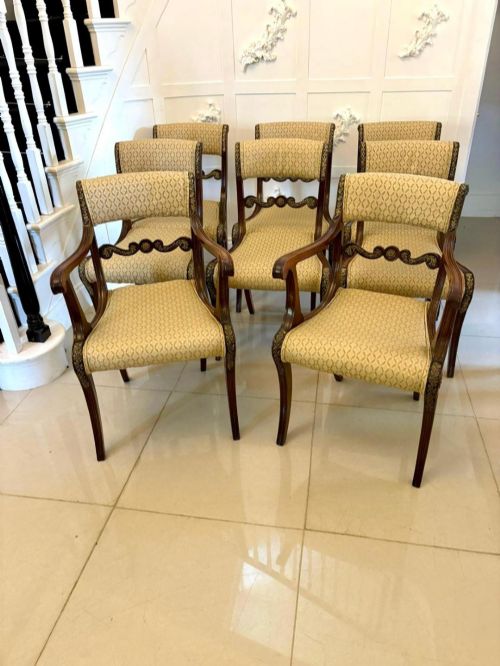
Regency brass inlay chairs are seating forms produced primarily during the Regency, George IV, and broader nineteenth-century periods, capturing the classical revival tastes of the era. Buyers seeking these items encounter dining chairs, armchairs, side chairs, and elbow chairs alongside occasional seating such as music stools and hall chairs.
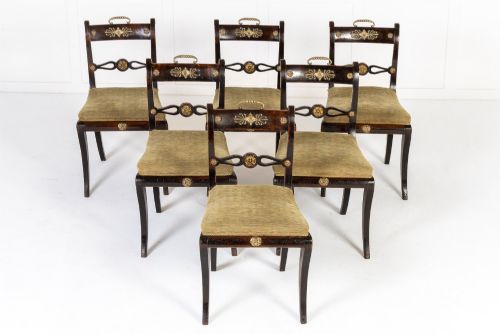
The materials recorded across these pieces combine dark timbers and exotic veneers with contrasting metal embellishment. Mahogany, rosewood, faux rosewood, and satinwood form the primary wooden structures, while brass provides the characteristic linear inlay work.
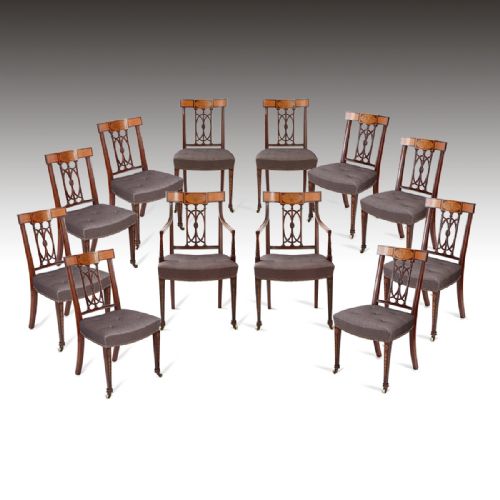
Seating formats vary from single side chairs to large dining sets numbering up to twelve pieces, alongside matched pairs and armchairs. Upholstery options include leather, fabric, and standard textile coverings tailored to the frame type.
How they were made
Cabinetmakers constructed these frames using dense timbers like mahogany and rosewood, often employing simulated finishes such as faux rosewood to achieve uniform dark grain patterns. Artisans then recessed thin sheets of brass into precision-cut channels across the wooden surface, securing the metal flush with the timber.
Detailing relied on contrasting woods alongside the brasswork, incorporating satinwood elements to enhance visual depth on back rails and splats. Joinery techniques supported both formal dining sets and weight-bearing library and desk armchairs.
Regency Brass Inlay Chairs Retail Price Guide 2026
Typical asking prices for regency brass inlay chairs among the pieces listed under this phrase on Sellingantiques today, from the lower quarter to the upper quarter. They describe what is for sale here now, not the wider market.
Listings feature seating from the Regency, Georgian, and Victorian periods, executed in mahogany, rosewood, satinwood, and faux rosewood.
What varies in quality
The precision and complexity of the brass inlay work set high-grade examples apart from simpler productions, particularly where intricate scrollwork or figurative motifs meet the timber. Uniformity across large sets of dining chairs indicates superior workshop output compared to mismatched or later assembled groupings.
The choice of primary timber influences the standing of a piece, with figured rosewood and rich mahogany commanding greater attention than standard hardwoods. Original surface patination and the retention of period leather or fabric upholstery further distinguish museum-grade examples from heavily restored variants.
John Gee
The Regency Brass Inlay Chairs Glossary
- Regency
- A stylistic period spanning the early nineteenth century defined by classical restraint and archaeological revival forms. This era drew inspiration from Greek, Roman, and Egyptian design vocabulary.
- Inlay
- A decorative technique where materials like brass are embedded flush into the surface of a wooden base. The method creates contrasting patterns along chair backs and rails.
- Elbow chair
- An armchair featuring low supports designed to accommodate the user's arms while seated at a desk or dining table. These pieces often match larger sets of side chairs.
- Faux rosewood
- A painted or grained surface finish designed to imitate the appearance of genuine rosewood timber. Workshops utilised this technique on alternative woods to achieve a uniform aesthetic.
Regency Brass Inlay Chairs: Frequently Asked Questions
What defines a Regency brass inlay chair?
These chairs combine classical nineteenth-century silhouettes with precision-cut brass lines embedded directly into woods like mahogany and rosewood.
They reflect the design priorities of the Regency and George IV periods through balanced proportions and classical revival motifs.
Were these chairs made in large sets?
Surviving examples range from single hall chairs and music stools to extensive dining sets numbering up to twelve matching pieces.
Larger sets frequently appear alongside pairs of armchairs and library seating designed for formal rooms.
How do I care for rosewood and brass?
Maintain the timber using appropriate waxes while keeping the metal clean with dry cloths to prevent tarnishing around the recessed channels.
Avoid placing these items in direct sunlight or fluctuating humidity to protect both the wood veneers and the brass bond.
What is the difference between side and elbow chairs?
Side chairs are built without armrests for compact placement around dining tables, whereas elbow chairs feature integrated arm supports for desk or library use.
Both formats often share matching brass inlay patterns and wood grains within the same dining suite.