

English Regency Chairs
English regency chairs combine neoclassical elegance with structural restraint, offering collectors sophisticated seating in mahogany, rosewood and painted timber.
English Regency Chairs
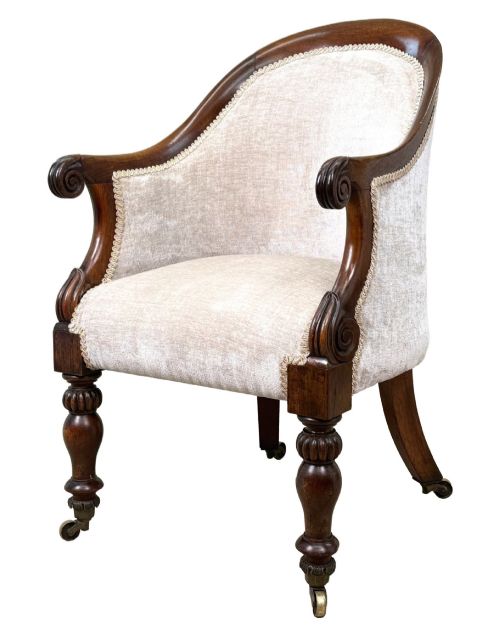
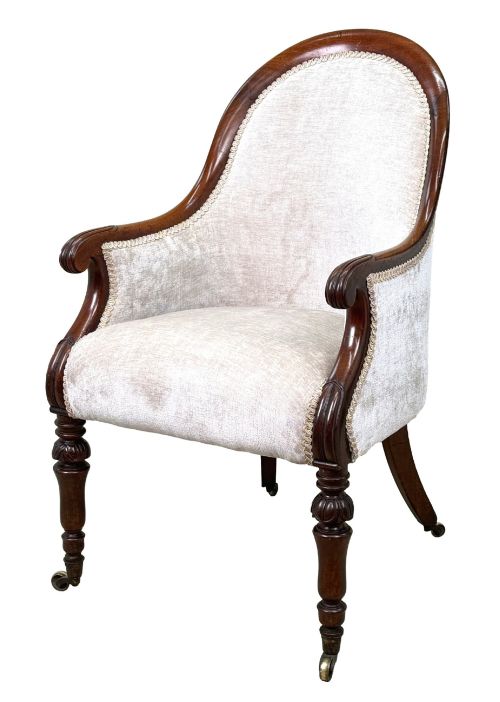
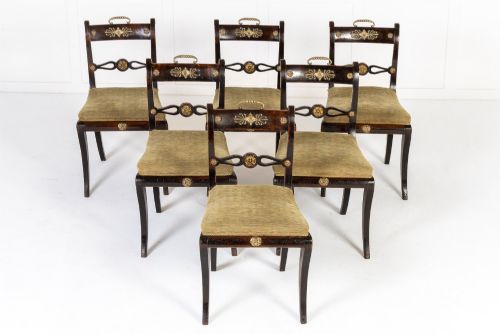
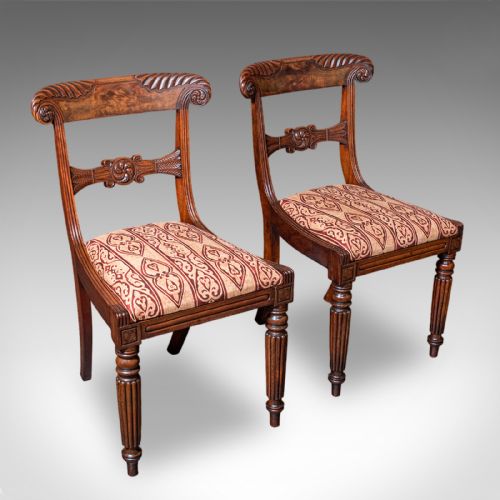
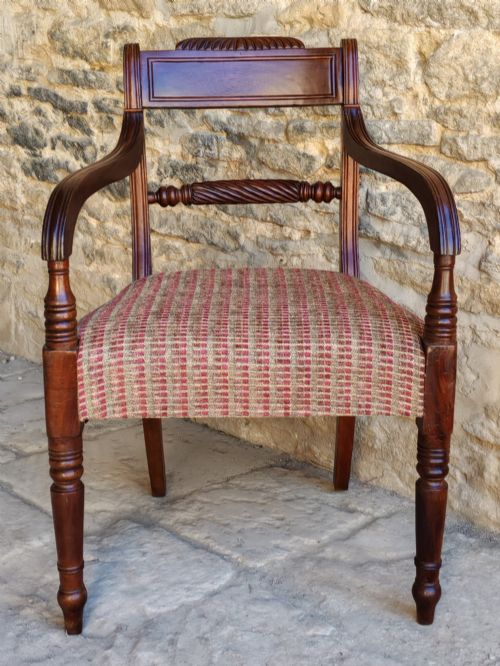
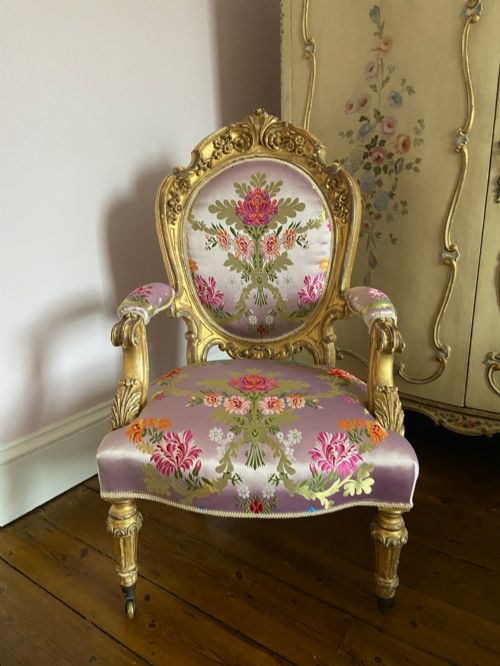
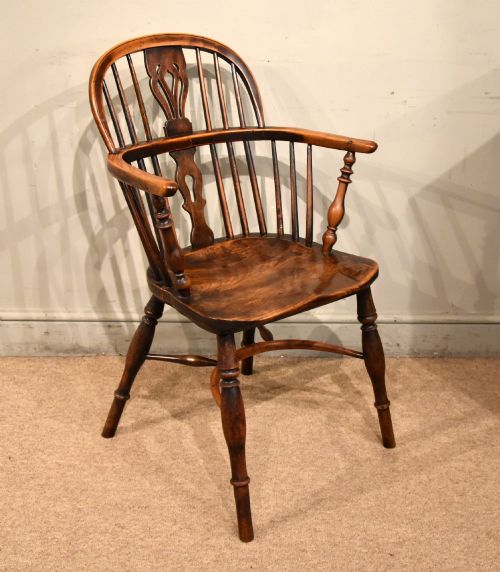
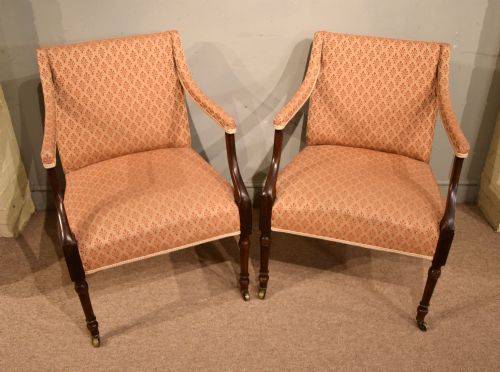
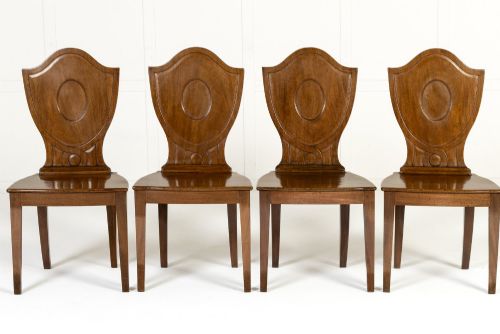
English regency chairs embody the neoclassical taste of the early nineteenth century, drawing heavily on Roman, Greek and Egyptian design motifs. When searching for english regency chairs, buyers encounter various seating forms including dining chairs, armchairs, side chairs, library chairs and hall chairs.
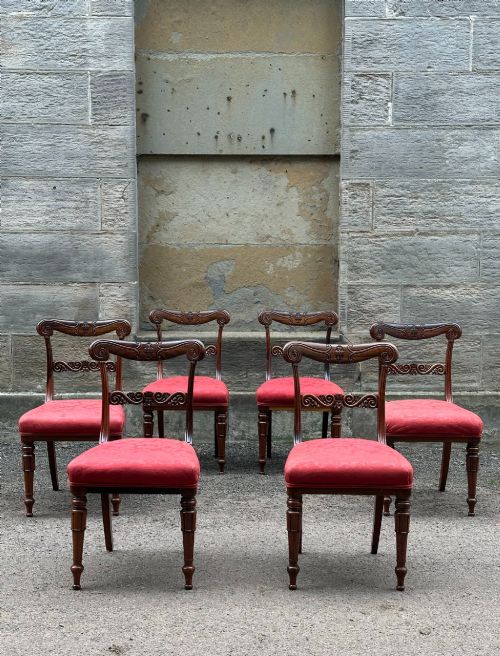
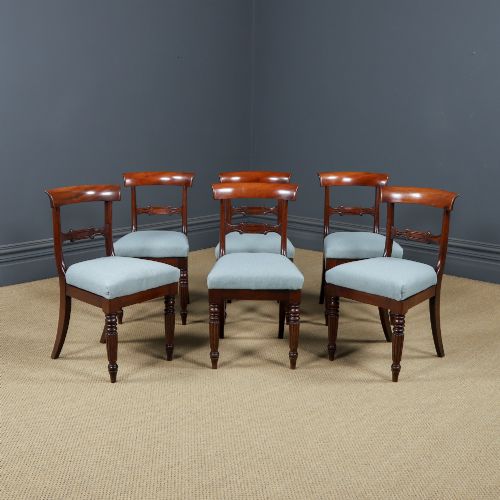
The single side chair and matched pairs appear frequently, alongside larger dining sets numbering from four up to ten or eleven pieces. These items originate predominantly from the regency period and the broader nineteenth century, capturing a distinct era of cabinetmaking.
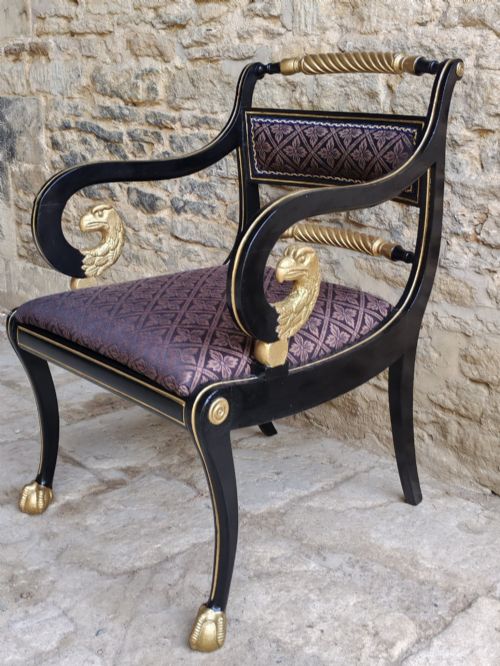
Makers adapted ancient forms such as the klismos and the curule chair for domestic interiors, producing low-backed dining seats and comfortable elbow chairs. Surviving examples demonstrate how dining furniture evolved from heavier eighteenth-century proportions into lighter, more athletic profiles.
Materials and Construction
Cabinetmakers relied heavily on dense timber stocks, particularly mahogany and flame mahogany, alongside rosewood, oak, satin birch and pine. Many surfaces received applied ornamentation including brass inlay, ebony stringing, and elaborate gilt decoration upon painted timber.
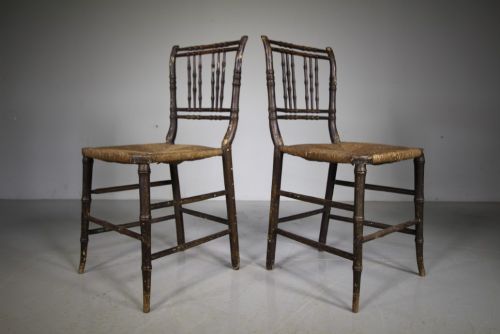
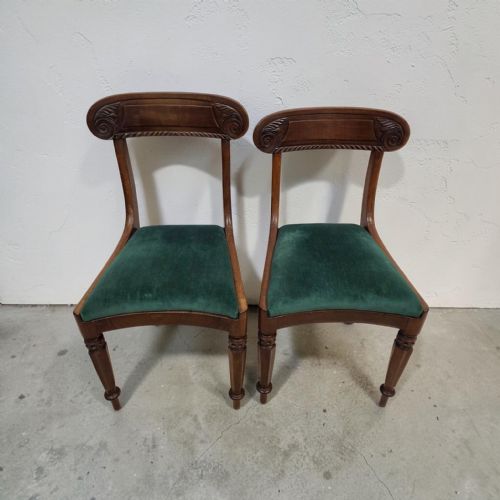
Specialised techniques defined the period, such as steam-bending wood to create sweeping bar backs and rope twist rails, or turning timber into delicate bobbin shapes. Workshops utilised cane for light seats and applied intricate paint finishes to simulate bamboo or exotic hardwoods on simpler country frames.
Upholstery played a central role, with craftsmen padding seats in horsehair and finishing them with fine textiles, leather or brass nailhead trim. Frame assembly depended on traditional mortise and tenon joinery, ensuring durability across complex curved armchairs and dining sets.
Retail Price Guide 2026
Typical UK retail prices for english regency chairs, calculated from the Sellingantiques database of over a million retail prices indexed since 2003. This retail price guide relies exclusively on Sellingantiques data; no external sources or auction records are used, so the figures do not describe the wider market.
Listings feature woods like mahogany, rosewood and oak alongside cane, paint and leather across the regency and nineteenth-century periods.
Factors of Distinction
Quality rests upon the selection of timber and the ambition of the carved or inlaid details. Sets constructed from richly figured flame mahogany or dense rosewood command greater attention than simple painted pine or country interpretations.
The crispness of execution distinguishes superior cabinetwork, particularly in carved rope twists, reeded legs, and brass mounts. Finer dining chairs maintain structural integrity across large matched sets without relying on excessive secondary reinforcement.
Originality of surface finish dictates historical value, separating untouched patinated timber and genuine period paint from later interventions. Pieces retaining original cane work or early upholstery systems offer deeper insight into nineteenth-century workshop practices.
John Gee·Gillows
The English Regency Chairs Glossary
- Klismos
- An ancient Greek chair shape with curved back legs and a concave backrest, revived during the regency period for dining and side chairs. This form provided both ergonomic comfort and a dramatic neoclassical silhouette.
- Bar Back
- A horizontal top rail spanning the uprights of a chair back, often shaped like a classical tablet or curved channel. These rails frequently feature carved drapery, Trafalgar motifs, or flame mahogany veneers.
- Trafalgar
- A chair type characterised by a square or rounded back with distinctive carved cresting, popularised following naval victories. These models often incorporate bold horizontal splats and sturdy sabre legs.
- Simulated Bamboo
- Wood turned and painted to imitate natural bamboo stalks, reflecting an eighteenth and nineteenth-century fascination with exotic eastern aesthetics. Artisans applied this technique to light pine and beech country frames.
- Sabre Leg
- A chair leg that curves outward and backward in a graceful concave sweep, derived from classical Greek furniture. This structural form appears widely on dining and library seats of the period.
Frequently Asked Questions
How do I identify a genuine period piece?
Examine the timber selection, joinery methods, and surface wear for consistency with early nineteenth-century manufacturing techniques. Genuine examples display period-appropriate construction details and natural patination across high-use areas.
Compare the proportions and decorative vocabulary against documented pieces from the regency era. Subtle indicators like hand-cut screws and traditional glue blocks help confirm authenticity.
Can I use these chairs for daily dining?
Many solid mahogany and rosewood dining chairs remain robust enough for regular daily use when properly maintained. Their sturdy mortise and tenon frames were built for functional domestic dining environments.
Ensure that joints remain tight and that upholstery webbing is secure before placing them into service. Rotating chairs within a large set distributes wear evenly across the entire group.
What is the difference between side chairs and armchairs?
Side chairs are built without arms, designed primarily to tuck neatly around a dining table or line a hallway wall. Their compact frames allowed multiple seats to fit comfortably within formal rooms.
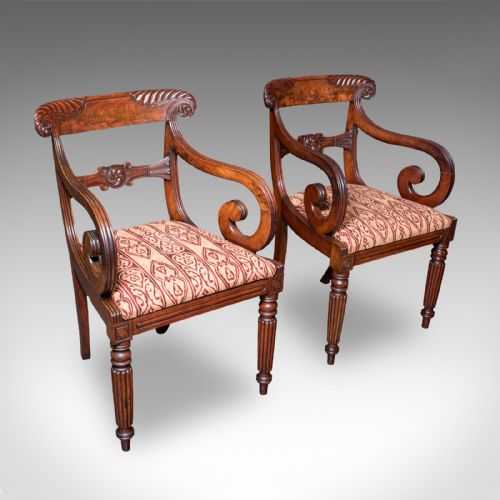
Armchairs, or elbow chairs, feature supportive side rests and were traditionally placed at the heads of a dining table or utilised as desk and library seating. They offer a wider, more enclosing seat profile.
How should I care for antique wood surfaces?
Protect timber surfaces by maintaining stable indoor humidity levels and avoiding direct placement near heat sources or strong sunlight. Regular dusting with a soft, dry cloth preserves the fragile historic wax or polish.
Avoid commercial silicone sprays or abrasive cleaning products that can strip the delicate aged finish. Consult a professional conservator if the timber requires structural intervention or deep cleaning.