
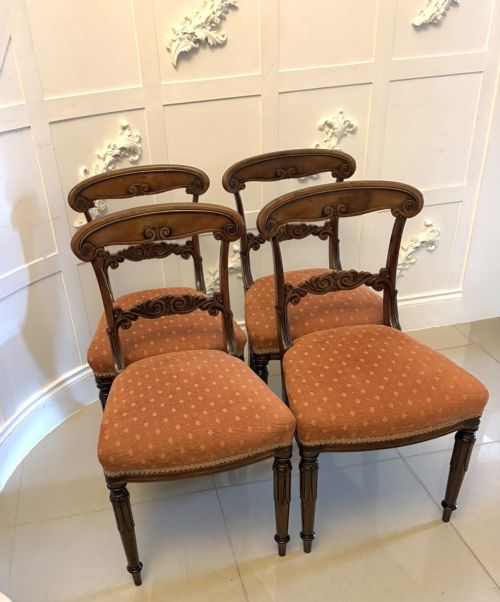
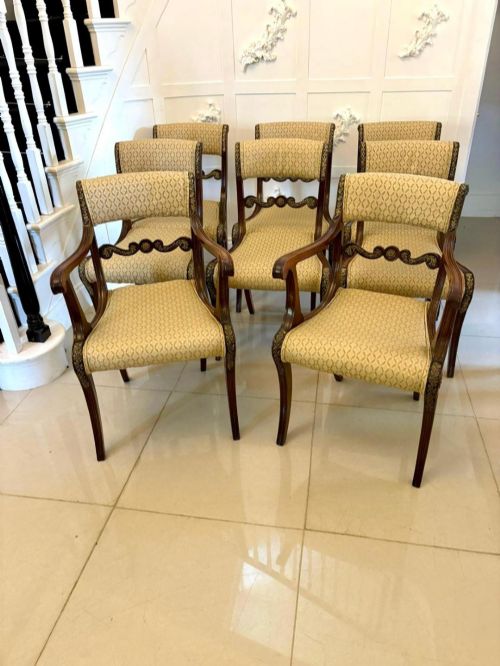

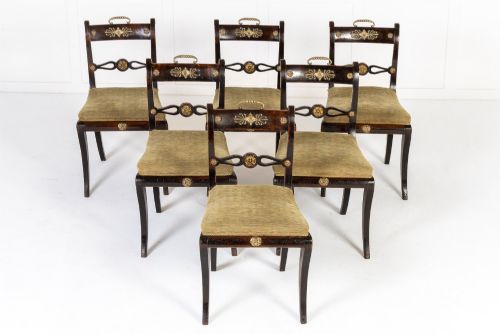
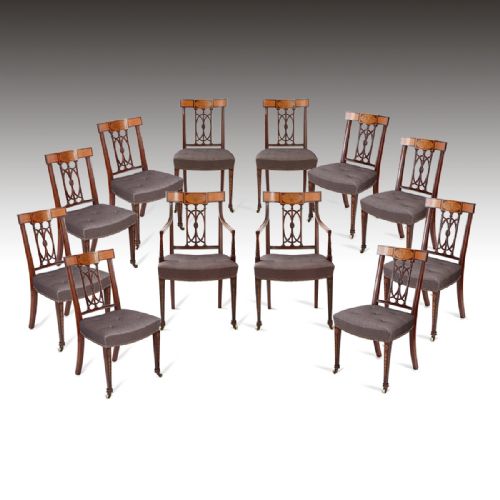
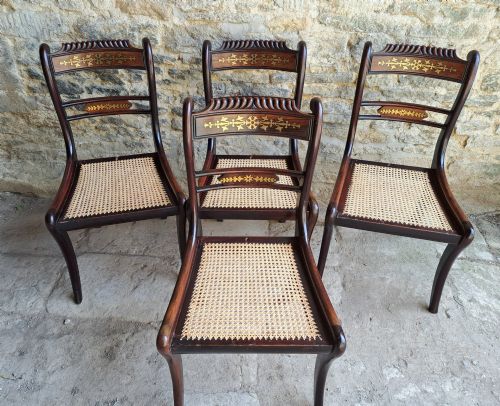


Brass Inlaid Side Chairs
Brass inlaid side chairs bring brilliant metallic line and warm timber into a room, making them a mainstay of Regency dining spaces.
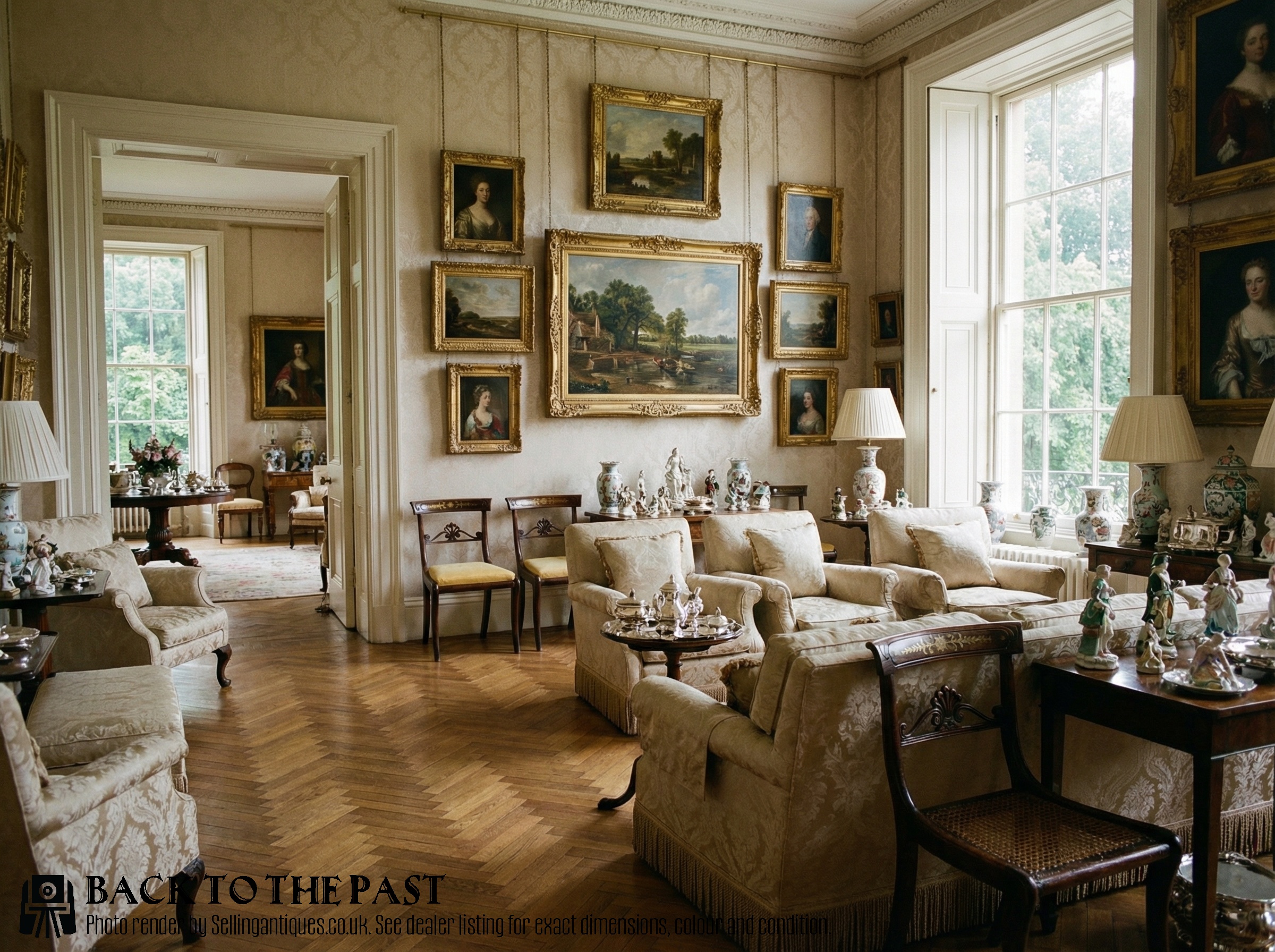
Brass Inlaid Side Chairs
Brass inlaid side chairs are seating forms most frequently encountered from the Regency, Georgian, and nineteenth-century periods, often appearing in matching sets or pairs. The listings here comprise dining chairs, side chairs, and hall chairs fashioned from timber with distinctive metallic embellishment. Buyers hunting for brass inlaid side chairs will find robust woods and refined classical silhouettes originating from English and continental workshops.
The prevalent materials across these items include rosewood, mahogany, satinwood, and faux rosewood, paired with fabric and velvet upholstery. Forms range from grand twelve-piece dining sets down to intimate pairs of bedroom or hall chairs. Regency examples dominate the selection, bringing classical proportions and decorative brass work directly to the domestic interior.
How they were made
Cabinetmakers constructed these chairs using dense cabinet timbers such as mahogany, rosewood, and satinwood as a structural base. Artisans then routed shallow channels into the wooden surface to receive precision-cut brass wire or sheet brass in ornamental motifs. These metal elements were secured flush with the wood, sometimes accompanied by delicate fine-line stringing.
Upholstered variants incorporated webbing and traditional stuffing materials beneath outer layers of fabric or velvet. Frame joints relied on traditional joinery techniques to ensure stability across frequent daily use in dining rooms and halls.
Some nineteenth-century makers fashioned chair backs into delicate musical instruments, letting you sit down inside a permanent brass-strung harp.
What varies in quality
The standard of timber selection and the precision of the brass inlay work govern the overall quality of these pieces. Higher-grade examples display tightly figured rosewood or rich mahogany with meticulously fitted brass elements that remain flush against the timber grain over centuries of movement.
Proportion and decorative ambition also set superior pieces apart, seen in sophisticated classical carving and harmonious design integration. Larger sets sharing uniform craftsmanship and original timber patination hold greater distinction than single chairs or assembled groups.
John Gee
The Brass Inlaid Side Chairs Glossary
- Side chair
- A chair without arms, originally designed for placement at the sides of a dining table or against a wall. These form the vast majority of antique seating surviving today.
- Regency
- A design period spanning the early nineteenth century defined by classical revival styles influenced by Greek, Roman, and French aesthetics. Furniture from this era often incorporates bold brass ornamentation and exotic veneers.
- Faux rosewood
- A painted or grained surface finish designed to imitate the rich dark figuring of genuine rosewood. Makers utilised this technique on native timbers to achieve an expensive aesthetic economically.
- Harp chair
- A seating form featuring a lyre or harp-shaped splat within the open backrest. This classical motif frequently appears in Regency dining and side chairs.
- Inlay
- A decorative technique where contrasting materials are set into recesses flush with the surface of the base timber. Brass is the predominant metal used for this purpose on nineteenth-century seating.
Brass Inlaid Side Chairs: Frequently Asked Questions
How do I date a brass inlaid chair?
Dating relies on examining the timber species, structural joinery, and stylistic vocabulary of the frame. Regency examples from the early nineteenth century typically feature distinct classical motifs and specific veneering methods.
Later nineteenth-century interpretations often exhibit subtle shifts in proportion and construction techniques that distinguish them from their earlier counterparts.
Were these chairs used for dining?
Many examples served as formal dining seating around large tables in country houses and town residences. Sets often included a combination of armchairs and numerous side chairs.
Smaller pairs frequently functioned as bedroom or hall seating rather than primary dining furniture.
How do I care for brass inlay?
Maintain the timber and metal with gentle cleaning using soft cloths, avoiding harsh polishes that can dislodge delicate brass elements. Keep chairs away from direct heat sources and strong sunlight to protect the wood and veneer.
Check the stability of the joints periodically to ensure the brass remains secure within its wooden channel.
What is faux rosewood?
Faux rosewood is a painted or stained finish applied to a lighter base timber to simulate the appearance of genuine tropical hardwood. Cabinetmakers used this method during the Regency period to achieve a luxurious aesthetic.
Close inspection reveals brushwork or grain manipulation beneath the clear polish rather than natural timber growth rings.