




Antique Spoonback Chair
An antique spoonback chair offers the curved comfort of Victorian seating, shaped to fit the human form with deep scrolling timber frames.
Antique Spoonback Chair
The antique spoonback chair sits firmly within the Victorian period, spanning the nineteenth century from the eighteen-fifties through to the eighteen-eighties. These seats appear most frequently as individual parlour chairs, nursing chairs, or larger gentleman's and ladies' open armchairs built for comfort and display. Makers also produced matching pairs and larger salon suites of six pieces for formal drawing rooms.
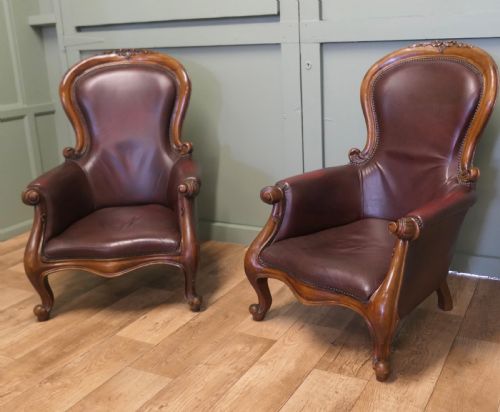
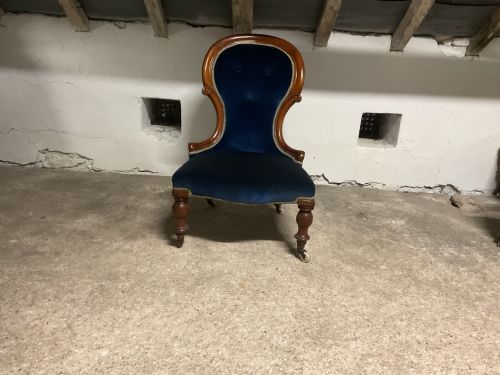
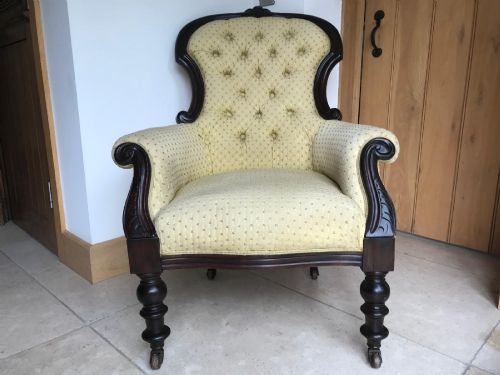
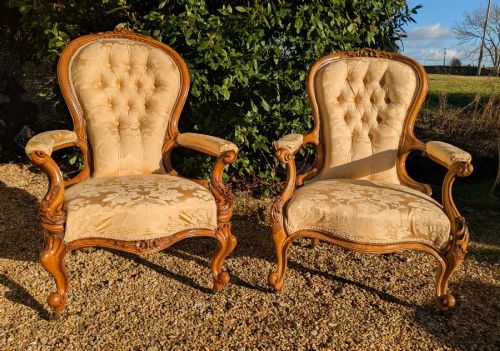
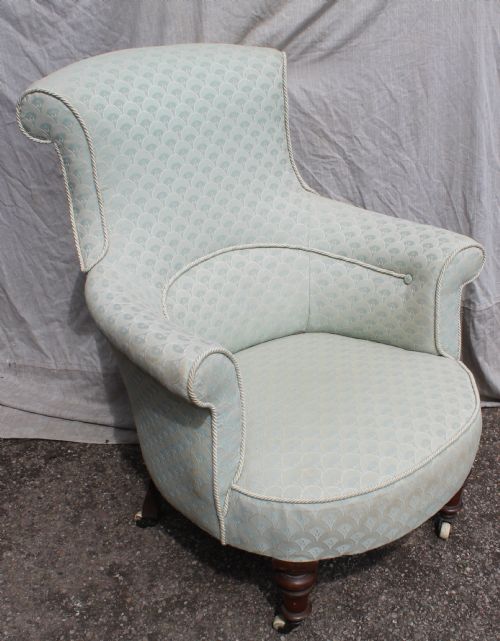
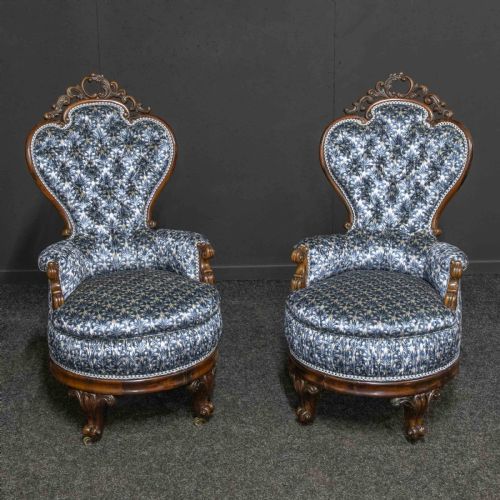
The defining characteristic of these pieces is the concave, oval backrest carved to resemble the bowl of a spoon, which supports the spine naturally. Examples range from compact fireside chairs upholstered in fabric or leather to grander showwood frames resting on brass castors. You will encounter both mahogany and walnut frames alongside rarer rosewood constructions from the early Victorian decades.
Timber frames and upholstery
Cabinetmakers constructed the characteristic curved frames using dense hardwoods like mahogany, walnut, and rosewood, often steaming or laminating the timber to achieve the deep, unbroken oval sweep of the back. Showwood frames display intricate hand-carved floral motifs and scrollwork, particularly during the Victorian Rococo Revival style. Underneath the decorative timber, traditional joinery secured the seat rails before artisans applied webbing, springs, and stuffing.
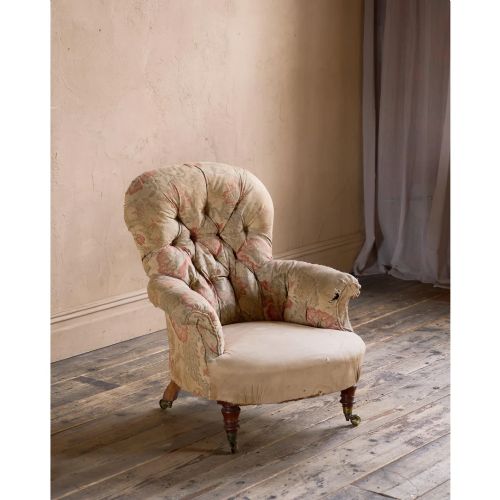
Finishing touches involved covering the springs with horsehair or wool stuffing, then securing top layers of velvet, leather, patterned textile, or buttoned upholstery. Metal components such as brass castors were fitted to the legs of heavier armchairs and reading chairs to allow easy movement across carpets. Selected pieces also incorporated leather linings and elaborate brass studding along the framework.
Victorian furniture makers ingeniously curved solid hardwoods into gentle spoon shapes without modern steam boxes, purely through patience and muscle.
Distinctions in craftsmanship and design
The distinction between standard parlour seating and the finest nineteenth-century examples lies in the depth and crispness of the timber carving. Superior walnut and rosewood frames exhibit masterly hand-chiselled details along the crest rail and cabriole legs, whereas ordinary pieces rely on simpler machine mouldings or plain mahogany surfaces. Maker attribution also elevates certain chairs, with branded or historically attributed workshops commanding particular attention from collectors.
Proportion and scale dictate the visual balance of each chair, separating modest bedroom pieces from grand gentleman's reading chairs. The integration of showwood framing, buttoned upholstery, and retained original brass castors contributes to the overall integrity of a piece. Finer examples maintain rigid frame stability despite the inherent structural stress placed upon the curved backrest over generations of use.
Holland and Sons·C. Hindley and Sons
The Antique Spoonback Chair Glossary
- Spoonback
- A chair back shaped with a concave, oval contour designed to cradle the sitter's spine. This distinctive form emerged prominently during the Victorian era across various parlour and drawing room seats.
- Showwood
- Exposed polished timber on a chair frame where the carved woodwork remains visible around the upholstered sections. Walnut and rosewood were frequently utilised for this decorative purpose.
- Cabriole leg
- A furniture leg that curves outward at the knee and tapers inward toward the foot, often finishing in a scroll or plain pad. This graceful form appears frequently on mid-nineteenth-century salon seating.
- Buttoned upholstery
- A traditional technique where upholstery is pulled tight and secured with deep-set buttons arranged in a geometric pattern across the backrest. This method creates characteristic padded diamonds of fabric or leather.
- Salon suite
- A matching set of seating furniture, often comprising multiple armchairs and parlour chairs designed for a formal drawing room. These matched groupings share identical timber frames, carving details, and upholstery fabrics.
Antique Spoonback Chair: Frequently Asked Questions
What is an antique spoonback chair?
An antique spoonback chair is a Victorian seating piece featuring a concave, oval wooden backrest carved to resemble a spoon. These chairs were built primarily during the nineteenth century in mahogany, walnut, and rosewood.
They served various domestic roles, functioning as fireside armchairs, low nursing seats in bedrooms, and formal parlour chairs for entertaining guests.
How do I date a spoonback chair?
Dating relies on examining the timber, the carving style, and structural traits recorded across the nineteenth century. Early Victorian pieces from the eighteen-fifties often utilise rosewood and feature rich rococo revival carving.
Later Victorian examples from the eighteen-seventies and eighties frequently employ walnut or mahogany with simpler cabriole legs and brass castors. Archival records and maker stamps also help narrow down the decade of production.
Where were spoonback chairs used?
These chairs were designed for principal rooms within nineteenth-century homes, including drawing rooms, libraries, and bedrooms. Gentlemen's reading chairs provided sturdy support for studies, while ladies' chairs offered lower seating tailored for parlours.
Smaller nursing chairs were specifically constructed for domestic nurseries and bedrooms, allowing mothers to tend to infants with ease.
How do I live with a spoonback chair?
Living with these chairs involves placing them in sitting rooms or bedrooms where their curved wooden frames can be appreciated from multiple angles. Pairing an armchair with a reading lamp or grouping parlour chairs within a salon suite recreates period domestic arrangements.
Maintenance requires treating the polished showwood frames with appropriate furniture wax and protecting delicate fabrics or leather from direct sunlight.