

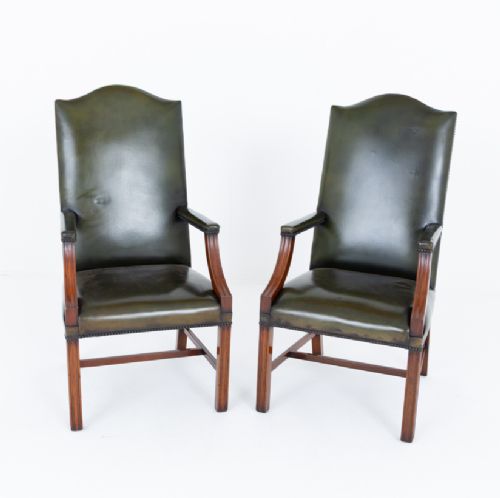


Vintage Gainsborough Chair
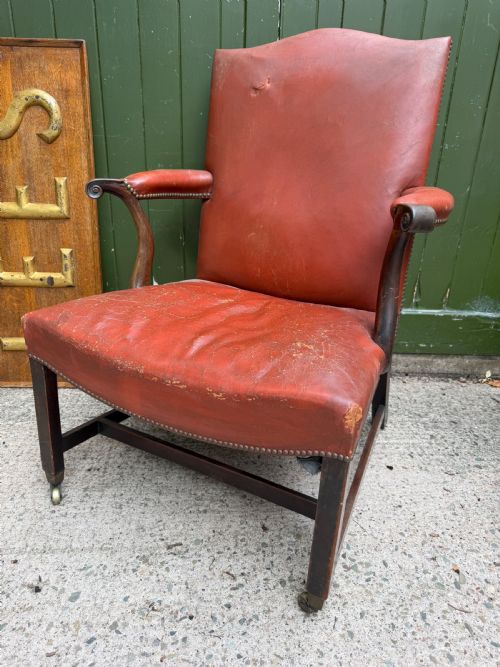
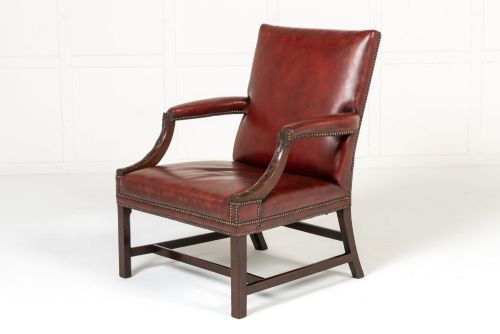
A vintage gainsborough chair is a wide upholstered library armchair built to hold comfortable seat cushions, offering substantial timber frames and upholstered hide that suit a serious study.
Vintage Gainsborough Chair
A vintage gainsborough chair offers an open-framed upholstered seat designed primarily for libraries, studies and writing desks during periods ranging from the eighteenth century through the twentieth. You will frequently encounter mahogany and walnut frames alongside reproductions spanning the Georgian revival and Edwardian eras.
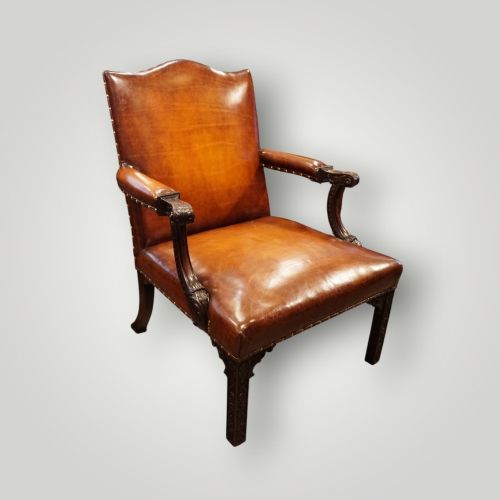
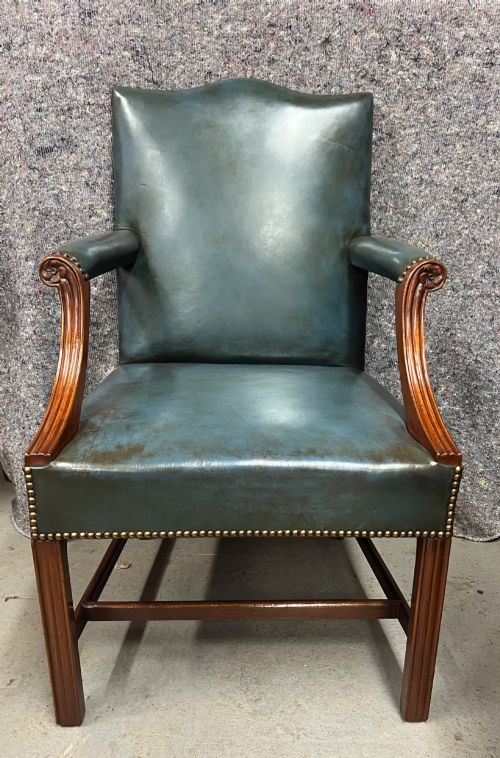
The form typically combines a square upholstered back with padded armrests and straight or slightly cabriole legs, creating a commanding seat that pairs naturally with a partners desk. Most examples listed on this page rely on leather or textile upholstery rather than bare wood.
Makers and workshops constructed these armchairs to serve as functional library or desk seating rather than mere decorative objects, which accounts for their robust timber construction and generous proportions.
What varies in quality
The standard of a vintage gainsborough chair depends substantially on the depth and crispness of the timber carving on the frame, such as blind fretwork or moulded arm supports. Earlier periods and careful revival pieces exhibit a refined proportion that separates them from simpler later interpretations.
The quality of the leather upholstery and the integrity of the underlying frame construction also determine the standing of the piece. Substantial timber gauge and traditional joining methods distinguish a robust library chair from lighter commercial seating.
Vintage Gainsborough Chair Retail Price Guide 2026
Typical asking prices for vintage gainsborough chair among the pieces listed under this phrase on Sellingantiques today, from the lower quarter to the upper quarter. They describe what is for sale here now, not the wider market.
Several armchairs are large and over-scaled, ready to swallow anyone who sits down to read a weighty volume.
Howard & Son's·Gillows
The Vintage Gainsborough Chair Glossary
- Blind carving
- Carved ornamentation applied to a flat surface in low relief, often seen on the straight legs of mid-eighteenth-century library chairs. This technique decorates the wood without altering its structural profile.
- Library armchair
- A wide upholstered seat designed for reading rooms and studies, typically featuring padded armrests and a supportive upright back. These chairs provide a stable platform for prolonged periods of sitting.
- English hide leather
- Heavy cattle hide tanned and dyed in traditional tones for upholstery use. It develops a rich surface texture through handling and age.
- Carver
- An armchair designed to match a set of dining or desk chairs, usually featuring open arms to accommodate wider clothing. The term frequently appears in descriptions of library seating.
- Georgian revival
- A nineteenth or twentieth-century design movement that recreated the architectural and furniture forms of the Georgian period. Pieces from this era employ traditional timber working methods to emulate earlier styles.
Vintage Gainsborough Chair: Frequently Asked Questions
What is a gainsborough chair?
A gainsborough chair is a wide upholstered library armchair with open padded arms and a timber frame, built during the eighteenth century and later revived in subsequent eras.
These seats were traditionally placed in studies, libraries and dressing rooms to provide comfortable support while reading or writing at a desk.
How are these chairs used?
They function primarily as desk chairs or reading armchairs in studies and libraries, offering a wide seat and supportive backrest for daily use.
Their substantial proportions make them suitable as focal seating points paired with large partners desks or placed beside bookshelves.
How do I live with leather upholstery?
Leather upholstery requires minimal maintenance beyond regular dusting and occasional conditioning to keep the hide supple and prevent cracking over time.
Positioning the chair away from direct sunlight and heat sources preserves both the hand-dyed colour and the natural texture of the leather.
How can I tell periods apart?
Distinguishing periods relies on observing timber choice, carving styles, and construction methods, noting whether a piece is an eighteenth-century original or a later revival.
Earlier examples display period-specific carving details and hand-cut joinery, whereas Edwardian and later revival pieces often reflect the manufacturing standards of their own decade.