
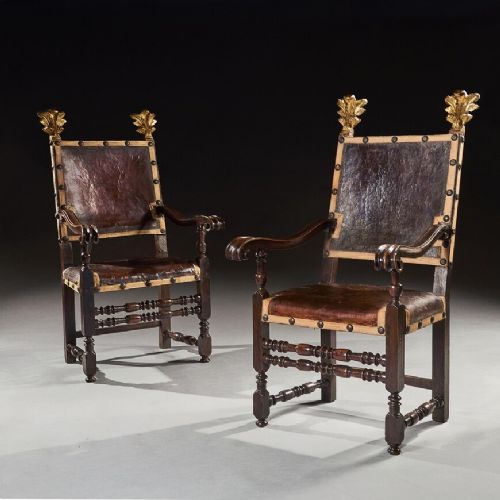
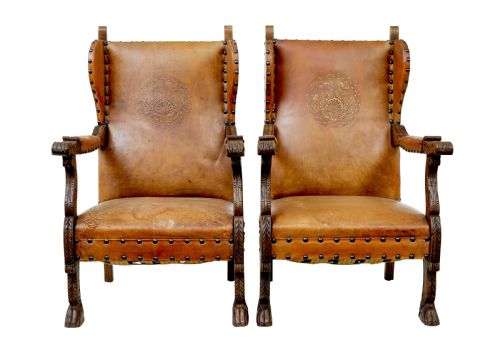
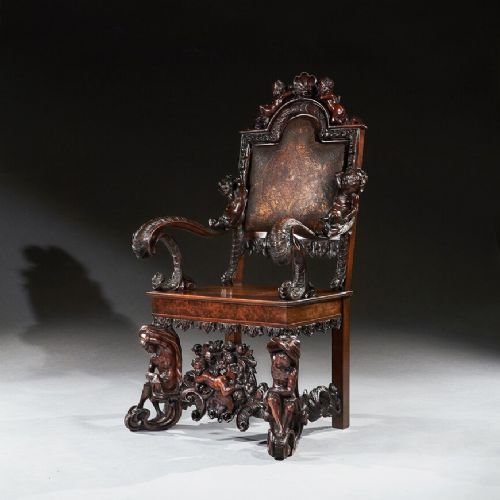
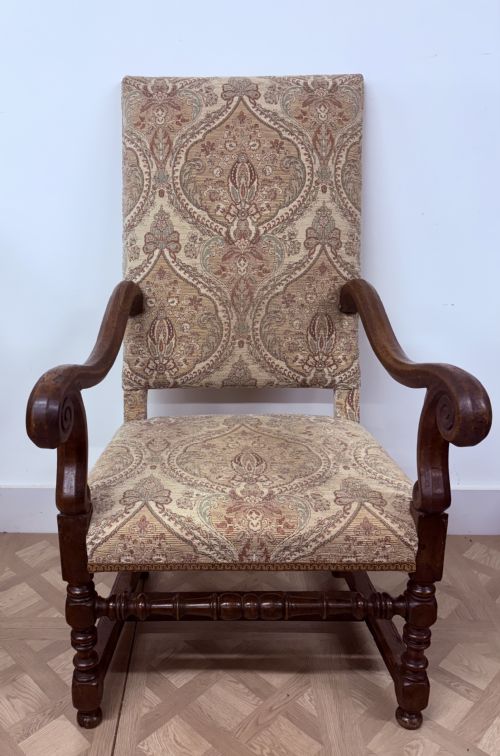
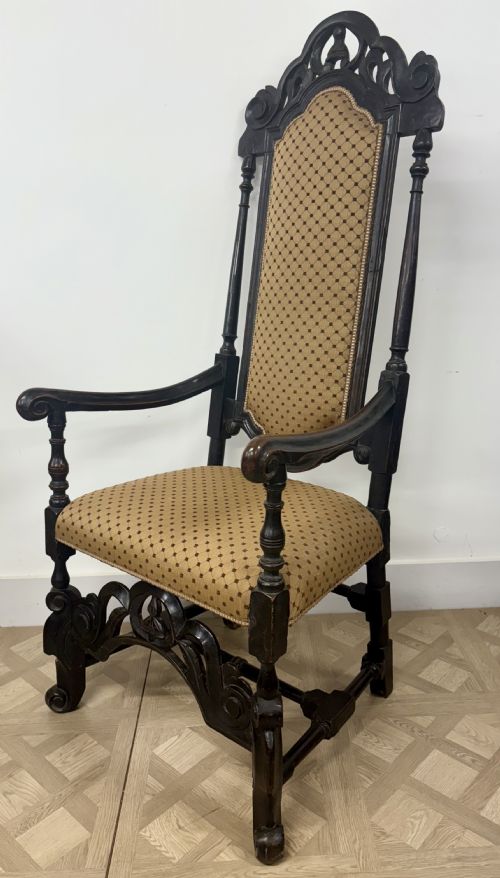
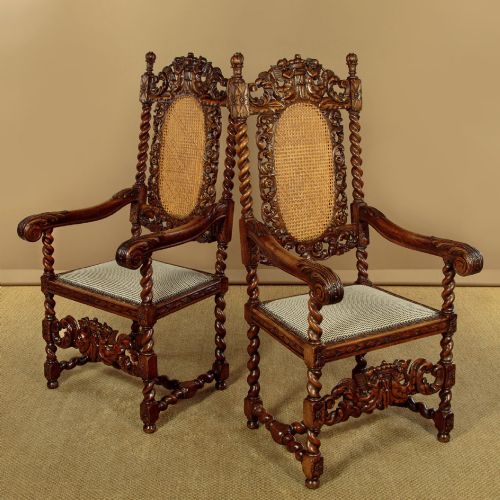
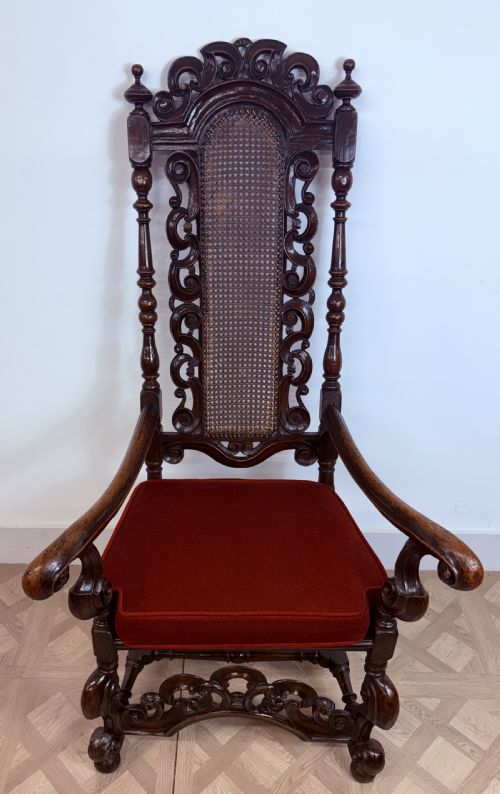
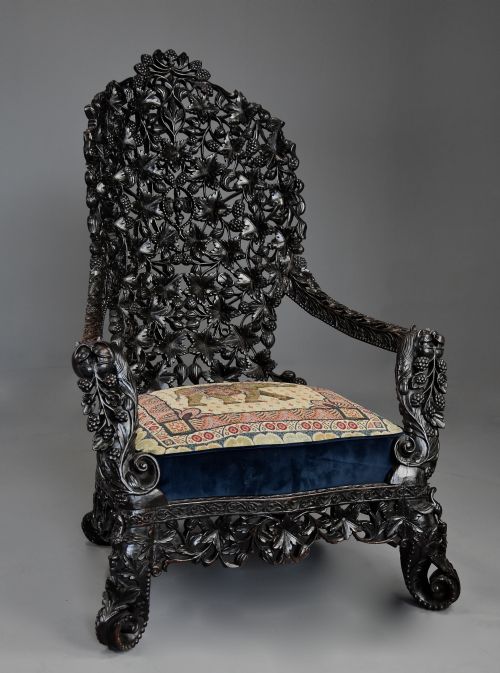
High Back Throne Chair
A high back throne chair commands any room with towering joinery and authoritative proportions.
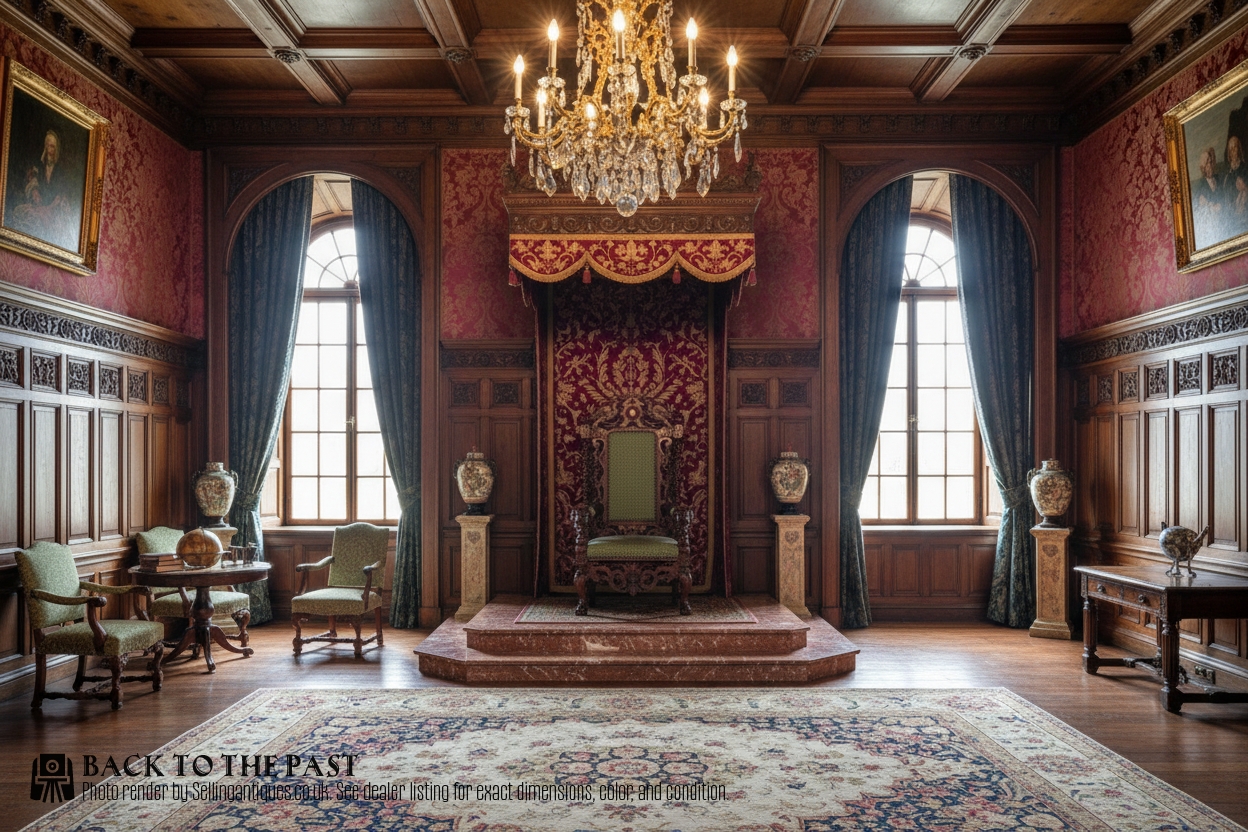
What a high back throne chair is
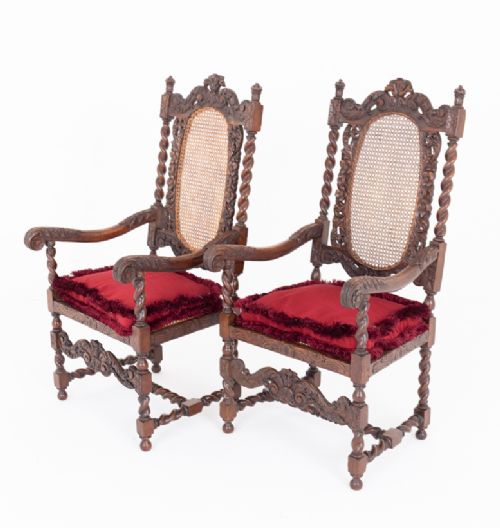
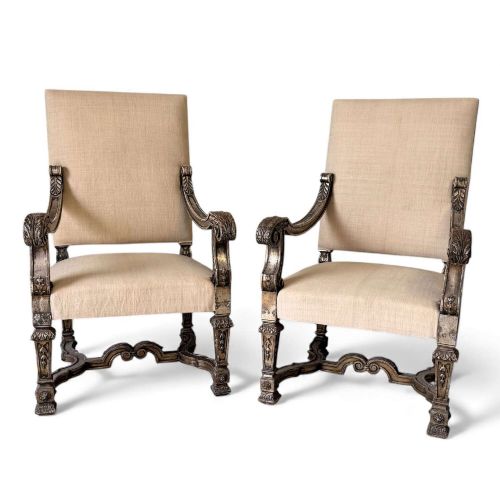
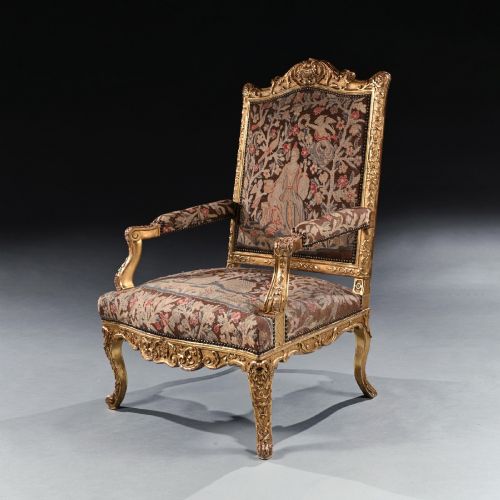
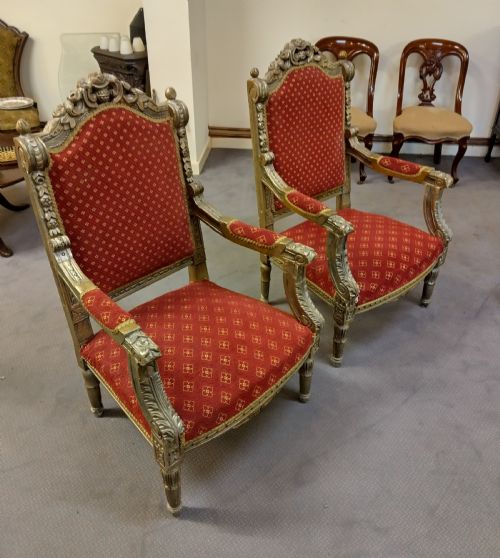
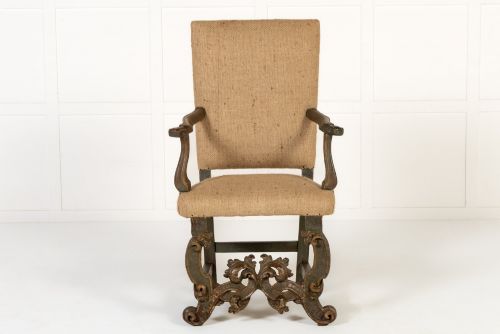
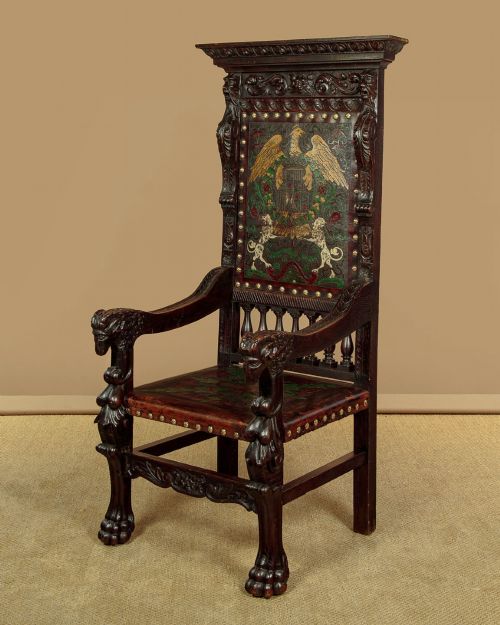
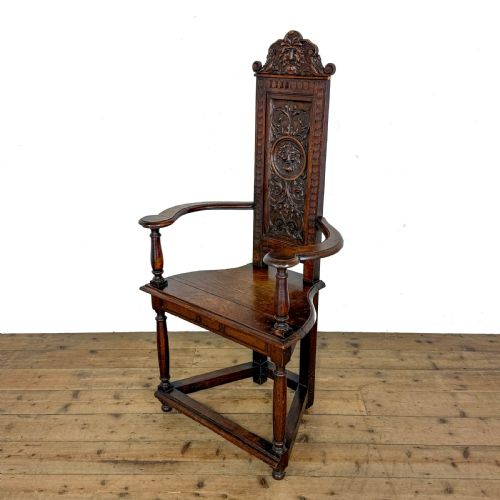
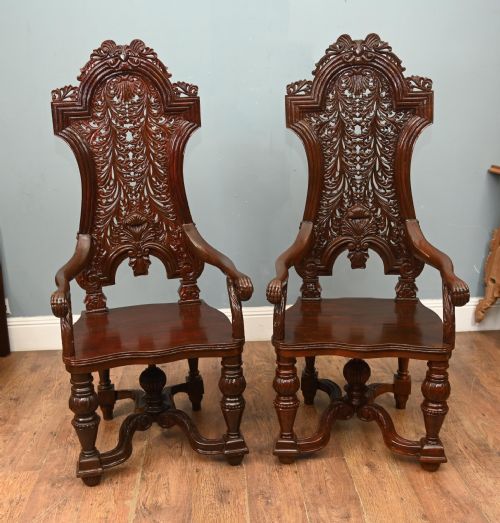
A high back throne chair is a commanding seating form designed to draw the eye in any interior. These pieces appear as grand armchairs and hall chairs rooted in historical revivals.
The versions most frequently met on this page date from the seventeenth century through to the nineteenth century. Examples span walnut, oak, and beech constructions featuring elaborate vertical backs.
Makers drew on historic motifs, producing revival pieces that emulate much earlier centuries. These large armchairs served both functional seating and symbolic roles in domestic spaces.
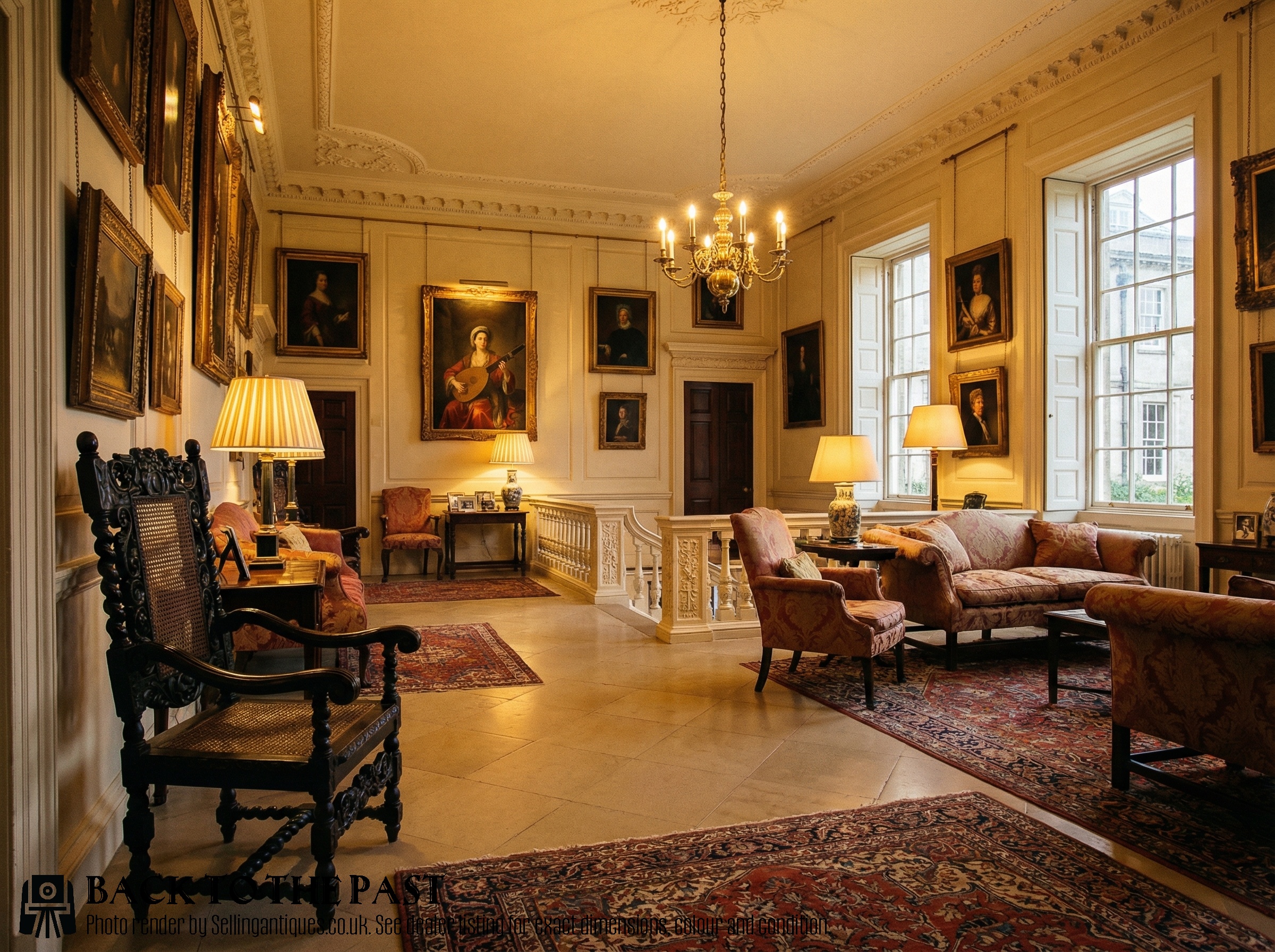
How they were made
Carpenters utilised solid hardwoods including oak and walnut for the primary frames and structural supports. Artisans employed traditional joinery to construct the robust vertical backrests.
Surface enrichment relied on deep carving into the timber, sometimes supplemented by turned members. Panels of leather, cane, and upholstered fabric were integrated into the wooden frameworks.
Retail Price Guide 2026
Typical UK retail prices for high back throne chair, calculated from the Sellingantiques database of over a million retail prices indexed since 2003. This retail price guide relies exclusively on Sellingantiques data; no external sources or auction records are used, so the figures do not describe the wider market.
Listings feature oak and walnut constructions spanning from the seventeenth century through to the nineteenth century.
What varies in quality
Quality rests upon the depth and crispness of the carved ornamentation across the timber frame. Superior examples demonstrate confident chisel work and substantial structural proportions.
The selection of primary materials shifts the character of the piece, with dense walnut and heavily figured oak marking the more ambitious interpretations. Integrated details such as brass accents elevate the overall execution.
The High Back Throne Chair Glossary
- Carolean Revival
- A nineteenth-century style reviving the exuberant carved aesthetic of the late seventeenth century. This design movement favours scrolling woodwork and crown motifs.
- Wainscot
- A wooden panelled construction method typical of early chairs. It provides a sturdy wooden back that shields the sitter from draughts.
- Box settle
- A high-backed wooden seat incorporating a box compartment beneath the base. This form shares the vertical presence of throne chairs.
- Caning
- Woven rattan material used to form light yet strong panels within chair backs. It introduces textural contrast to heavy timber frames.
Frequently Asked Questions
Where did people use these chairs?
These tall chairs were traditionally placed at the head of a long table or in a grand hall to signify status. Their imposing height was designed to shield the occupant from cold draughts.
In domestic interiors today, they serve as focal points in studies, hallways, or living rooms where vertical presence is desired.
How do I identify a revival piece?
Revival pieces emulate historical periods like the seventeenth century while using nineteenth-century manufacturing methods. Examining the underside and interior joinery reveals the tools and cutting techniques of later workshops.
Secondary woods and consistent patination help distinguish nineteenth-century interpretations from genuinely older furniture.
What materials were used?
Primary construction relies on durable hardwoods such as oak, walnut, and beech. These timbers provided the strength needed to support high, heavily carved backrests.
Seating surfaces and back panels frequently incorporate leather, woven cane, or upholstered fabric secured with brass detailing.
How do I care for the wood?
Maintain the timber by keeping the chair away from direct heat sources and sudden temperature fluctuations. Regular dusting with a soft cloth preserves the natural finish without building up residue.
Feed dry wooden surfaces sparingly with traditional wax to maintain the historic sheen.