
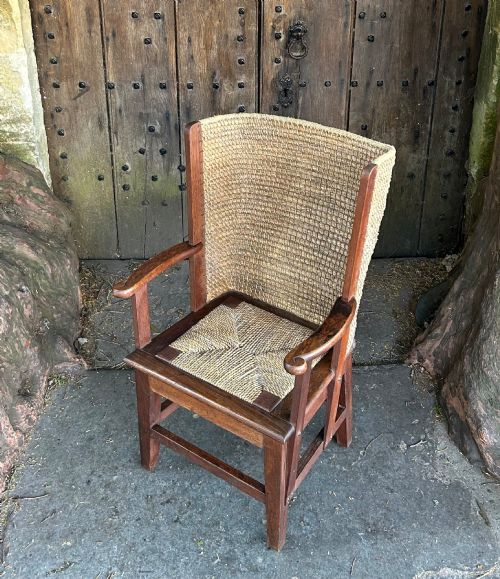
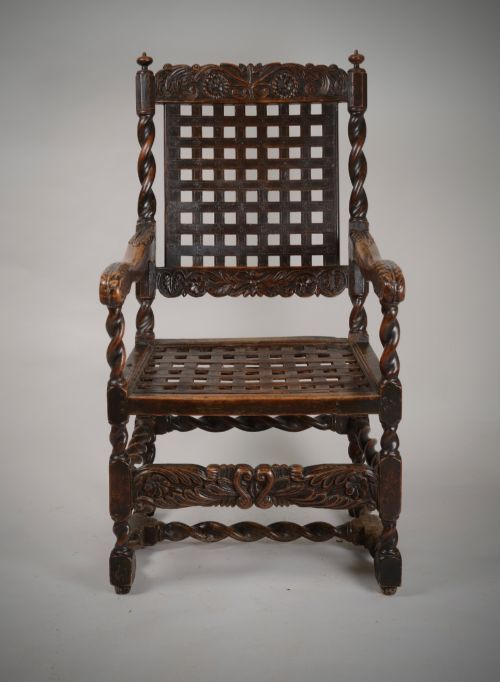
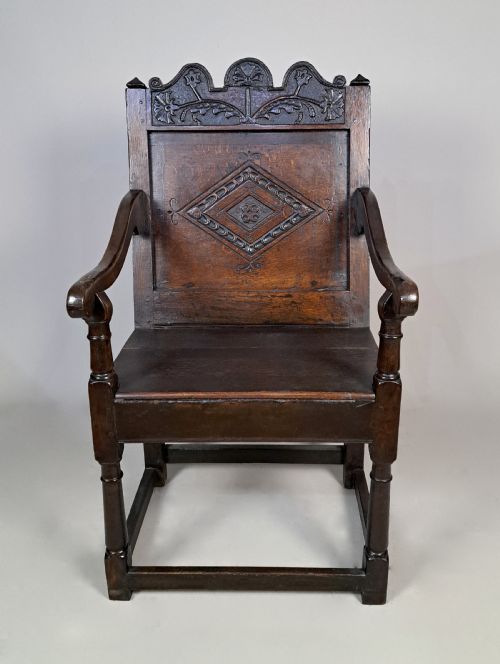
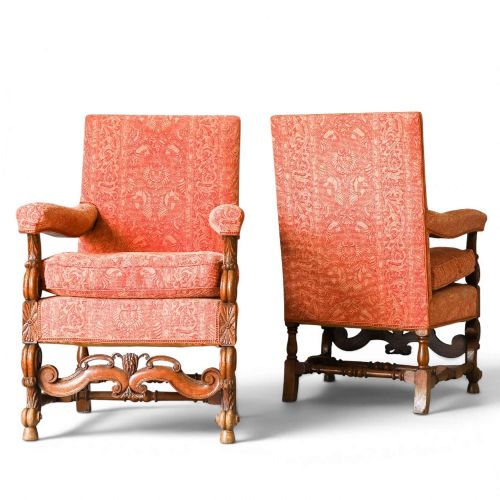
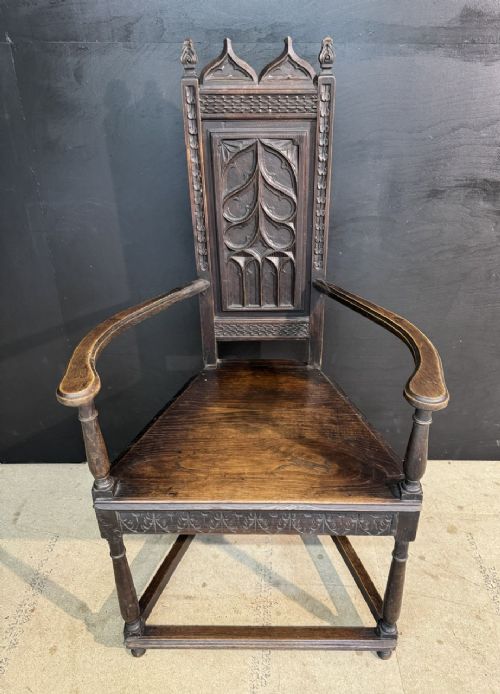
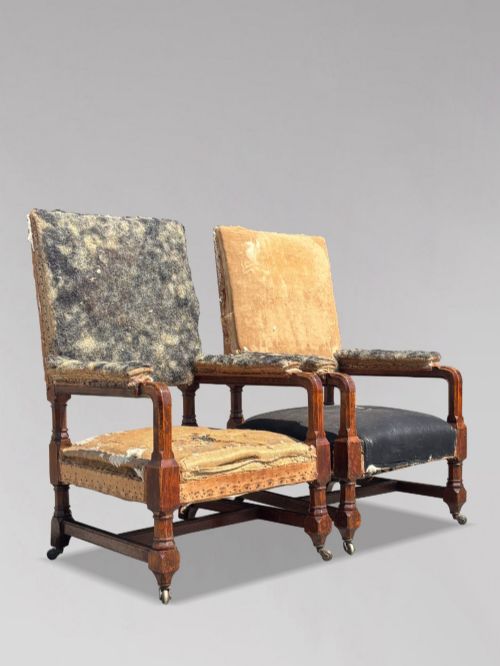
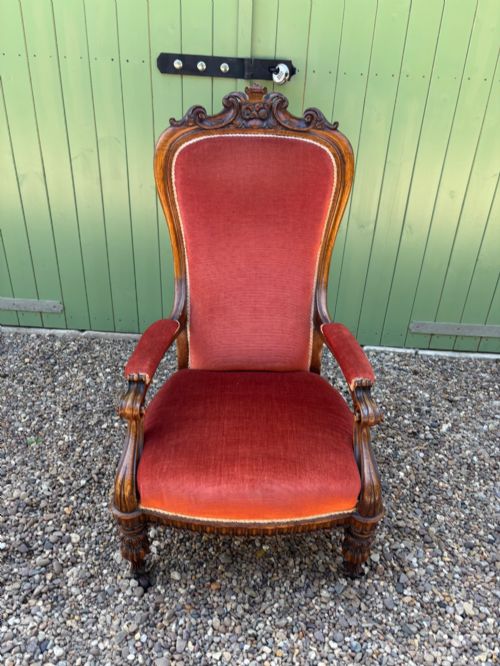
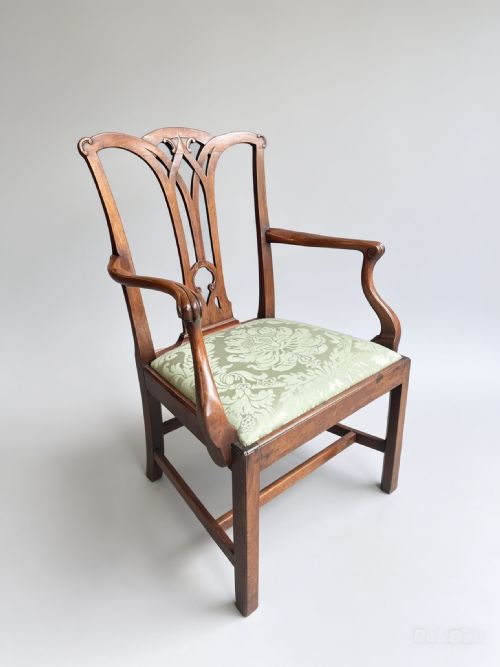

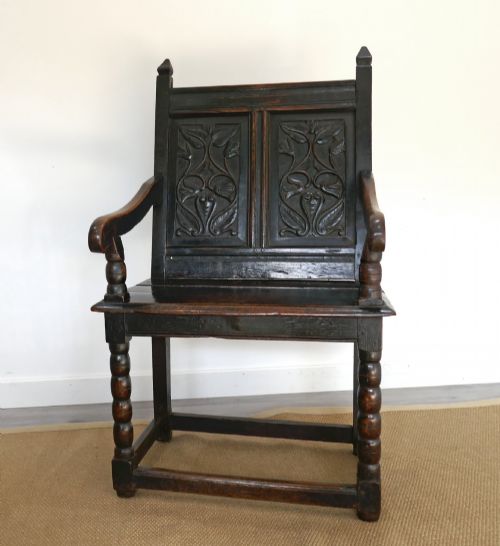
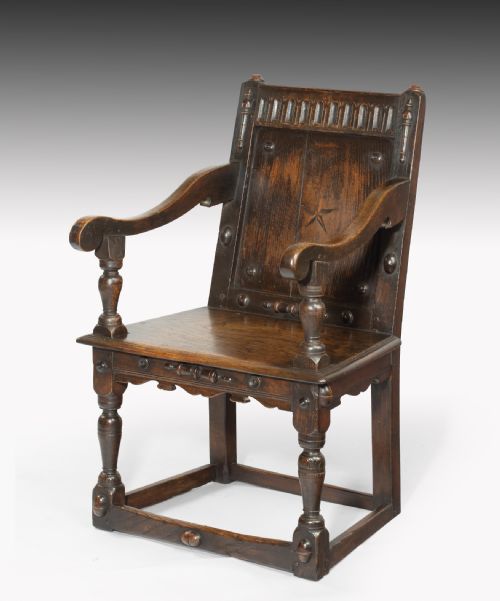
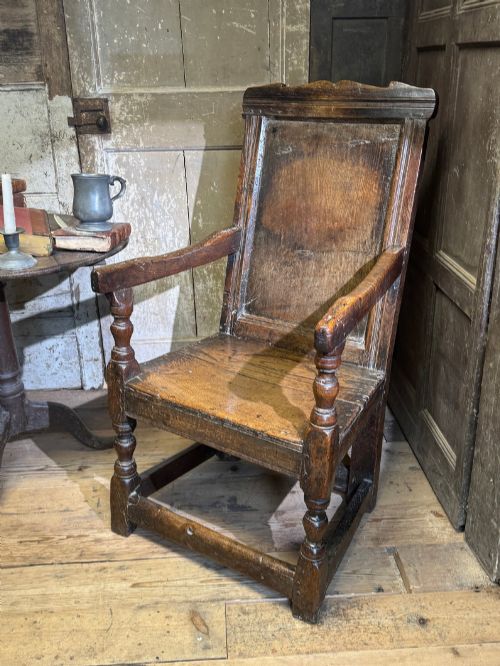


Carved Oak Open Armchair
A carved oak open armchair offers honest timber and structural warmth, giving any room a grounded, historical focal point.
What these chairs are
A carved oak open armchair is a sturdy timber seat featuring exposed structural arms, built for durability and everyday use. The selection spans robust vernacular pieces and decorative revival models from various centuries.
Early examples include heavy wainscot forms rooted in the seventeenth and eighteenth centuries, featuring panelled backs and solid timber seats. Later nineteenth and early twentieth-century interpretations bring regional vernacular traditions and revival styles into domestic spaces.
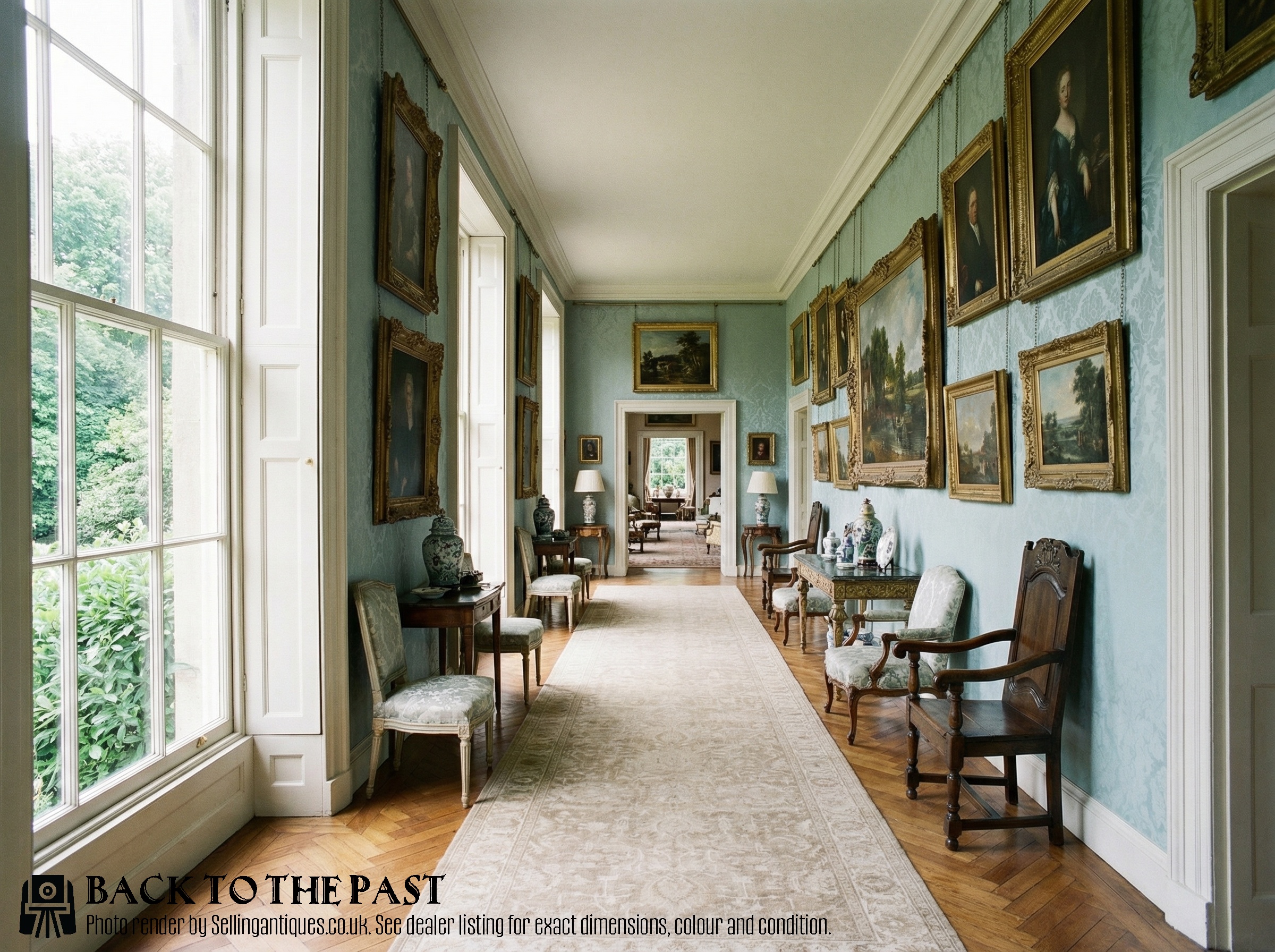
How they were made
Makers utilised solid oak, shaping heavy planks and framing members using traditional joinery techniques. Turnings such as bobbin and barley twist forms added decorative structure to the uprights and stretchers.
Upholstery elements integrate leather, rush, straw, and tapestry fabric held with brass studs. Carving details applied directly to the timber frame provide texture and visual depth.
Retail Price Guide 2026
Typical UK retail prices for carved oak open armchair, calculated from the Sellingantiques database of over a million retail prices indexed since 2003. This retail price guide relies exclusively on Sellingantiques data; no external sources or auction records are used, so the figures do not describe the wider market.
The listings span multiple periods from the seventeenth century through to the 1920s, incorporating oak alongside brass, leather, rush, and tapestry fabric.
What varies in quality
Quality rests in the crispness of the timber carving and the integrity of the original joints. Pieces retaining their early surface patination and uncompromised structural members command greater appreciation.
Regional vernacular variations and well-executed revival interpretations display distinct regional character that elevates the visual interest of the object.
The Carved Oak Open Armchair Glossary
- Wainscot chair
- A heavy wooden armchair dating from the seventeenth or eighteenth century, featuring a panelled wooden back and solid timber seat.
- Barley twist
- A decorative turning technique resembling a spiralling rope, commonly found on the legs and stretchers of later revival seating.
- Bobbin turning
- A series of rounded wooden spheres turned along the length of a chair leg or stile, creating a rhythmic profile.
- Rush seating
- A woven seat made from marsh plants, historically utilised in vernacular country chairs for flexibility and strength.
Frequently Asked Questions
What is a wainscot chair?
A wainscot chair is an early form of wooden armchair constructed predominantly from solid oak with a panelled back.
These pieces date back to the seventeenth and eighteenth centuries and were originally reserved for notable members of a household.
Where were regional chairs made?
Regional chairs originate from distinct geographical areas such as Scotland and Wales, reflecting local woodworking traditions.
Scottish vernacular pieces often incorporate organic materials like straw and rush within their construction.
How do I care for oak furniture?
Maintain oak furniture by keeping it away from direct heat sources and sudden humidity changes to prevent timber splitting.
Apply natural beeswax occasionally to nourish the grain and preserve the surface patination.
What is a carver armchair?
A carver armchair is a term traditionally used to describe an open armchair designed to match a set of dining chairs.
These chairs feature supportive armrests and often share the decorative turning and carving seen throughout the matched dining suite.