

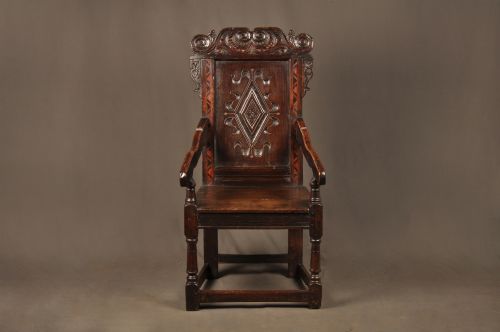
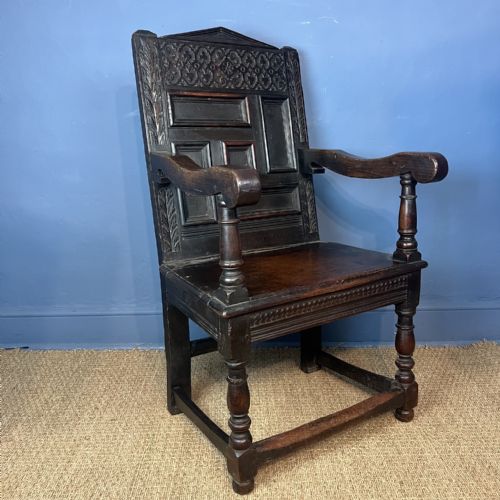
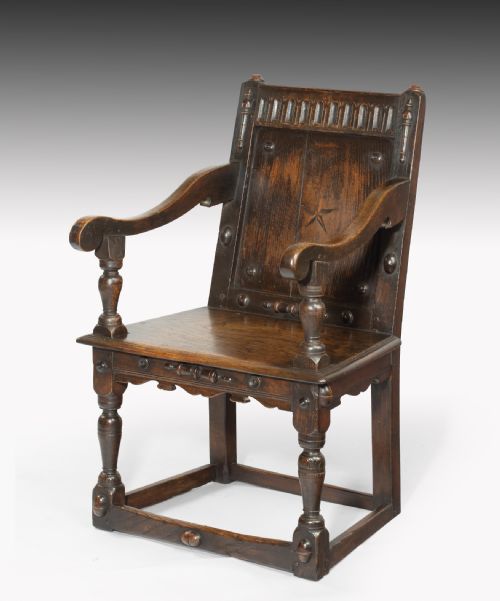
Carved Oak Panel Chair
These carved oak panel chairs are sturdy seats built to last centuries, prized for their traditional joinery and period presence.
What They Are
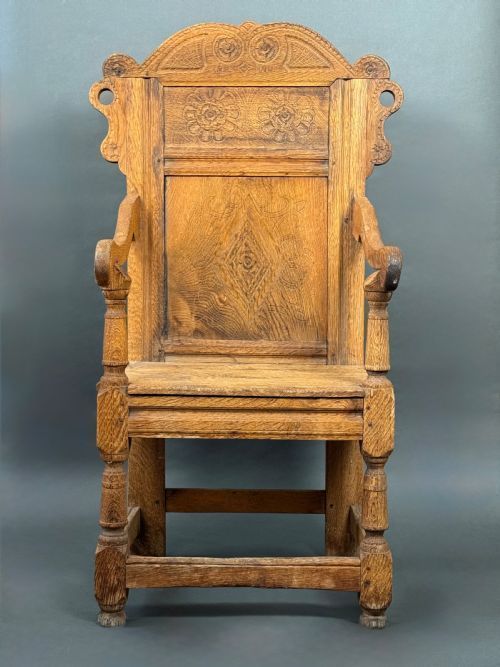
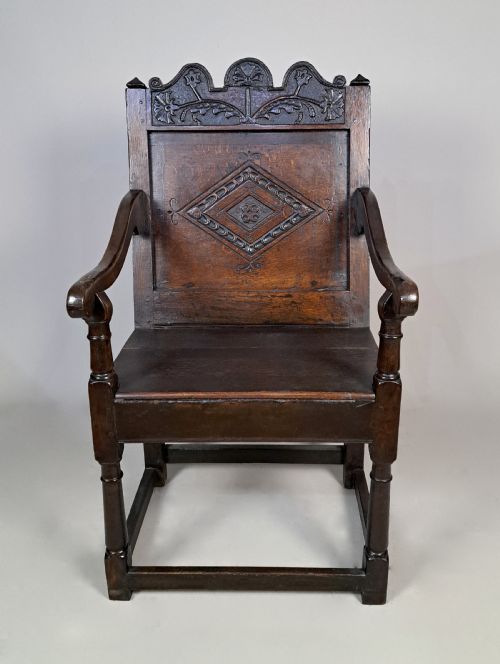
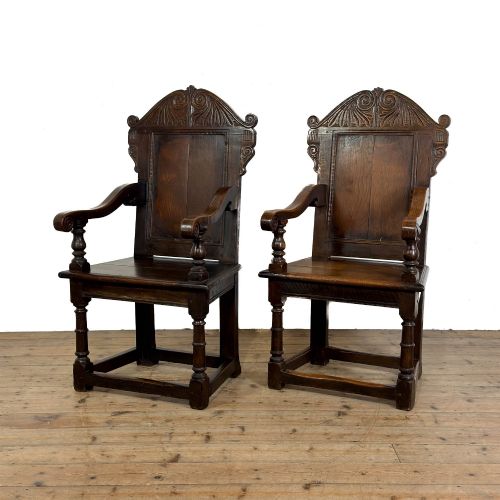
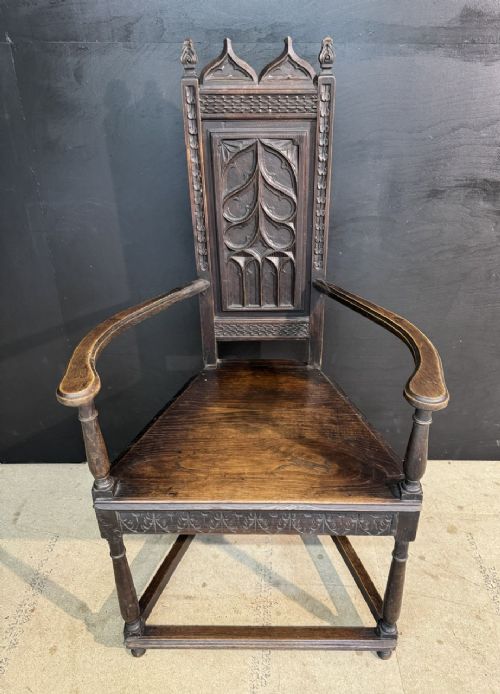
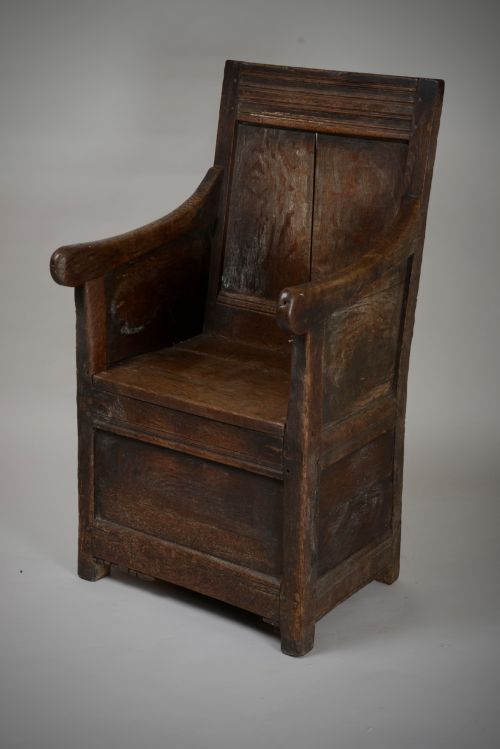
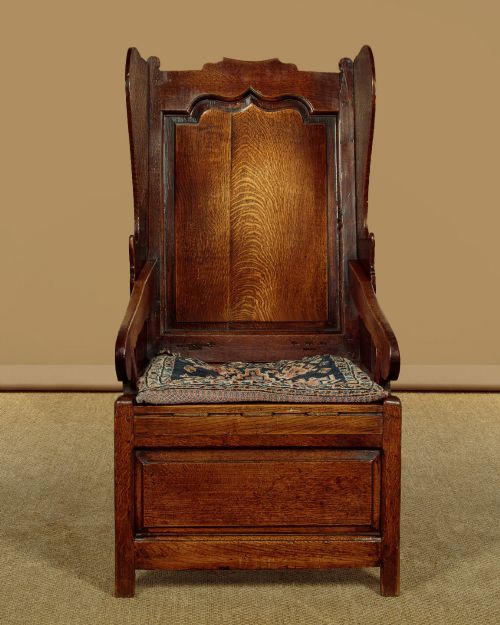
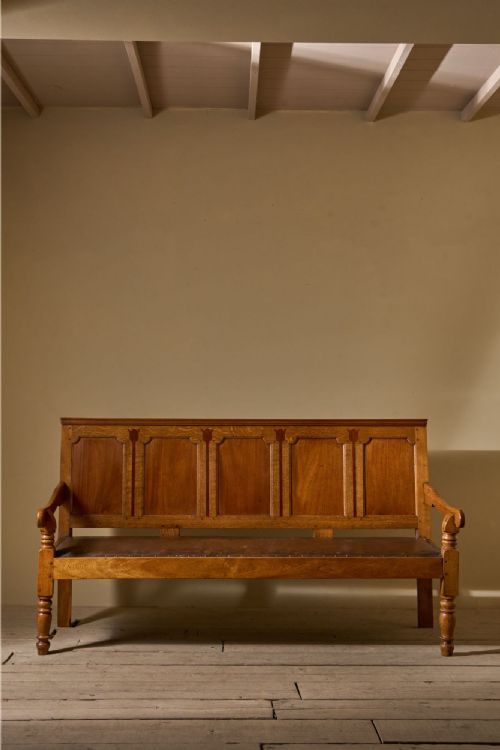
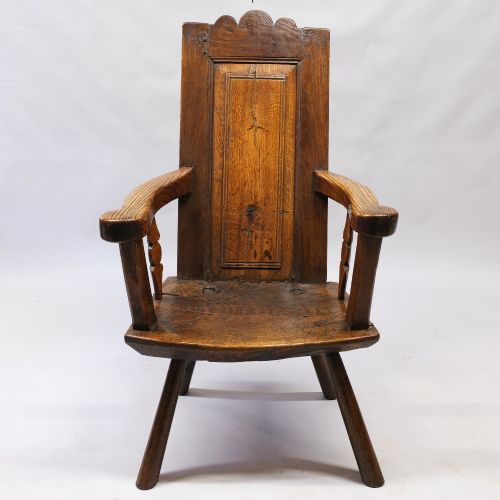
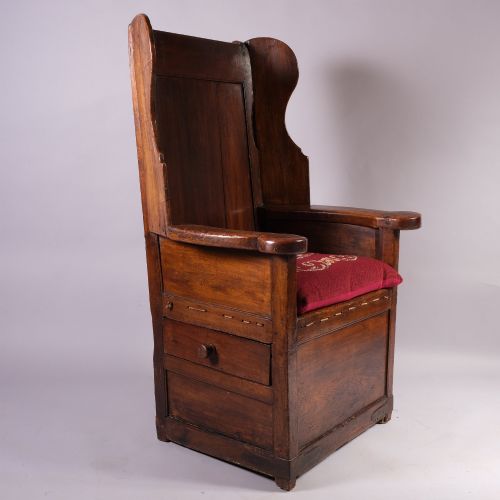
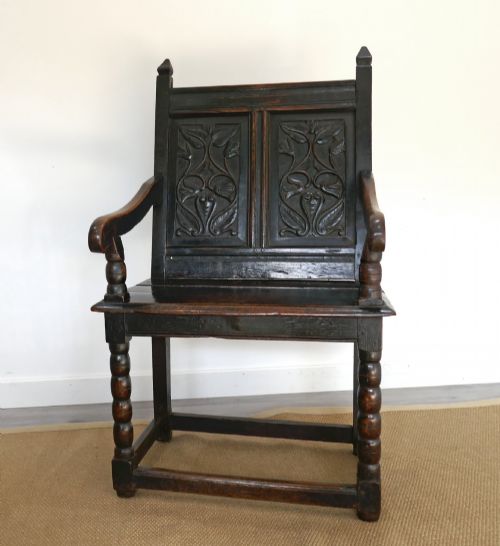
A carved oak panel chair is a substantial seat defined by solid wood construction, high panelled backs, and open arms. When you search for a carved oak panel chair, you encounter examples originating primarily from the seventeenth and eighteenth centuries, reflecting English, Welsh, Lancashire, Cheshire, and Yorkshire origins. These items are strictly armchairs and great chairs, built for domestic use in period interiors.
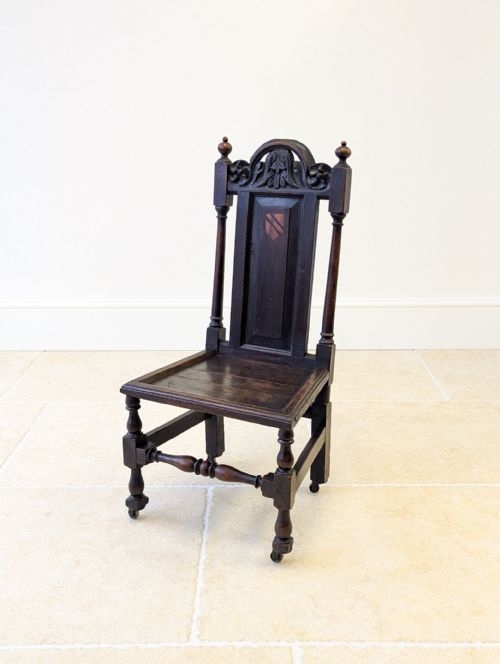
The pieces listed here span the Jacobean period, seventeenth-century English styles, and English Country traditions. You will also find scaled-down versions designed as ladies or children's chairs. Each piece relies on heavy timber framing, reflecting the domestic architecture and joinery methods of its era.
What Varies in Quality
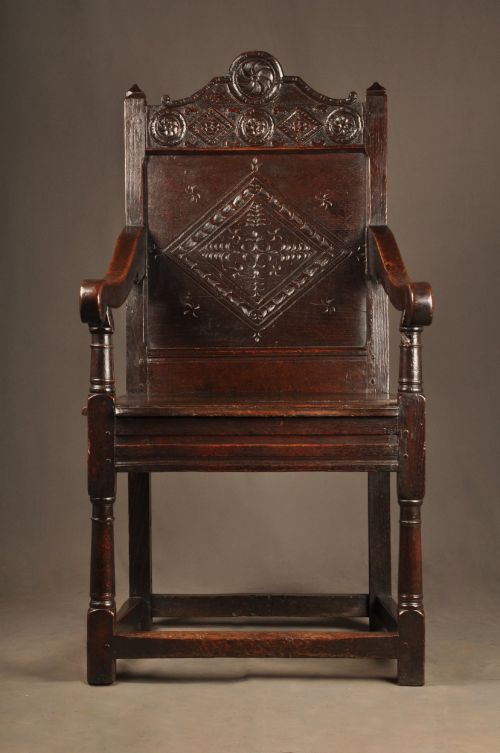
Quality rests in the crispness and depth of the carved detail on the panelled back and the proportion of the arm supports. Pieces featuring elaborate crest rails or regional design characteristics like those from Lancashire or Yorkshire demonstrate higher levels of period craftsmanship.
The integrity of the original solid oak framing and the survival of early surface patination dictate the standing of an example. Minimal timber replacement and well-preserved joints separate standard domestic seating from finer regional survivals.
Retail Price Guide 2026
Typical UK retail prices for carved oak panel chair, calculated from the Sellingantiques database of over a million retail prices indexed since 2003. This retail price guide relies exclusively on Sellingantiques data; no external sources or auction records are used, so the figures do not describe the wider market.
Several miniature child and ladies wainscot chairs survive, proving that sixteenth-century toddlers sat with just as much gravity as their parents.
The Carved Oak Panel Chair Glossary
- Wainscot chair
- A heavy wooden armchair constructed with panelled backs and solid wooden seats, typical of seventeenth-century domestic interiors. This term is frequently used interchangeably with panel chairs.
- Jacobean
- The period of English design spanning the reign of James I, characterised by heavy oak furniture and geometric carving. Pieces from this era display rigorous joinery and formal proportions.
- Mortise and tenon
- A traditional woodworking joint where a projecting tongue fits snugly into a matching cavity, secured with wooden pegs. This method forms the structural skeleton of seventeenth-century oak seating.
- Patina
- The surface sheen and deep colour developed by oak timber over centuries through oxidation, wax, and handling. A rich surface indicates genuine age and minimal harsh stripping.
- Strapwork
- Carved ornamentation consisting of flat interlaced bands forming geometric patterns or scrollwork. This motif is common on the panelled backs of seventeenth-century chairs.
Frequently Asked Questions
What is a wainscot chair?
A wainscot chair is an early form of wooden armchair constructed with panelled backs, solid seats, and heavy armrests. They originated at a time when oak furniture was costly and reserved for the head of a household.
These chairs rely on frame-and-panel joinery rather than upholstery, making them robust survivors from the seventeenth and eighteenth centuries.
How old are these chairs?
The pieces available date primarily from the seventeenth and eighteenth centuries, with specific examples attributed to eras like the Jacobean period. Regional variations often help narrow down their exact decade of origin.
Craftsmen built these items from solid oak, meaning their age is reflected in the wear patterns and dry timber surface.
Where were they made?
These items originate from various English regions, including Yorkshire, Lancashire, Cheshire, and Wales. Local joiners adapted regional design preferences for carved crests and panel layouts.
Geographic attribution is often visible in the specific carving motifs and proportions employed by regional workshops.
How do I care for antique oak?
Antique oak benefits from stable indoor humidity levels, away from direct heat sources and strong sunlight. Regular application of a traditional beeswax polish helps maintain the timber's moisture and surface sheen.
Avoid modern liquid cleaners or silicone polishes, which can penetrate open oak pores and alter the historic finish.