
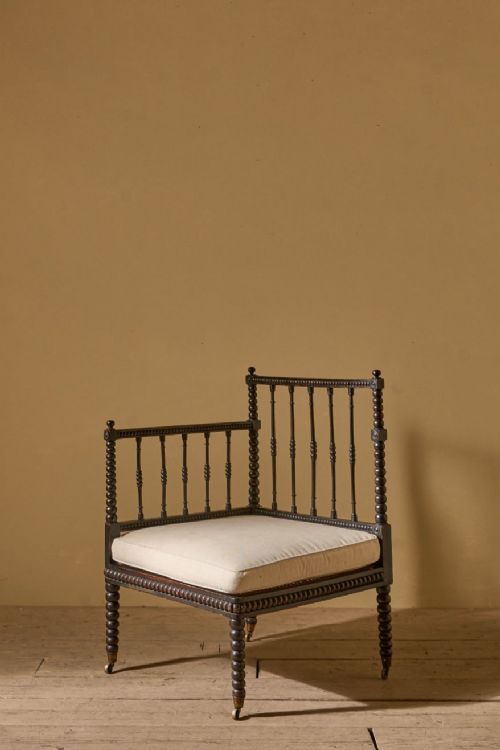

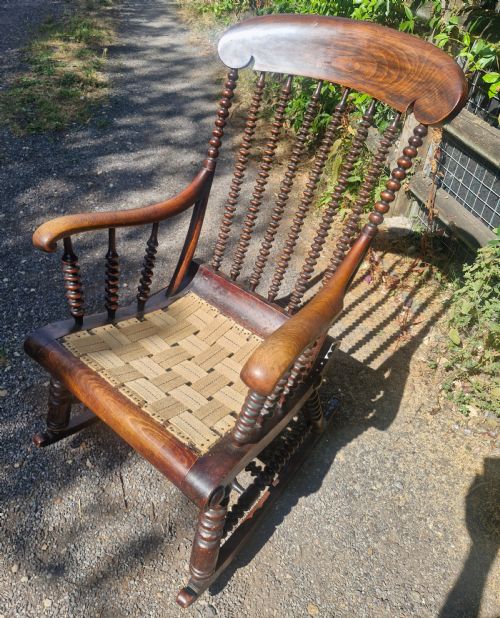
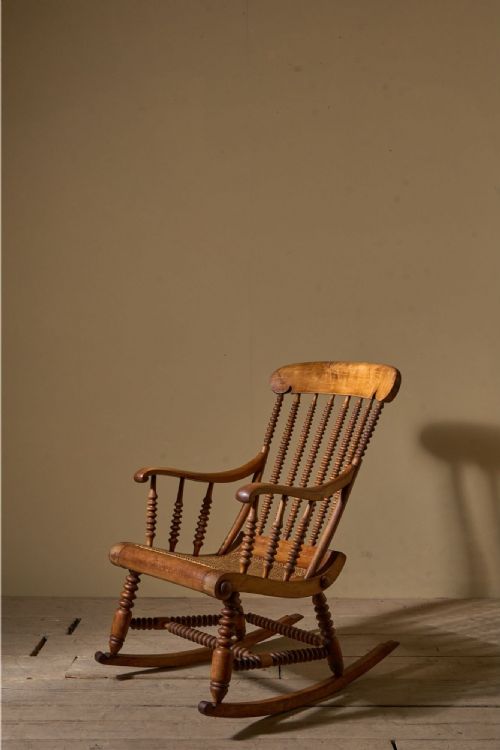
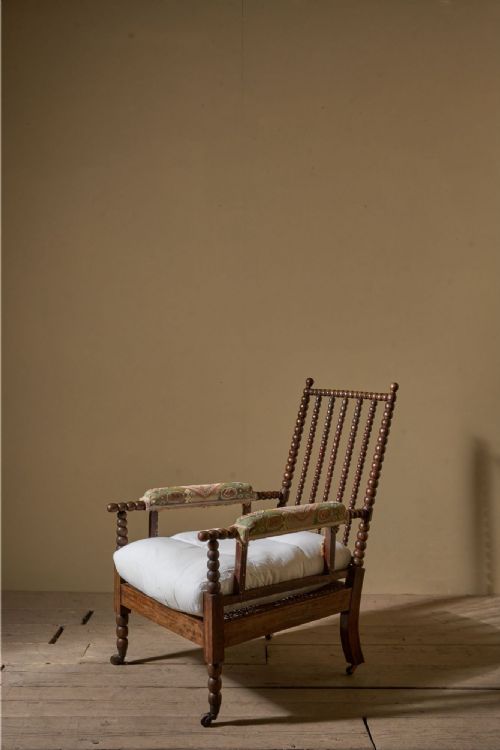


Spool Turned Chair
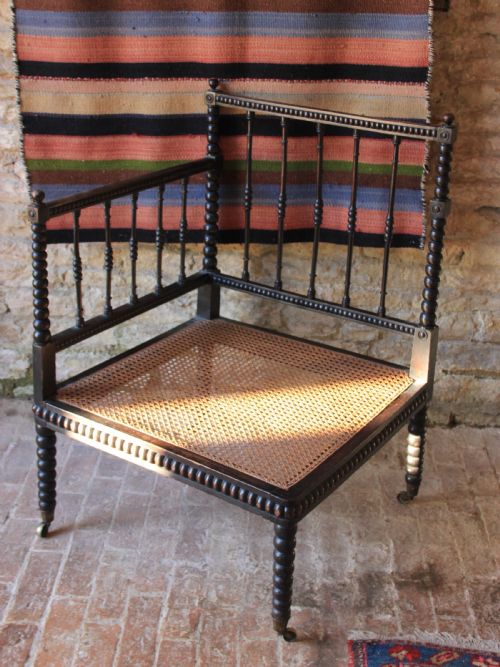
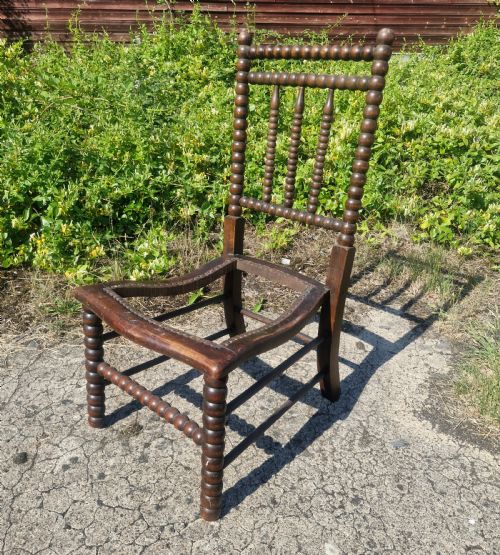
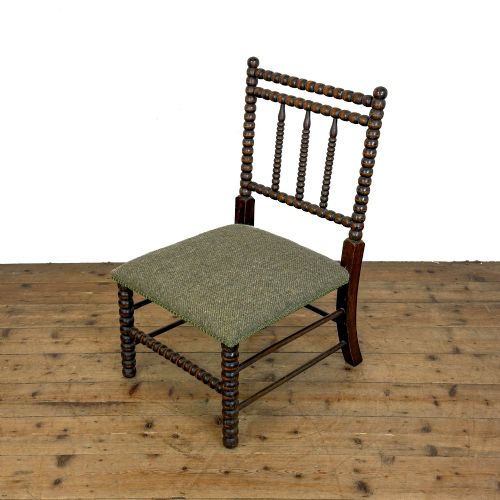
Spool turned chairs offer rhythmic turned framing that transforms simple timber seats into striking statements of decorative carpentry.
Spool Turned Chair
The selections here range from eighteenth century oak examples to nineteenth century Victorian and continental variants. You will frequently encounter ebonised finishes, simulated rosewood, and walnut frames alongside simpler country pieces.
Regional diversity shapes these listings, encompassing English country workshops, Scottish vernacular seating, and Swedish country folk art. Seating variations include open arms, cane inserts, and upholstered pads in fabric, velvet, and textile.
How they were made
Cabinet makers utilised lathe turning to shape solid timbers such as oak, walnut, and regional woods into uniform spool profiles. Sections of wood were mounted and turned sequentially to create the characteristic repeated convex discs.
Surfaces were frequently ebonised or painted to imitate costlier materials like exotic hardwoods, while structural joints relied on traditional pegged or mortice and tenon construction. Seating areas incorporated woven cane, drop in pads, or upholstered cushions covered in textile or velvet.
Spool Turned Chair Retail Price Guide 2026
Typical asking prices for spool turned chair among the pieces listed under this phrase on Sellingantiques today, from the lower quarter to the upper quarter. They describe what is for sale here now, not the wider market.
The listings combine nineteenth century Victorian production with eighteenth century oak items and continental pieces.
What varies in quality
The crispness and uniformity of the lathe turning dictate the visual rhythm of the frame, with sharper spool profiles demanding greater skill from the turner. Timber selection also defines the tier, as dense hardwoods endure centuries of stress better than softer regional woods.
Original surface finishes, whether polished walnut, ebonised coatings, or aged oak patination, preserve the historic integrity of the piece. The survival of period elements like cane seats, brass details, and original upholstery construction distinguishes finer examples.
The Spool Turned Chair Glossary
- Bobbin turning
- A form of lathe turning that produces a sequence of rounded wooden spools resembling thread bobbins along a rail or leg.
- Ebonised wood
- Timber treated with a dark stain or finish to simulate expensive ebony.
- Vernacular furniture
- Domestic objects made by regional craftsmen following local traditions rather than metropolitan academic designs.
- Cane seat
- A seating surface woven from peeled rattan strips, often found on light side chairs and armchairs.
Spool Turned Chair: Frequently Asked Questions
Are spool turned chairs comfortable?
Most variants offer upright support suited to parlour or occasional use, though padded seats and rocking versions provide additional ease.
Adding loose cushions or squabs improves comfort on timber or cane variants.
How do I date a bobbin chair?
Examination of the underlying timber species, joint construction, and tool marks helps establish the period of manufacture.
Eighteenth century pieces typically display denser oak framing, whereas Victorian examples often feature ebonised finishes or walnut.
Can I use a bobbin chair daily?
Sturdy hardwood frames handle regular domestic seating when joints remain tight and stable.
Cane panels and antique textiles require more careful treatment than solid wood surfaces.
What is the difference between spool and bobbin turning?
The terms describe the same lathe turned profile resembling a string of spools or bobbins.
Makers across different regions used both designations interchangeably for identical furniture styles.