




Bobbin Turned Chair
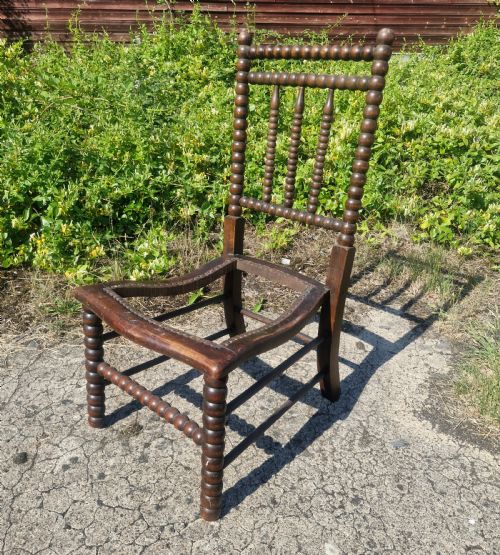
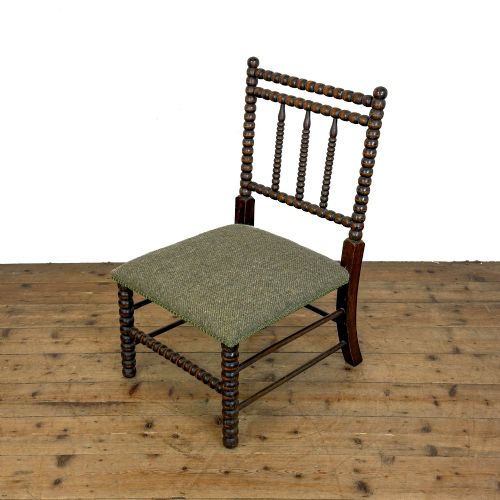
A bobbin turned chair brings tactile geometry to a room, defined by its spindle-turned woodwork reminiscent of textile bobbins.
What a bobbin turned chair is
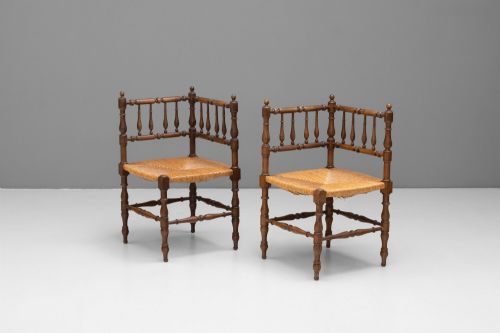
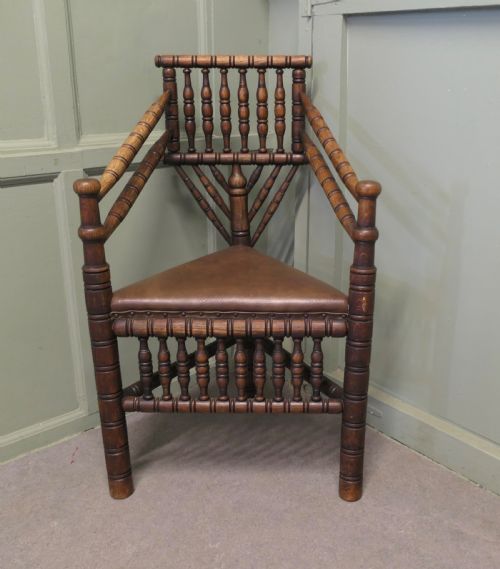
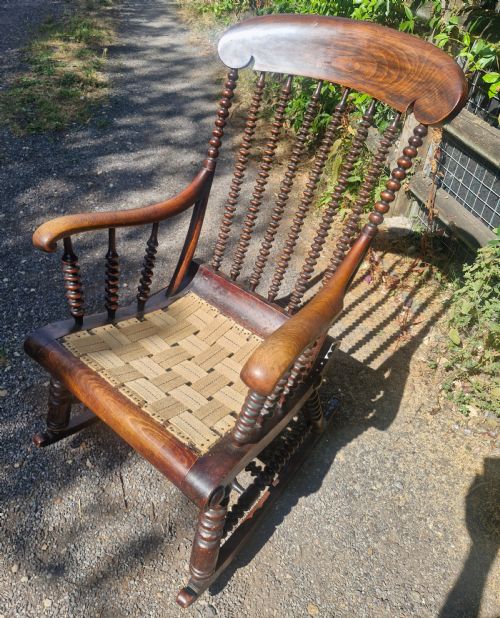
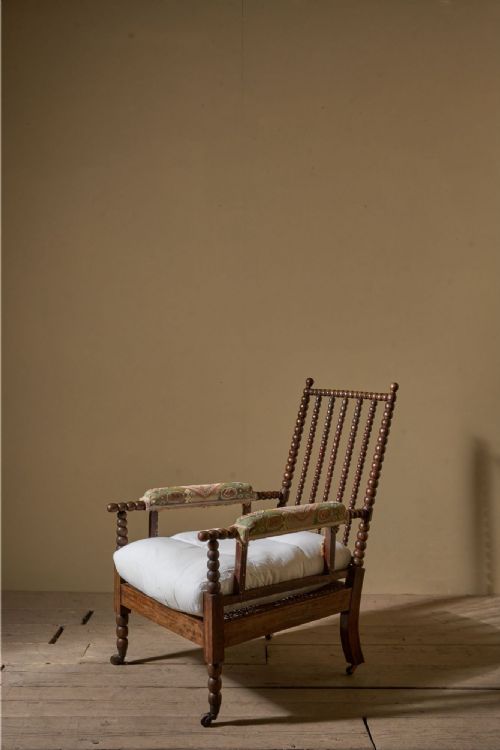
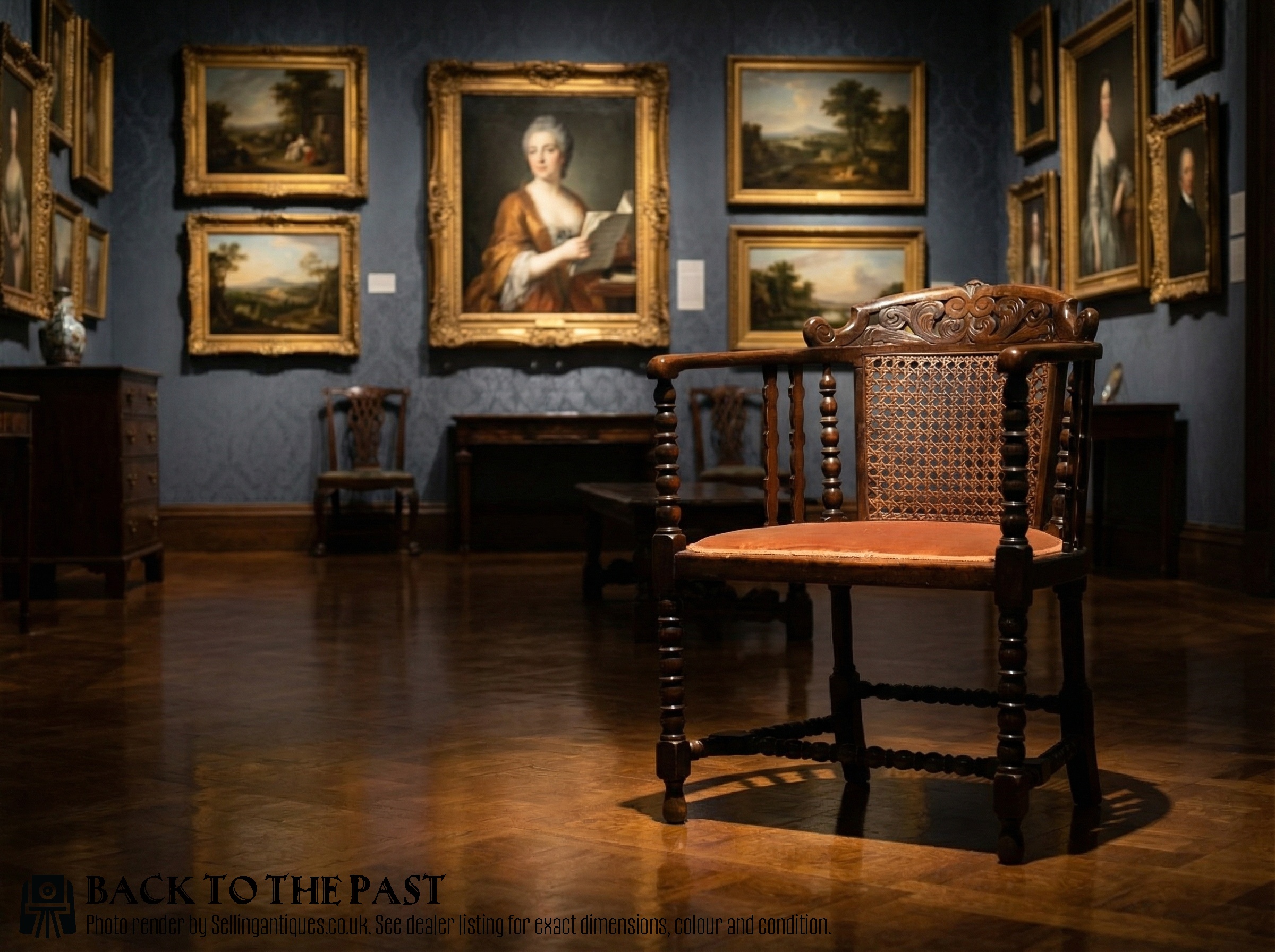
A bobbin turned chair relies on repetitive spherical and cylindrical lathe turnings along its structural framing to create a rhythmic profile. When exploring this selection, buyers encounter formats ranging from low bedroom chairs and slipper chairs to substantial open armchairs and corner seats.
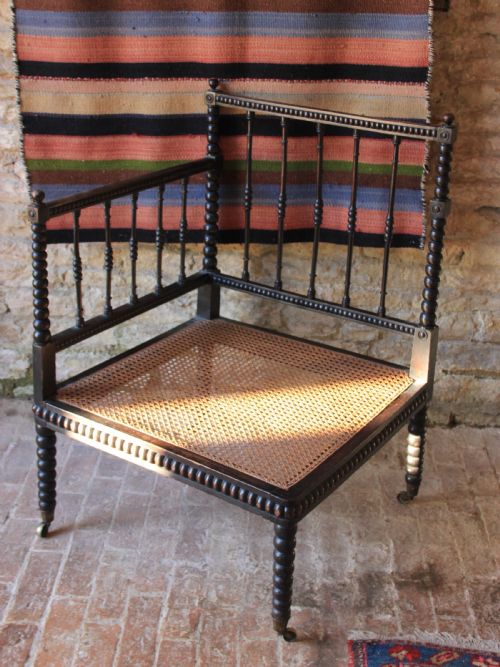
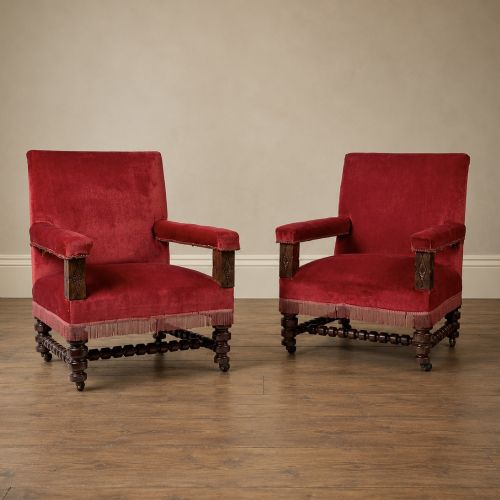
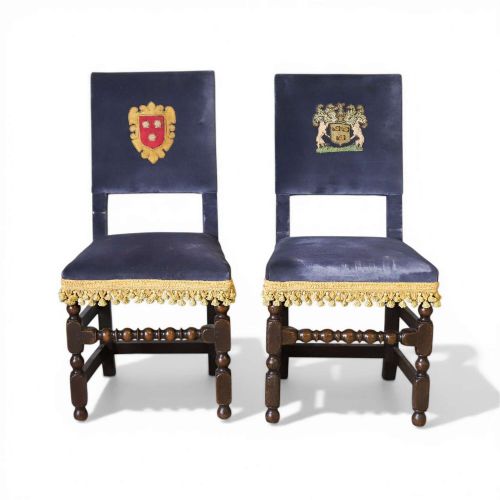
The material vocabulary spans from dark ebonised woods and oak to mahogany and beech, frequently paired with cane seats, leather, or velvet upholstery. Victorian and nineteenth century examples dominate the offerings, occasionally showing Gothic revival details or arts and crafts influences.
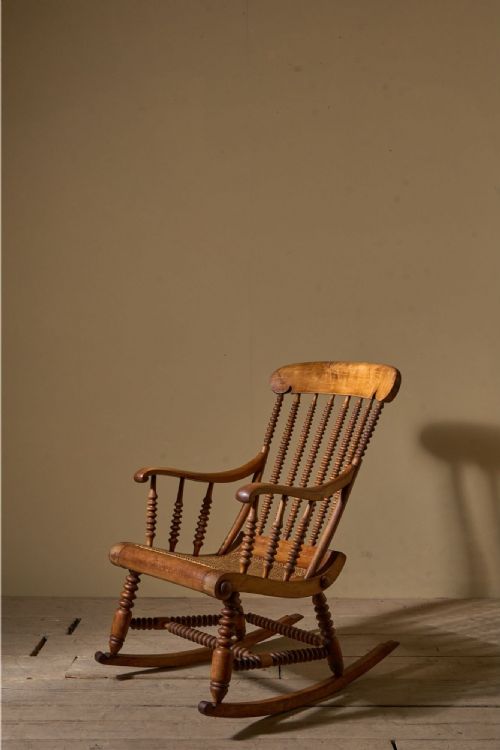
Armchairs and corner chairs represent the most common heavy forms, whilst lighter side chairs and child rocking chairs appear in smaller numbers. Each piece exhibits the signature spoolwork across stretchers, legs, or uprights, transforming basic structural supports into decorative focal points.
How they were made
Cabinetmakers shaped these frames on a lathe, cutting identical circular blocks and coves into solid hardwoods like oak, mahogany, and beech. This labour-intensive process required precise hand tool work to ensure the spool motifs aligned symmetrically across stretchers and uprights.
Upholstered versions incorporate traditional stuffing materials beneath textiles such as velvet and leather, while cane-seated variants utilise hand-woven natural material threaded through frame drillings. Certain pieces include brass cup castors fixed to the feet to aid mobility.
Retail Price Guide 2026
Typical UK retail prices for bobbin turned chair, calculated from the Sellingantiques database of over a million retail prices indexed since 2003. This retail price guide relies exclusively on Sellingantiques data; no external sources or auction records are used, so the figures do not describe the wider market.
Makers occasionally turned out miniature child rocking chairs and deportment chairs featuring the exact same bobbin spoolwork as adult furniture.
What varies in quality
The crispness of the lathe turning dictates visual success, where sharply defined spool profiles distinguish superior joinery from soft, worn mouldings. Heavier timbers and substantial framing provide structural integrity that lighter secondary woods lack.
Intact original surfaces, whether polished oak, ebonised finishes, or applied black lacquer, preserve the piece's historical integrity far better than unsympathetic modern stripping or over-finishing. Integrated elements like undamaged cane work and original brass castors elevate the standing of a chair.
LIBERTY of LONDON·C.Hindley & Sons
The Bobbin Turned Chair Glossary
- Bobbin turning
- A type of lathe work producing a series of rounded wooden spheres or discs resembling thread bobbins along a shaft. This decorative woodwork forms the primary visual identifier for the entire category.
- Ebonised wood
- Timber treated with a dark stain or finish to imitate expensive ebony. Makers frequently utilised this technique during the nineteenth century to create high-contrast decorative seating.
- Corner chair
- A seat designed to fit into the corner of a room, featuring a diagonal orientation with a backrest wrapping around two adjacent sides. These often incorporate bobbin turned supports beneath a cane or upholstered seat.
- Slipper chair
- A low-seated bedroom chair traditionally used by women while putting on shoes. These pieces sit close to the floor and frequently feature turned frames.
- Spindle
- A slender, turned rod of wood used as a structural or decorative baluster in chair backs and underframes. Bobbin turning represents a specific, highly ornate evolution of the standard spindle.
Frequently Asked Questions
What period are bobbin turned chairs from?
Most examples date from the nineteenth century, encompassing Regency, Victorian, and Arts and Crafts periods.
Earlier iterations appear from the seventeenth century under the guise of turner's chairs, though the majority on the market reflect later nineteenth century revivals.
Where were bobbin turned chairs placed?
These chairs served various domestic functions, from fireside armchairs and office swivel seats to bedroom slipper chairs and hall seating.
Corner chairs and side chairs filled awkward interior angles, adding decorative woodwork without blocking walking space.
Are bobbin turned chairs comfortable?
Comfort varies significantly depending on the specific form, with upholstered armchairs and padded Victorian desk chairs offering substantial support.
Stiff wooden corner chairs and low decorative seats prioritize visual geometry and posture over lounging.
How do I identify a Victorian bobbin turned chair?
Victorian pieces often utilise ebonised hardwood, walnut, or oak, frequently incorporating accessories like brass cup castors or button-tufted upholstery.
Constructive details and secondary timbers help distinguish these nineteenth century interpretations from earlier seventeenth century antecedents.