



Dark Oak Corner Chair
A dark oak corner chair brings solid timber and clever space-saving design to a forgotten room angle.
Dark Oak Corner Chair
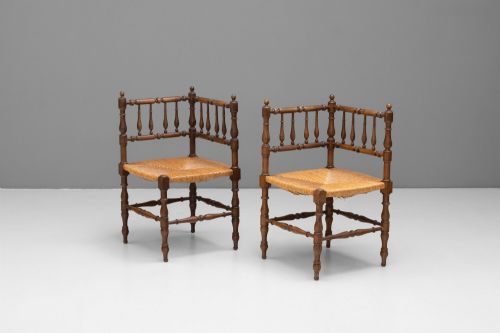
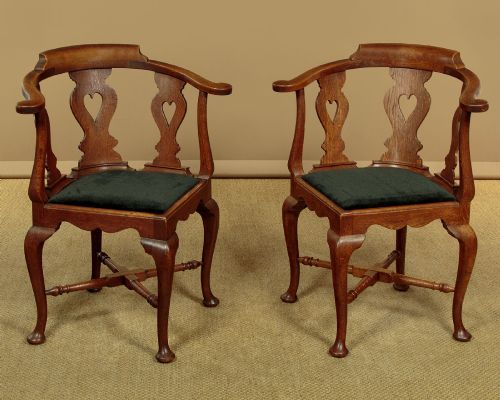
A dark oak corner chair is designed to fit snugly into a room junction, offering a practical seating option where standard chairs fail. You will encounter various formats spanning the eighteenth, nineteenth, and early twentieth centuries, with Victorian and Edwardian examples appearing frequently.
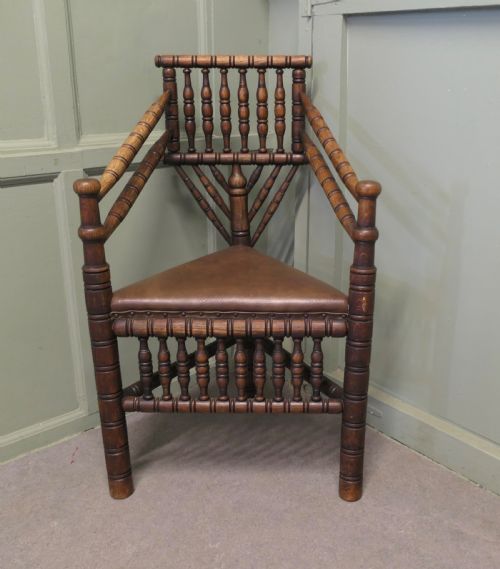
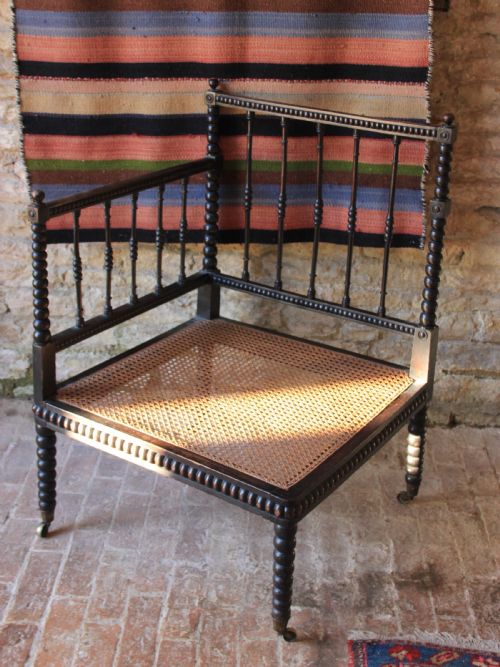
The selection ranges from simple vernacular forms to elaborate revival pieces. Examples include turner's chairs, bobbin-turned models, and heavy Gothic Revival armchairs alongside traditional corner seats.
Most pieces utilise solid timber frames designed to support seated occupants in a diagonal posture. Makers often fitted these seats with rush, cane, or upholstered pads in fabric and leather.
Materials and construction methods
Makers relied primarily on solid oak, shaping structural components through turning, carving, and joinery. Secondary woods and beech occasionally appear alongside ebonised wood elements within specific revival styles.
Surface details often involve carved decoration, spindle turnings, and pegged joints. Seat bases frequently incorporate woven rush, cane panels, or drop-in upholstered pads finished in leather or fabric.
Dark Oak Corner Chair Retail Price Guide 2026
Typical asking prices for dark oak corner chair among the pieces listed under this phrase on Sellingantiques today, from the lower quarter to the upper quarter. They describe what is for sale here now, not the wider market.
Several heavy old saxon chairs are ready to make you feel like a minor Anglo-Saxon monarch while you check your emails.
Assessing craftsmanship and condition
Quality rests in the crispness of the timber carving and the integrity of the structural joints. Superior examples display thoughtful proportions and substantial timber thickness rather than thin, machine-cut components.
The choice of seat material and the preservation of the original dark finish influence the character of each piece. Finer versions maintain tight turnings and stable frames without excessive replacement timber.
S&H Jewell
The Dark Oak Corner Chair Glossary
- Turner's chair
- A sturdy seat constructed entirely from turned wooden spindles and round rails. These heavy designs draw inspiration from medieval prototypes.
- Bobbin turning
- A form of lathe work that produces a series of rounded, bead-like shapes resembling spools of thread along a wooden shaft. This technique appears frequently on nineteenth-century frames.
- Rush seat
- A bottom woven from dried marsh grass twisted into cords. This traditional seating surface provides a resilient and natural texture.
- Gothic Revival
- A nineteenth-century design movement that reinterpreted medieval architectural motifs. Pieces in this style often feature pointed arches and heavy tracery carvings.
- Bergère
- An enclosed upholstered armchair with exposed wooden framing and woven cane sides. French examples introduce lighter decorative elements to the dark timber.
Dark Oak Corner Chair: Frequently Asked Questions
Where should I place a dark oak corner chair?
These seats suit awkward room junctions, empty landings, or study corners where standard square chairs obstruct movement.
Their diagonal footprint allows them to utilise dead space effectively while providing a functional place to sit.
How do I care for rush and cane seats?
Maintain natural rush and cane by keeping them away from direct heat sources and damp environments.
Light dusting and occasional damp wiping help keep the fibres supple over decades of use.
What is an old saxon chair?
Old Saxon is a nineteenth-century term used by makers to describe heavily turned chairs inspired by early medieval designs.
These pieces typically feature low backs, thick spindles, and solid wooden seats.
How can I tell a Victorian copy from an older piece?
Examination of tool marks, joint construction, and timber oxidation reveals the manufacturing era.
Eighteenth-century examples display hand-cut joinery and dense grain, whereas Victorian revival pieces often incorporate machine turnings and uniform patination.