
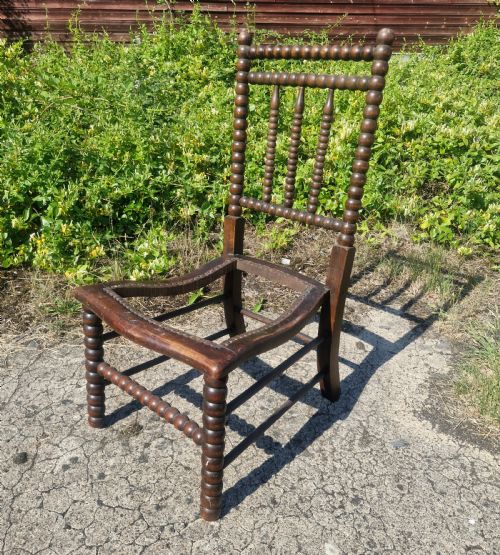
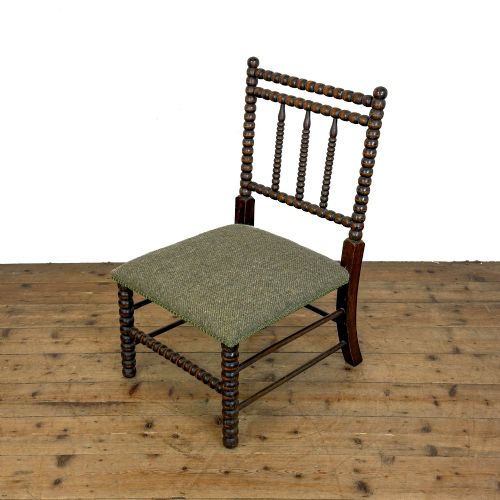


Victorian Spool Chair
These nineteenth-century seating pieces bring distinct turned woodwork into a room.
Victorian Spool Chair
A victorian spool chair brings distinct turned woodwork into a room through repeated cylindrical shapes carved along the frame. Buyers search for these pieces to add texture and historical character to a interior space.
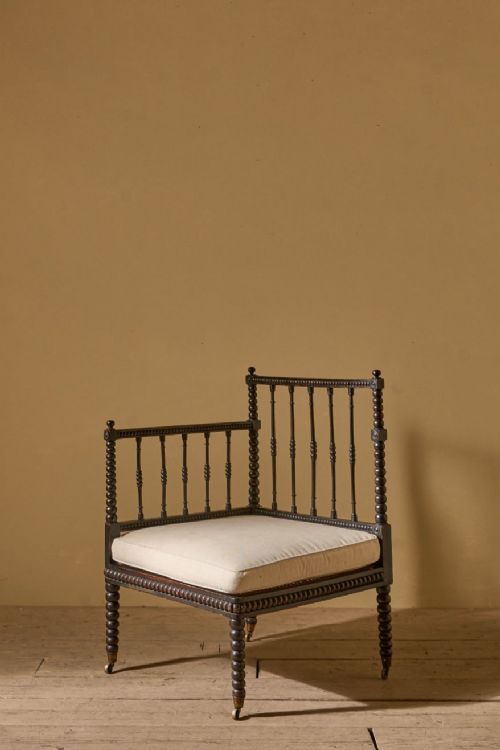
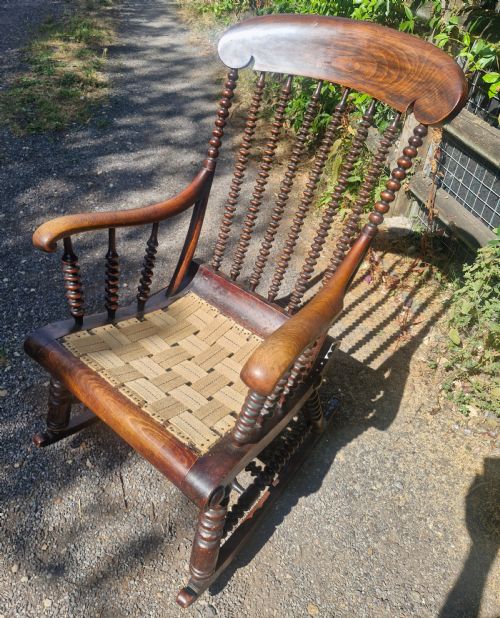
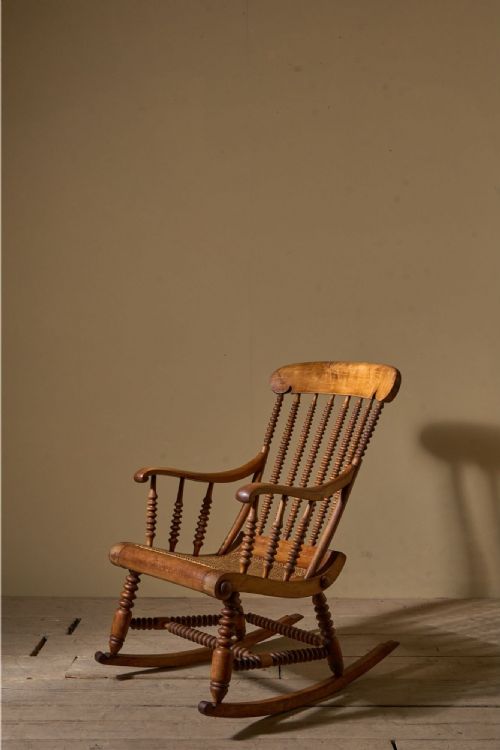
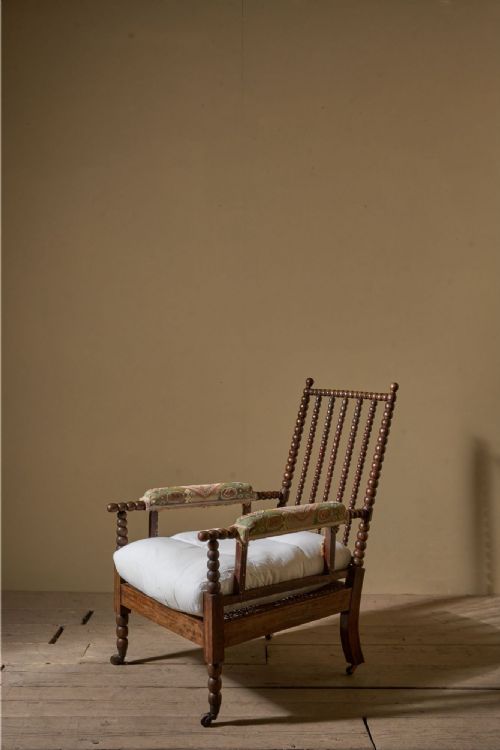
The versions most frequently met on this page date from the nineteenth century, including specific years from the mid to late Victorian period. Forms range widely from armchairs and rocking chairs to corner chairs, daybeds, and slipper chairs.
Regional variations appear across the listings, encompassing English country, Victorian country, and Scottish vernacular styles. These seating options often feature low seats, open arms, or cane inserts alongside upholstered elements.
How they were made
Cabinet makers constructed these frames from various hardwoods such as oak and walnut, alongside ebonised wood and simulated rosewood finishes. Turned elements were shaped individually on a lathe before assembly into structural frames.
Seating portions incorporated woven cane, fabric, and other textiles, sometimes accompanied by cushions. Brass accents occasionally supplemented the wooden framework on specific chairs and daybeds.
The inventory records styles spanning Victorian, Victorian country, Jacobean revival, English country, and Scottish vernacular.
What varies in quality
The distinction between tiers rests upon the precision of the woodturning and the selection of primary timbers such as walnut or ebonised hardwood. Heavier framing and sophisticated regional joinery elevate certain vernacular examples above simpler production pieces.
Condition of the turned components and the integrity of original cane or textile elements influence the overall standing of an individual chair. Cohesion of the bobbin detailing across structural members indicates higher workshop competence.
The Victorian Spool Chair Glossary
- Bobbin turning
- A form of woodturning characterised by a series of cylindrical swellings resembling spools or bobbins threaded along a shaft. This decorative turning defines the entire visual structure of the frame.
- Ebonised wood
- Timber treated with a chemical stain or pigment to imitate heavy ebony. This dark finish highlights the repeated profiles of turned components.
- Cane
- Plant material woven into open mesh panels for seats and backs. It offers lightweight durability in vernacular seating.
- Vernacular
- Objects designed by local makers following regional traditions rather than high academic styles. These pieces reflect specific functional needs and local material availability.
- Daybed
- An elongated seating form designed for reclining. Nineteenth-century examples adapt turned framing to extended platforms.
Victorian Spool Chair: Frequently Asked Questions
What is a spool chair?
A spool chair is nineteenth-century seating defined by wooden frames shaped with repeated cylindrical turnings resembling bobbins or spools.
These pieces encompass armchairs, rocking chairs, and daybeds constructed from various hardwoods.
How do I identify a Victorian spool chair?
Identification relies on the characteristic bobbin-turned woodwork applied across uprights, armrests, and stretchers. Evidence shows these pieces date predominantly from the nineteenth century.
Styles range from English country and Scottish vernacular to formal ebonised and simulated rosewood designs.
Were spool chairs used in bedrooms?
Certain forms, such as low seat bedroom chairs and slipper chairs, were designed specifically for dressing rooms and sleeping quarters. Their lower profiles suited domestic tasks associated with private rooms.
Other variations like armchairs and rocking chairs functioned primarily in sitting rooms and country house interiors.
What woods were used for spool chairs?
Makers utilised hardwoods including oak, walnut, and ebonised wood to build the turned frames. Simulated rosewood finishes also appear on nineteenth-century examples.
Structural elements were frequently paired with cane seats, fabric upholstery, and brass details.
Are spool chairs comfortable?
Comfort depends heavily on the specific form, ranging from open armchairs with cushions to low bedroom seating and rocking chairs. The wooden turnings provide structural rigidity while upholstery or cane provides the primary support surface.
Adding cushions to open armchairs with cane seats alters the seating posture.