


Accent Chair with Castors
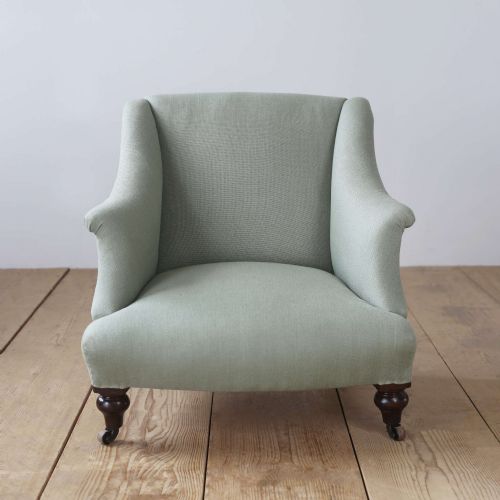
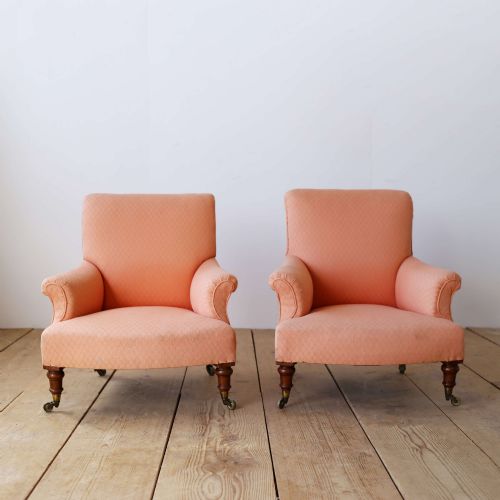
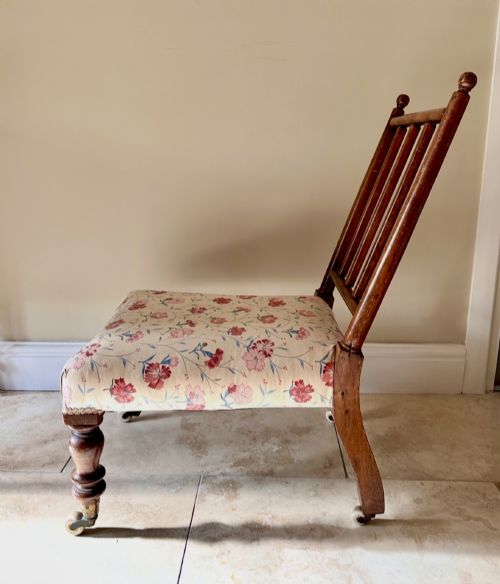
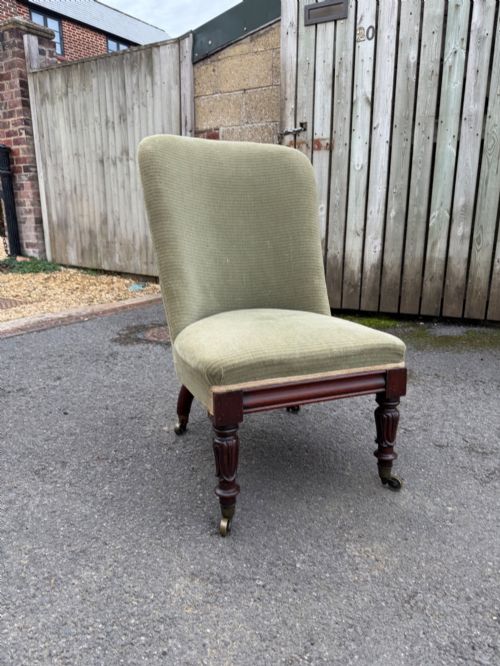
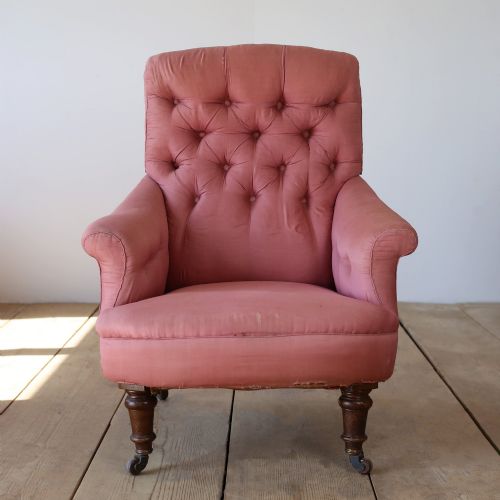
An accent chair with castors brings movable nineteenth and early twentieth century seating into a room, offering both mobility and period character.
Accent Chair with Castors
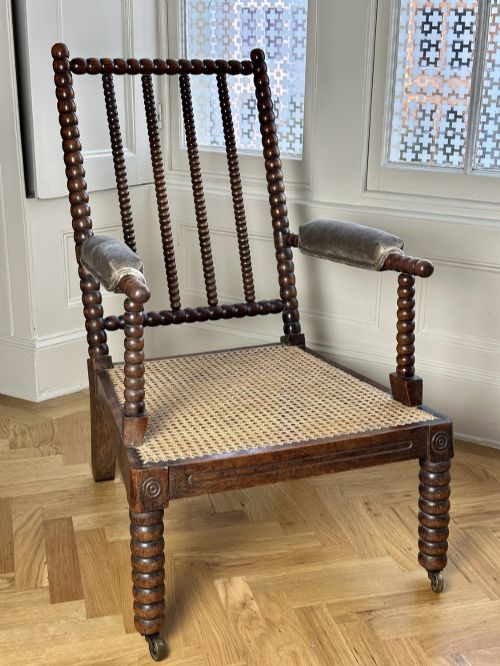
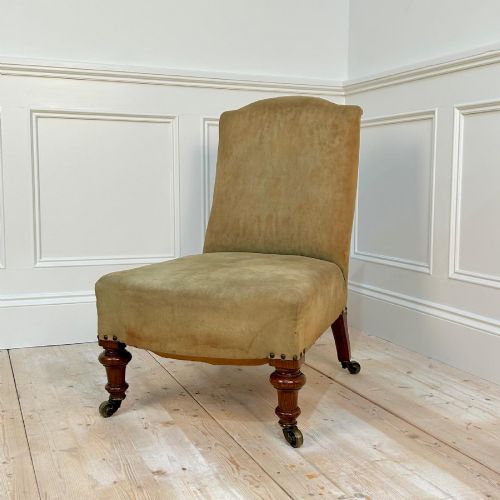
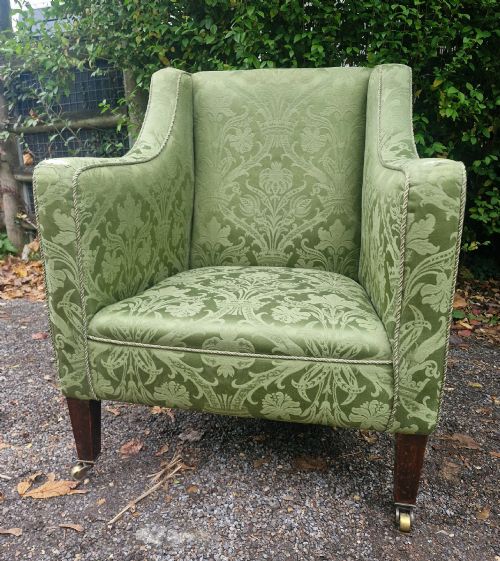
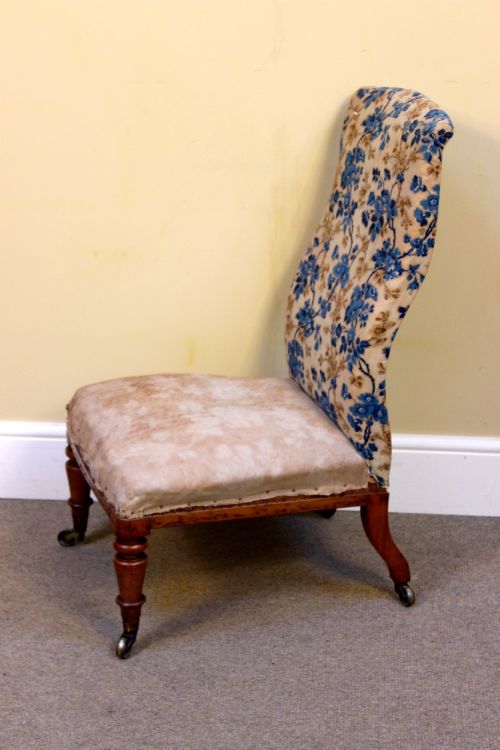
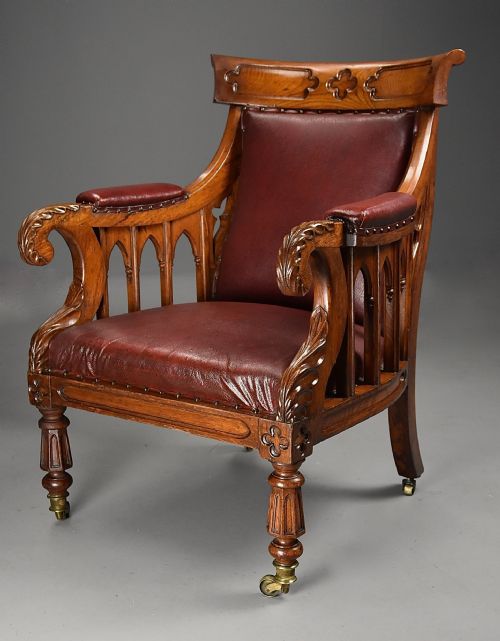
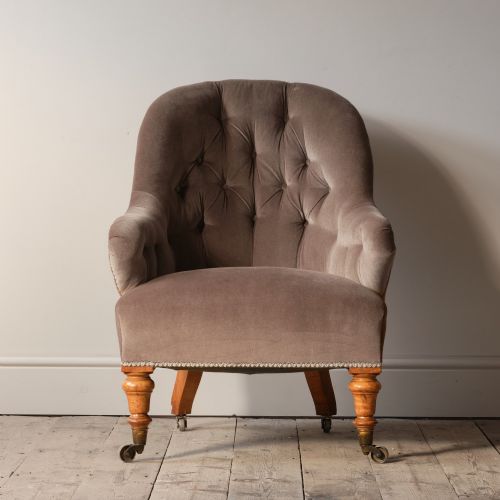
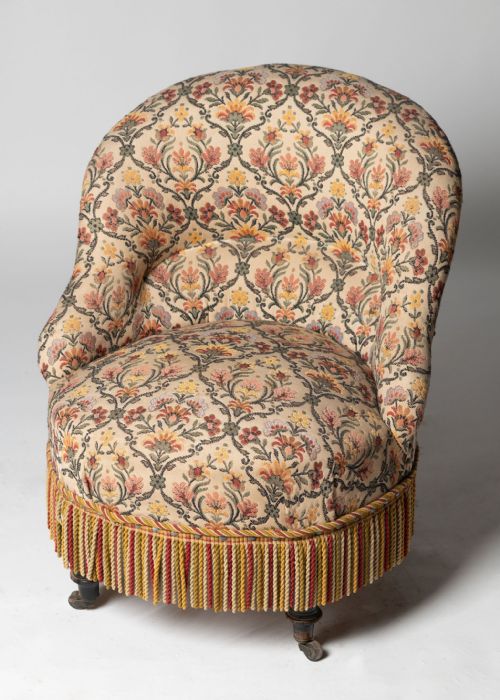
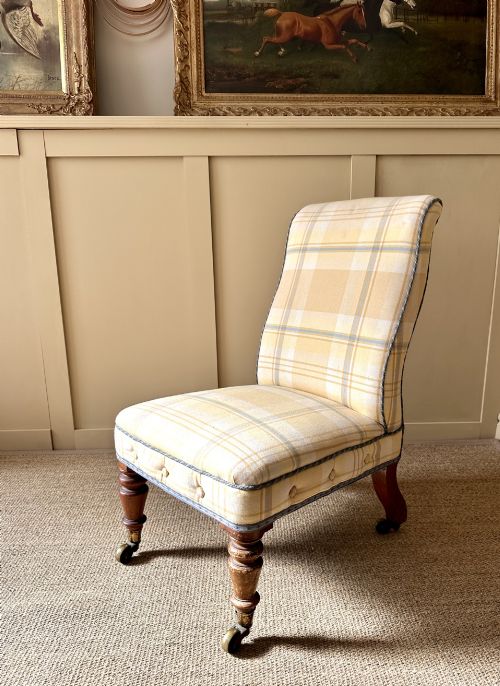
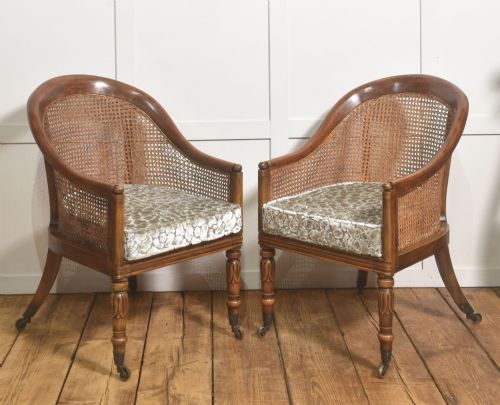
An accent chair with castors spans the nineteenth century, Victorian, Edwardian, and nineteen-twenties periods, encompassing forms such as armchairs, side chairs, slipper chairs, and bedroom chairs. These pieces appear in styles including Victorian, Edwardian, French Art Deco, and Victorian Rococo Revival.
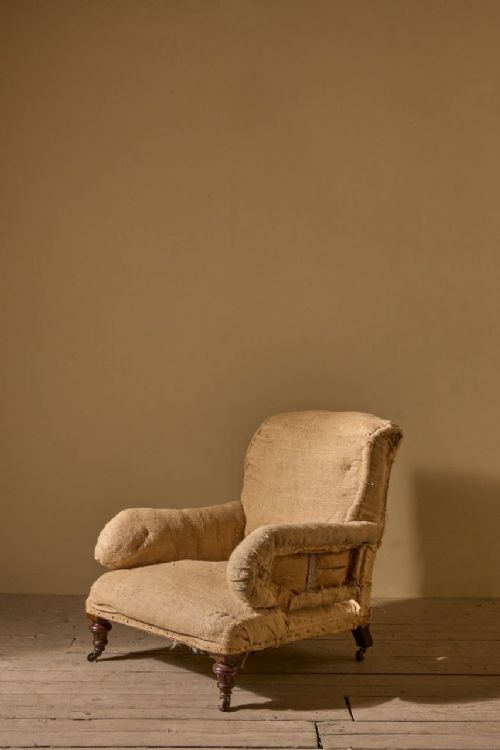
The inventory on this page consists predominantly of Victorian and Edwardian armchairs and bedroom chairs, frequently mounted on castors to allow easy movement across carpets and wooden floors in period drawing rooms and chambers.
How they were made
Frames are constructed from woods such as mahogany, walnut, and birds eye maple, providing a sturdy skeleton for upholstered seating. Brass fittings commonly form the castors attached to the turned or straight legs.
Seating and backs utilise traditional upholstery techniques, often finished with buttoning, tapestry fabric, needlework covers, leather, velvet, or kilim. Frames occasionally show historical re-upholstering work carried out in later decades.
Accent Chair with Castors Retail Price Guide 2026
Typical asking prices for accent chair with castors among the pieces listed under this phrase on Sellingantiques today, from the lower quarter to the upper quarter. They describe what is for sale here now, not the wider market.
Even a Victorian bedroom chair insisted on wearing tiny brass shoes to roll across the carpet.
What varies in quality
The distinction between ordinary and exceptional examples rests upon the refinement of the timber frame, the carving of wooden components like turned legs, and the retention of original upholstery schemes where applicable. Maker attributions significantly elevate an armchair above standard commercial production of the period.
The integrity of the structural joinery and the original brass castor hardware also determine the tier of the piece. Chairs retaining their period textiles or high-grade replacement fabrics demonstrate superior preservation.
Howard and Sons·J.Mills
The Accent Chair with Castors Glossary
- Castor
- A small wheel mounted on a swivel assembly attached to the base of a furniture leg to facilitate movement. These brass fittings are typical on nineteenth-century seating.
- Slipper chair
- A low--seated upholstered chair traditionally used in bedrooms for dressing. They often feature castors to allow repositioning.
- Needlework
- Hand-stitched textile used as a furniture cover. Such covers demonstrate decorative handcrafting.
- Button back
- An upholstery style where depressions are formed in the padding by stitches pulled tight and secured with buttons. This creates a tufted surface.
- Kilim
- A flat-woven carpet or rug material utilised here as upholstery fabric. It provides a distinct textile pattern on period frames.
Accent Chair with Castors: Frequently Asked Questions
What is an accent chair with castors?
An accent chair with castors is a movable nineteenth or early twentieth century seat mounted on small wheels. These pieces include armchairs, side chairs, and bedroom chairs.
They combine wooden frames of mahogany, walnut, or birds eye maple with upholstered seating in leather, velvet, or tapestry.
How do I date a Victorian armchair?
Dating relies on stylistic markers such as Victorian Rococo Revival curves, Edwardian proportions, or specific construction details. Frame timbers like birds eye maple also help indicate the period.
Makers' stamps or labels, when present, provide definitive chronological evidence.
Why are castors fitted to chairs?
Castors allowed nineteenth-century residents to move heavy upholstered armchairs across thick carpets or polished floorboards with ease. This mobility suited the flexible arrangement of drawing rooms.
Brass castors on turned front legs are a standard feature of Victorian bedroom chairs and club armchairs.
Are these chairs newly upholstered?
Some pieces retain their original fabrics, while others feature new velvet, geometric cloth, needlework, or kilim upholstery applied during modern conservation or historical updates.
Listings specify whether a piece has received new upholstery or maintains period covers.
How do I live with an antique armchair?
Place the chair where its wooden frame and upholstered back can be appreciated as a focal point in a room. Ensure the castors are used carefully on delicate flooring.
Regular gentle maintenance of the wood and fabric preserves the condition of these nineteenth-century seats.