

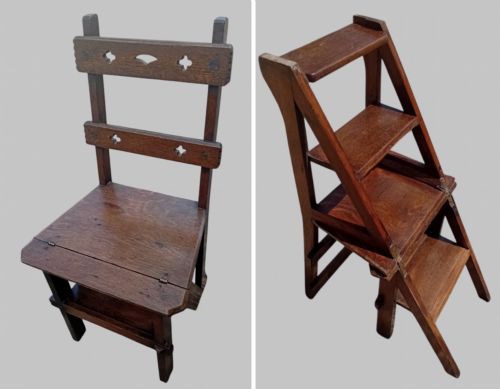


Victorian Oak Library Chair
A victorian oak library chair brings heavy timber and leather into a study, offering a sturdy seat built for long hours of reading.
Victorian Oak Library Chair
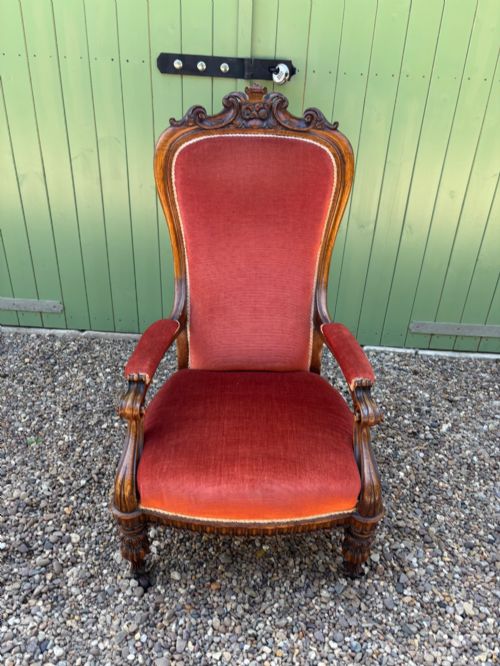
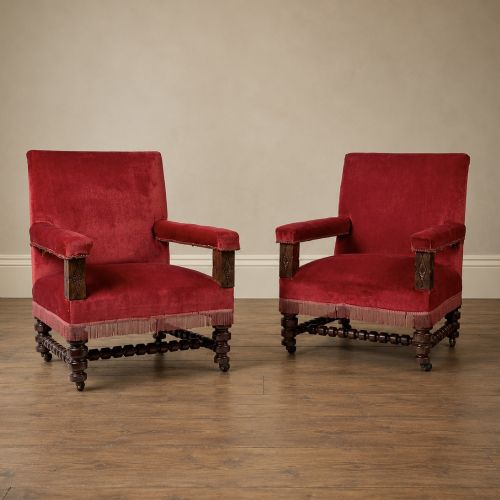
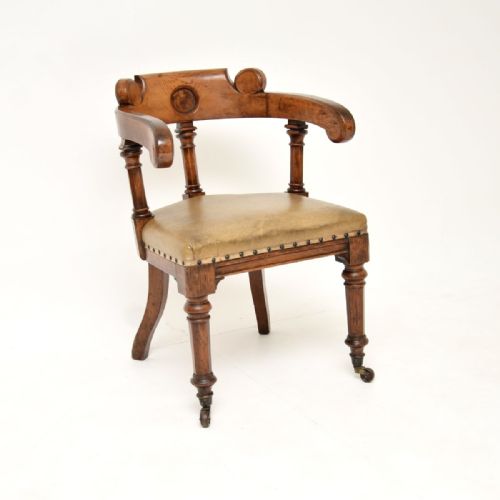
A victorian oak library chair is a substantial seating form designed for heavy daily use in studies, offices, and private libraries during the nineteenth century. These pieces appear in forms ranging from standard open armchairs and swivel desk chairs to ingenious metamorphic variants that fold down into library steps.
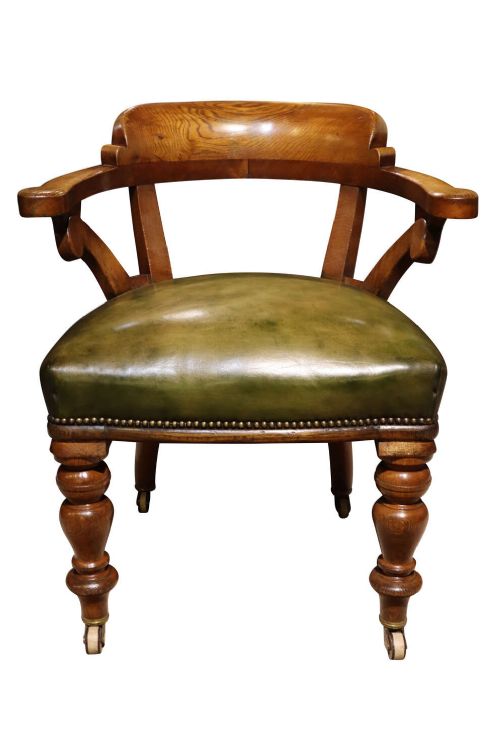
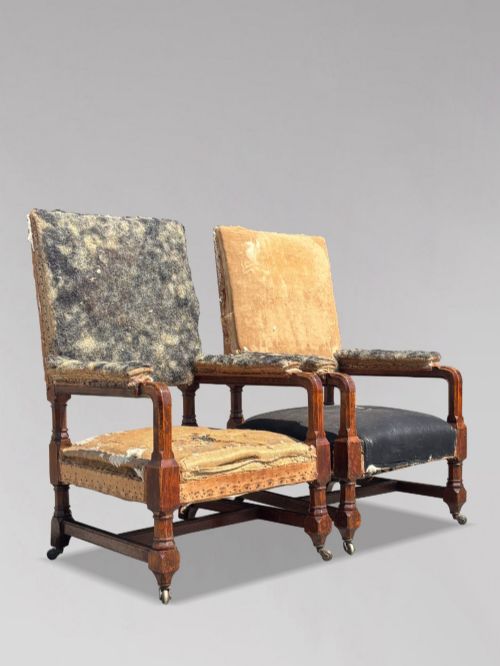
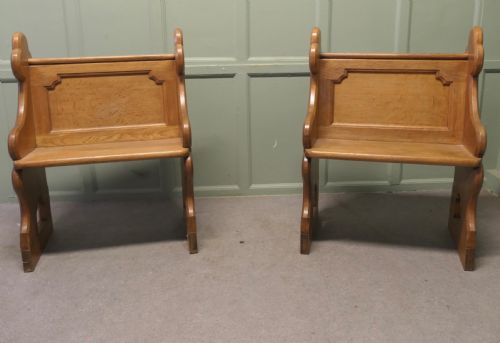
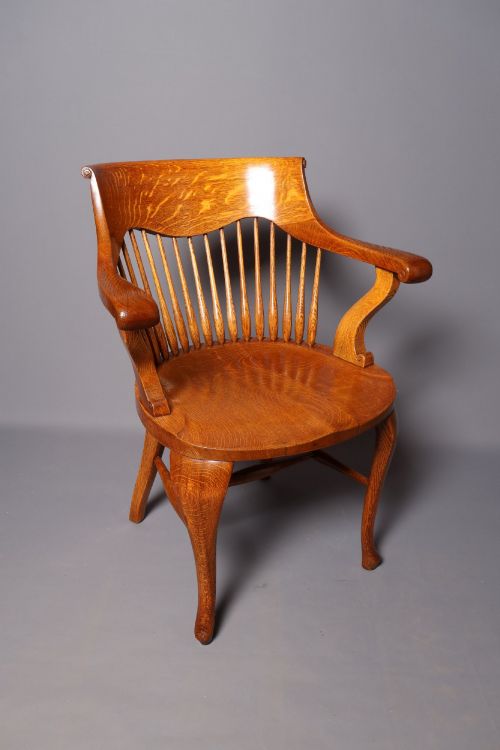
The prevailing examples on this page date from the middle decades of the nineteenth century through to the eighteen nineties. Common vernacular interpretations include captains chairs, smokers bows, and robust Gothic revival armchairs featuring carved details and heavy frames.
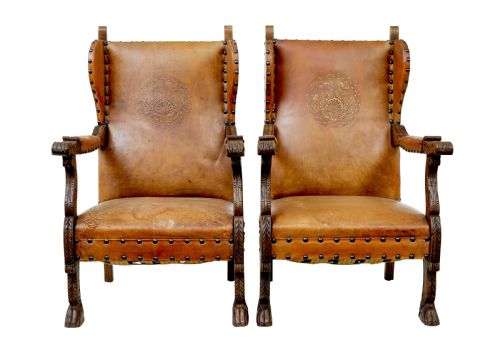
Makers often utilised golden oak or darker fumed timber, pairing the solid wood construction with leather, hide, or velvet upholstery. Buyers encounter both simple desk variants and grand throne chairs bearing deep buttoning or carved armrests.
Assessing quality and build
Quality separates through the depth and crispness of the timber carving, the selection of figured oak, and the robustness of the structural joints. Superior examples display thoughtful proportions, integrated swivel mechanisms, or complex metamorphic hinges that operate smoothly.
The grade of the original leather and the precision of the hand-turned spindles or bobbin work also dictate the standing of the piece. Lesser examples rely on plain, machine-sawn timber with minimal detailing and standard joinery lacking secondary bracing.
Gillows·John Taylor and Son·W Williamson and Sons·Alfred Allen·Shannon Company
The Victorian Oak Library Chair Glossary
- Metamorphic chair
- A dual-purpose piece of furniture that transforms from an armchair into a set of library steps. This ingenious design allowed readers to reach high bookshelves without fetching separate ladders.
- Captain's chair
- A rounded, low-backed wooden armchair designed for swivel desks or office spaces. They frequently feature spindle supports and a broad, comfortable seat.
- Gothic Revival
- A nineteenth-century design movement drawing inspiration from medieval architecture and ornamentation. Pieces in this style often display pointed arches, tracery, and carved foliage.
- Smoker's bow
- A sturdy, low-backed wooden armchair originating from the vernacular tradition. They share similarities with Windsor chairs but possess shorter backs and robust turned arm supports.
- Fumed oak
- Oak that has been darkened and aged through exposure to ammonia fumes. This process reacts with the tannins in the wood to produce a rich, deep hue.
Victorian Oak Library Chair: Frequently Asked Questions
How do metamorphic library chairs work?
These clever designs feature concealed hinges and pivoting seat sections that unfold to create a stable flight of wooden steps. The transformation requires simple manual adjustment without removing loose components.
Craftsmen built these mechanisms to remain sturdy in both chair and ladder configurations, supporting the weight of a person climbing to high shelves.
What defines a Gothic Revival armchair?
Gothic Revival models incorporate architectural motifs such as pointed arches, quatrefoils, and heavy carved tracery into the solid oak framework. Makers often drew inspiration from medieval church woodwork.
These pieces typically present an imposing silhouette with deep mouldings and occasionally carved animal figures like hounds or green men.
Are swivel desk chairs period-correct for the nineteenth century?
Revolving desk chairs with central wooden spindles and metal screw mechanisms appeared frequently during the later decades of the nineteenth century. They served clerks and scholars who required mobility around a large desk.
Most feature four-legged or five-legged wooden bases with castors, pairing with leather-upholstered tub seats.
How should I care for historic leather upholstery?
Historic leather requires gentle cleaning with a soft, damp cloth and occasional application of appropriate conservation leather dressings to prevent drying. Avoid modern chemical cleaners that strip natural oils.
Maintaining moderate room humidity preserves both the hide and the underlying wooden frame from excessive shrinkage or cracking.