



Spool Turned Accent Chair
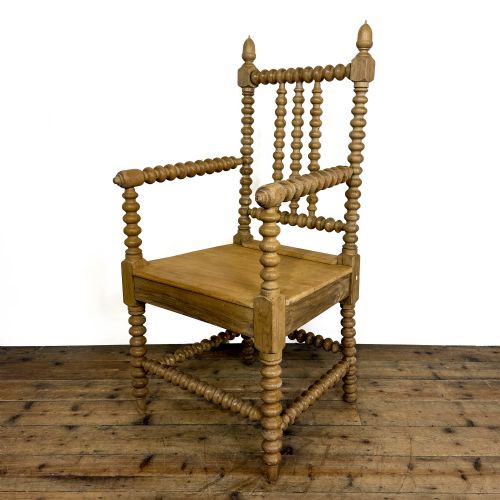
A spool turned accent chair brings sculptural rhythm into a room through repetitive, lathe-shaped timber.
Spool Turned Accent Chair
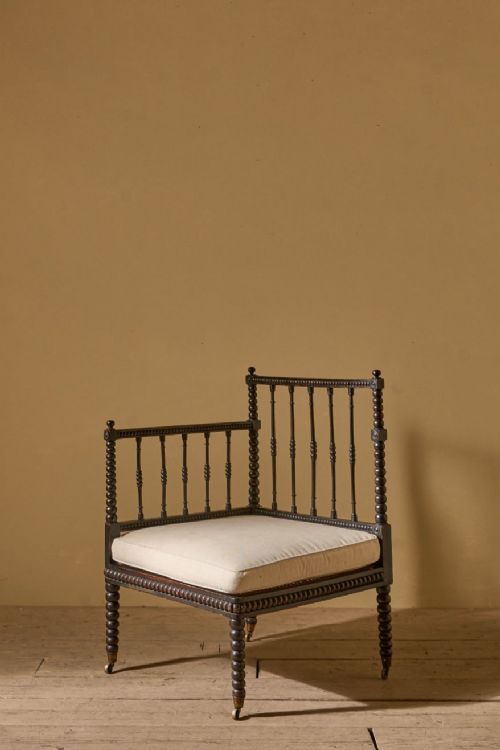
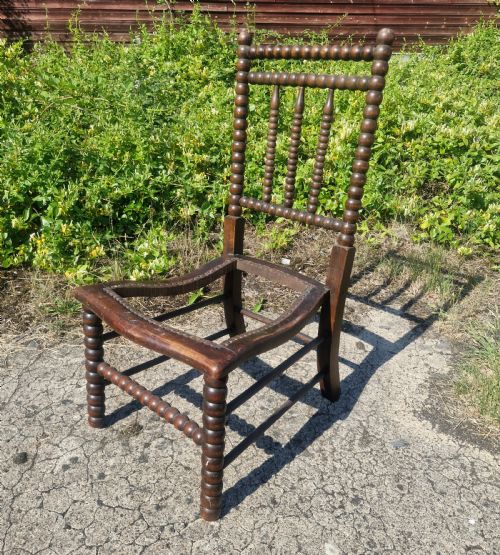
A spool turned accent chair relies on distinctive rounded turnings that resemble spools of thread or bobbins along the frame. These seating pieces emerge primarily across the nineteenth century alongside earlier eighteenth century examples, offering varied silhouettes from compact corner seats to expansive armchairs.
Buyers frequently encounter nineteenth century ebonised timber models and walnut or oak armchairs featuring distinct turned supports. Regional variations span English country forms to Swedish country folk art and Italian baroque revival styles.
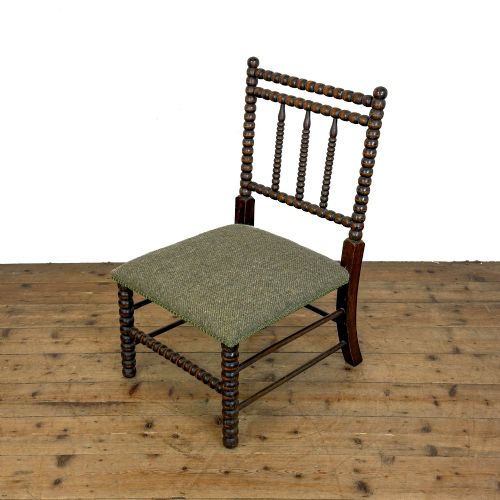
The selection ranges from low bedroom chairs and slipper chairs to open armchairs fitted with cane seats or upholstered cushions. Each piece showcases the lathe work differently, whether applied solely to the legs or shaping the entire structural framework.
Materials and construction
Craftsmen shaped these frames from dense hardwoods including oak, walnut, rosewood, and ebonised timber, turning the wood on a lathe to create uniform, rounded spool profiles. Structural joints relied on traditional joinery techniques to support the repetitive weight and stress placed on the turned members.
Upholstery and seating surfaces incorporated fabric, velvet, and woven cane inserts supported by secondary textiles and internal padding. Brass components sometimes appear in the hardware or structural reinforcement of specific regional styles.
Spool Turned Accent Chair Retail Price Guide 2026
Typical asking prices for spool turned accent chair among the pieces listed under this phrase on Sellingantiques today, from the lower quarter to the upper quarter. They describe what is for sale here now, not the wider market.
Every spindle requires precise lathe work, meaning someone spent hours turning tiny wooden bobbins just so you can admire them.
Evaluating craftsmanship and integrity
Quality rests in the crispness and consistency of the lathe turnings, where sharp, well-defined spool profiles indicate skilled hand-turning rather than hurried production. The choice of timber also dictates the standard of the piece, with richly grained walnut and dense ebonised woods holding finer turned details than softer timbers.
Structural cohesion separates a superior example from a lesser one, specifically how tightly the turned spindles, stretchers, and legs fit within the main frame. Original surface patination and retained upholstery systems add to the integrity of older nineteenth and eighteenth century examples.
The Spool Turned Accent Chair Glossary
- Bobbin turning
- A form of lathe woodworking characterised by a sequence of rounded, cylindrical segments resembling spools of thread. This decorative motif defines the entire aesthetic of these chairs.
- Ebonised timber
- Wood treated with a dark finish to imitate expensive ebony. Makers frequently utilised this technique on nineteenth century frames to create stark visual contrast.
- Slipper chair
- A low-set upholstered chair lacking arms, designed originally for bedrooms. These pieces place the turned framework close to the floor.
- Cane seat
- A woven seating surface made from split rattan or cane strips. This lightweight material provides flexible support within an open wooden frame.
Spool Turned Accent Chair: Frequently Asked Questions
How do I date a bobbin chair?
Dating relies on examining the timber species, joinery methods, and the sharpness of the lathe turnings. Earlier eighteenth century models often display heavier oak construction and hand-carved nuances.
Nineteenth century revivals frequently utilise ebonised finishes, walnut, or rosewood. Comparing the form to documented regional styles helps confirm the period of origin.
Where should I place an accent chair?
These chairs suit quiet corners, bedrooms as low slipper seats, or flanking a fireplace where the turned profile remains visible from multiple angles. Their compact footprints allow them to fit easily into smaller spaces.
Pairing the chair with neutral surroundings lets the intricate wooden turnings stand out as the primary visual focus of the room.
Are these chairs comfortable for daily use?
Comfort depends entirely on the specific form, ranging from upright wooden side chairs to generously proportioned armchairs with upholstered cushions. Many nineteenth century examples were designed primarily for formal reception rooms or bedrooms rather than long lounging.
Adding a loose cushion or selecting a model featuring a padded upholstered seat increases everyday usability while preserving the historic frame.