

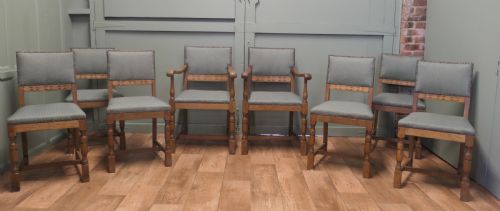
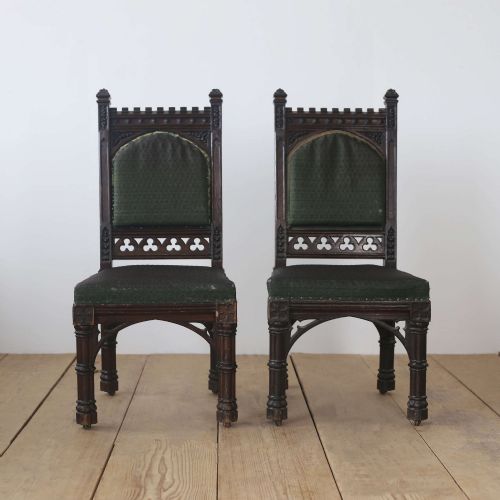
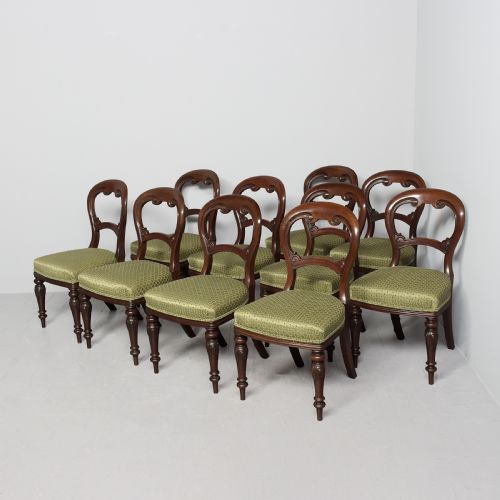
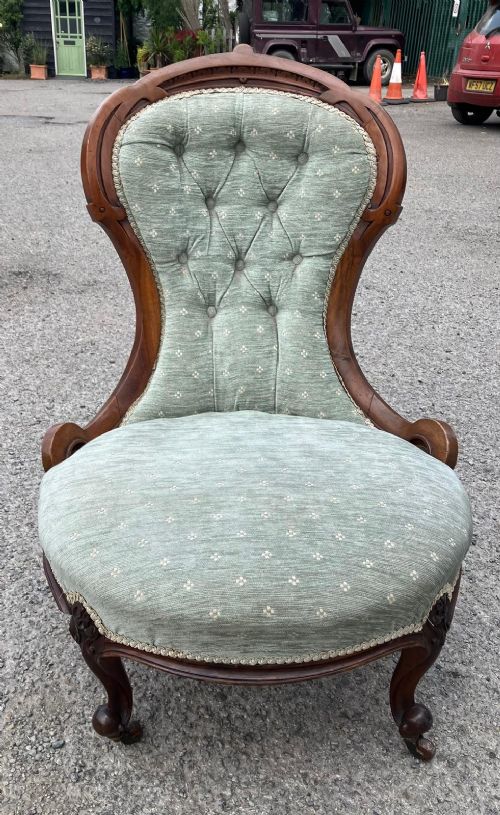
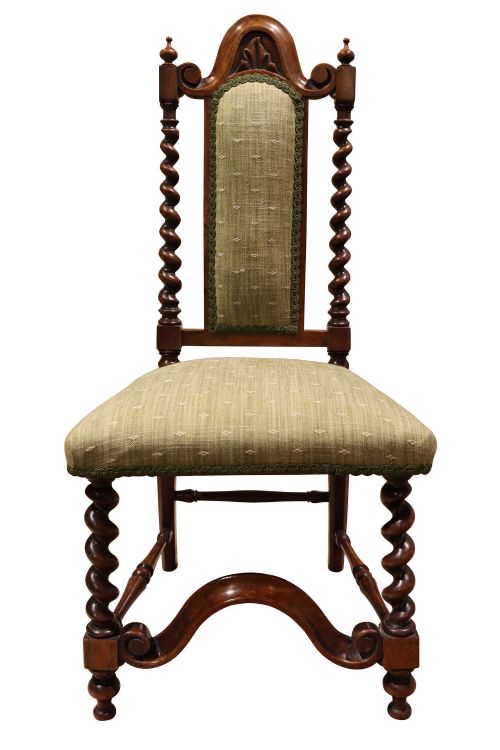
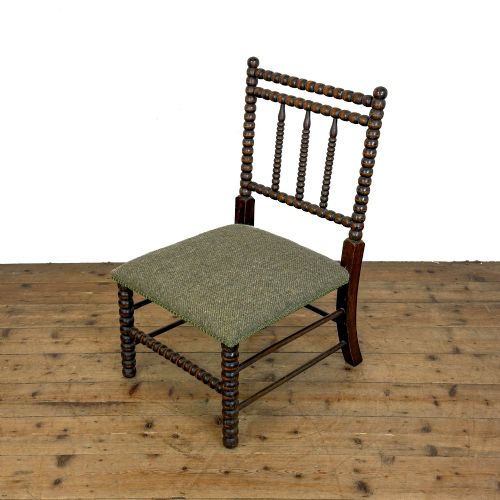


Green Fabric Side Chair
A green fabric side chair brings a rich splash of colour and period timber into a room, offering both practical seating and decorative presence.
Green Fabric Side Chair
When you search for a green fabric side chair, you encounter a selection of seating fashioned primarily from timber frames upholstered in textile. These pieces span centuries of cabinetmaking, from Georgian and Regency forms up to Edwardian and Arts and Crafts examples.
Originating across different eras, these items demonstrate how upholstery choices evolved alongside timber frames. The combination of green textile coverings with dark woods forms a recurring theme throughout the available selections.
How they were made
Makers constructed these frames using dense timbers such as mahogany, oak, walnut, and satinwood, often employing ebonised timber or parcel gilt for added visual contrast. These hardwoods provided the structural integrity required for daily use.
Upholstery involved stretching textiles over supportive foundations within the chair frames. Detail work included inlaid woods, barley twist turnings, and bobbin structures, showing the specific craftsmanship of each respective period.
Green Fabric Side Chair Retail Price Guide 2026
Typical asking prices for green fabric side chair among the pieces listed under this phrase on Sellingantiques today, from the lower quarter to the upper quarter. They describe what is for sale here now, not the wider market.
Materials utilised across these items include mahogany, oak, walnut, satinwood, and ebonised timber paired with various textiles.
What varies in quality
The standard of a piece rests heavily on the selection of timber and the precision of its joinery. Superior examples display carefully chosen grains, tight joints, and intricate decorative elements such as inlay work or turned woodwork.
Proportion and execution distinguish finer items from standard ones. Chairs that retain their original structural balance and crisp detailing demonstrate the higher tier of period craftsmanship.
The Green Fabric Side Chair Glossary
- Side chair
- A chair without arms, traditionally used for dining or placed against a wall when not in use. It is smaller than an armchair and designed to fit neatly around a table.
- Ebonised timber
- Wood treated with a dark stain or finish to imitate the appearance of ebony. This technique was popular in Regency and Victorian furniture for creating sharp contrast.
- Barley twist
- A type of turning shaped like a spiral or helix, commonly found on the legs or supports of 17th-century and Victorian furniture. It adds texture and visual movement to the piece.
Green Fabric Side Chair: Frequently Asked Questions
Where should I place a side chair?
Side chairs function well around a dining table, as occasional seating in a living room, or placed against a hallway wall. Their compact, armless design allows them to fit into tighter spaces without crowding the room.
They also serve effectively in bedrooms or studies where extra seating is required intermittently. Their decorative frames add architectural interest even when unoccupied.
How do I identify a Georgian chair?
Georgian chairs typically feature robust timbers like mahogany or oak, often displaying classical proportions and restrained carved details. The joinery is solid, and the overall design reflects the prevailing architectural tastes of the 18th century.
Looking closely at the stretcher placement and leg forms helps distinguish these pieces from later revival styles. The craftsmanship reflects the manual woodworking techniques of the period.
What is an ebonised finish?
An ebonised finish involves staining or painting timber to resemble ebony, a dense black wood. This treatment was utilised during periods such as the Regency era to achieve a sleek, dark aesthetic.
The process enhances the formality of the furniture and creates a striking contrast against upholstered textile seats. It highlights the clean lines of the timber frame.
Are these chairs suitable for daily use?
Period chairs constructed from hardwoods like oak and mahogany remain structurally robust for regular seating. Their solid joinery and durable timber frames ensure they withstand normal daily activity.
Ensuring the upholstery and underlying support remain in sound condition preserves their utility. Many examples were built specifically for heavy dining room use.