


Pair of Nursing Chairs
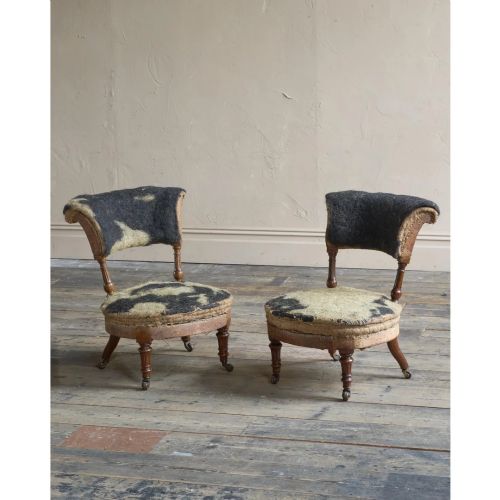
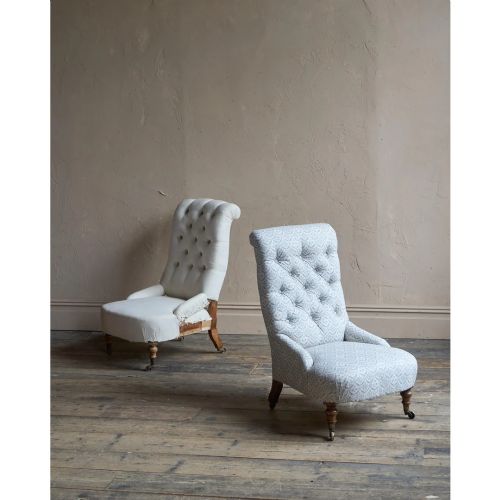
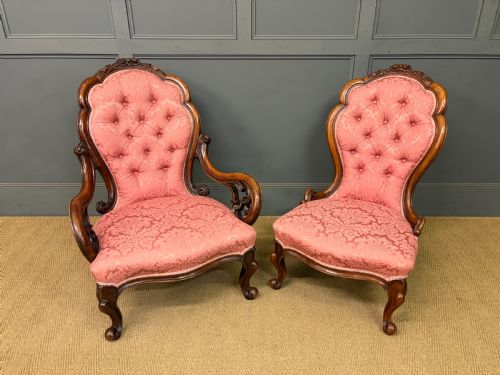
These pair of nursing chairs are low-slung seating pieces built for domestic comfort and bedroom dressing, offering a distinctive historical silhouette.
Pair of Nursing Chairs
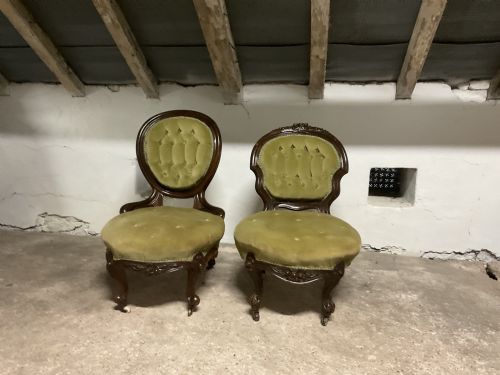
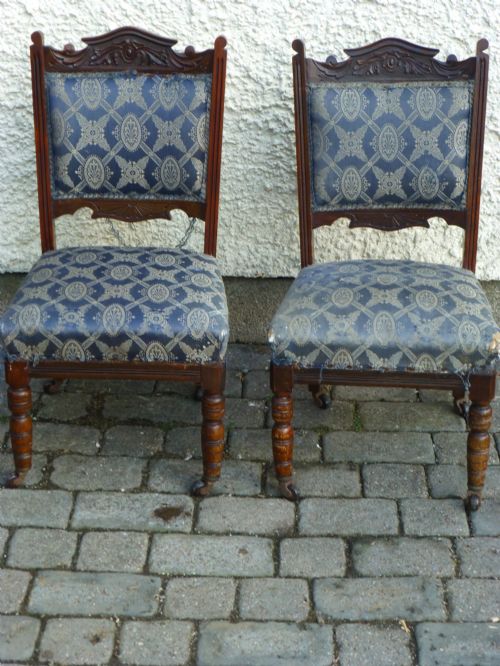
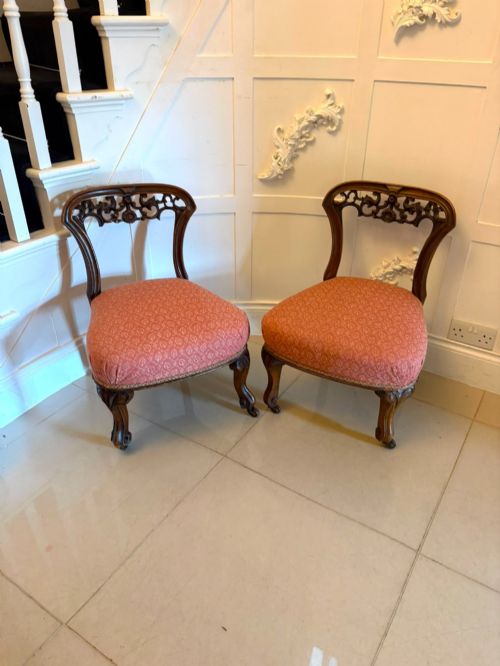
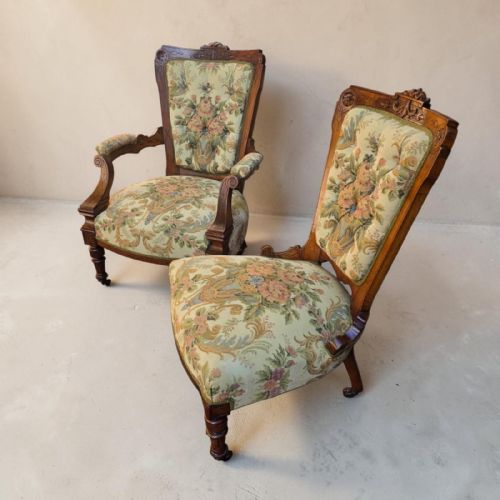
A pair of nursing chairs brings low seating and characteristic proportions into domestic spaces, appearing primarily in Victorian and Edwardian variations across this selection. These pieces serve as bedroom chairs, salon chairs, and fireside seating, designed originally to allow comfortable tasks near the hearth or dressing table.
The inventory shows these seating pairs spanning the nineteenth and early twentieth centuries, drawing on stylistic vocabularies such as Victorian Rococo Revival, Queen Anne style, and Art Nouveau. Walnut and mahogany frames dominate the offerings, frequently accompanied by distinct alternatives in rosewood, ebonised wood, and oak.
Buyers encounter matching his and hers configurations alongside round seat models, button-backed variations, and specialised frames like low priedieu chairs. The selection ranges from robust mahogany frames to slender inlaid Edwardian examples, maintaining the characteristically low seat height that defines the form.
How they were made
Upholstery defines the surface of these pieces, employing fabric and velvet over deep padding, button-backed construction, and sprung bases. Wood framing supports elaborate carving, turned members such as bobbin turnings, and delicate scroll backs depending on the prevailing period aesthetic.
Pair of Nursing Chairs Retail Price Guide 2026
Typical asking prices for pair of nursing chairs among the pieces listed under this phrase on Sellingantiques today, from the lower quarter to the upper quarter. They describe what is for sale here now, not the wider market.
Hospital nursing arms appear among the traditional parlour seating, reminding us these low frames served nurses across various Victorian institutions.
What varies in quality
The standard of the timber framing dictates much of the physical merit, separating dense, finely figured walnut and mahogany from simpler utility woods. Carved detail demonstrates the hand of the maker, moving from brisk, mechanical cutting to deeply sculpted, fluid ornamentation across the crest rails and frame margins.
The integrity of the frame construction and the fidelity of the original upholstery platform dictate long-term durability. Higher-grade examples retain substantial internal framing, intact buttoning, and harmonious proportions between the low seat and the supporting backrest.
Howard and Sons
The Pair of Nursing Chairs Glossary
- Castor
- A small wheel fitted to the base of furniture legs to assist movement. These are commonly brass in this period of seating.
- Button back
- An upholstery technique where depressions are formed in the padding by stitching deep buttons through to the frame. This creates a tufted surface texture.
- Prie Dieu
- A low devotional chair featuring an elevated top rail designed for kneeling or leaning during prayer. Examples often incorporate upholstered arm rests or tablet tops.
- Inlay
- A decorative technique where contrasting woods or materials like boxwood are inserted into recesses cut into the primary surface. This adds linear detail and geometric patterns to mahogany or rosewood frames.
Pair of Nursing Chairs: Frequently Asked Questions
Why were nursing chairs made so low?
These chairs were built with low seats to make dressing, infant care, and tending domestic fires much easier. The reduced height placed the user closer to the floor for practical daily tasks.
Over time, this functional proportion evolved into a distinct aesthetic style within Victorian and Edwardian bedrooms and sitting rooms.
How do I spot a Victorian chair?
Victorian examples typically feature dark timber frames in walnut or mahogany, often with deep button-backed upholstery and robust turned legs. Carved crest rails and visible joinery point directly to mid-to-late nineteenth-century manufacturing methods.
Later Victorian pieces frequently adopt lighter ebonised finishes or incorporate brass castors to aid movement across carpets.
Can I use these in a modern living room?
These compact seats fit easily into contemporary sitting rooms as accent chairs or fireside seating. Their modest physical footprint allows them to sit comfortably alongside larger modern sofas without dominating the floor space.
Placing them in bedrooms or reading corners preserves their original domestic function while introducing period character.
What is the difference between Edwardian and Victorian styles?
Edwardian versions generally display lighter mahogany frames, delicate boxwood stringing, and inlaid decoration that reflects a shift toward airier room designs. Victorian pieces lean toward heavier walnut construction, rich velvet coverings, and more assertive carved ornamentation.
Both retain the signature low seat height, but Edwardian proportions often feel visually lighter and less formal.