
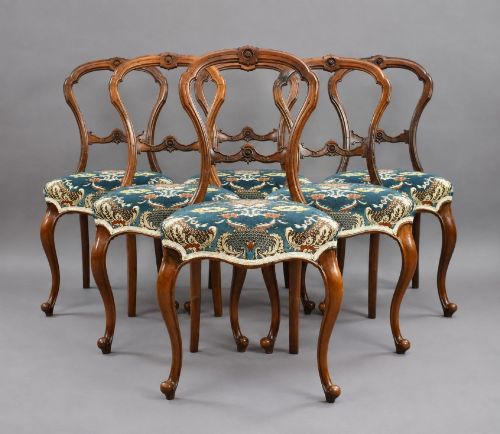
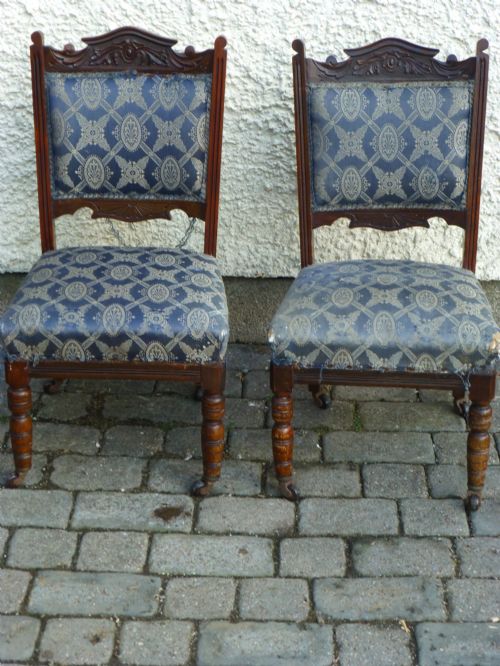
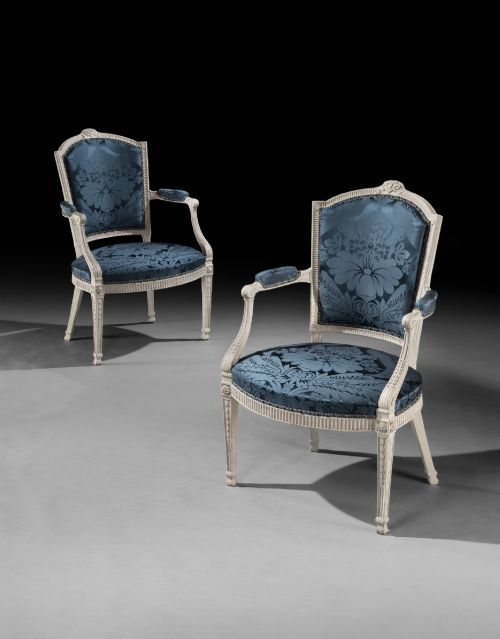
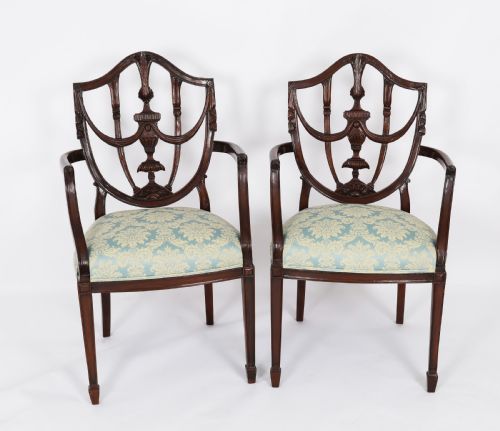
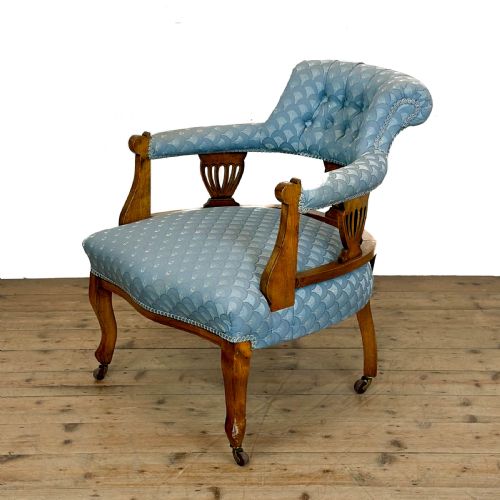


Blue Damask Chairs
Blue damask chairs bring a rich textile warmth to a room, uniting timber frames with classic patterned silk or fabric upholstery.
Blue Damask Chairs
When you search for blue damask chairs, you encounter a varied selection of seating spanning multiple centuries and stylistic revivals. The listings here include everything from formal dining sets to library chairs and chaise longues upholstered in damask fabric.
Most examples date from the nineteenth and early twentieth centuries, featuring distinct periods such as Victorian, Edwardian, and George III styles. You will find forms ranging from balloon back dining chairs to winged armchairs and French chateau styles.
The frames reflect traditional craftsmanship in mahogany, walnut, and rosewood, paired with woven blue patterns. Whether you seek a single statement armchair or a set of matching dining seats, the variety captures diverse historical influences.
Materials and construction
The structural frames rely on hardwoods such as mahogany, walnut, and rosewood, shaped through traditional joinery and hand carving. Metal elements like brass and ormolu mounts appear on specific revival pieces to accent the woodwork.
Upholstery relies on fabric and specialised damask material, sometimes featuring silk, stretched over internal padding and secured to the wooden frameworks. Certain projects require re-upholstering to restore the textile finish on older frames.
An iron back sneaks into the nineteenth-century selection, proving that even heavy metal had a soft spot for damask.
Distinguishing quality
Quality rests in the precision of the timber carving and the structural integrity of the frame joints. Superior examples show refined proportions and harmonious integration between the wooden structure and the textile upholstery.
The grade of the damask fabric and the fidelity of historical revival styles also set finer pieces apart. Well-executed details, such as carved mahogany details or balanced library proportions, elevate the standing of the seating.
Miles & Edwards·Thomas Chippendale
The Blue Damask Chairs Glossary
- Damask fabric
- A reversible figured fabric with patterns formed by weaving, traditionally produced on a drawloom. This textile provides the characteristic textured surface seen on the upholstery.
- Balloon back
- A rounded, oval-shaped chair back resembling a balloon, popular during the Victorian era. This form appears frequently on dining chairs.
- Gainsborough armchair
- A wide, open-framed armchair with padded armrests, originating in the eighteenth century. These seats often feature mahogany frames and generous proportions.
- Fauteuil
- An open-framed upholstered armchair with exposed wooden arms, originating in France. This style brings a lighter aesthetic to seating arrangements.
- Chaise longue
- An elongated upholstered chair designed for reclining, combining a chair with an extended seat. Examples range from Victorian designs to French daybeds.
Blue Damask Chairs: Frequently Asked Questions
How do I clean blue damask fabric?
Vacuum the fabric gently using a soft brush attachment to remove surface dust and prevent debris settling into the woven pattern.
For marks, consult a professional textile conservator rather than applying domestic cleaning agents, as silk and blended damasks require specialist care.
Are these chairs suitable for daily use?
Many sturdy nineteenth and twentieth-century armchairs handle regular seating comfortably, provided the internal webbing and padding remain secure.
Earlier eighteenth-century or decorative revival pieces often benefit from more considered placement to preserve their structural timber and delicate textiles.
How do I date a mahogany armchair?
Examine the timber colour, grain tightness, and the joinery methods used beneath the seat rails where visible. Tool marks and construction techniques offer clear indicators of whether a piece belongs to the Georgian period or a later revival.
Can I re-upholster a vintage armchair?
Many antique frames accommodate new fabric quite well, and certain pieces arrive specifically prepared for re-upholstery projects.
Ensure any restoration work respects the original frame construction and uses appropriate padding materials suited to the age of the chair.