


Victorian Carved Walnut Chairs
When you search for victorian carved walnut chairs, you enter a diverse world of nineteenth-century seating designed for formal dining rooms, parlours and studies.
Victorian Carved Walnut Chairs
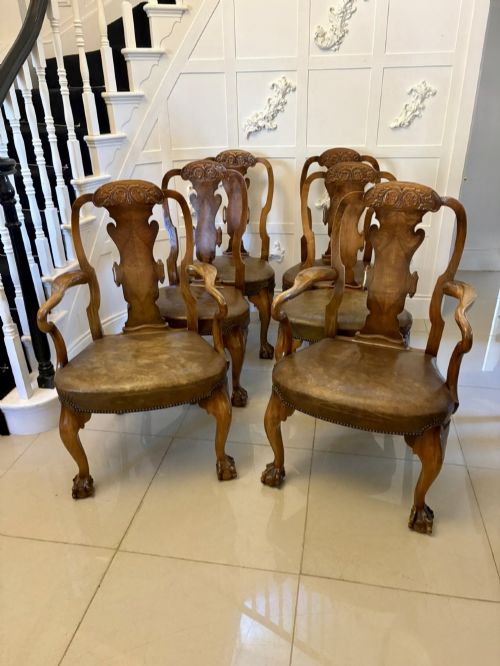
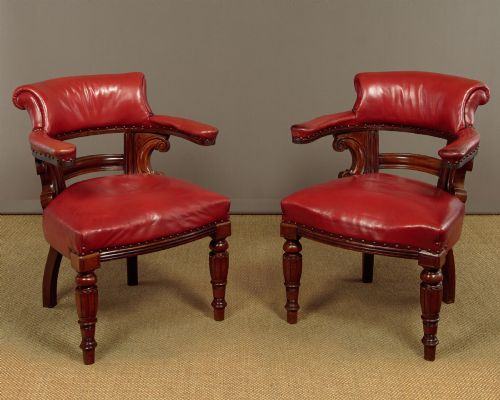
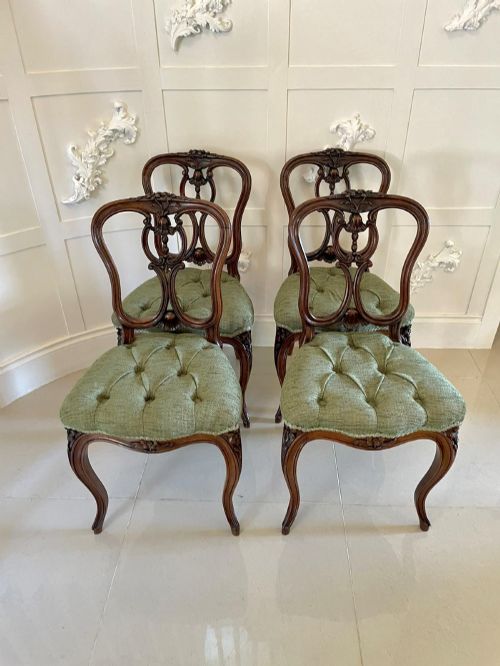
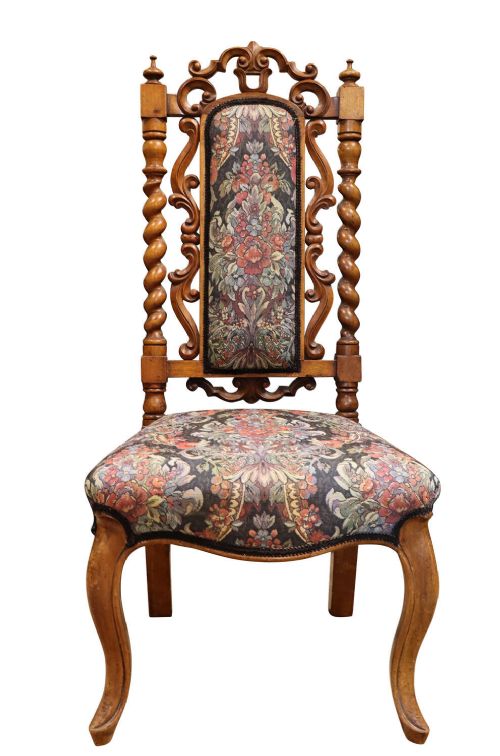
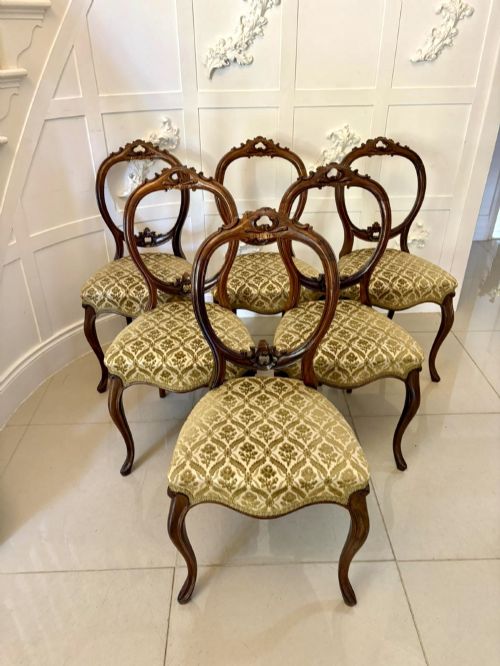
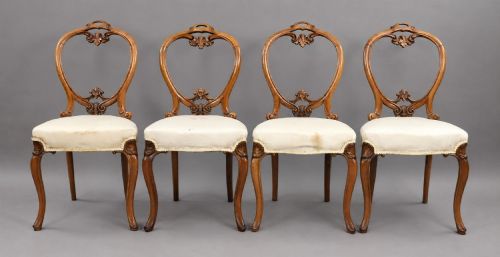
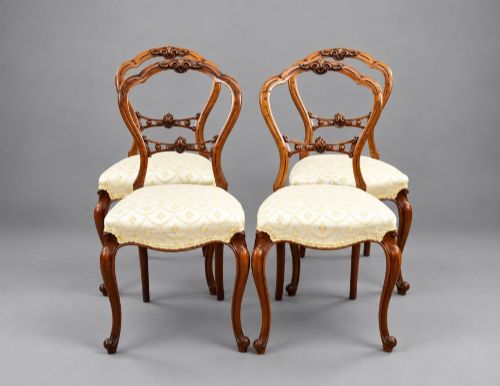
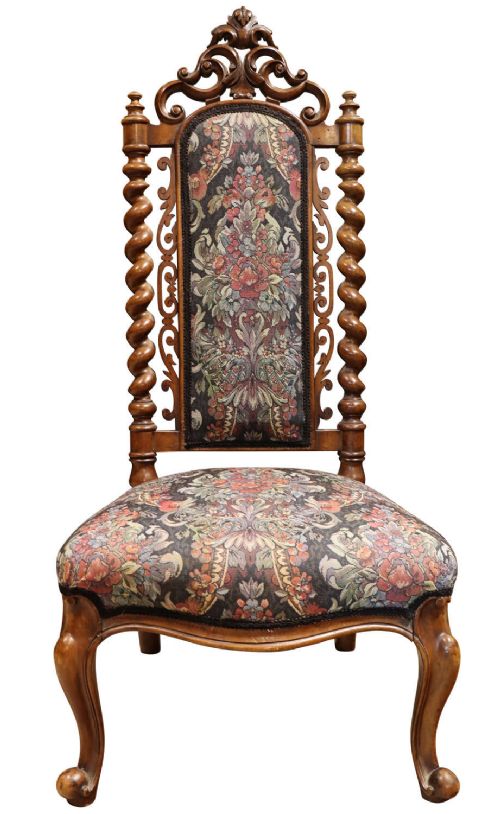
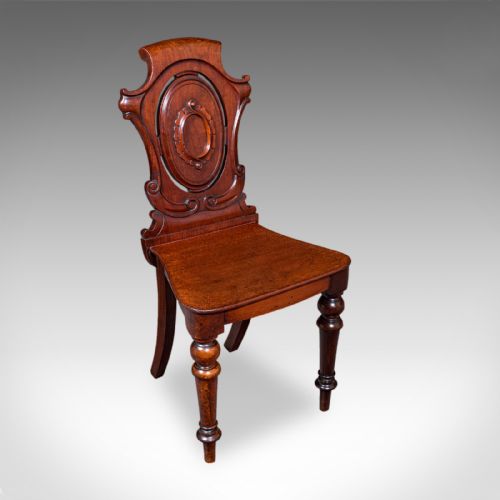
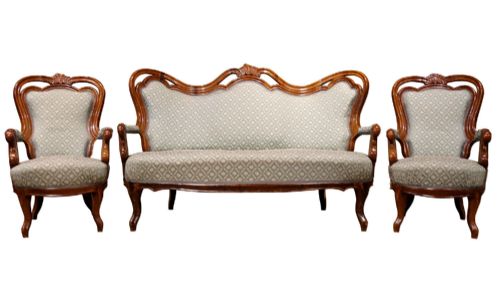
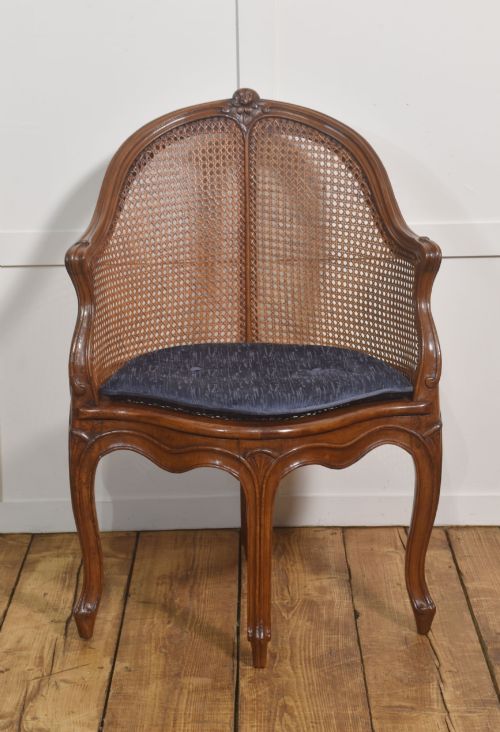
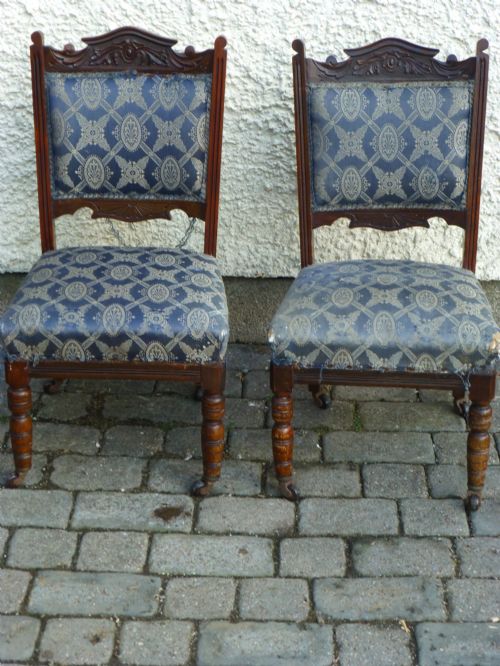
Victorian carved walnut chairs encompass a wide variety of domestic forms, ranging from single dining chairs and balloon-back side chairs to nursing chairs, armchairs, and matching salon suites.
Dining chairs often appear in matched sets of four, six, or twelve, while occasional pieces such as piano stools, revolving desk chairs, and low parlour seats serve specialised domestic functions.
The selection reflects both British production and continental influences, featuring revival styles like Rococo, Queen Anne, and Louis XV alongside regional variations.
How they were made
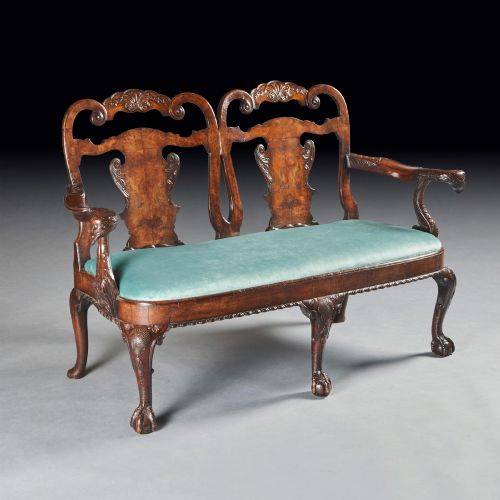
The frames are constructed primarily from solid walnut and burr walnut, providing a rich, dark timber ground capable of holding crisp, deep relief carving along crest rails and cabriole legs.
Traditional upholstery techniques utilise webbing, springs, and stuffing covered in period textiles such as velvet, leather, tapestry, needlework, and brocade.
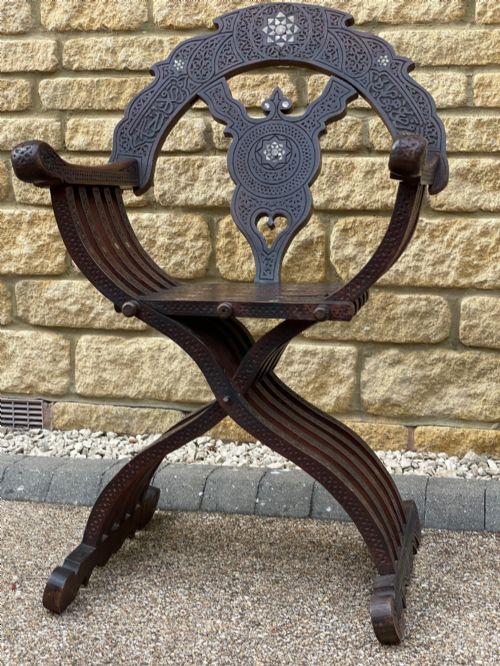
Secondary materials including brass hardware, cane panels, and mother-of-pearl inlay appear on specific continental and late nineteenth-century examples.
Victorian Carved Walnut Chairs Retail Price Guide 2026
Typical asking prices for victorian carved walnut chairs among the pieces listed under this phrase on Sellingantiques today, from the lower quarter to the upper quarter. They describe what is for sale here now, not the wider market.
The listings demonstrate a heavy reliance on solid walnut and burr walnut timber, supplemented by period textiles including tapestry, leather, and velvet.
What varies in quality
The depth, precision, and hand-carved detail of the ornamentation separate standard commercial seating from exceptional parlour and dining furniture.
The choice of timber grain, particularly the use of highly figured burr walnut veneers on back panels and seat rails, dictates the visual status of a piece.
Structural integrity relies on the original joinery remaining tight, especially where slender members like balloon backs and cabriole legs meet the seat frame.
The Victorian Carved Walnut Chairs Glossary
- Balloon back
- A rounded, oval-shaped chair back resembling the profile of a hot-air balloon, which became immensely popular in domestic seating during the nineteenth century.
- Cabriole leg
- A furniture leg that curves outward at the knee and tapers inward toward the foot, frequently terminating in a scroll or plain pad.
- Nursing chair
- A low-seated armchair designed historically for comfort during infant feeding, typically featuring an upholstered back and sprung seat.
- Spoonback
- An upholstered chair back hollowed out in the centre to resemble the bowl of a spoon, conforming naturally to the human spine.
- Burr walnut
- A prized timber cut from growths on the walnut tree, displaying intricate, swirling grain patterns used for decorative veneer work.
Victorian Carved Walnut Chairs: Frequently Asked Questions
How do I identify balloon back chairs?
Look for the continuous curved wooden frame that forms an enclosed oval shape above the seat. This profile defines standard nineteenth-century dining and side chairs.
Check the junction where the back meets the seat rail to ensure the frame remains solid and free from excessive movement.
Were these chairs used for dining?
Many examples were made specifically as sets for formal dining rooms, often numbering four, six, or more pieces. They provided sturdy yet ornate seating around large mahogany or walnut tables.
Single pieces and smaller pairs served different functions in bedrooms, halls, and parlours.
Can I use these chairs daily?
Solid walnut frames offer remarkable durability for everyday domestic use. Modern placement simply requires checking that the underlying nineteenth-century joinery remains stable.
Rotating pieces or ensuring proper weight distribution preserves the antique wooden joints over time.
How do revival styles affect the design?
Revival designs borrow decorative motifs from earlier historic periods, such as Rococo curves, Queen Anne cabriole legs, or Gothic tracery. Cabinetmakers reinterpreted these historical vocabularies using Victorian timber and construction methods.
Recognising these stylistic cues helps date the piece and understand its intended formal context.