


Yellow Velvet Chairs
Yellow velvet chairs bring warmth and tactile depth to a room, appearing in forms from stately library armchairs to delicate nursing seats.
Yellow Velvet Chairs
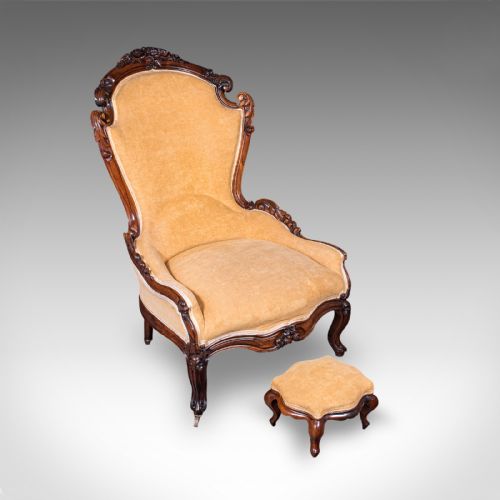
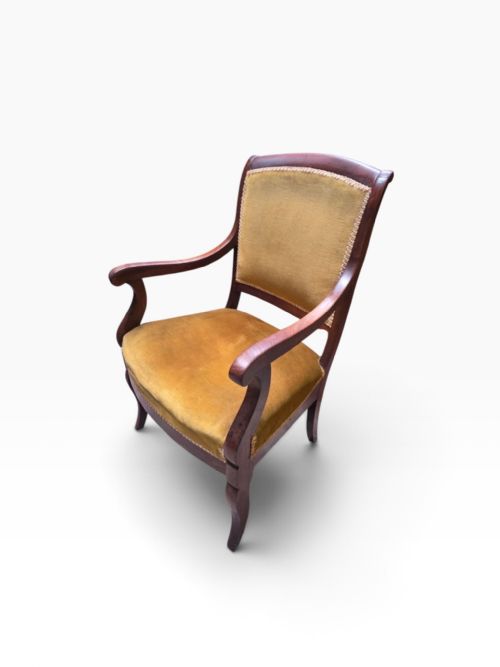
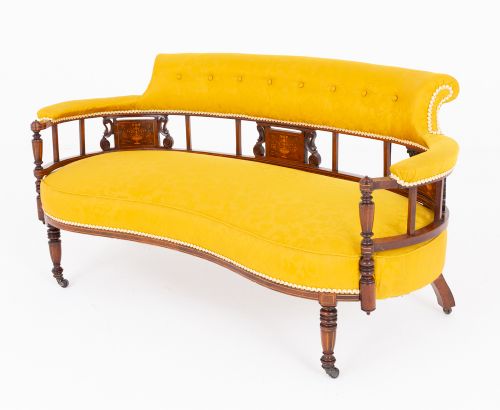
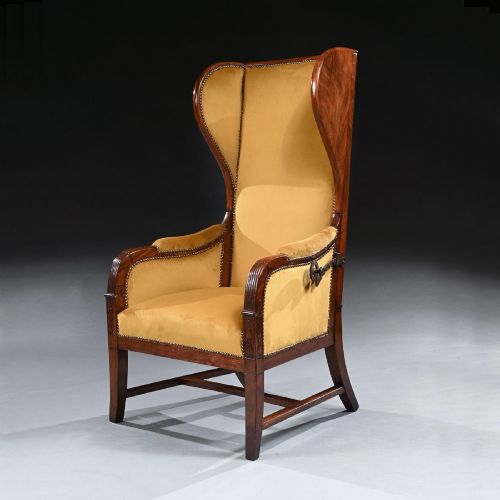
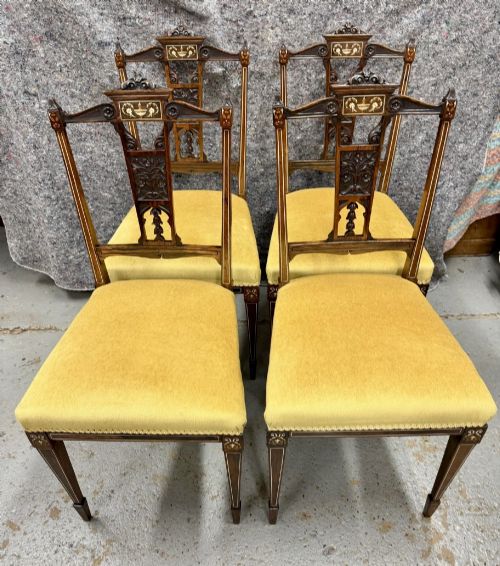
Yellow velvet chairs span periods from the nineteenth century into the early twentieth century, taking the form of dining chairs, armchairs, nursing chairs, and settees. The selection on this page demonstrates how makers applied velvet upholstery to mahogany, walnut, rosewood, and oak frames across Victorian, Edwardian, and revival styles.
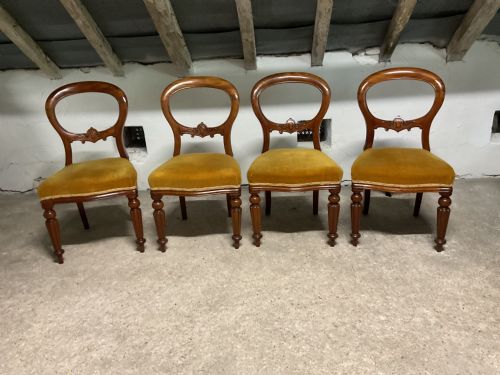
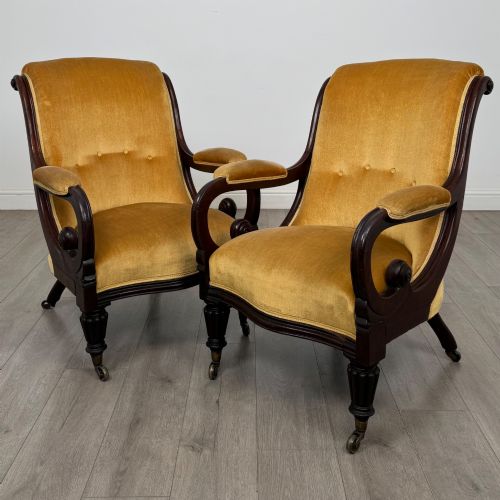
Buyers seeking yellow velvet chairs will find various iterations including balloon back dining chairs, button back salon seats, and barrel back armchairs. These pieces combine historic woodwork with soft pile fabric, creating functional seating with a distinct visual presence.
How they were made
Frames rely on dense hardwoods such as mahogany, walnut, and rosewood, carved or turned into styles ranging from simple barley twist legs to elaborate George II revival motifs. Upholstery utilises velvet stretched over internal padding and secured to the wooden structure.
Cabinetmakers and joiners constructed the structural supports using traditional jointing methods, whilst upholsterers applied the fabric finish, occasionally incorporating brass castors and turned front legs.
Yellow Velvet Chairs Retail Price Guide 2026
Typical asking prices for yellow velvet chairs among the pieces listed under this phrase on Sellingantiques today, from the lower quarter to the upper quarter. They describe what is for sale here now, not the wider market.
Listings feature yellow velvet chairs across Victorian, Edwardian, and 1920s periods, utilising mahogany, walnut, and rosewood frames.
What varies in quality
Quality depends upon the integrity of the timber frame, the depth of the wood carving, and the proportion of the silhouette. Pieces retaining their original structural joinery without alteration represent a higher tier.
The sophistication of the timber grain, whether rosewood, walnut, or mahogany, dictates the visual merit of the piece. Upholstery choices and the execution of revival styles further separate standard production from superior craftsmanship.
Blyth and Sons·Hindley and Sons·Howard and Sons·Johnstone and Jeanes
The Yellow Velvet Chairs Glossary
- Balloon back
- A rounded, oval chair back resembling a balloon, popular during the Victorian period. This shape offers ergonomic support while displaying carved wood grain.
- Nursing chair
- A low-seated Victorian chair designed for comfort and close seating, often featuring an upholstered spoon back. They were traditionally used in bedrooms and nurseries.
- Bergere
- An enclosed upholstered armchair with wooden show frames, typically featuring cane work or fabric sides. These pieces originated in France and appeared in various British revivals.
- Spoon back
- A padded chair back hollowed out in the centre to mimic the shape of a spoon. It is frequently seen on Victorian walnut and mahogany chairs.
Yellow Velvet Chairs: Frequently Asked Questions
How do I clean yellow velvet chairs?
Velvet requires gentle brushing with a soft-bristled brush to maintain the pile direction and prevent flattening. Avoid using excessive water or harsh chemical cleaners on historic fabric.
For deeper maintenance, consult a professional upholstery specialist who understands antique textile preservation.
Are these chairs suitable for daily use?
Most of these historic frames are robustly constructed from solid hardwoods like mahogany and walnut, making them durable for everyday seating. Regular inspection of the joints ensures they remain stable over time.
Lighter salon or nursing chairs may be better suited to occasional use rather than heavy daily lounging.
How do I identify a Victorian chair?
Victorian chairs frequently feature dark hardwoods such as mahogany and walnut, combined with distinctive forms like balloon backs or button-tufted upholstery. Turned legs and the use of brass castors are also common indicators of this era.
Construction techniques visible beneath the seat, such as hand-cut screws and traditional joinery, help confirm the period.
What is a George II revival chair?
George II revival chairs emulate the heavy, ornate furniture styles of the mid-eighteenth century, typically produced in later eras like the early twentieth century. They often feature robust mahogany frames and carved details.
These pieces combine historic aesthetic elements with the manufacturing methods of their actual production date.