
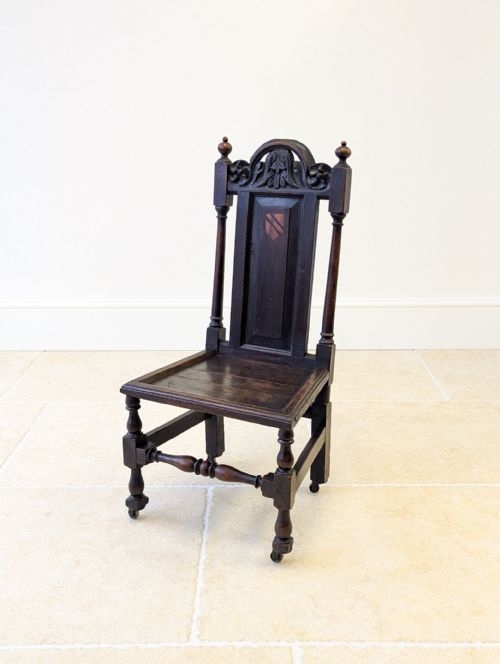
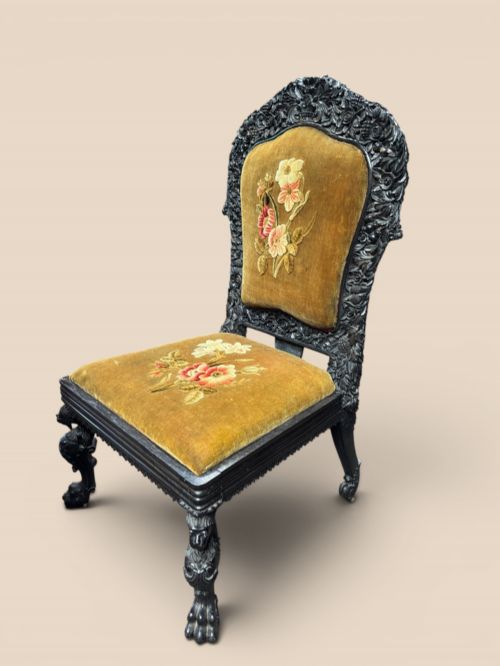
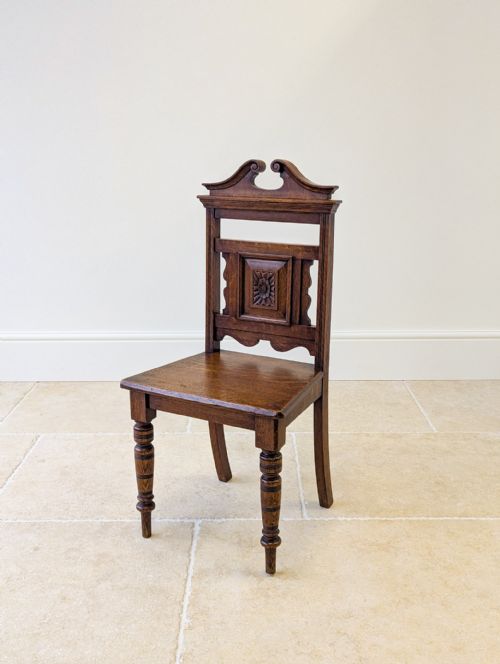
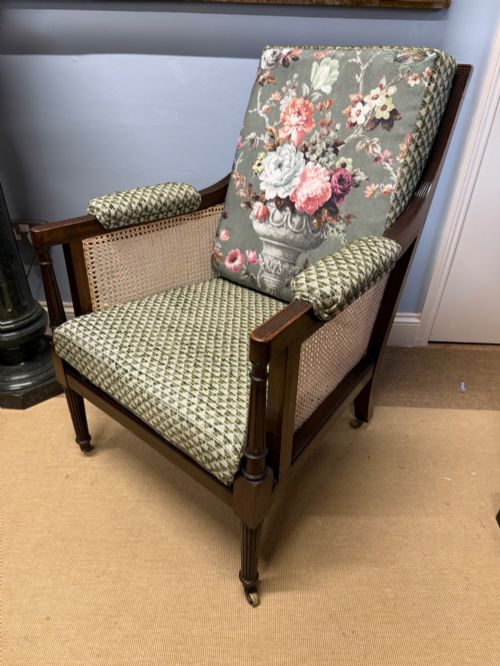




Late Victorian Side Chairs
Late victorian side chairs bring robust construction and distinct aesthetic movement, art nouveau or traditional styling into the home.
What late victorian side chairs are
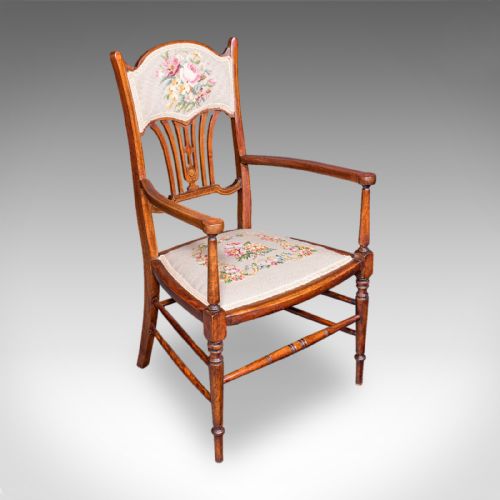
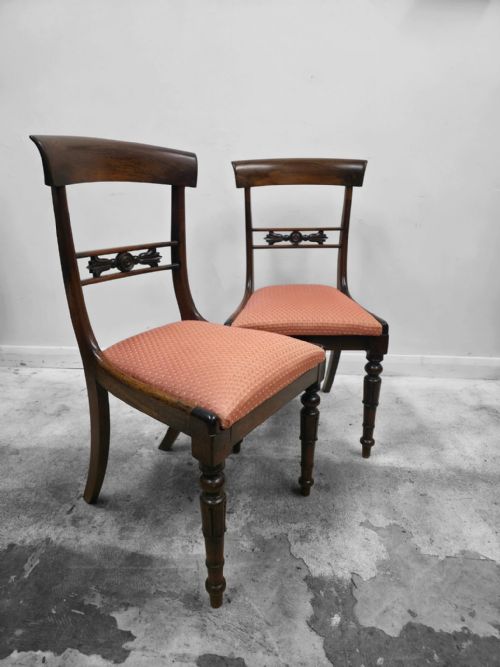
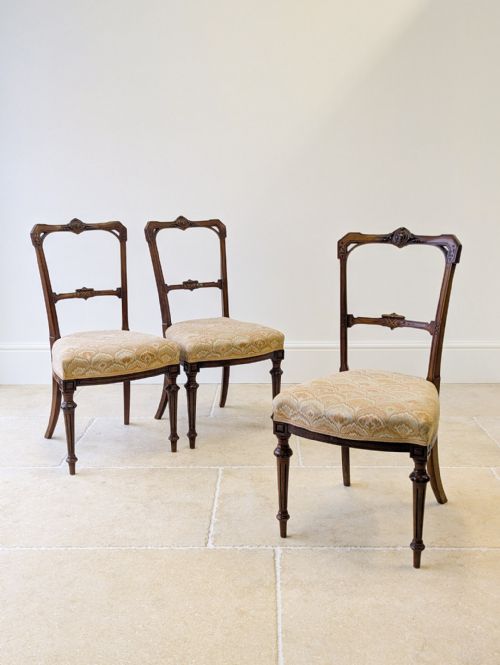
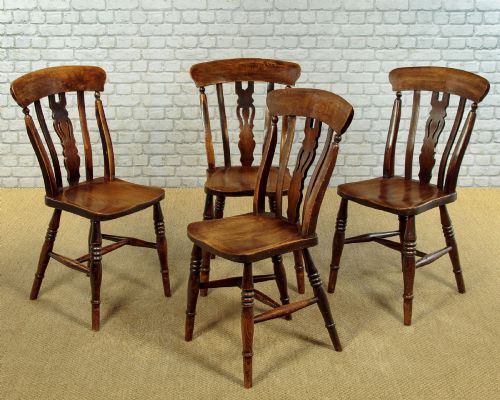
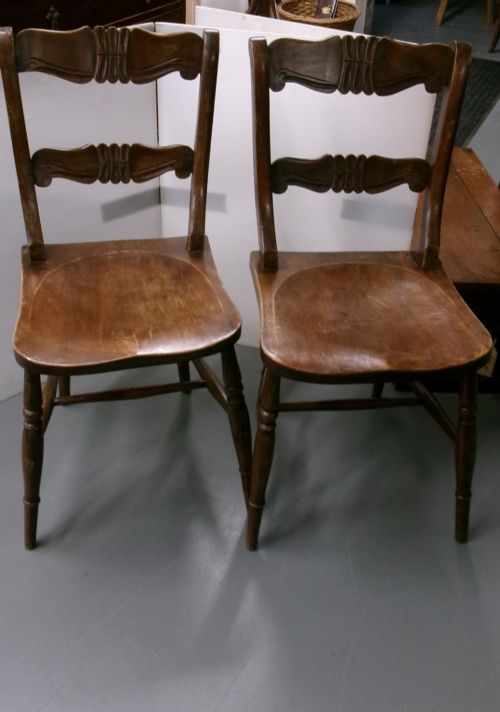
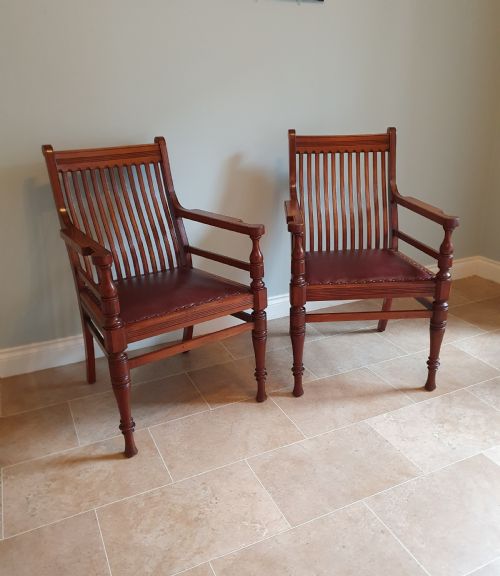
Late victorian side chairs represent a period of diverse design influences, encompassing dining and hall chairs created in the late nineteenth century. These pieces appear in forms ranging from sets of dining chairs to individual pairs intended for halls and bedrooms.
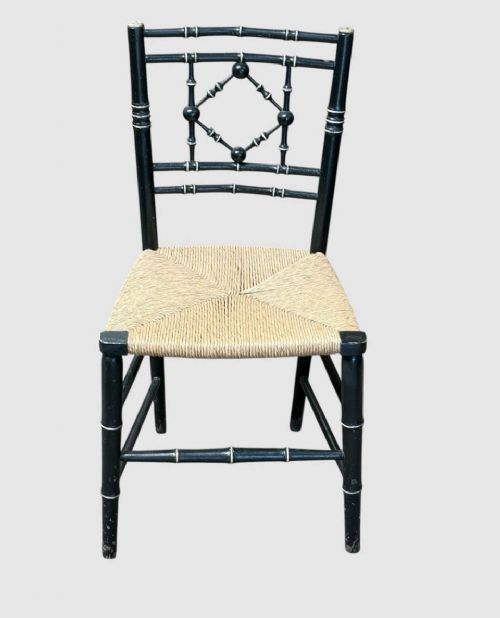
Makers of the era utilised styles such as the aesthetic movement and art nouveau alongside classical victorian traditions. Buyers most frequently encounter mahogany, oak, walnut and rosewood frames, often paired with rush seating or upholstered pads.
The objects served practical household functions in dining rooms, halls and bedrooms. Their surviving forms demonstrate the transition from heavy Victorian ornament toward lighter, more artistic domestic furnishing.
How they were made
Cabinetmakers constructed these frames using timbers such as mahogany, oak, walnut and rosewood. Brass hardware and decorative details occasionally supplemented the exposed woodwork.
Upholstery techniques incorporated fabric and velvet to finish seats and pads. Alternatively, rush seating provided a durable woven surface for dining and occasional chairs.
Retail Price Guide 2026
Typical UK retail prices for late victorian side chairs, calculated from the Sellingantiques database of over a million retail prices indexed since 2003. This retail price guide relies exclusively on Sellingantiques data; no external sources or auction records are used, so the figures do not describe the wider market.
What varies in quality
Quality rests upon the selection of timber and the precision of the joinery used in the frame. Finer examples display careful turning, carving or inlay work that reflects the designated style.
The integrity of the structural wood and the execution of stylistic details distinguish standard production pieces from more ambitious workshops. Original upholstery or well-executed woven rush likewise alters the character of a surviving chair.
Lamb of Manchester·Blyth & Sons
The Late Victorian Side Chairs Glossary
- Aesthetic Movement
- A late nineteenth-century design style emphasising visual beauty over narrative subject matter. It frequently draws inspiration from Japanese art and natural forms.
- Art Nouveau
- An international style of art and architecture prominent around eighteen-ninety, characterised by intricate linear designs and flowing organic motifs.
- Side chair
- A chair without arms, traditionally used for dining or placed against a wall when not seated at a table.
- Rush
- A pliable wetland plant woven to create durable, textured chair seats. It provides a traditional rustic alternative to padded upholstery.
Frequently Asked Questions
Where should I place late victorian side chairs?
These chairs suit dining tables, hallways or bedrooms depending on their original form and decoration. Dining sets fit naturally around a table, while hall or bedroom variants work well against a wall or as occasional seating.
Consider the timber tone and stylistic details of the room before placing them. Mixing aesthetic movement or art nouveau designs with complementary antiques creates a cohesive interior.
How do I care for wooden frames?
Maintain the timber by keeping the chairs away from direct sunlight and excessive heat sources. Gentle dusting with a dry cloth preserves the polished surface of mahogany, oak or walnut.
Avoid harsh chemical cleaners that might strip the historic finish. Professional wax application can occasionally nourish older wood without damaging the patina.
How do I identify the style?
Look closely at the decorative motifs and overall silhouette of the woodwork. Aesthetic movement and art nouveau pieces feature distinct linear patterns or organic carving compared to standard victorian forms.
Examine whether the chair uses turned wooden spindles, inlays or rush seating. These construction choices usually point towards specific late nineteenth-century design movements.
Can I use them every day?
Most of these chairs remain structurally sound for regular domestic use provided the joints are stable. Dining chairs in particular were built for daily seating.
Inspect the joinery and woven rush or fabric upholstery periodically to ensure they remain supportive. Gentle everyday use suits these nineteenth-century antiques well.