
Pair Victorian Hall Chairs
Pair victorian hall chairs are sturdy seating designed for grand entrances, offering robust timber construction and distinctive period character.
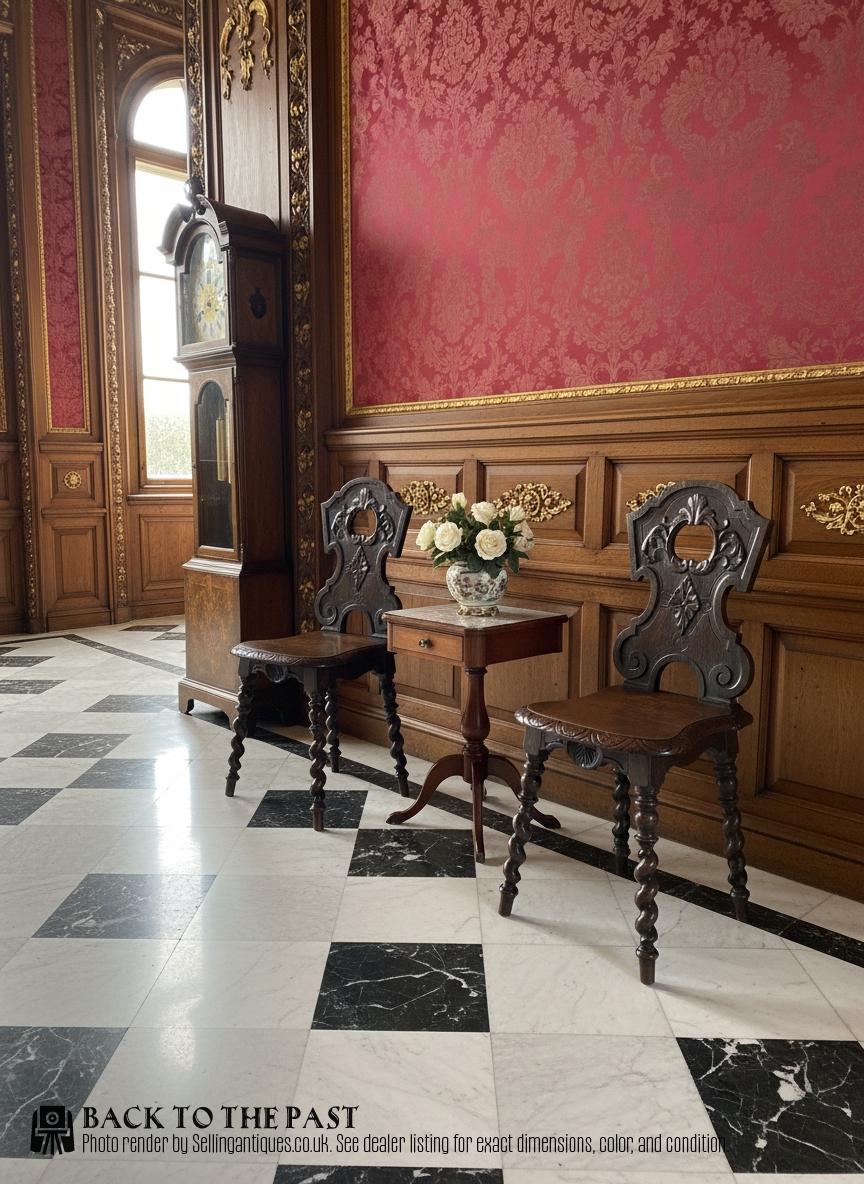
What Pair Victorian Hall Chairs Are
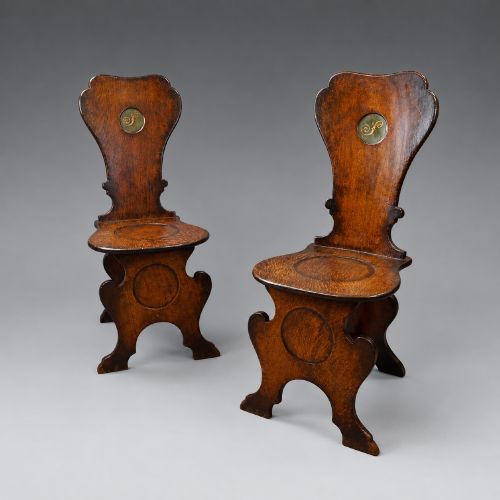
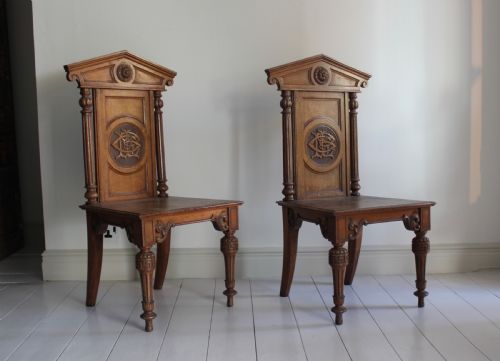
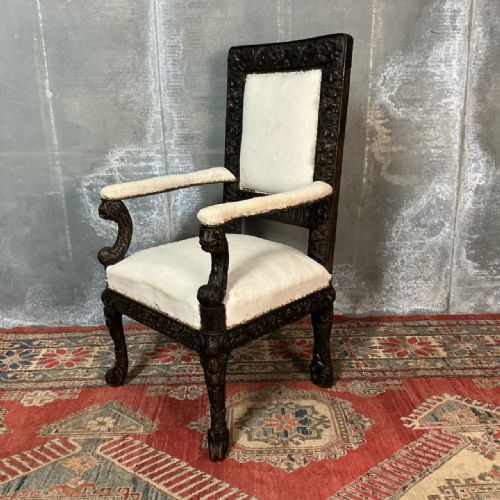
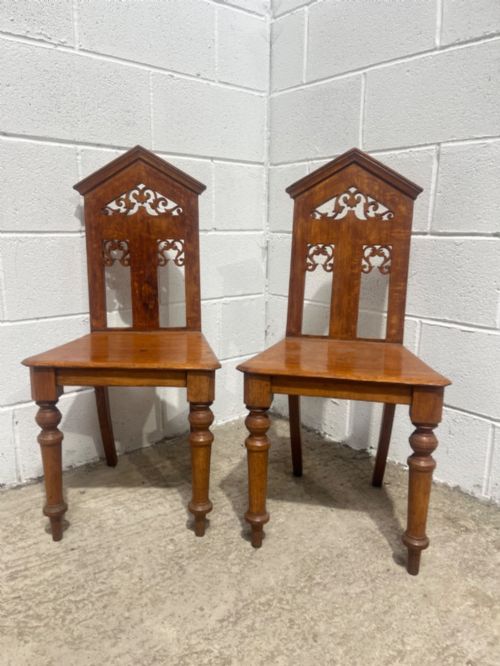
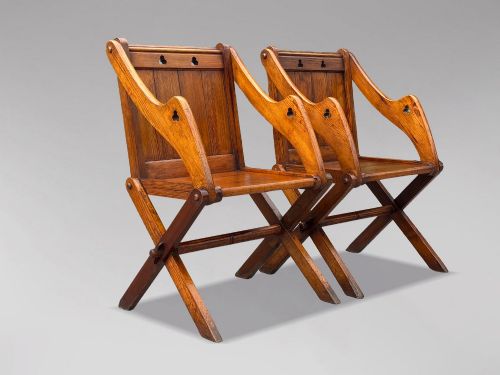
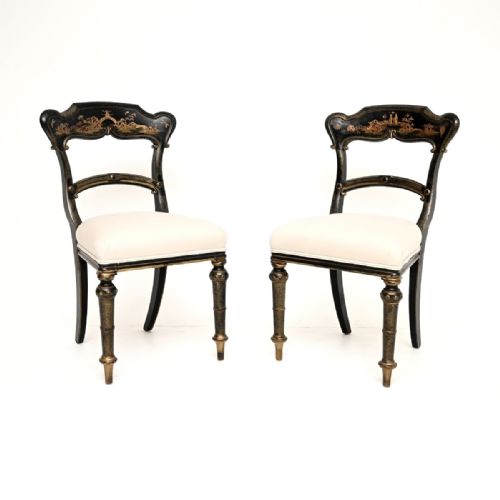
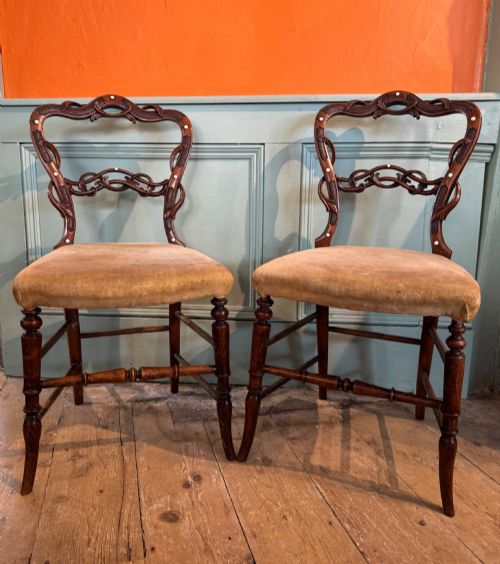
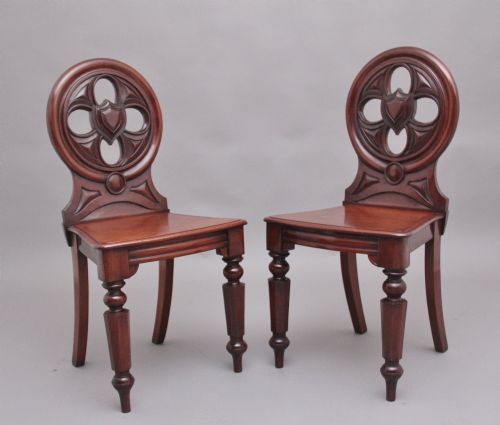
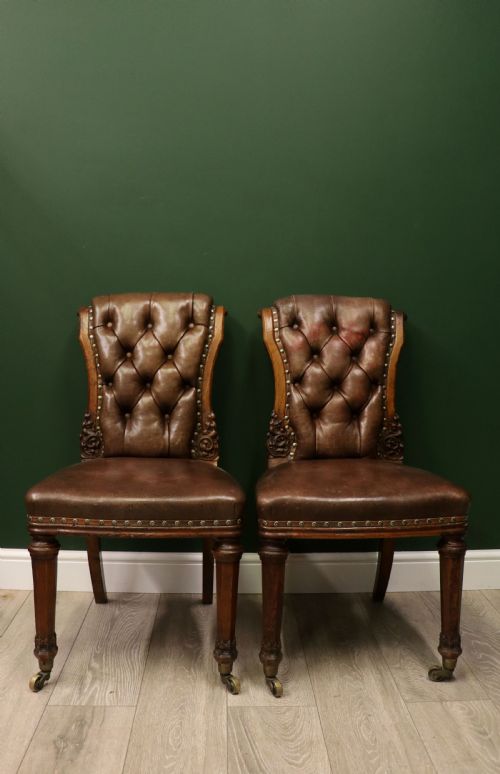
Pair victorian hall chairs represent heavy nineteenth-century seating designed for grand entranceways and reception rooms. The most common examples seen here are fashioned from solid oak or mahogany, often featuring carved wooden backs rather than upholstered comfort.
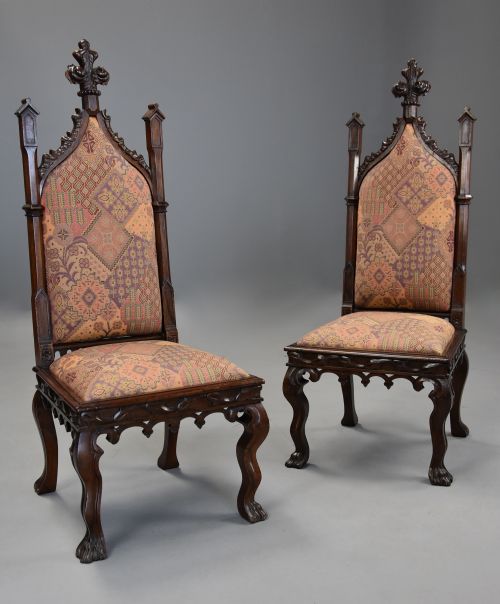
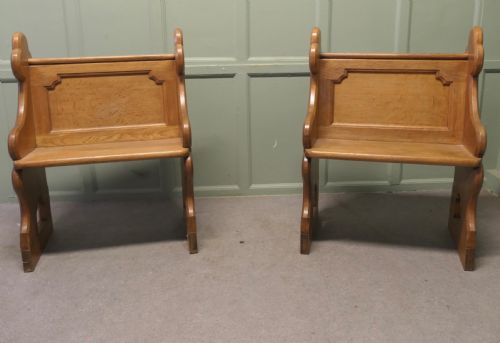
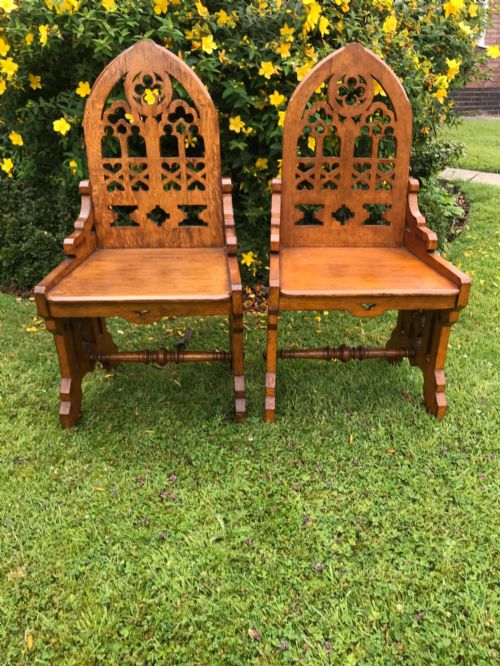
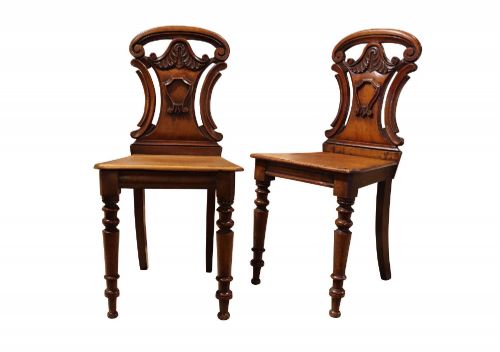
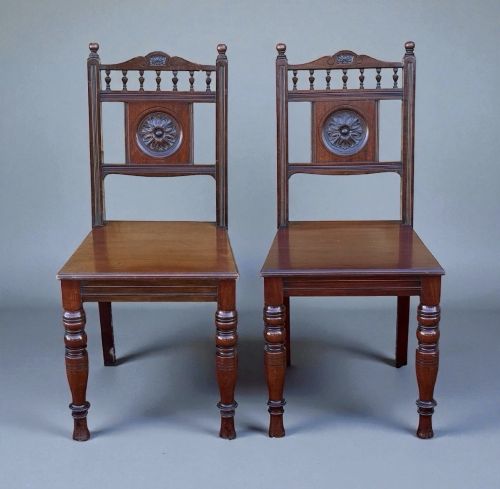
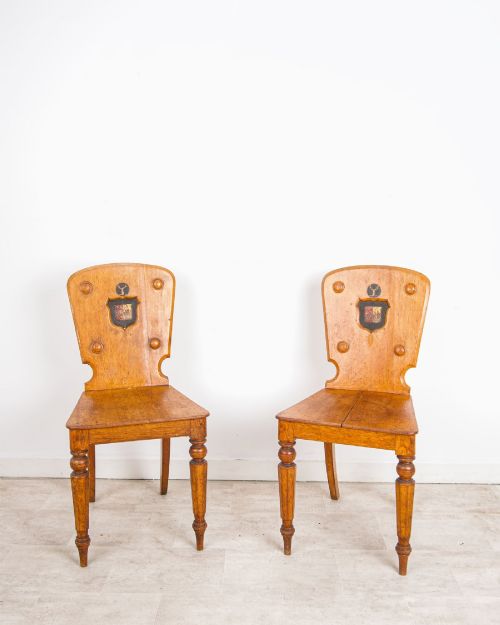
Makers produced these chairs as matching pairs to flank a hallway or reception space symmetrically. Forms range from simple shield back designs to elaborate Gothic Revival interpretations and Arts and Crafts examples fitted with ceramic tiles.
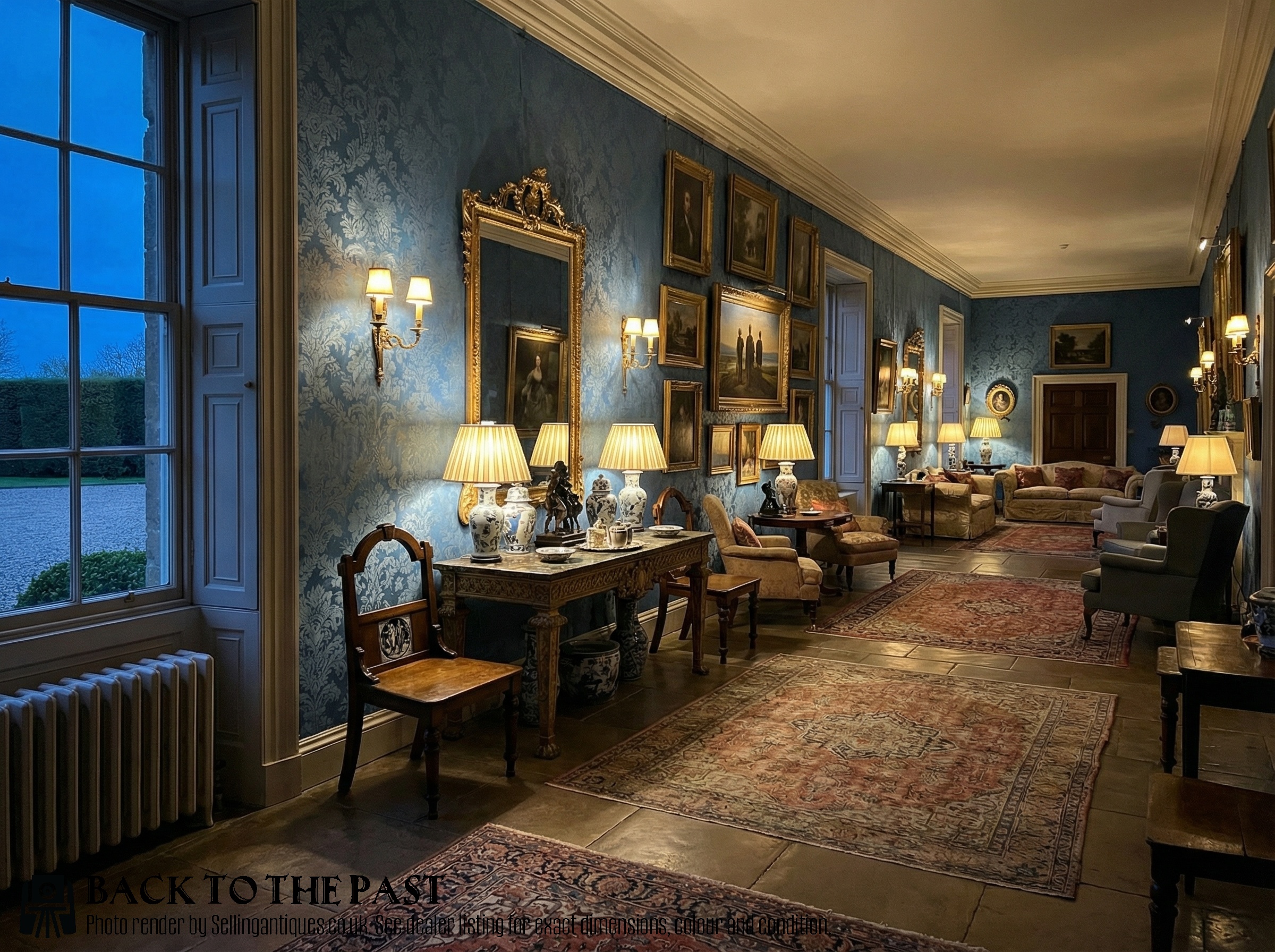
How They Were Made
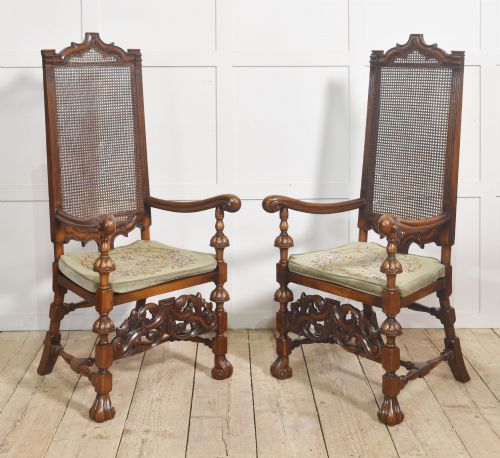
Cabinetmakers utilised dense hardwoods such as oak, mahogany, and walnut to withstand the heavy wear expected in entrance halls. Timber components were heavily carved, turned, or shaped into shield backs, crests, and spindle supports.
Certain pieces incorporate decorative elements like Minton ceramic tiles or painted heraldic panels set directly into the wooden backrests. Construction relied on robust joinery to ensure the upright frames remained rigid without upholstery.
Retail Price Guide 2026
Typical UK retail prices for pair victorian hall chairs, calculated from the Sellingantiques database of over a million retail prices indexed since 2003. This retail price guide relies exclusively on Sellingantiques data; no external sources or auction records are used, so the figures do not describe the wider market.
Listings demonstrate a strong preference for oak and mahogany timber, alongside occasional walnut and decorative ceramic tile inserts.
What Varies in Quality
Quality rests primarily on the depth and crispness of the timber carving and the selection of the primary wood. Plain mahogany or oak boards contrast with deeply carved crests, moulded shield backs, and figured grain patterns.
The inclusion of specialist details, such as inset Minton ceramic tiles or painted heraldic panels, elevates the standard of a pair. Heavier timber gauges and substantial proportions distinguish the finer workshops from standard production.
The Pair Victorian Hall Chairs Glossary
- Shield back
- A chair back shaped like a heraldic shield, popular in nineteenth-century seating design. This form provides a broad flat surface often enhanced with carved ornamentation.
- Gothic Revival
- An architectural and decorative style drawing inspiration from medieval forms. Pieces display pointed arches, tracery, and heavy structural lines.
- Arts and Crafts
- A design movement prioritising traditional craftsmanship and honest materials. Chairs in this taste often display exposed construction and simpler timber forms.
- Hall chair
- An upright wooden seat intended for occasional use in entrance halls rather than prolonged lounging. These pieces prioritise structural presence and decorative carving over padding.
Frequently Asked Questions
Where did these chairs stand?
These seats stood primarily in grand entrance halls, vestibules, and reception spaces of nineteenth-century homes.
They served as architectural accents and temporary seating for visitors waiting in the lobby.
Are they comfortable to sit on?
They were designed for upright posture and brief periods of waiting rather than relaxed lounging. The rigid wooden seats and carved backs encourage an upright stance.
Adding loose squab cushions can soften the timber surface for modern daily use.
How do I identify Gothic Revival examples?
Gothic Revival pieces display architectural motifs borrowed from medieval buildings, including pointed arches and heavy timber mouldings. These designs often feature deep oak frames and stern vertical lines.
They contrast with the smoother curves of standard shield back variations.
How do I care for nineteenth-century timber?
Maintain the wood by applying suitable furniture wax occasionally to nourish the dry surface. Keep the chairs away from direct heat sources and rapid temperature changes.
Gentle dusting with a soft cloth preserves the original polish and patina.