

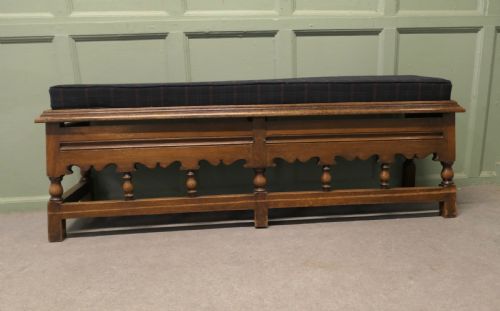


Carved Oak Window Seat
A carved oak window seat brings solid timber and period character to a light-filled alcove.
Identifying a carved oak window seat
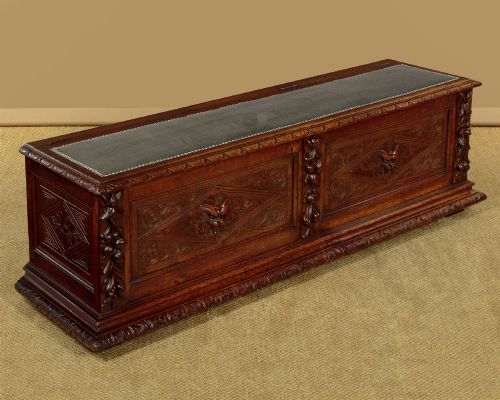
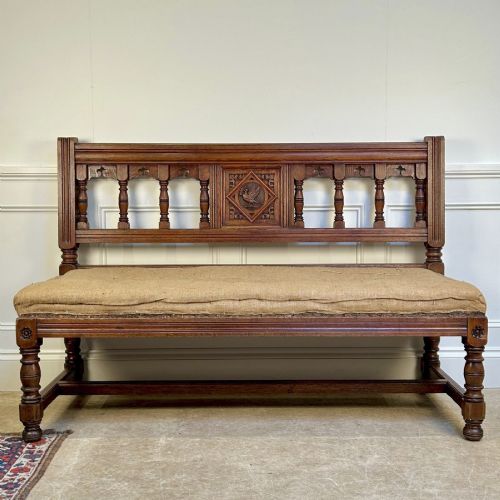
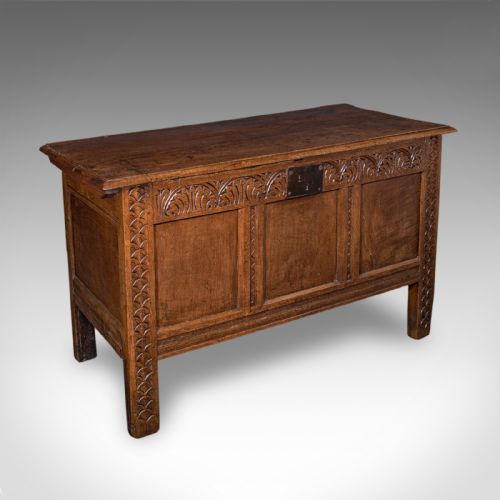
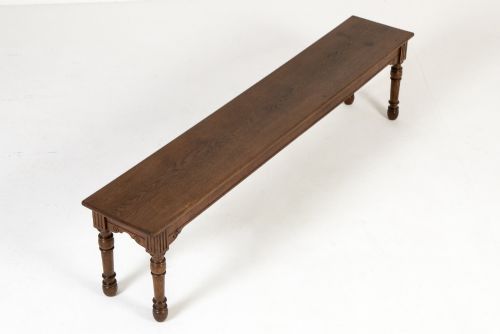
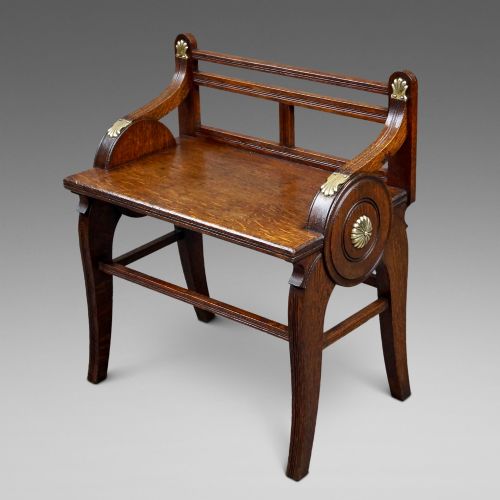
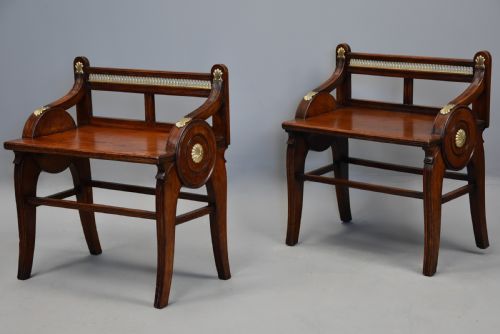
A carved oak window seat combines structural timber with decorative relief, designed to fit beneath a sill or within a hallway. These pieces span benches, joint stools, box settles, and daybeds, reflecting diverse domestic uses across historic interiors. The nineteenth century yields the highest concentration of examples on this page, often showing revival styles like Jacobean or Gothic.
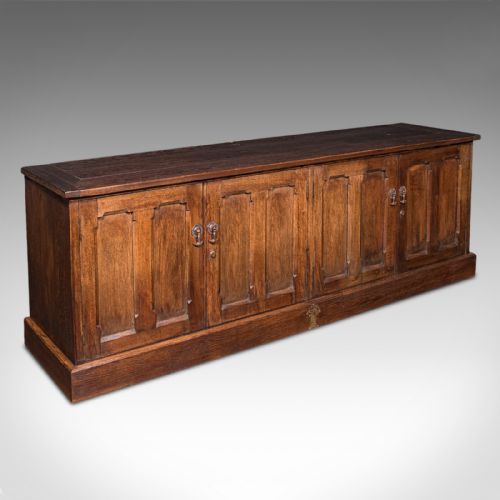
Makers adapted these forms for different rooms, sometimes integrating boot stores, storage boxes, or coffer lids beneath the seating surface. Styles range from plain country execution to elaborate French Chateau or Breton influences, alongside rectilinear Arts and Crafts designs. Oak predominates as the primary wood, frequently accompanied by secondary timbers such as elm or walnut in mixed-construction pieces.
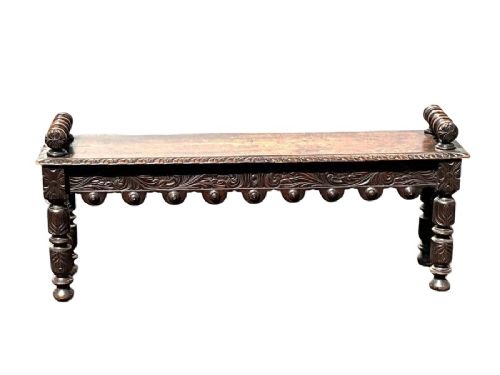
The visual vocabulary relies heavily on deep relief carving, turned legs, plank construction, and panelled backs or aprons. Proportions vary from compact stools built for a single person to longer benches intended for two. Buyers often encounter pieces that double as hall benches, pew-like settles, or low daybeds depending on the original commission.
Materials and construction methods
Carpenters relied principally on solid oak, utilising its dense grain and durability for load-bearing frames and decorative panels. Secondary woods like elm appear in structural components, while upholstery utilises textiles such as wool, tweed, silk, and velvet over internal padding. Natural finishes highlight the grain, ranging from dark patinated surfaces to golden honey tones achieved through age and wax application.
Joinery methods include traditional mortise and tenon joints, pegged constructions, and hand-cut dovetails on storage box elements. Relief carving is executed directly into the solid timber substrate, showing chip-carved geometric patterns, scrollwork, or figural motifs like the green man. Turnery on legs and stretchers is shaped on a lathe, providing robust support beneath heavy plank tops.
Retail Price Guide 2026
Typical UK retail prices for carved oak window seat, calculated from the Sellingantiques database of over a million retail prices indexed since 2003. This retail price guide relies exclusively on Sellingantiques data; no external sources or auction records are used, so the figures do not describe the wider market.
Some nineteenth-century examples hide green man carvings deep within the oak foliage, keeping a watchful eye on the hallway.
Distinguishing quality in carved oak window seats
Depth and crispness of the hand-carved ornament distinguish finer examples from standard production pieces. Sharp undercutting and confident tool marks indicate a skilled hand, whereas shallow or mechanical stamping suggests mass manufacture. The integration of secondary elements, such as panelled storage boxes or turned stretchers, reveals the original ambition of the workshop.
Timber selection significantly impacts desirability, with quarter-sawn oak displaying prominent medullary rays that enhance visual depth. The integrity of the structural joinery, including original pegged joints and sound secondary timbers like elm or walnut, underpins longevity. Upholstered variants gain distinction from the harmony between the textile choice and the period frame.
The Carved Oak Window Seat Glossary
- Joint stool
- A sturdy wooden stool constructed with mortise and tenon joints rather than turned legs driven into bored holes. These items often served multi-purpose roles in historic households.
- Green man
- A sculptural architectural ornament depicting a human face entwined with foliage, branches, or vines. This motif frequently appears carved into the woodwork of nineteenth-century revival pieces.
- Medullary rays
- Ribbons of cellular tissue radiating from the centre of a tree trunk, visible as silvery flecks in quarter-sawn oak. Artisans prized this figure for its decorative appearance on prominent surfaces.
- Settle
- A wooden bench featuring a high solid back, solid arms, and often a storage compartment beneath the seat. They were designed to block draughts in large hallways and living spaces.
Frequently Asked Questions
Where should I place a carved oak window seat?
These pieces suit narrow hallways, large bay windows, or quiet reading corners where solid timber brings architectural weight. Their traditional proportions allow them to sit comfortably beneath low sills without obstructing natural light.
Ensure the chosen spot accommodates the depth of the frame and any hinged storage lids. Placing the timber away from direct heat sources protects the oak and any accompanying wool or velvet upholstery from drying out.
How do I care for antique oak furniture?
Maintain the timber by applying a natural beeswax polish occasionally to nourish the dry grain and preserve the surface sheen. Avoid harsh chemical cleaners or excessive moisture, which can damage historic finishes and lift the grain.
Upholstered sections benefit from gentle brushing or professional cleaning suited to natural fibres like wool and silk. Keeping the room at a stable humidity level prevents the solid oak from splitting or warping over time.
What is the difference between a window seat and a hall bench?
Window seats generally feature lower profiles and compact lengths designed to fit into alcoves or beneath window frames. Hall benches often incorporate high panelled backs, arms, or enclosed storage bases intended for entryways.
Many nineteenth-century examples bridged these categories, serving dual functions as seating and storage depending on the room. The inclusion of boot stores or coffer bases usually points towards hallway utility rather than parlour use.
How can I identify the period of a carved oak seat?
Examine the style of the relief carving, which often mimics earlier historical eras like the Jacobean or Gothic revivals popular during the nineteenth century. Tool marks, joint construction, and the type of secondary timbers used inside the frame offer further clues to the date of manufacture.
Regional variations, such as French Normandy or Scottish regional pieces, display distinct stylistic markers in their turnery and proportions. Comparing the patination of the oak helps distinguish older surfaces from later restorations.