




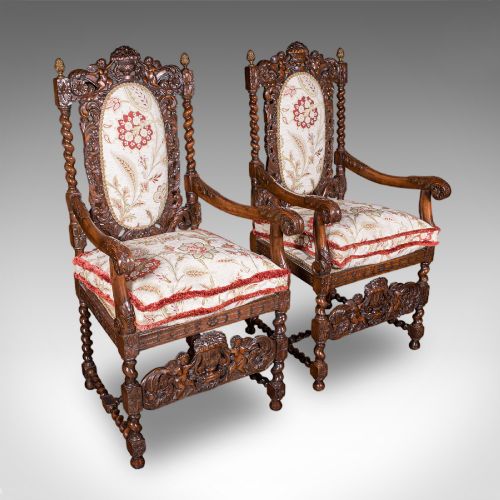
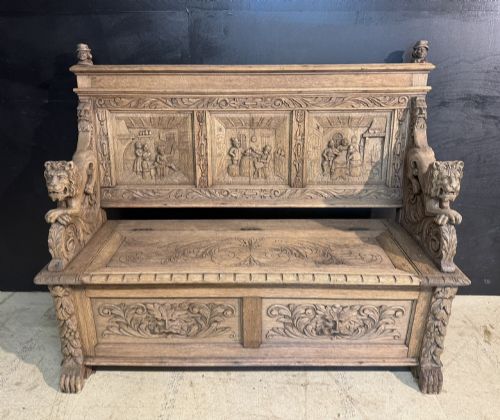

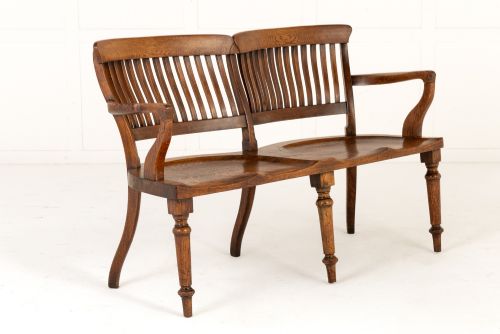
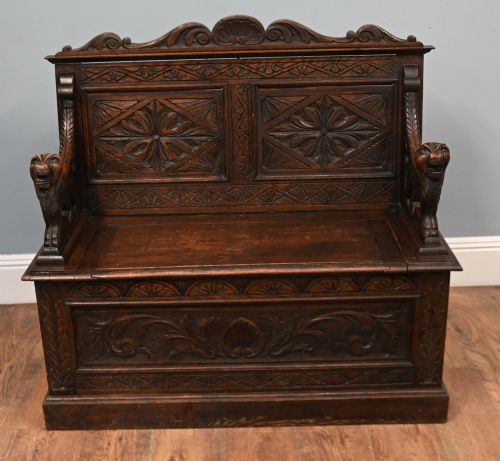
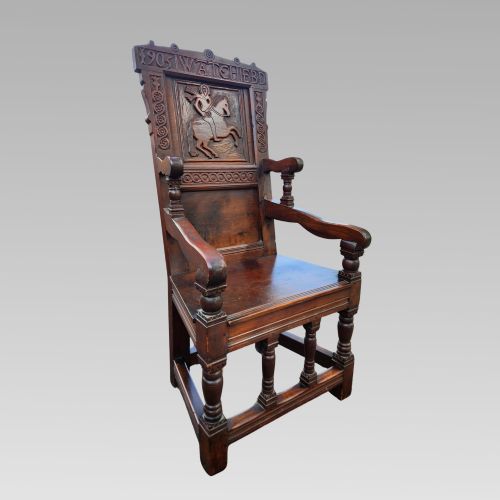
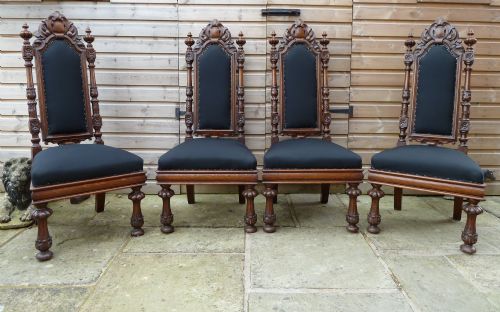
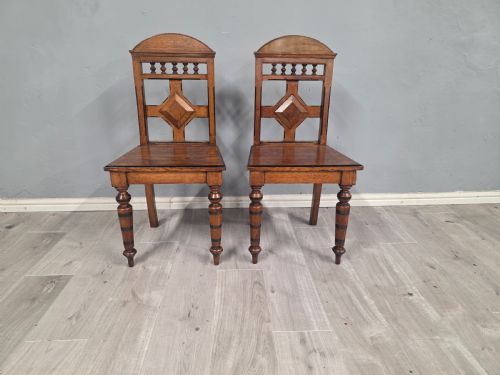
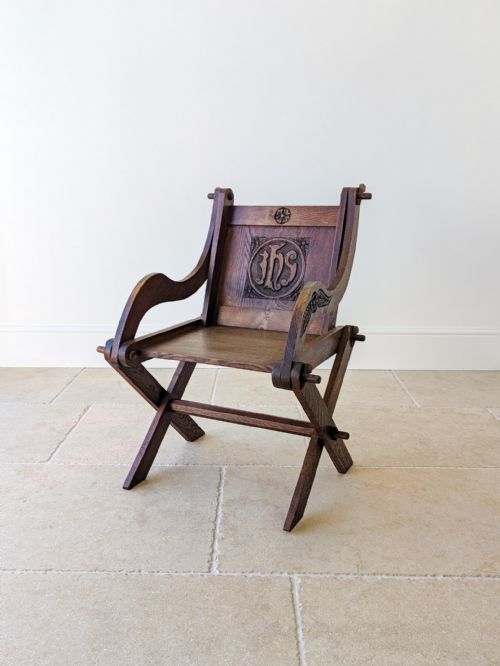
Oak Hall Seat
When you search for an oak hall seat, you are looking at substantial timber furniture designed to welcome visitors in an entranceway.
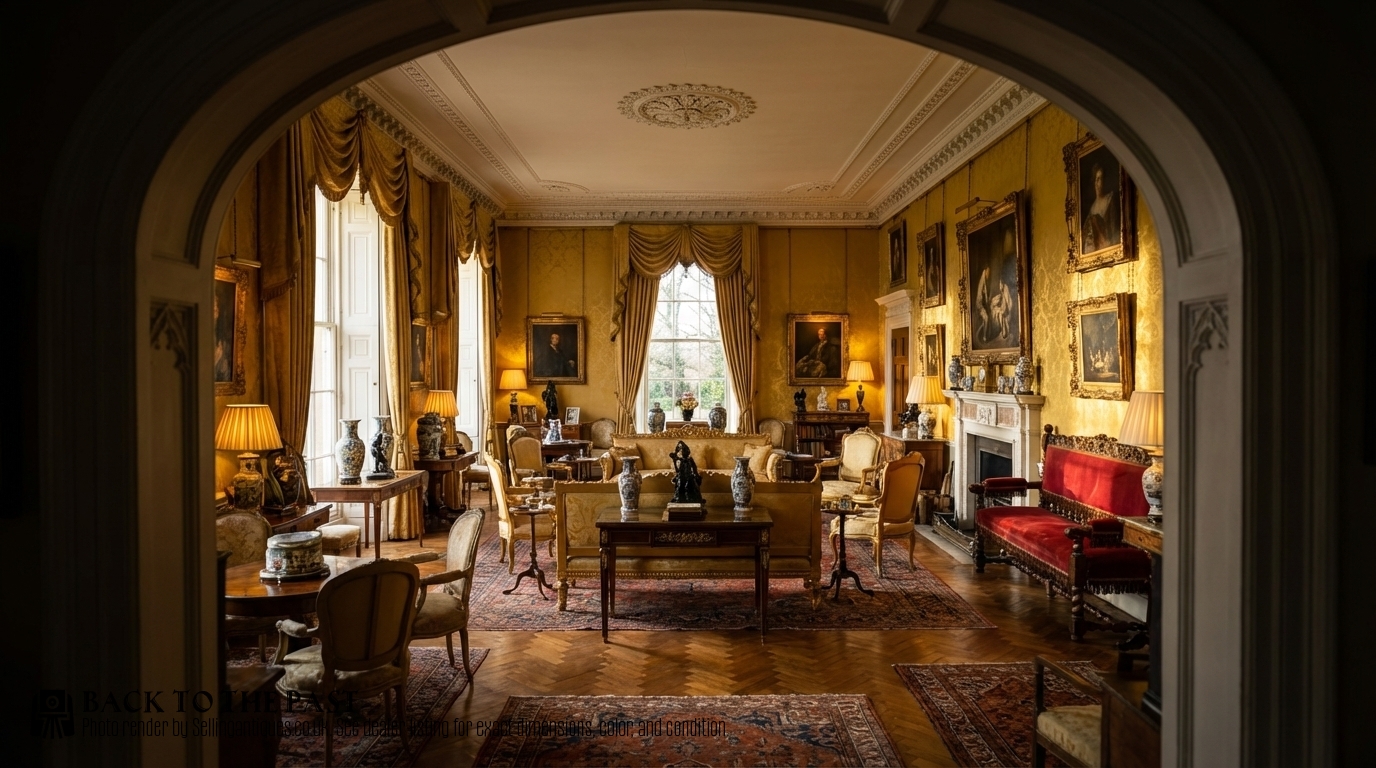
Oak Hall Seat
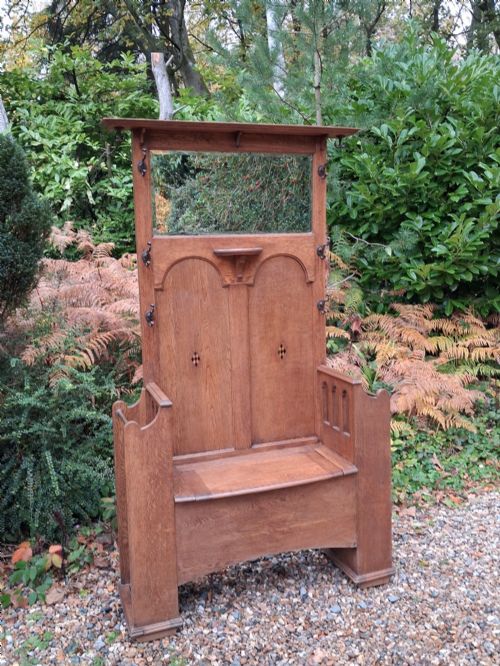
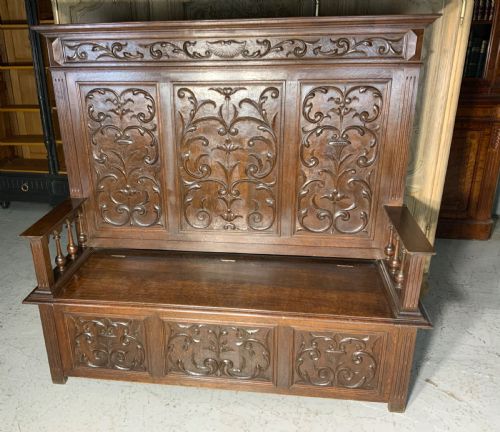
An oak hall seat serves as practical entranceway furniture, often combining a place to sit with integrated storage such as lift-up lids or box settle compartments. These pieces range from simple panelled benches and narrow proportions to architectural forms with high backs, umbrella stands, or coat hooks.
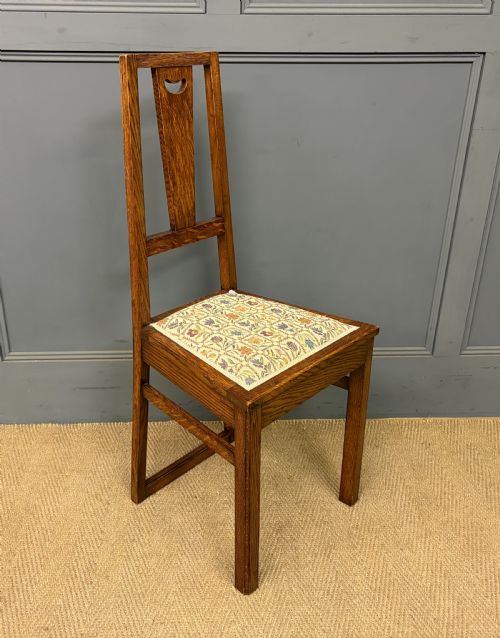
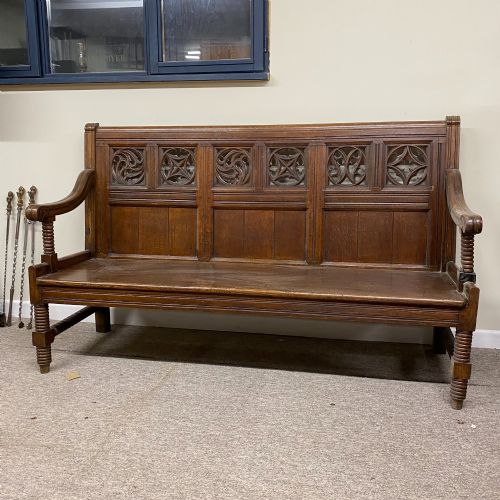
You are most likely to encounter Victorian and Edwardian examples on this page, alongside earlier 18th-century settles and later Arts and Crafts interpretations. The selection spans straightforward country benches to heavily carved Gothic Revival pieces.
The primary role of these items was to provide a sturdy resting place by the front door while keeping boots, sticks, and outdoor garments neatly organised out of sight.
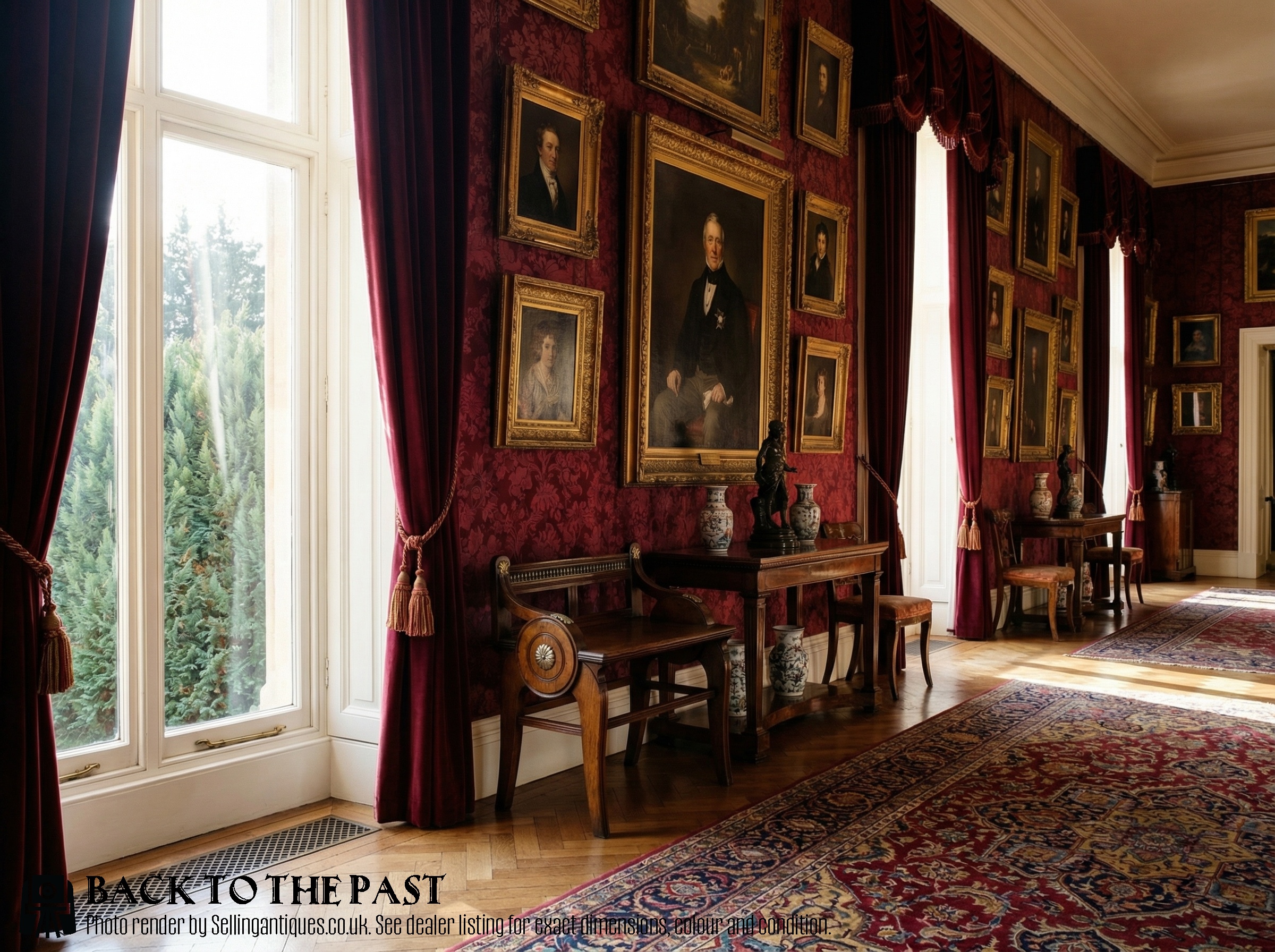
Materials and construction
Solid oak forms the foundation of nearly every piece, complemented occasionally by secondary timbers like ash or joined with iron and brass hardware. Cabinetmakers utilised traditional techniques such as panel construction, pegged joints, and solid timber framing to endure heavy daily use in busy hallways.
Surface treatment relies heavily on natural grain exposure, with many examples featuring waxed finishes, carved decorative panels, or turned elements like bobbin and barley twist supports. Upholstery appears selectively on specific variants, incorporating leather, fabric, needlepoint, or velvet to pad the seats.
Oak Hall Seat Retail Price Guide 2026
Typical asking prices for oak hall seat among the pieces listed under this phrase on Sellingantiques today, from the lower quarter to the upper quarter. They describe what is for sale here now, not the wider market.
The listings on this site span periods from the 18th century through to the Edwardian era, constructed primarily in solid oak.
Judging the standard
The standard of these items is determined by the depth and crispness of the hand-carving, the weight and selection of the solid oak timber, and the integrity of the original construction. Superior pieces display thoughtful proportions, balanced architectural details, and well-executed joinery that remains tight after centuries of use.
Lesser examples may feature plain, machine-cut boards with minimal detailing, altered dimensions, or replacement hardware that disrupts the period harmony of the design.
GIllows·Shoolbred
The Oak Hall Seat Glossary
- Settle
- A wooden bench with a high back, solid arms, and frequently a box seat compartment beneath the squab. This form kept draughts away from the occupants in traditional hallways.
- Monks bench
- A versatile convertible item featuring a fold-over top that transforms the backrest into a table surface. It combines seating with hidden storage beneath the hinged seat.
- Box settle
- A heavy seat featuring a compartment accessed by lifting the lid of the bench. It provided secure storage for blankets, boots, and household goods near the entrance.
- Gothic Revival
- A 19th-century style drawing inspiration from medieval architecture and ecclesiastical ornamentation. Pieces often display pointed arches, trefoil carvings, and heavy tracery.
- Arts and Crafts
- A design movement prioritising honest construction, visible hand craftsmanship, and simple utility over excessive factory ornamentation. These items highlight the natural grain of the oak.
Oak Hall Seat: Frequently Asked Questions
What is an oak hall seat used for?
These pieces provide a convenient spot to sit while putting on or removing outdoor footwear in an entrance hall. Many designs incorporate integrated storage beneath the seat or built-in racks for umbrellas and walking sticks.
Historically, they served as a grand architectural statement for visitors entering a home, offering both practical utility and a display of the owner's taste.
Will a heavy wooden bench fit in a modern hallway?
Many listings include narrow proportions specifically designed for tight corridors, though depth and overall length vary significantly across the centuries. It is essential to measure both your available floor space and any tight corners or doorways the piece must pass through.
Box settles and multi-functional hall stands require more generous clearance compared to simple side chairs or slim benches.
How do I care for solid oak furniture?
Keep wooden surfaces away from direct heat sources and strong sunlight to prevent the timber from drying out or splitting. Regular dusting with a soft cloth and occasional application of appropriate beeswax will maintain the natural lustre of the finish.
Avoid using harsh chemical polishes that can build up on antique waxed surfaces over time.