





Victorian Oak Settle
When you search for a victorian oak settle, you are looking at substantial hall seating built to anchor entrance spaces with historic architectural presence.
Victorian Oak Settle
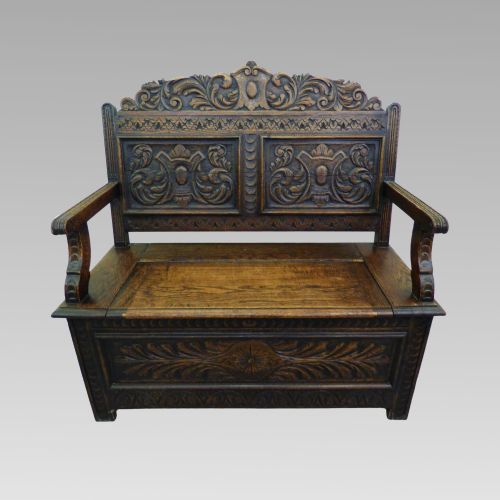
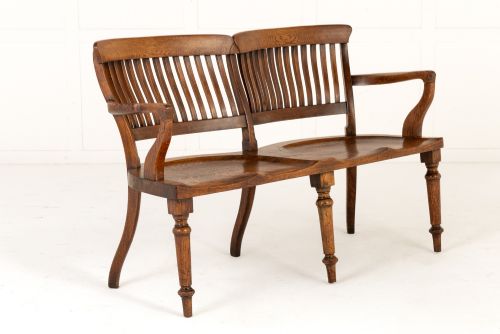
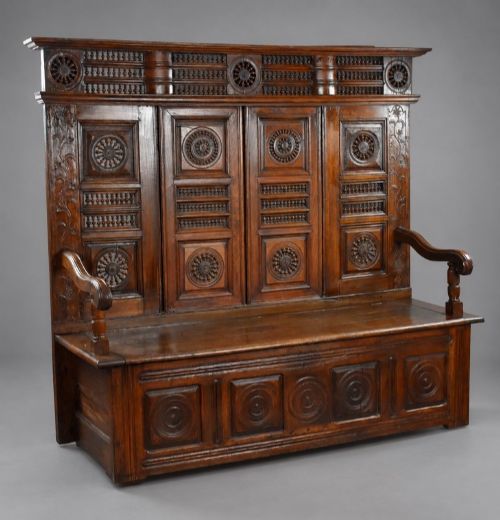
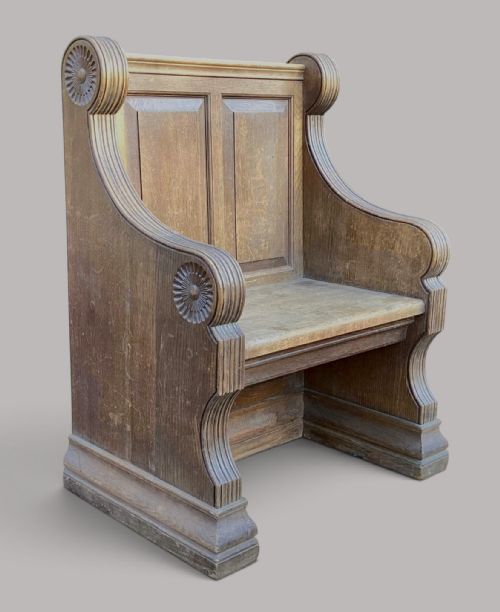
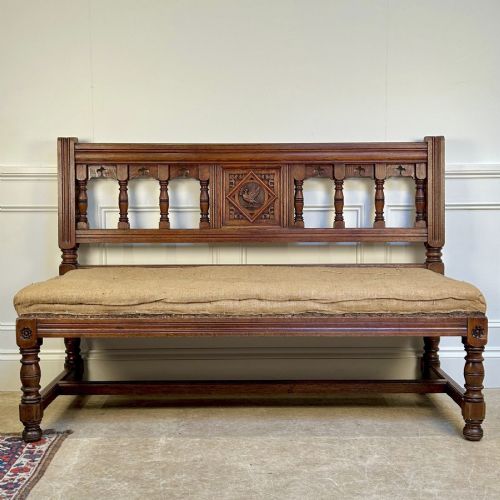
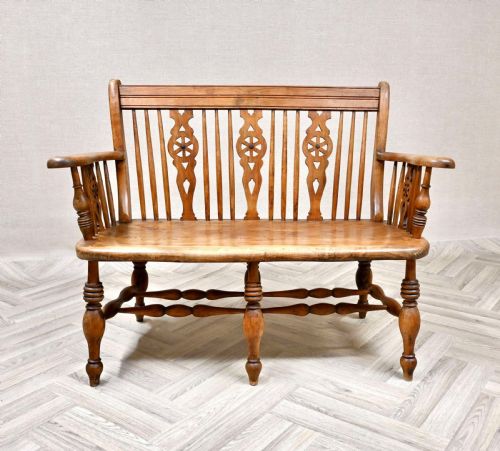
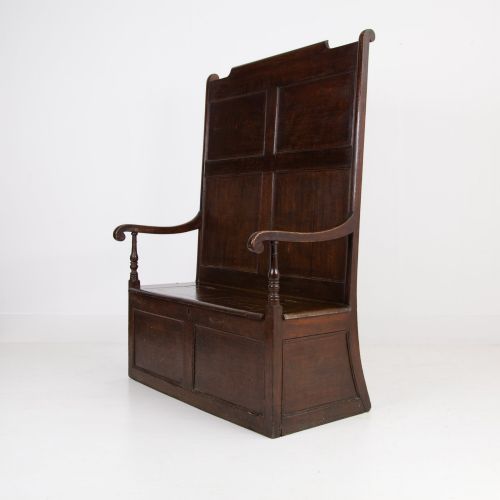
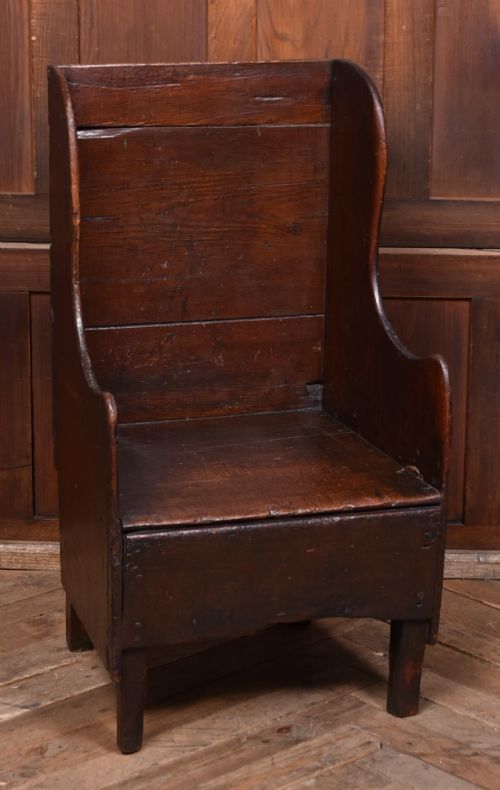
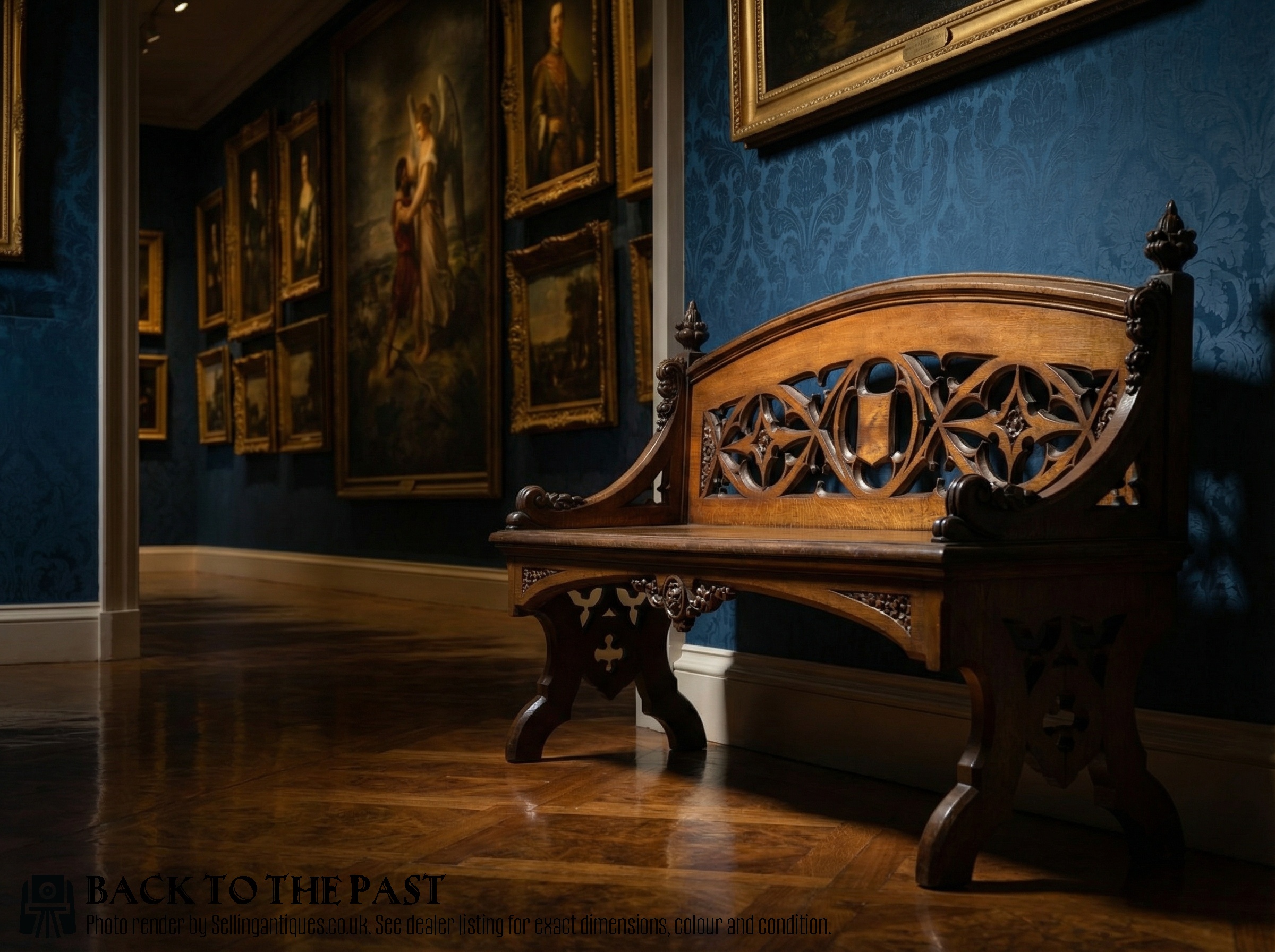
A victorian oak settle is a high-backed wooden bench originally designed to block draughts in large hallways and reception rooms. These pieces frequently incorporate panelled backs and substantial armrests, drawing on historical forms such as Jacobean and Gothic revival styles.
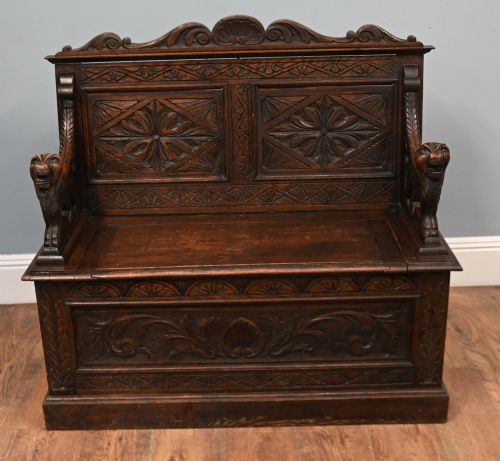
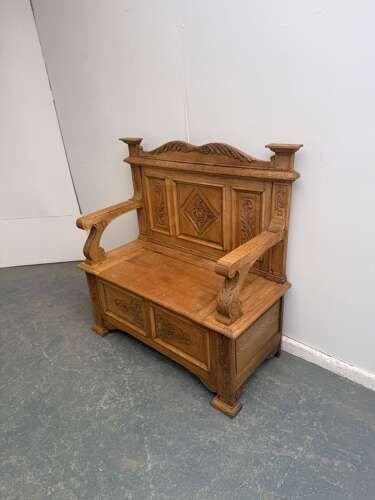
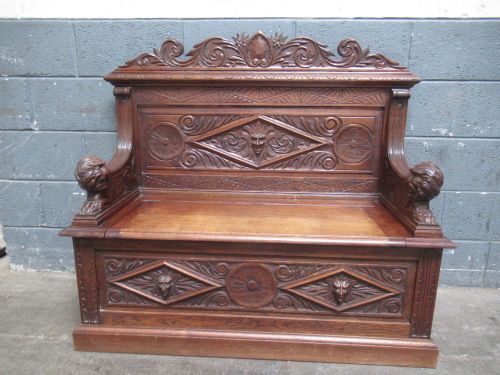
You will encounter numerous variations on this page, ranging from simple panelled hall benches to elaborate box settles with lift-up lids for storage. Many examples feature carved decoration, including Green Man motifs, scrolling foliage, and architectural pediments typical of the nineteenth century.
Makers and makers' workshops also produced convertible forms known as monk benches, where the high back folds down to form a table top. The selection includes regional variants from English country workshops alongside Scottish and Irish examples.
How they were made
Carpenters constructed these settles primarily from solid oak, frequently supplemented by secondary timbers like elm, pine, and burr elm for internal panels or structural framing. Workshops utilised traditional mortise and tenon joinery to ensure the high backs and heavy seats remained rigid under daily use.
Carving was executed by hand, yielding deep relief work on the crest rails, arm supports, and back panels. Surface finishes relied on traditional wax polish applied over timber, occasionally accented with brass mounts, iron hinges, or leather upholstery.
Victorian Oak Settle Retail Price Guide 2026
Typical asking prices for victorian oak settle among the pieces listed under this phrase on Sellingantiques today, from the lower quarter to the upper quarter. They describe what is for sale here now, not the wider market.
Keep an eye out for cheeky Green Man faces peering out from the carved foliage on the back panels.
What varies in quality
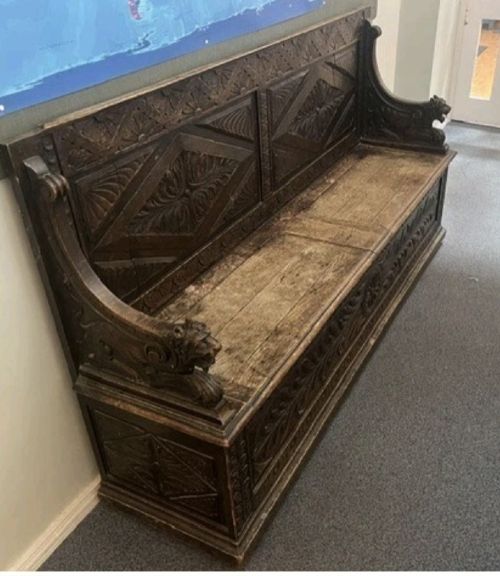
The distinction between ordinary utility seating and superior examples rests on the depth and crispness of the timber carving, alongside the selection of well-figured oak boards. Pieces featuring architectural elements like panelled canopies, lion arm supports, or integrated storage boxes display greater ambition in design and execution.
Structural integrity also separates individual items, as heavier framing, original hinged lids, and untouched surface patination indicate careful preservation. The presence of documented maker signatures or distinctive regional vernacular details elevates certain pieces above standard production.
GIllows·James Shoolbred & Co.
The Victorian Oak Settle Glossary
- Settle
- A wooden bench with a high back, solid arms, and often a closed base, designed to provide shelter from draughts in entrance halls. These pieces served as primary seating in domestic and public interiors.
- Box settle
- A variant featuring a hinged seat that lifts to reveal a storage compartment beneath. This dual-purpose form allowed households to store blankets, boots, or general items within the hallway.
- Monk bench
- A convertible piece of furniture with a pivoting or folding back that transforms the high-backed seat into a table top. It represents a clever space-saving design popular during the revival periods.
- Green Man
- A sculptural architectural motif depicting a human face carved with leaves, vines, or foliage emerging from the mouth. This ancient symbol enjoyed widespread popularity across nineteenth-century revival furniture.
- Gothic Revival
- An architectural and decorative style drawing inspiration from medieval design, featuring pointed arches, tracery, and heavy mouldings. Cabinet makers applied these motifs to create dramatic hall furniture.
Victorian Oak Settle: Frequently Asked Questions
Where did people put a settle?
These pieces traditionally stood in large entrance halls, vestibules, and reception rooms to provide immediate seating upon entering the house.
Their high backs helped block cold draughts blowing in from external doors while offering a commanding architectural feature in the hallway.
How do you use a box settle today?
Modern interiors utilise these benches in hallways or boot rooms to provide practical everyday seating alongside concealed storage space for shoes and household items.
The lift-up seat makes them particularly useful for keeping entryways tidy while maintaining a strong historic focal point.
What is a monk bench used for?
A monk bench functions as both a high-backed hall seat and a table by folding the upper back panel down over the arms.
This clever dual purpose provided households with a versatile surface for small spaces when extra table space was needed.
How can you tell revival styles apart?
Gothic Revival pieces display pointed arches, tracery, and ecclesiastical details, whereas Jacobean Revival examples focus on geometric panelling and strapwork.
Renaissance Revival items incorporate bolder classical motifs, figurative carvings, and architectural pediments borrowed from earlier European traditions.