



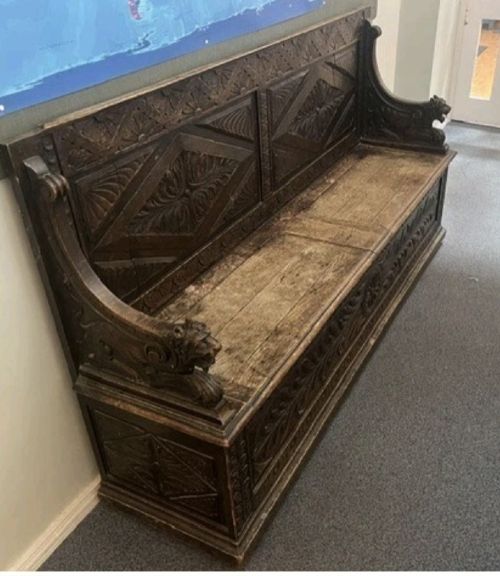
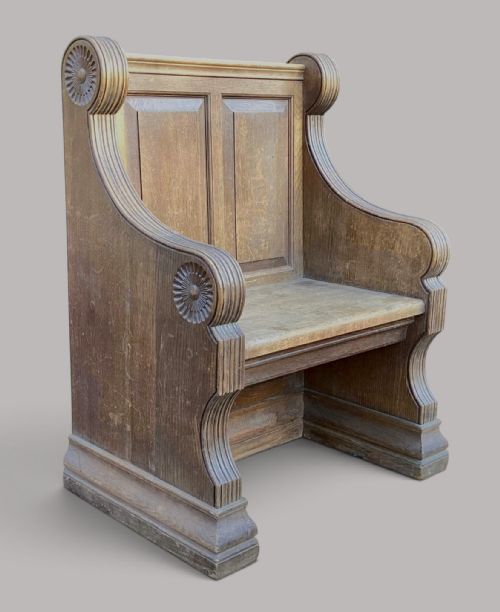
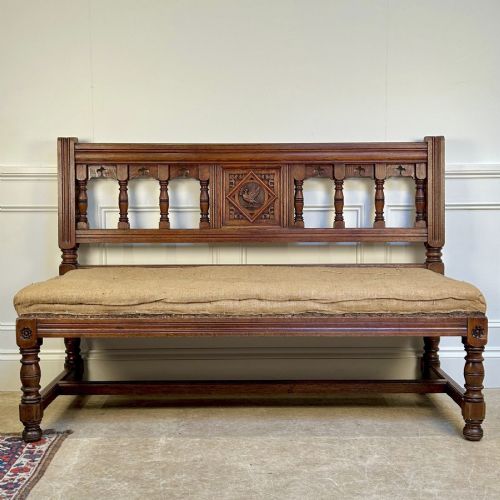
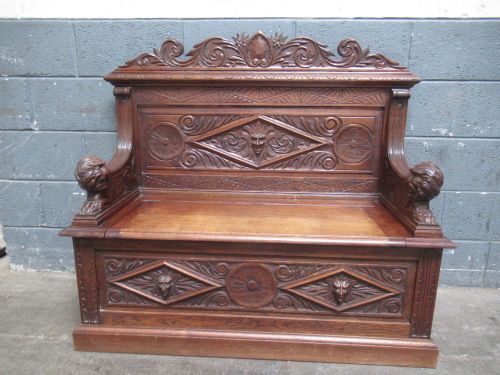





Gothic Revival Oak Settle
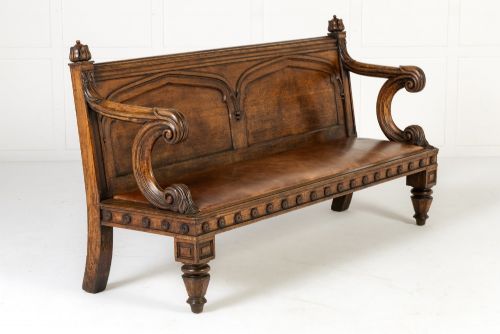
A gothic revival oak settle brings architectural presence and heavy timber construction directly into a hallway or reception room.
Gothic Revival Oak Settle
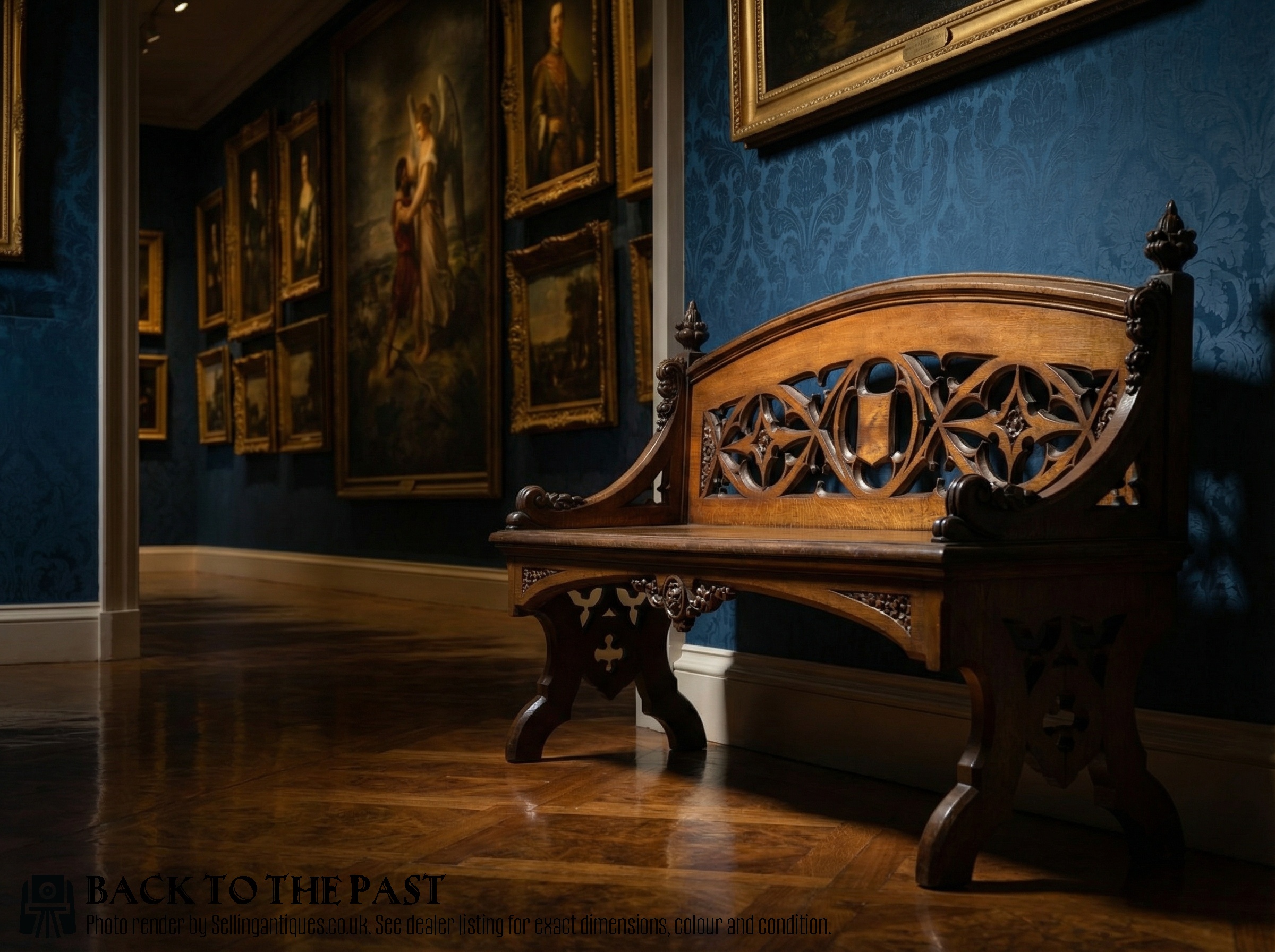
When you search for a gothic revival oak settle, you encounter robust seating designed for entrance halls, corridors, and grand reception spaces. The pieces appearing here span the nineteenth century, including Victorian interpretations alongside later Arts and Crafts and Edwardian examples.
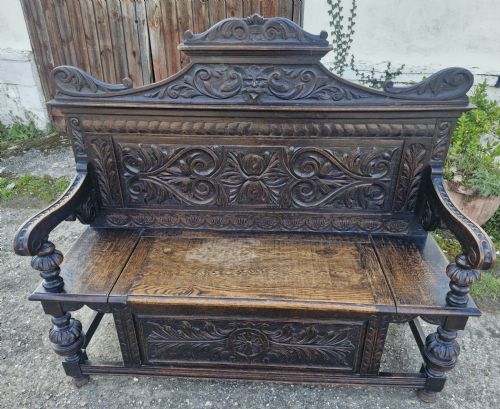
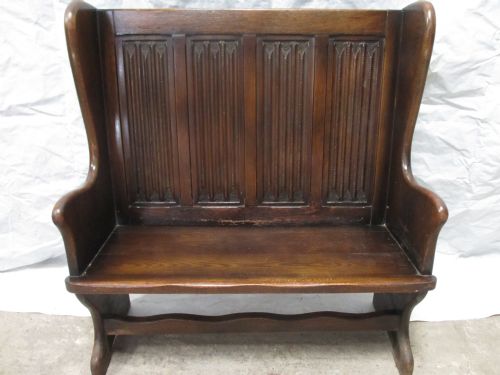
Most items on this page take the form of hall benches, high-backed settles, or convertible monks benches with lift-up seats and folding tabletops. They emerge from Victorian, Jacobean Revival, Reformed Gothic, and Victorian Baronial design traditions, frequently incorporating architectural proportions and panelled backs.
What varies in quality
Depth of carving and clarity of detail distinguish the finer examples from standard production, particularly where figures such as Green Man motifs or tracery panels are concerned. Architectural ambition also sets pieces apart, with solid timber framing, panelled backs, and substantial proportions indicating higher workshop standards.
The integrity of the timber and the retention of original structural elements define the better survivors. Pieces that maintain their heavy solid oak seats without intrusive alterations represent the stronger examples in this category.
Gothic Revival Oak Settle Retail Price Guide 2026
Typical asking prices for gothic revival oak settle among the pieces listed under this phrase on Sellingantiques today, from the lower quarter to the upper quarter. They describe what is for sale here now, not the wider market.
Listings on this site frequently combine oak with iron and brass fittings, reflecting nineteenth-century Gothic Revival and Arts and Crafts design traditions.
GIllows
The Gothic Revival Oak Settle Glossary
- Settle
- A wooden bench with a high back, solid arms, and often a storage compartment beneath the seat. This form provided shelter from draughts in large halls.
- Monks bench
- A convertible piece of furniture featuring a hinged top that folds down to form a table and a seat base that doubles as a storage chest.
- Reformed gothic
- A late nineteenth-century design style focusing on simplified structural forms and flatter, more geometric ornamentation rather than complex medieval revivalism.
- Baronial
- A style descriptor denoting heavy, imposing proportions, robust carving, and Scottish or northern European baronial architectural influences.
- Tracery
- Openwork or surface stone-like patterns in wood, derived from Gothic ecclesiastical window design and frequently carved into chair and settle backs.
Gothic Revival Oak Settle: Frequently Asked Questions
Where were settles placed?
These pieces traditionally stood in entrance halls, corridors, and large reception spaces to provide seating for visitors while blocking cold draughts from doorways.
Their substantial high backs and solid wooden construction made them practical functional furniture for high-traffic areas of a home.
What is a monks bench?
A monks bench is a dual-purpose piece of furniture that converts from a seat with a high panelled back into a table by folding the back forward over the arms.
This clever design allowed dual functionality in smaller spaces or utility rooms where extra surface area was occasionally required.
How do I date a settle?
Dating relies on examining the timber construction, the style of carving, and the specific revival movement influences present in the woodwork, ranging from mid-Victorian Gothic to later Arts and Crafts interpretations.
Comparing the joinery methods and hardware to known period examples helps narrow down the decade of manufacture.
Are these benches comfortable?
Most nineteenth-century hall settles and benches were built for architectural presence and upright posture rather than lounging, often featuring solid wooden seats and high backs.
Some variants incorporate upholstered pads in leather, fabric, or hessian to soften the seating experience.
How do I care for oak furniture?
Solid oak furniture benefits from steady indoor humidity levels away from direct heat sources and radiators to prevent timber shrinkage and splitting.
Regular dusting and occasional treatment with appropriate beeswax help maintain the natural lustre of the antique wood surface.