


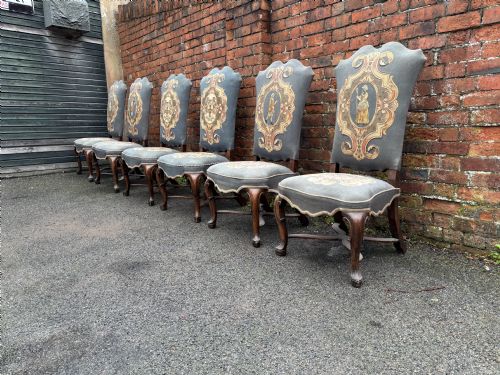


Dark Walnut Dining Chairs
Dark walnut dining chairs bring rich timber tones and centuries of seating history straight to the dining table.
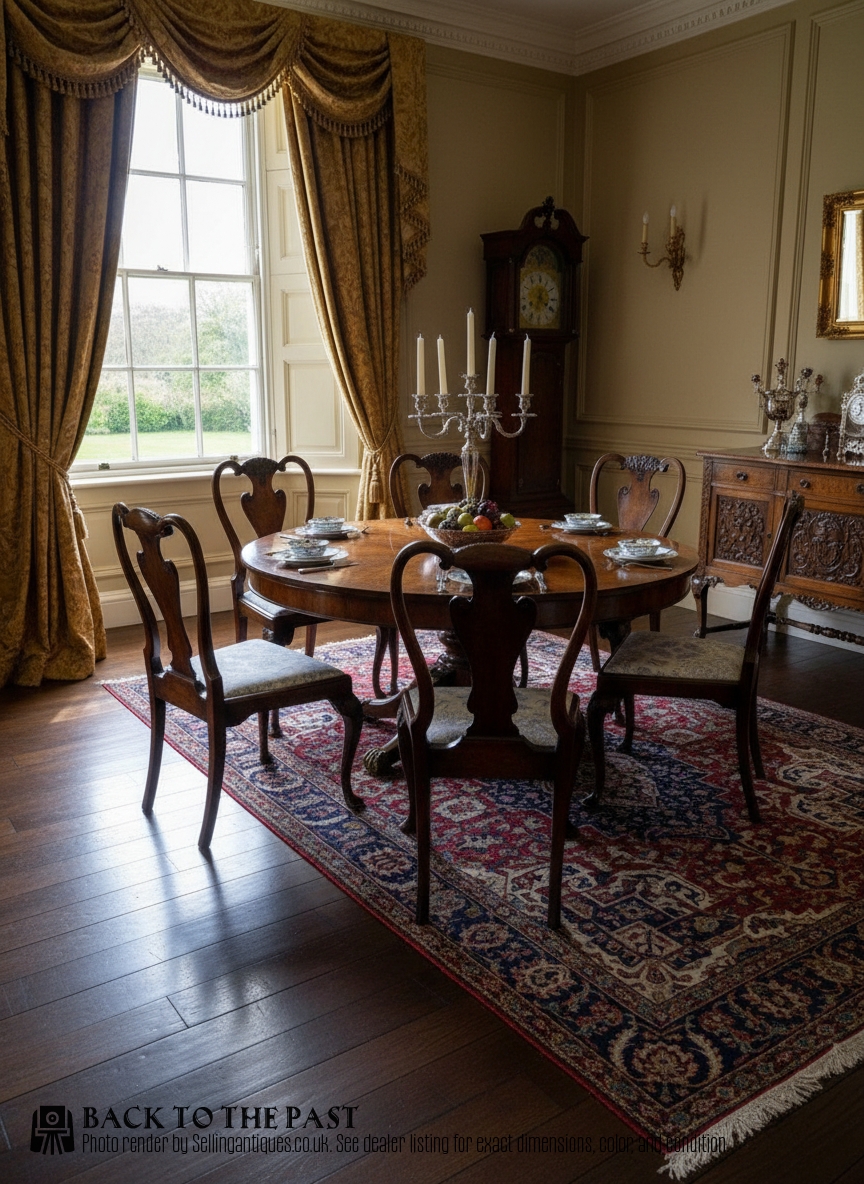
What dark walnut dining chairs are
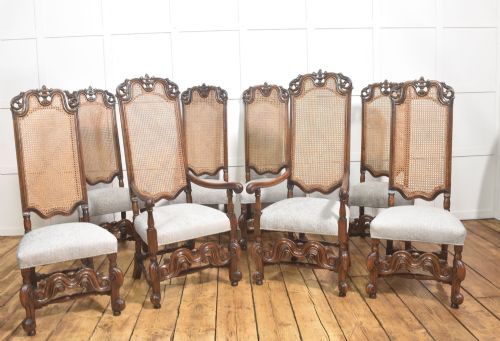
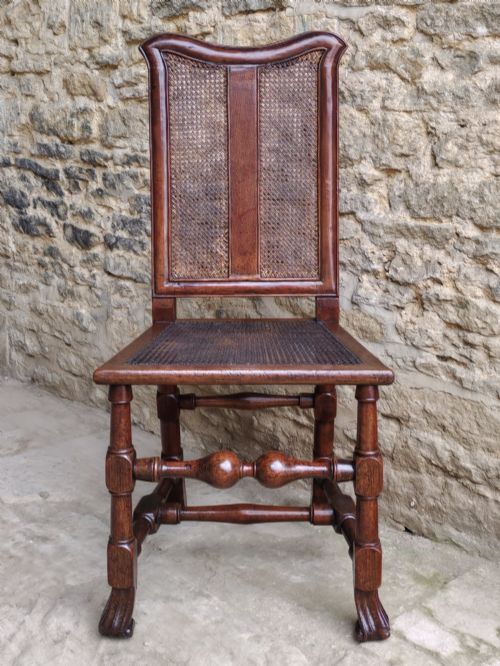
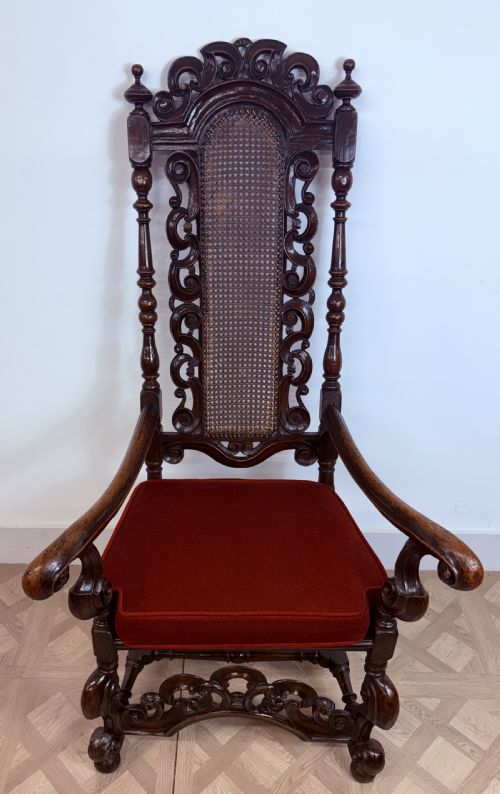
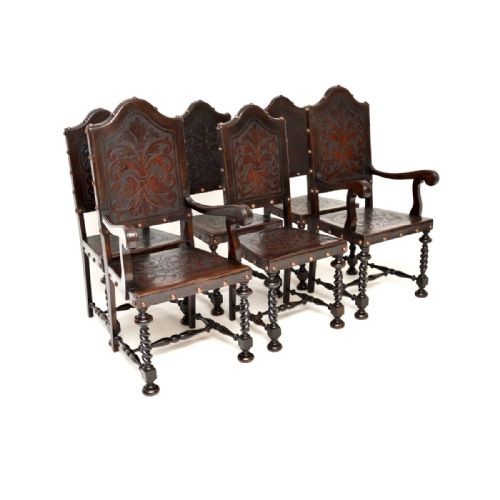
Dark walnut dining chairs cover seating pieces fashioned from rich, dark timber across several distinct historical periods. When searching for dark walnut dining chairs, buyers encounter forms ranging from early eighteenth century high back designs to late Victorian sets.
Examples span formal George I seating, Portuguese Baroque creations, and balloon back occasional chairs. This variety gives collectors access to centuries of cabinet making expertise in a single seating form.
How dark walnut dining chairs were made
Cabinet makers utilised solid walnut and burr walnut veneers to construct these frames, often incorporating intricate carving. Workshops applied bone inlay on select pieces to create striking visual contrast against the dark timber ground.
Structural elements frequently feature cabriole legs and supportive stretcher rails shaped by hand tools. Upholstery fabrics, velvet, and cane inserts complete the seating surfaces, secured with traditional methods.
Retail Price Guide 2026
Typical UK retail prices for dark walnut dining chairs, calculated from the Sellingantiques database of over a million retail prices indexed since 2003. This retail price guide relies exclusively on Sellingantiques data; no external sources or auction records are used, so the figures do not describe the wider market.
Materials documented across these listings include solid walnut, burr walnut, bone, cane, fabric, and velvet.
What varies in quality
Quality depends upon the crispness of the carved details and the choice of timber figure, such as burr walnut veneers. Superior examples display refined proportions and cohesive design elements that reflect the maker's skill during the period of origin.
The integration of secondary materials like bone inlay and the preservation of original cane or upholstery elements dictate the standing of individual pieces. Masterful joinery and well executed cabriole legs separate fine workshop output from standard production.
The Dark Walnut Dining Chairs Glossary
- Cabriole leg
- A furniture leg that curves out and then narrows inward, imitating an animal's leg. This form appears frequently on walnut seating from the eighteenth and nineteenth centuries.
- Burr walnut
- A prized wood veneer showing swirling, knotty grain patterns harvested from tree growths. Cabinet makers utilised this decorative timber on prominent surfaces of fine dining chairs.
- Aesthetic Movement
- A late nineteenth century design style emphasising visual beauty over narrative content. Pieces from this movement display distinctive artistic influences and Japanese inspired motifs.
- High back chair
- A seating form featuring an elongated backrest that rises significantly above the seat. These chairs were favoured in formal interiors during earlier centuries.
Frequently Asked Questions
How do I date dark walnut dining chairs?
Dating relies upon stylistic markers such as cabriole legs, high backs, and specific ornamental details like bone inlay. Comparing the construction methods and timber characteristics against known historical periods helps narrow the timeframe.
Changes in silhouette, from rigid early eighteenth century proportions to flowing Victorian balloon backs, offer clear chronological clues for the collector.
Are these chairs suitable for daily use?
Many antique walnut chairs remain sturdy enough for regular seating when the underlying timber frame is sound. Careful placement and mindful handling help preserve original joinery and decorative surfaces.
Owners often balance daily utility with the preservation requirements of delicate upholstery fabrics or cane work.
What is the difference between side chairs and dining chairs?
Side chairs are generally built without arms and were designed to sit against a wall when not in use around a table. Dining chairs encompass both armless and armed variants specifically intended for seating guests during meals.
Both types share the same stylistic vocabulary within specific historical periods.
How should I care for walnut furniture?
Protecting walnut surfaces involves keeping them away from direct sunlight and maintaining stable indoor humidity levels. Gentle dusting with a soft cloth preserves the natural lustre of the dark timber.
Avoid harsh chemical cleaners that can strip the historic finish or damage delicate veneer work.