

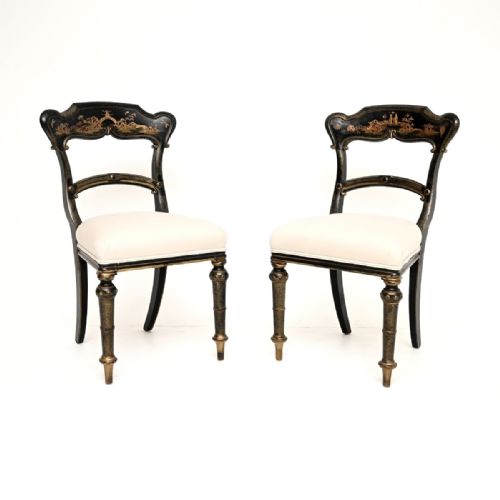
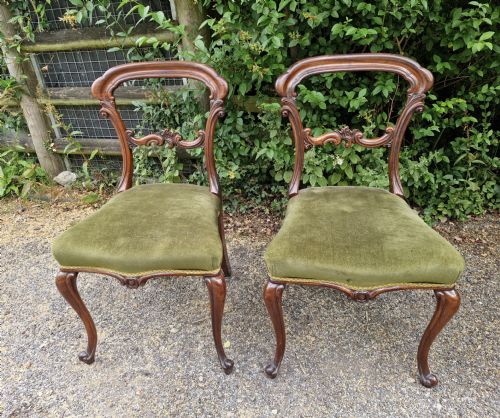
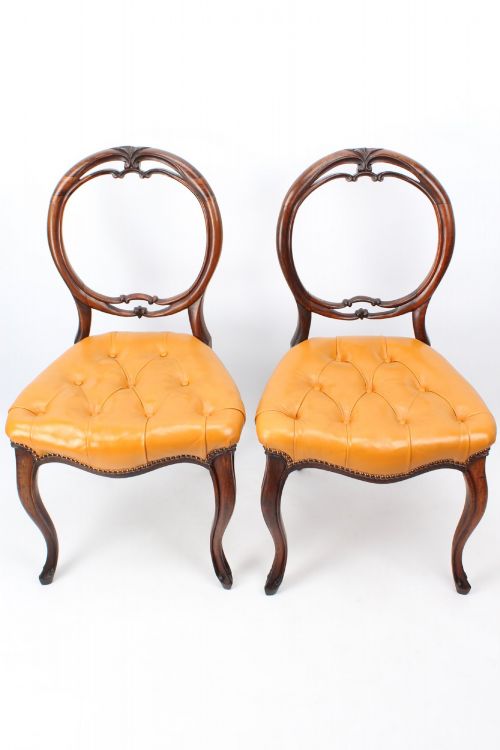
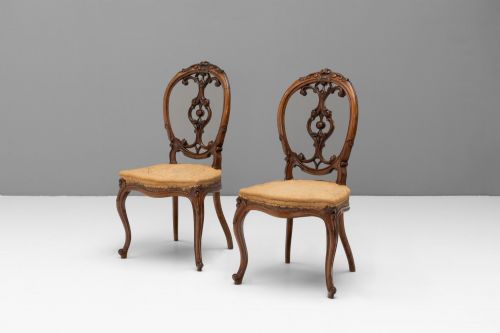


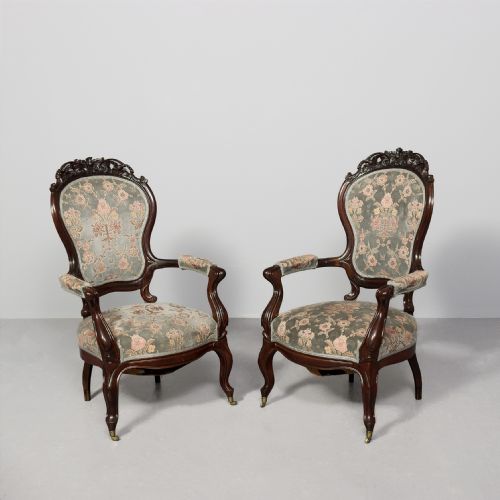
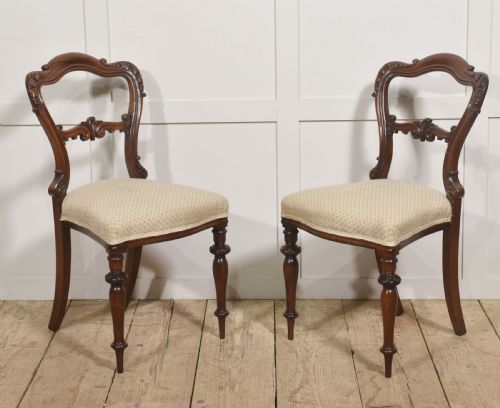


Pair Balloon Back Chairs
Pair balloon back chairs bring graceful Victorian proportion to dining rooms and parlours, valued for their curved timber frames.
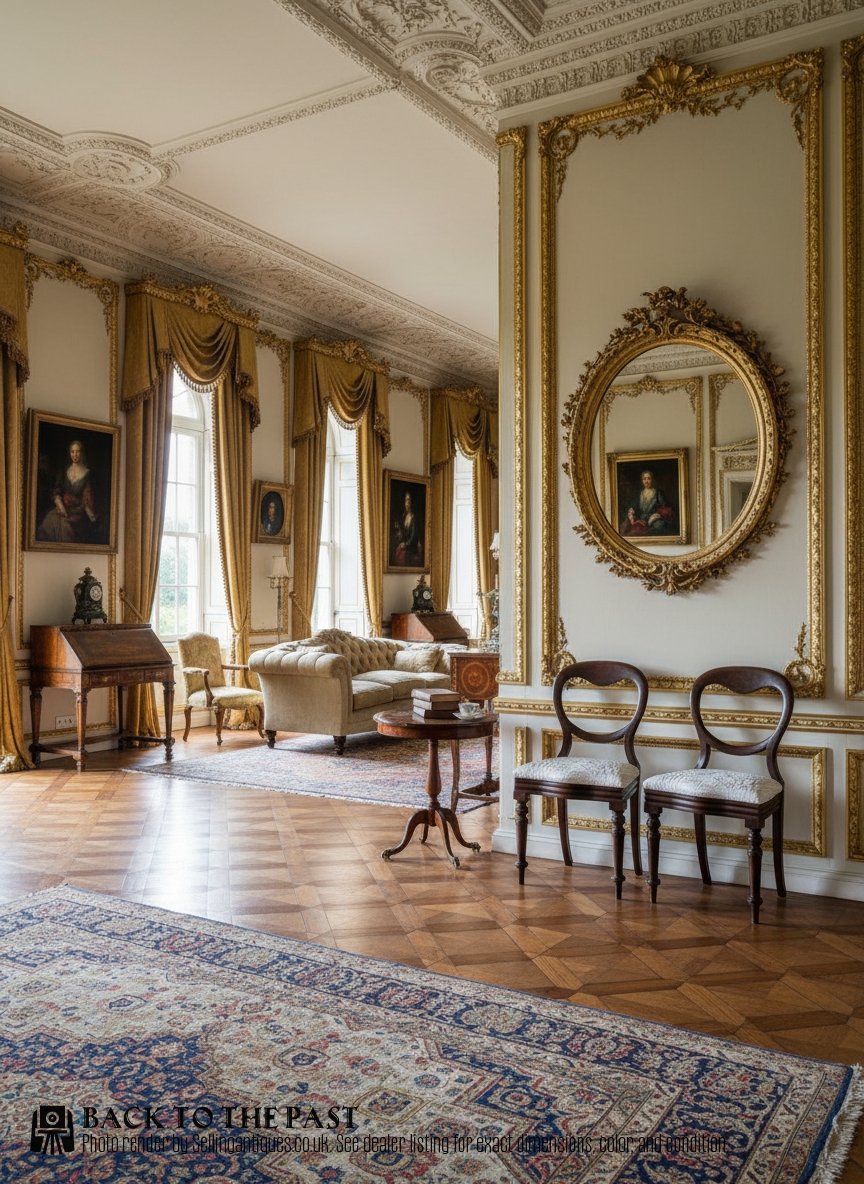
What pair balloon back chairs are
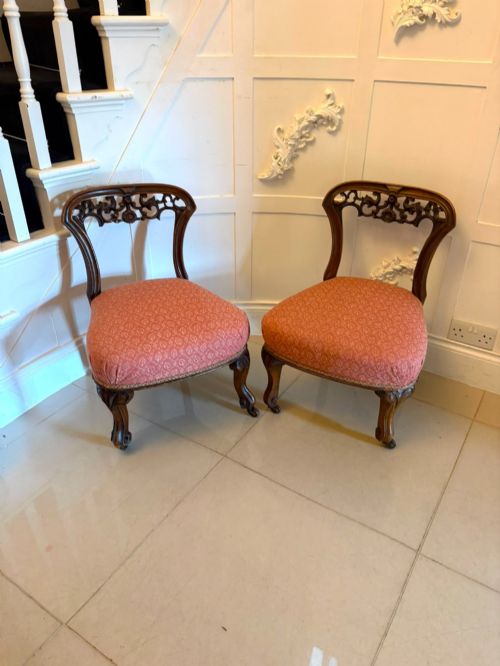
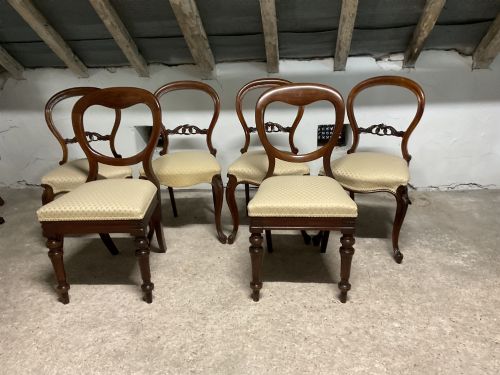
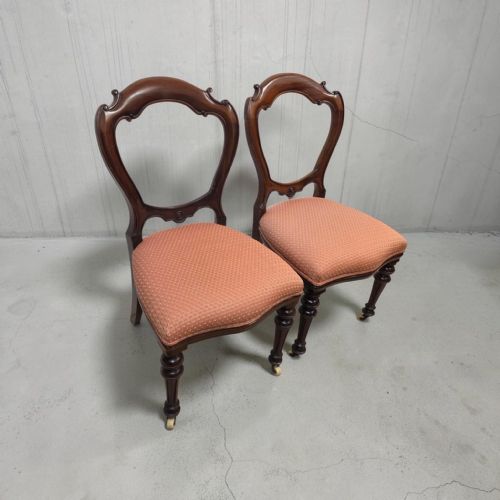
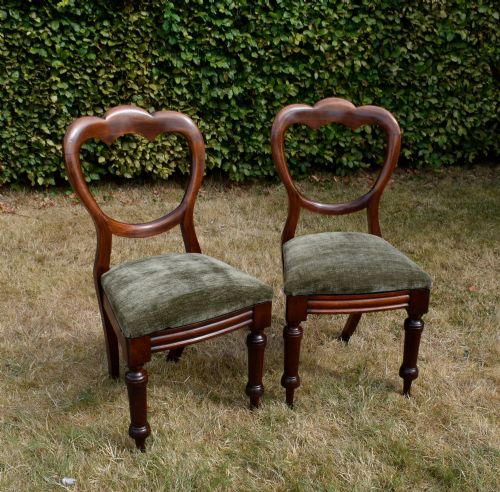
Pair balloon back chairs are seating furniture defined by the distinctive rounded, open profile of the backrest, which resembles the shape of a hot air balloon. When you search for pair balloon back chairs, you encounter matched sets originating primarily from the nineteenth century, including the Victorian and Edwardian periods.
The selections on this page appear most frequently in rich timbers such as mahogany, walnut, and rosewood. These pieces served historically as dining chairs, occasional chairs, side chairs, and salon seating.
Makers fashioned these frames for formal entertaining and everyday domestic use. The designs incorporate cabriole legs, serpentine fronts, and carved details that reflect the prevailing aesthetic of the era.
How they were made
Craftsmen built the curved backrests by steaming and bending solid timber to form the continuous loop characteristic of the design. Joinery relied on traditional methods to secure the back frame to the seat rail.
Woodworkers selected mahogany, walnut, and rosewood for their dense grain and ability to hold crisp carved ornamentation. Surface finishes were applied to enhance the natural figure of the wood.
Upholsterers finished the drop-in or padded seats using materials such as velvet, tapestry upholstery, fabric, and brass tacks. Some frames incorporated ceramic castors or subtle brass hardware for mobility and protection.
Retail Price Guide 2026
Typical UK retail prices for pair balloon back chairs, calculated from the Sellingantiques database of over a million retail prices indexed since 2003. This retail price guide relies exclusively on Sellingantiques data; no external sources or auction records are used, so the figures do not describe the wider market.
Some chairs roll on tiny brass castors, built so nineteenth-century diners could glide across the carpet without lifting a finger.
What varies in quality
Quality rests in the precision of the timber bending and the depth of the hand-carved details on the frame. Superior examples display seamless joints and choice veneers or solid hardwoods with strong grain figures.
The choice of primary wood affects the standing of a piece, with solid rosewood and finely figured walnut generally commanding greater regard than standard mahogany. The crispness of floral or scroll carvings distinguishes workshop output from mass production.
Structural integrity depends on the original joinery remaining tight and unaltered through generations of use. The standard of secondary woods and the authenticity of the upholstery build add further distinction to individual pairs.
Gillows
The Pair Balloon Back Chairs Glossary
- Balloon back
- A chair backrest formed in a continuous oval or loop curve resembling a balloon. This silhouette defined mid-nineteenth century seating design.
- Cabriole leg
- A furniture leg that curves outward and then tapers inward with a pad or scroll foot. It draws inspiration from animal limbs.
- Serpentine front
- A furniture seat rail curved with a convex centre flanked by concave ends. This contour adds visual movement to the piece.
- Drop-in seat
- A removable upholstered frame that drops into a ledge rebated into the chair rails. It allows for straightforward re-covering.
- Occasional chair
- A light, movable seat designed for use in various rooms when needed rather than having a fixed place at a dining table.
Frequently Asked Questions
What are balloon back chairs?
Balloon back chairs are nineteenth-century seats featuring an oval, rounded backrest resembling a balloon. They emerged during the Victorian period and served as dining or occasional seating.
Craftsmen built them primarily in mahogany, walnut, and rosewood, often incorporating carved details and upholstered seats. Matched pairs remain popular for their elegant silhouette and versatile proportions.
How do I date these chairs?
Dating relies on observing the timber choice, construction methods, and stylistic details recorded across the nineteenth century. Victorian examples from eighteen fifty to eighteen eighty frequently utilise solid walnut or mahogany with hand-carved motifs.
Later Edwardian versions or transitional pieces display subtle shifts in leg shape and carving style. Comparing the joinery and secondary woods helps place the chairs within their specific decades.
Were they used for dining?
These chairs served extensively around dining tables in Victorian and Edwardian homes. Their upright posture and sturdy frames suited formal meals and gatherings.
At the same time, many pairs functioned as occasional, salon, or desk chairs in parlours and studies. Their modest footprint allowed owners to move them between rooms easily.
How do I care for the wood?
Maintenance involves dusting the timber regularly with a soft, dry cloth to prevent grit accumulation. Keeping the chairs away from direct heat sources and strong sunlight protects the polish and natural wood oils.
Occasional application of appropriate wax polish helps preserve the finish on mahogany and walnut surfaces. Checking the stability of the joints ensures the frame remains secure during use.