
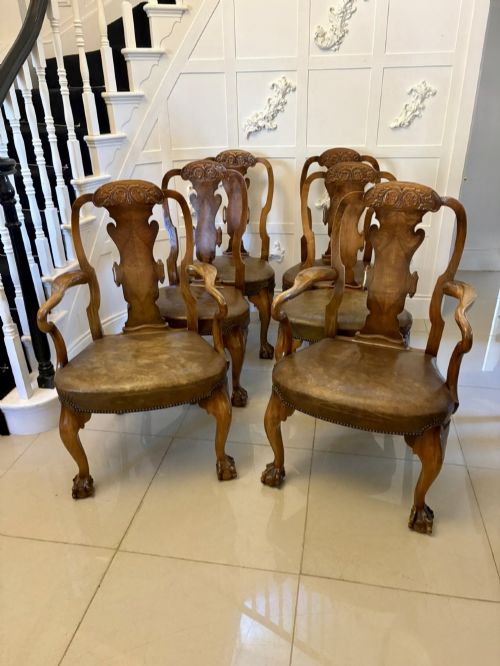
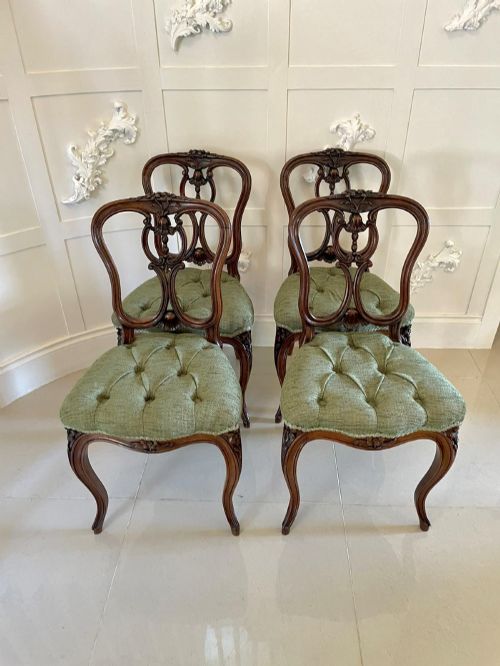

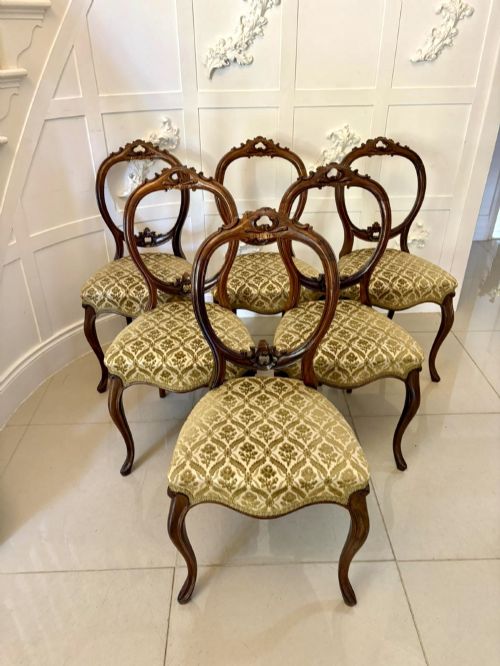
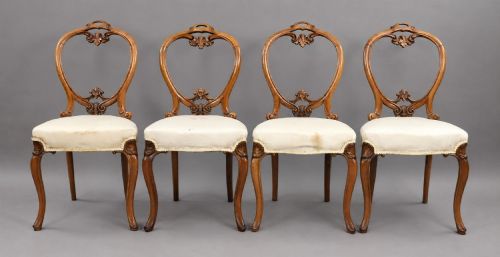
Victorian Walnut Dining Chairs
When choosing victorian walnut dining chairs, you are selecting sturdy seating defined by rich timber and curvaceous silhouettes.
Victorian Walnut Dining Chairs
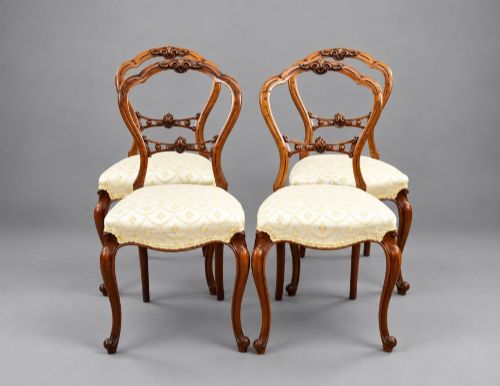
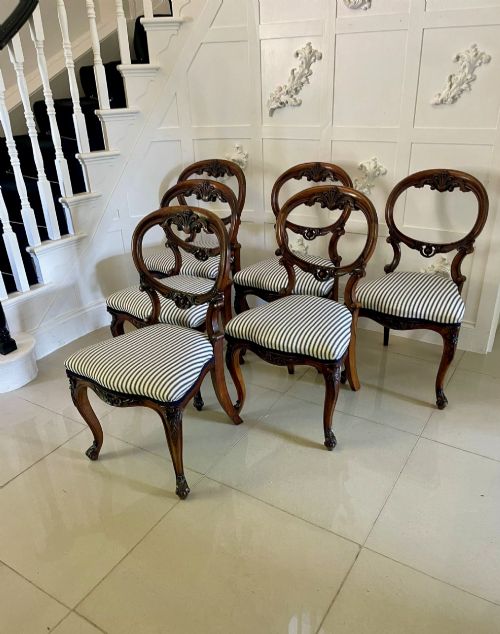
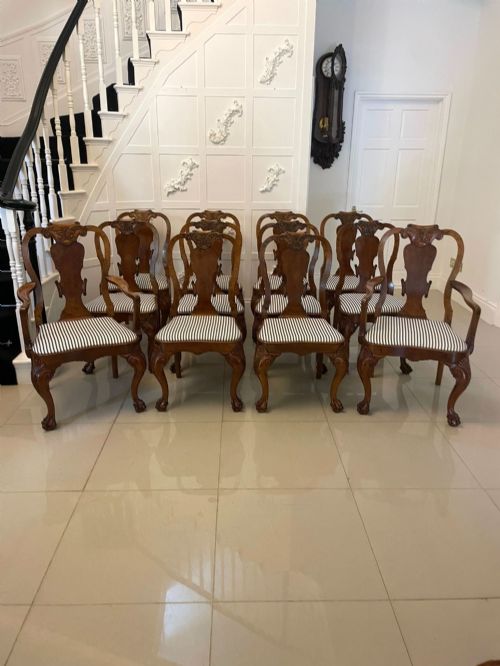
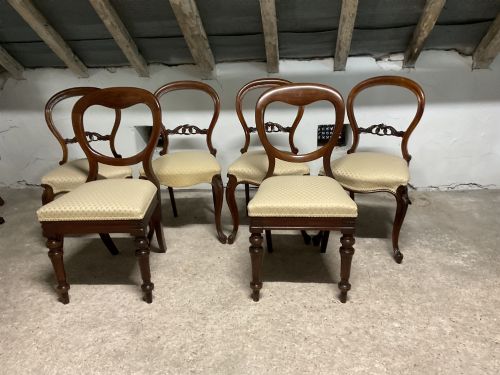
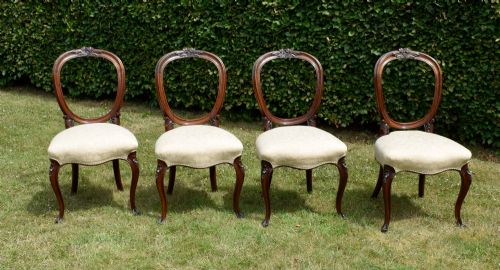
Victorian walnut dining chairs are seating options produced predominantly during the nineteenth century, ranging from the 1850s through to the 1890s. Buyers searching this phrase commonly encounter balloon back profiles, side chairs, and larger matched sets intended for formal dining rooms.
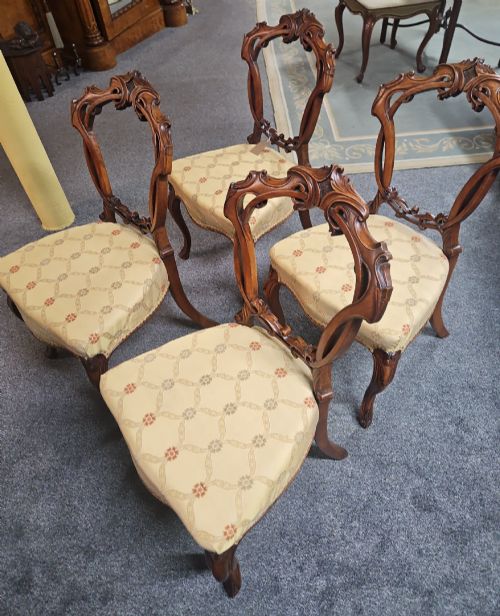
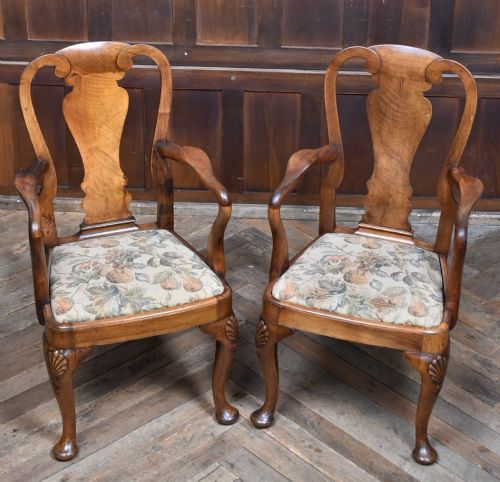
The aesthetic vocabulary spans simple carved frames to revival styles such as Queen Anne, Chippendale, and Victorian Rococo, alongside Late Victorian Aesthetic Movement designs. While single chairs and pairs appear frequently, larger gatherings of four, six, eight, or twelve pieces form the backbone of this category.
Materials and construction
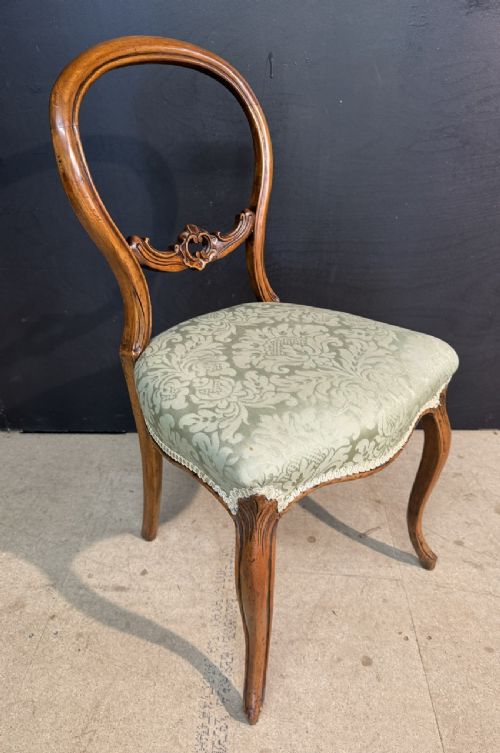
The primary material used is walnut, sometimes selected as burr walnut for enhanced grain patterning, paired occasionally with secondary timbers like mahogany. Carving is executed directly into the solid wood frames, often forming the characteristic open-splat or balloon-shaped backrests.
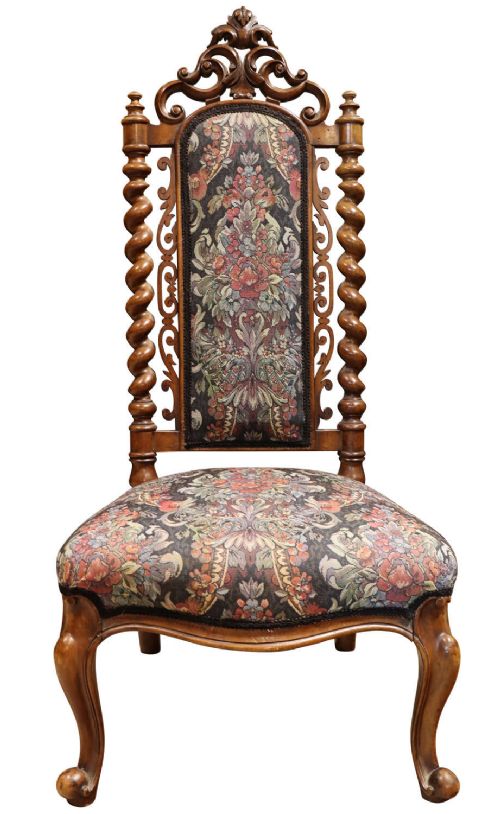
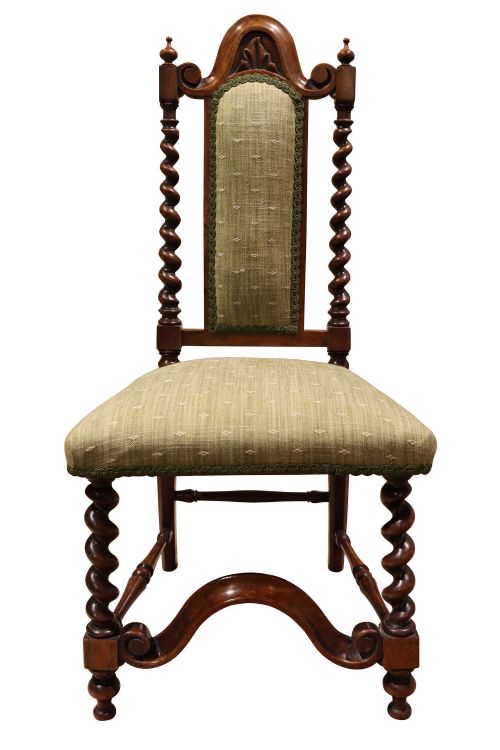
Upholstery materials recorded across the evidence include velvet, fabric, textile, and tapestry, secured over padded seats alongside brass details. Frames frequently incorporate cabriole legs or turned supports to provide structural stability.
A musical chair featuring Swiss marquetry inlay brings an unexpected auditory element to nineteenth-century walnut seating.
Gradations of craftsmanship
Quality separates ordinary utility seating from pieces marked out by crisply defined hand-carved motifs and substantial timber thickness. Sets that remain uniformly matched in colour, grain, and timber selection command greater distinction than assembled groupings.
The depth of the carving on the back splats and the integrity of the frame construction, particularly around the leg joints, dictate the overall standard of survival.
The Victorian Walnut Dining Chairs Glossary
- Balloon back
- A chair back shaped in a continuous curve resembling an oval or balloon, highly popular during the Victorian period. This form provides ergonomic support through its rounded timber frame.
- Cabriole leg
- A furniture leg featuring a double curve, typically arching outward at the knee and tapering inward at the ankle. It often terminates in a plain or scrolled foot.
- Burr walnut
- Timber sliced from walnut tree growths or burls, prized for its swirling, highly figured grain patterns. It is frequently utilised on prominent surfaces to create visual depth.
- Aesthetic Movement
- A late-nineteenth-century design style emphasising visual beauty over narrative content, often incorporating simpler lines and stylized ornamentation. Pieces from this era reflect a shift away from heavy historic revivalism.
- Pierced splat
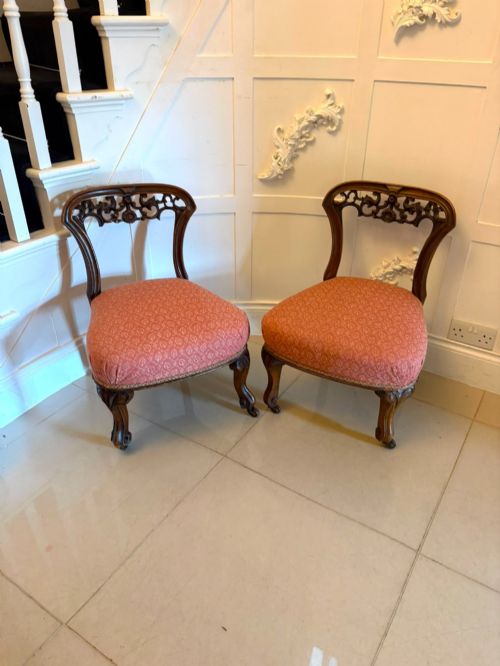
- A vertical central strip of wood within a chair back that has been cut through to form decorative patterns. This technique lightened the visual weight of the timber frame.
Victorian Walnut Dining Chairs: Frequently Asked Questions
How many chairs came in a set?
Victorian dining seating was commonly produced in matched groupings of four, six, eight, ten, or twelve chairs to suit formal dining tables of the era. Smaller sets of two or individual pieces also survive.
Larger matching sets require significant consistency in timber selection and carving quality across every single frame.
How do I care for antique walnut?
Antique walnut benefits from stable indoor humidity and protection from direct sunlight to prevent the timber from drying out or fading. Gentle dusting with a dry cloth maintains the surface without stripping the aged patina.
Moisture and chemical polishes should be avoided to preserve the original finish of the wood.
Can these chairs be used daily?
Solid walnut construction provides the structural integrity necessary for regular use around a modern dining table. Checking the stability of the frame joints ensures the timber can handle daily sitting.
Upholstery can be renewed using contemporary or period-appropriate textiles while keeping the historic wooden frame intact.