
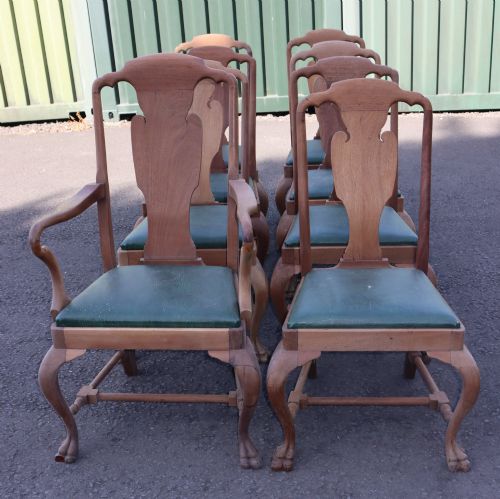
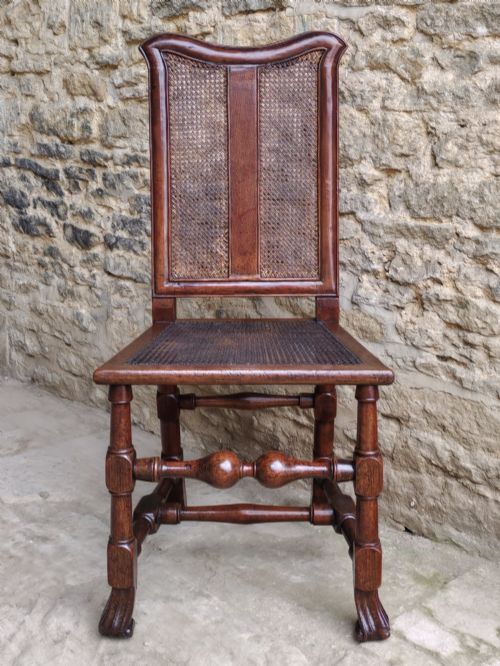
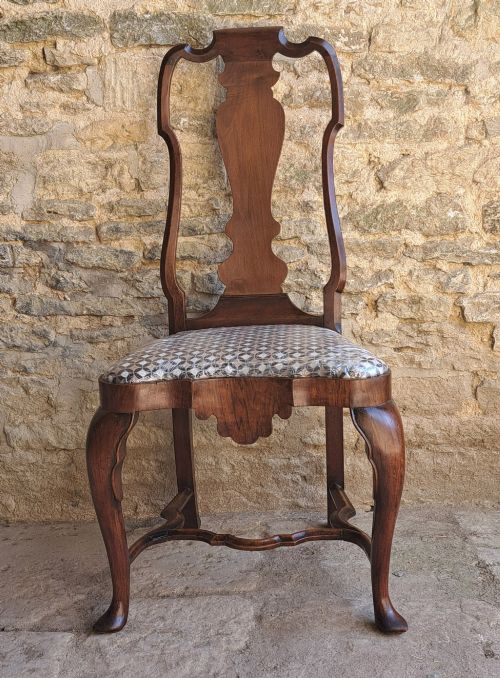
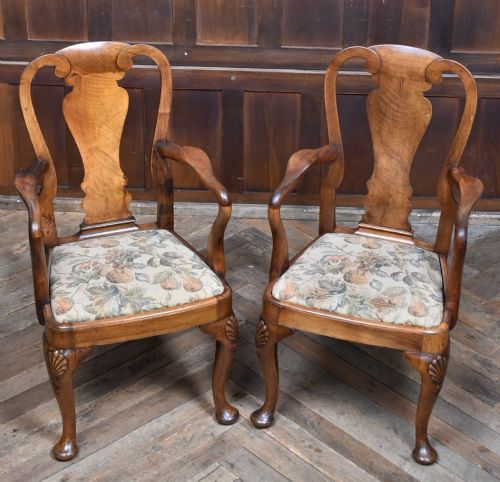
Brown Walnut Dining Chairs
Brown walnut dining chairs bring rich timber tones and enduring form to a room, offering both sturdy seats and classic silhouette.
What brown walnut dining chairs are
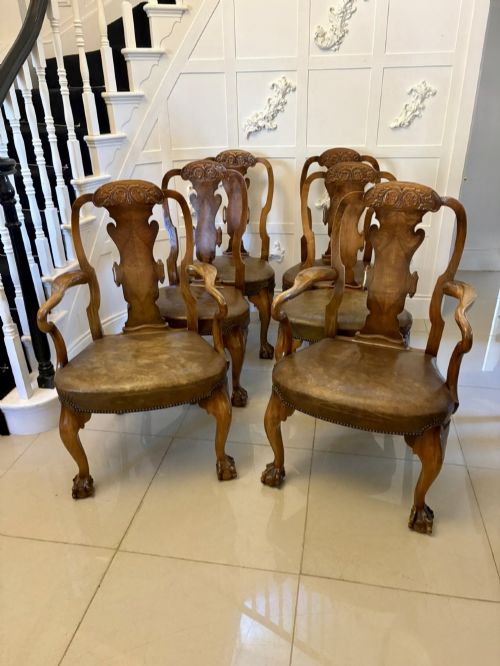
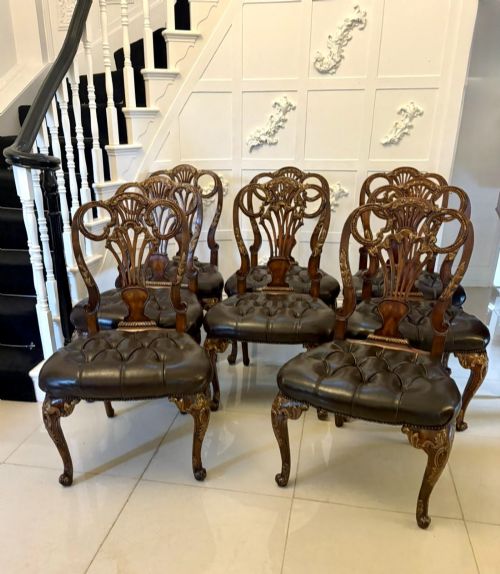
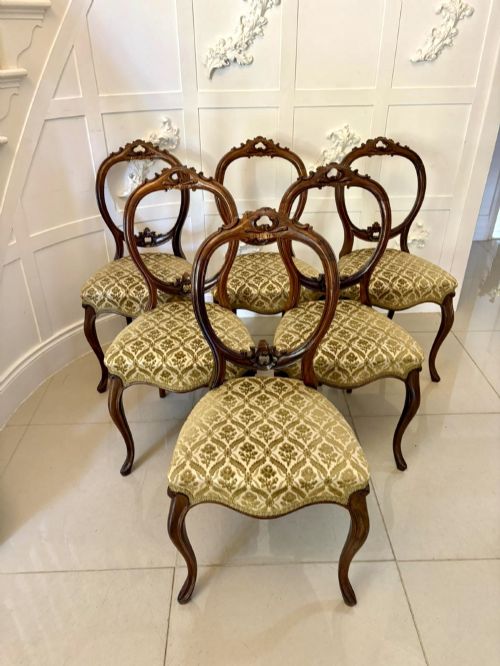
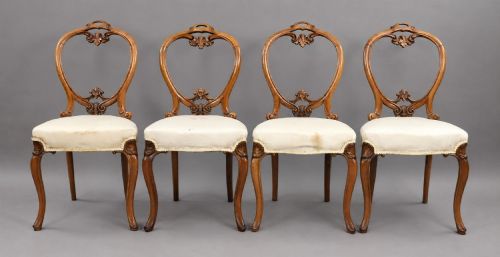
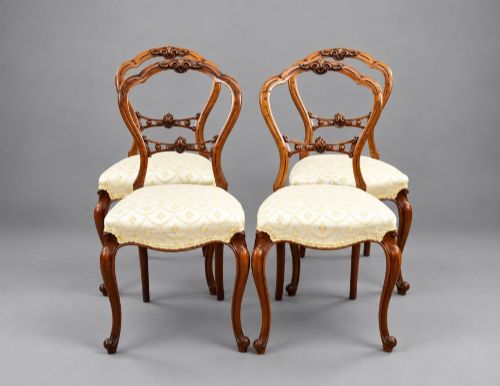
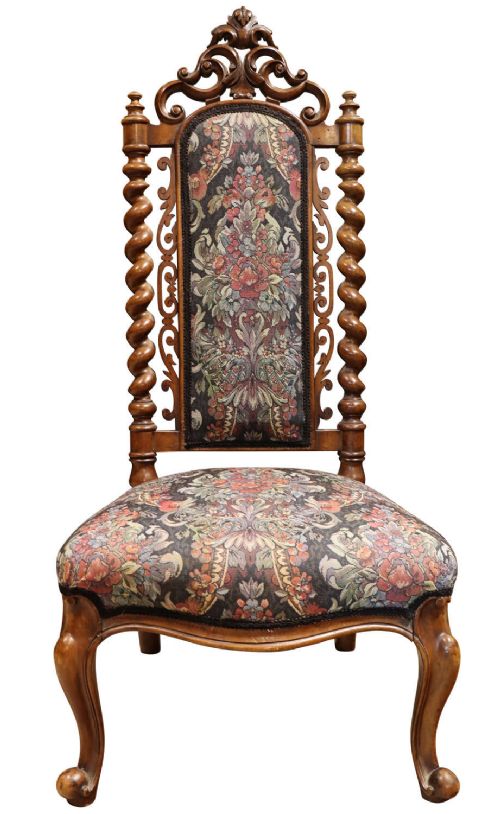
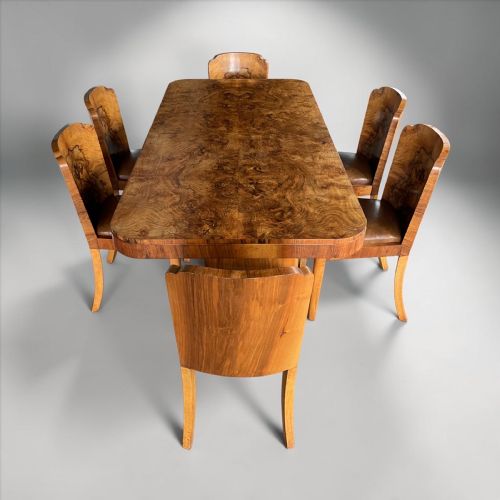
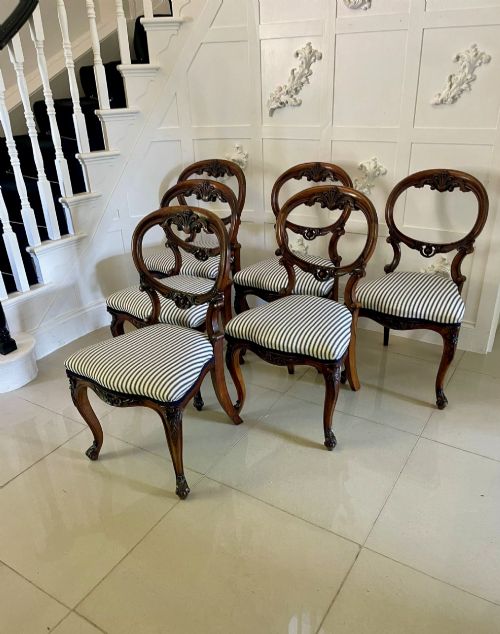
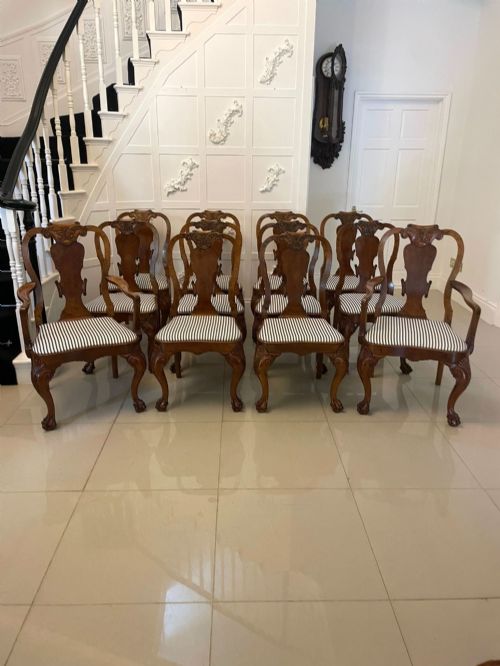
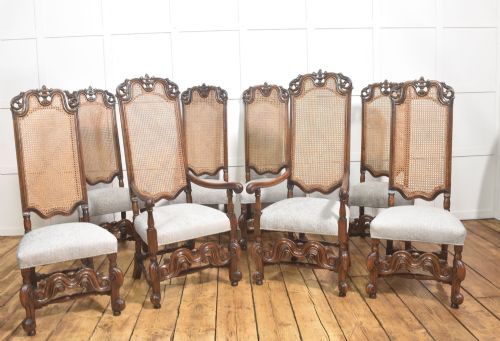
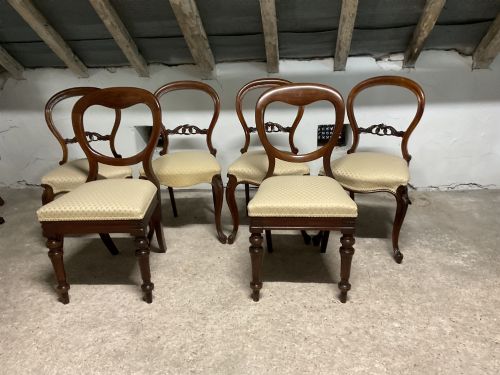
Brown walnut dining chairs span multiple centuries of seating design, appearing in forms such as side chairs, carver chairs, salon chairs, and drawing room sets. A buyer searching this phrase encounters early 18th century examples, Victorian balloon back varieties, and later interpretive pieces.
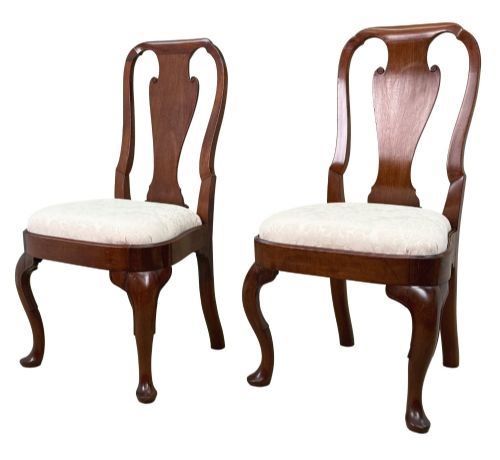
The selection includes matched sets alongside pairs and larger groups intended for formal tables or drawing rooms. Queen Anne and George II styles sit alongside Victorian designs and later 1920s interpretations, showing the sustained popularity of walnut timber.
Construction varies from traditional solid timber frames to veneered surfaces supported by cabriole legs. Certain sets arrive ready for re-upholstery, allowing new fabric to match an existing interior scheme.
How they were made
Craftsmen utilised walnut timber, often applied as fine veneer over secondary woods to create decorative grain patterns on back splats and seat rails. Frames incorporate carved details such as cabriole legs, reflecting the prevailing style of the period.
Seating portions incorporate cane or traditional upholstery finishes using textile, fabric, and upholstery fabric. These materials support daily use while maintaining the visual proportion characteristic of each era.
Retail Price Guide 2026
Typical UK retail prices for brown walnut dining chairs, calculated from the Sellingantiques database of over a million retail prices indexed since 2003. This retail price guide relies exclusively on Sellingantiques data; no external sources or auction records are used, so the figures do not describe the wider market.
Some chairs arrive quietly waiting for new fabric, having spent decades in drawing rooms watching polite society come and go.
What varies in quality
The standard of carving and the selection of walnut veneer distinguish finer examples from standard production. Crisp execution of cabriole legs and balanced proportions elevate the appearance of a set.
The integrity of the timber frame and the condition of original or restored elements dictate the longevity of each chair. Matched sets command attention for their uniformity across all pieces.
The Brown Walnut Dining Chairs Glossary
- Walnut
- A dense, dark timber prized for its rich brown colour and decorative grain patterns. It forms the primary structural and decorative material for these chairs.
- Cabriole leg
- A furniture leg that curves outward and then tapers inward, finishing in a pad or foot. This form is typical of Queen Anne and George II styles.
- Carver chair
- An armchair designed to match a set of dining chairs, traditionally placed at the head of the table. These often feature open arms.
- Balloon back
- A rounded, oval-shaped chair back popular during the Victorian era. The curved wood resembles the silhouette of a balloon.
Frequently Asked Questions
Are these chairs suitable for daily dining use?
Most pieces function well for regular seating provided the frames remain sturdy and joints are secure. Antique timber handles daily dining when treated with reasonable care.
Pairs and larger sets accommodate household gatherings while retaining their decorative presence around a table.
How do I identify a Queen Anne style chair?
Queen Anne pieces typically feature smooth cabriole legs, vase-shaped back splats, and pad feet without heavy carving. The emphasis rests on clean curved lines and the natural grain of walnut.
Later revival pieces from the twentieth century often adopt these same eighteenth-century design characteristics.
What does re-upholstery involve for these chairs?
Chambers offered for re-upholstery allow a buyer to select modern or period-appropriate textile, fabric, or upholstery fabric. This process updates the seat pad while preserving the antique wooden frame.
Original webbing and stuffing can be replaced to ensure comfort and support during meals.
Can I mix side chairs and carvers?
Mixing side chairs with matching carver armchairs follows traditional dining room arrangements. Carver chairs sit at the head and foot of the table while side chairs line the sides.
Matching timber tones and styles help unify mixed seating groups within a room.