
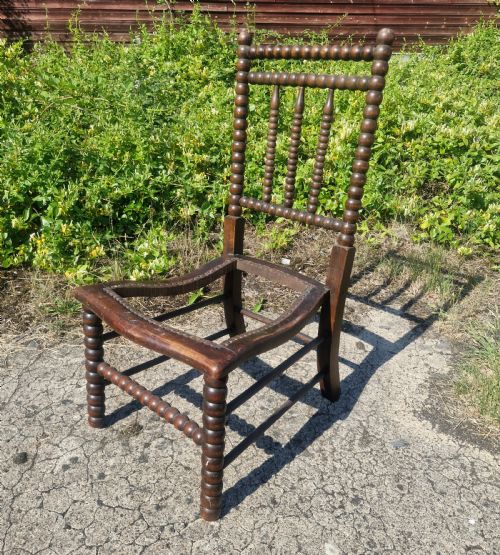


Brown Wood Nursing Chairs
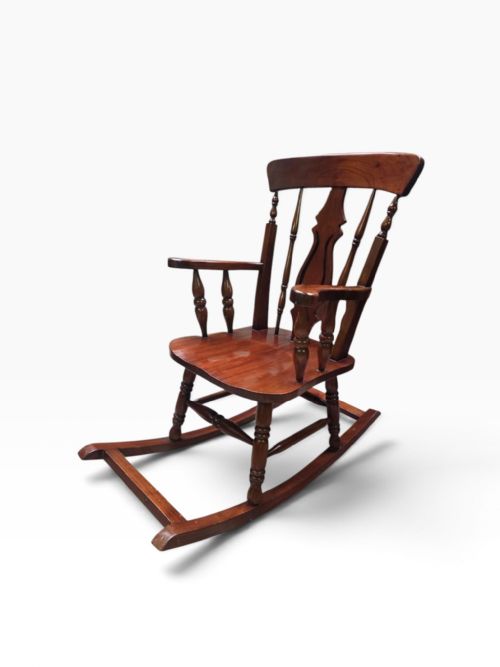
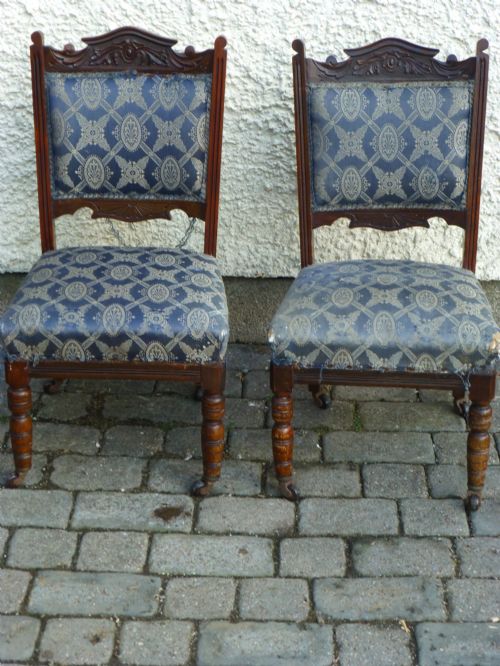
Brown wood nursing chairs are low-seated Victorian and Edwardian low chairs designed for comfort, and you will find them here in walnut, mahogany, and beech.
Materials and construction
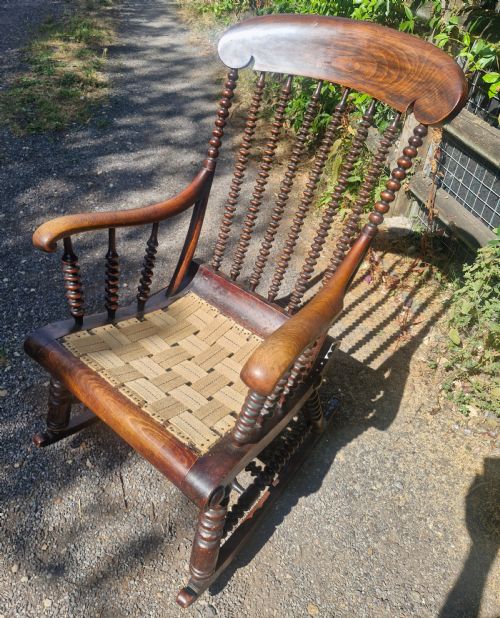
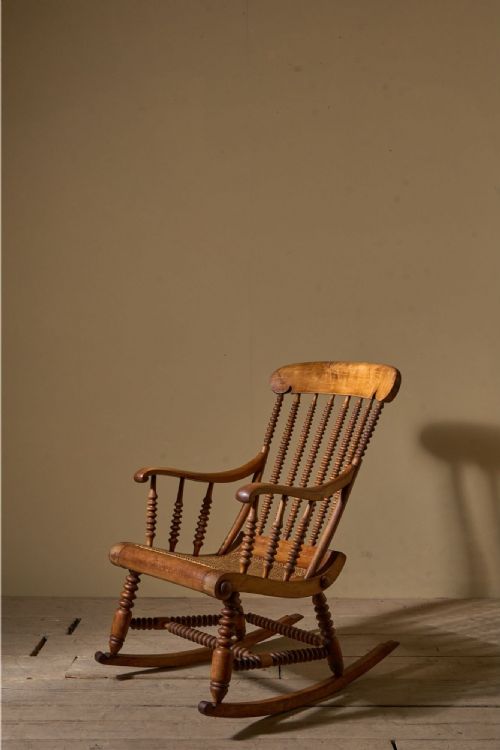
Makers utilised solid timbers including mahogany, walnut, oak, beech, and assorted hardwoods to construct the frames of these low chairs. Turned elements, such as bobbin framing and spindle backs, appear frequently across nineteenth-century examples. Structural support is often provided by turned legs, sometimes numbering five, or low rocking rails.
Upholstery techniques varied from fabric panels requiring complete renewal to woven cane inserts set within wooden frames. Brass components occasionally appear in castors or decorative hardware. The joinery relies on traditional wood-working methods appropriate for domestic seating of the Victorian and Edwardian periods.
Assessing quality and character
The calibre of a brown wood nursing chair rests upon the crispness of its turnery, particularly in bobbin-framed and spindle-backed examples. Finer pieces display well-figured mahogany or walnut timber with rich natural colour, whereas utility grades utilise simpler hardwoods like beech. The integrity of the wooden frame and the survival of original decorative carving distinguish superior pieces from standard workshop production.
Proportion and stance also define the hierarchy among these low seats, with elegantly raked backs and balanced low profiles commanding attention. The presence of untouched surface patina on the wood indicates how well a chair has aged through the Victorian and Edwardian eras. Pieces retaining cane seating in sound condition or showing thoughtful early upholstery retain a distinct integrity.
Current listings feature nineteenth-century walnut and mahogany alongside Edwardian beech, utilising cane, fabric, and textile materials across various low chair forms.
The Brown Wood Nursing Chairs Glossary
- Bobbin framing
- Furniture construction featuring turned wood shaped like a series of bobbins or spools. This decorative turning style defines many nineteenth-century low chairs and rocking seats.
- Slipper chair
- An upholstered bedroom chair characterised by its very low seat, originally designed to assist ladies when putting on shoes. These pieces typically lack arms to allow full freedom of movement.
- Aesthetic Movement
- A late nineteenth-century design style emphasising visual beauty over narrative content. Pieces from this period often display refined lines and artistic simplicity.
- Cane seating
- Woven rattan material used to form seat panels within a wooden frame. This technique provides a resilient yet light surface suitable for bedroom and occasional seating.
Brown Wood Nursing Chairs: Frequently Asked Questions
What is a nursing chair?
A nursing chair is a low-seated nineteenth-century chair designed for comfort in the bedroom or nursery, allowing a person to sit close to the floor.
These pieces typically feature low frames, supportive upholstered backs, and occasionally rocking rails or turned wooden spindles.
How do I date a brown wood chair?
Dating relies on identifying stylistic markers such as bobbin turning, timber choice like walnut or mahogany, and structural proportions.
Victorian pieces often display heavier carved details, while Edwardian examples tend to show lighter construction in beech or walnut.
Can I use these chairs daily?
Most of these antique low chairs function well for daily use provided the wooden frame is stable and the joints remain secure.
Many examples listed require re-upholstery, meaning you can strengthen the interior webbing and foam to suit modern seating comfort.