

Antique Salon Armchairs
Antique salon armchairs offer refined seating shaped by Victorian and French neoclassical design, bringing period elegance to drawing rooms and reception spaces.
What antique salon armchairs are
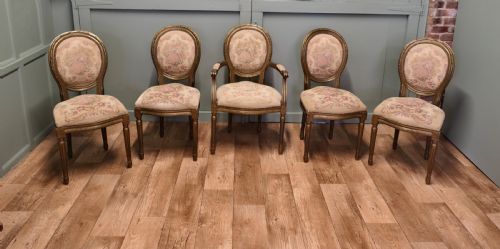
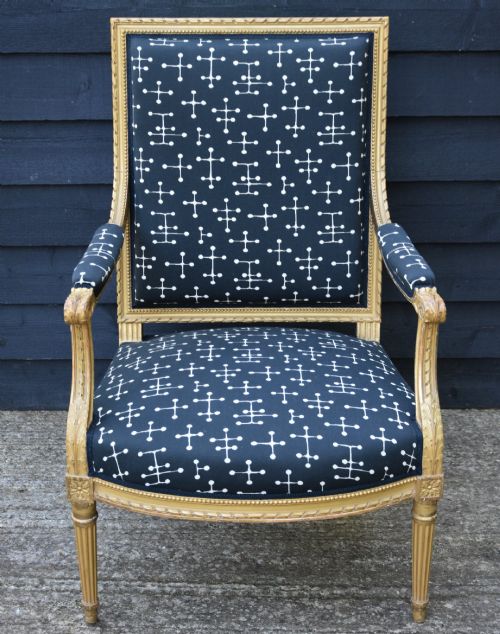
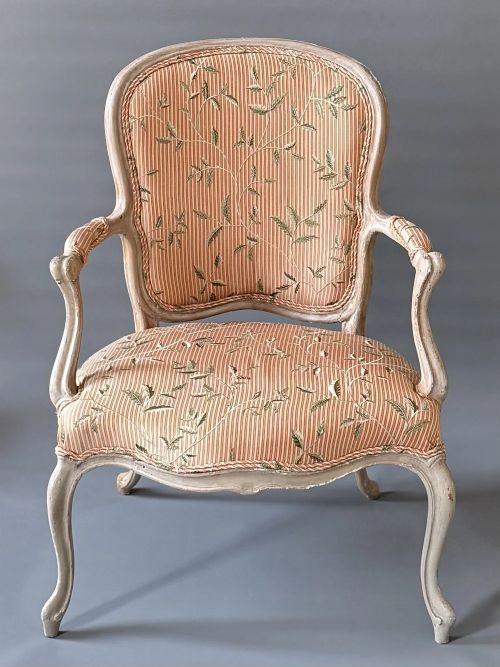
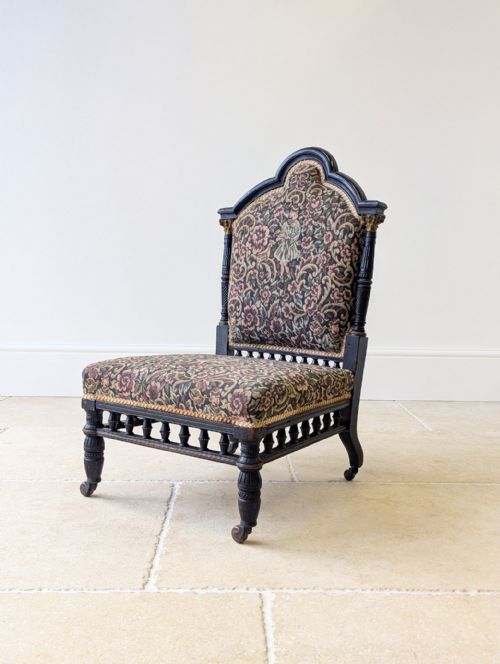
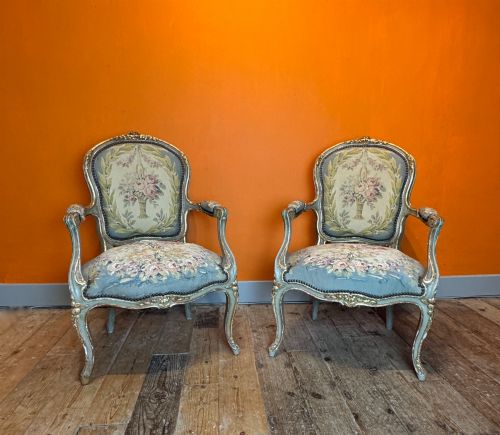
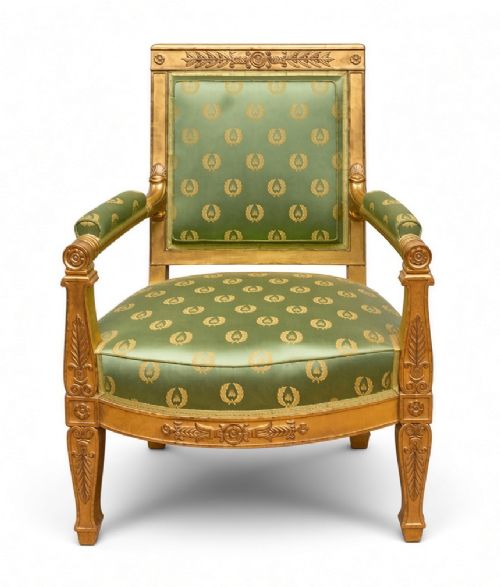
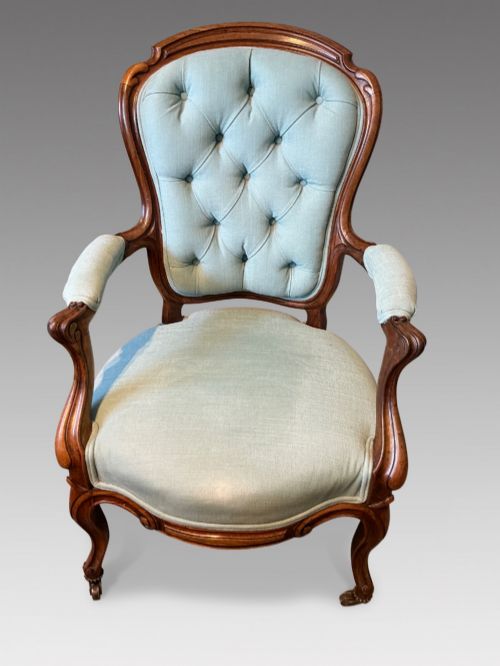
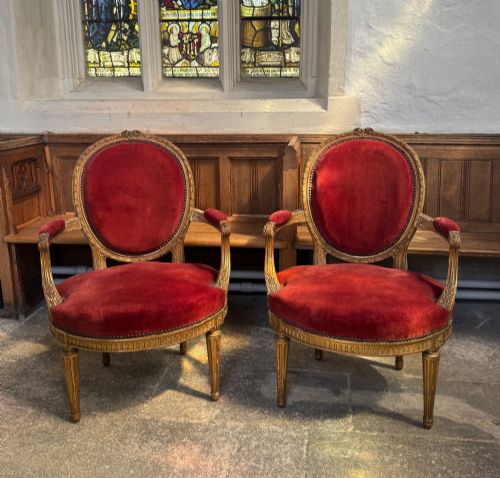
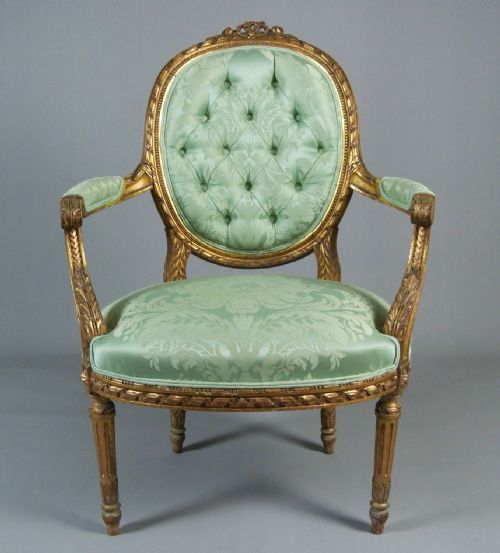
Antique salon armchairs comprise upholstered seating designed for formal entertaining and reception rooms during the nineteenth and early twentieth centuries. When searching for antique salon armchairs, buyers frequently encounter pairs shaped by French taste, including Louis XV and Louis XVI revivals alongside English Victorian and Edwardian examples.
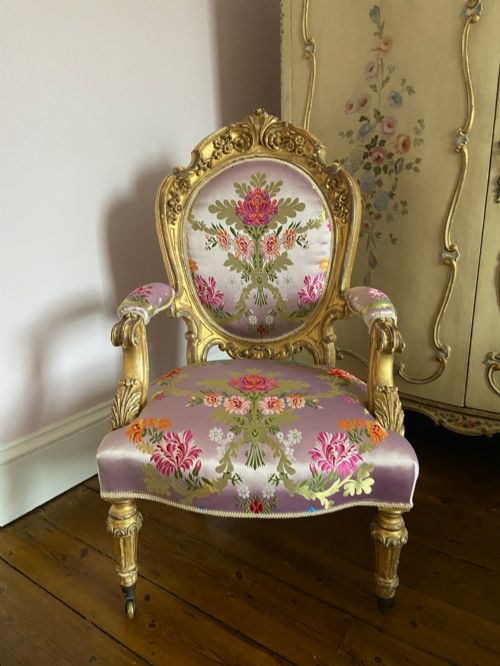
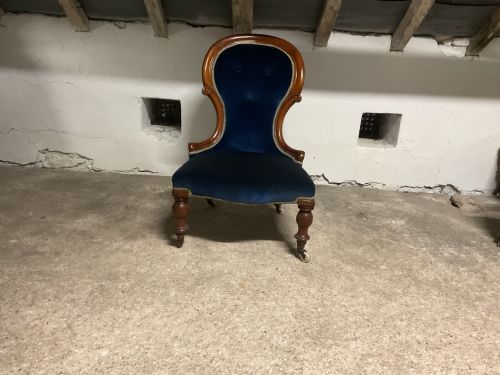
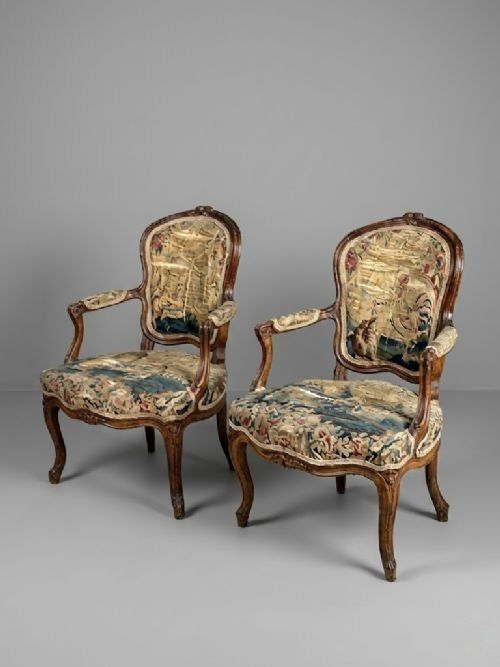
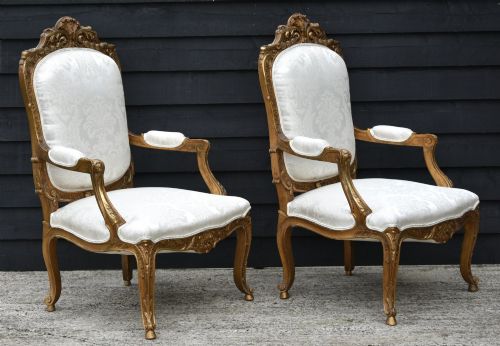
The form encompasses open armchairs, tub chairs, and carved fauteuils meant for drawing rooms rather than heavy parlour use. These seats range from giltwood frames covered in tapestry to mahogany and walnut frames finished with modern or period fabric.
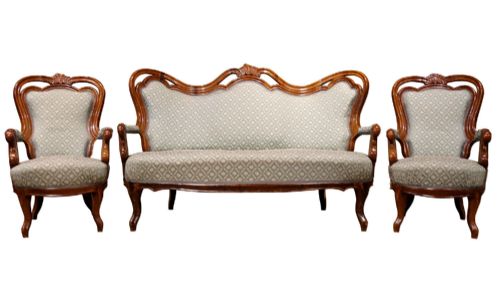
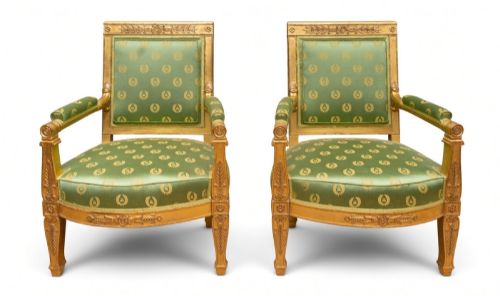
Most pieces survive in matched pairs or small suites alongside matching settees and smaller chairs. Their scale is typically lighter than a standard library armchair, reflecting their original purpose as movable seating for polite company.
What varies in quality
The distinction between standard and exceptional pieces rests in the crispness of the timber carving and the sophistication of the giltwood or painted finish. Hand-carved walnut and intricate marquetry inlays demonstrate a higher level of cabinetmaking than simpler turned frames.
Proportion and structural integrity dictate the overall merit of a chair, alongside the historical appropriateness of the upholstery textiles. Pieces retaining original gilding or fine tapestry work command greater attention from collectors than heavily altered examples.
Retail Price Guide 2026
Typical UK retail prices for salon armchairs, calculated from the Sellingantiques database of over a million retail prices indexed since 2003. This retail price guide relies exclusively on Sellingantiques data; no external sources or auction records are used, so the figures do not describe the wider market.
Several armchairs arrive in pairs because nineteenth-century drawing rooms required symmetrical seating arrangements flanking a fireplace or window.
The Antique Salon Armchairs Glossary
- Fauteuil
- An open-armed upholstered armchair with exposed wooden framing, typical of French seating design. These chairs feature padded armrests and a rigid back.
- Giltwood
- Timber coated with a thin layer of gold leaf over a prepared base layer. This treatment creates a brilliant decorative surface found on formal revival seating.
- Bergère
- An enclosed upholstered armchair with solid upholstered sides integrated into the backrest. These pieces often incorporate cane panels or tight fabric stuffing.
- Marquetry
- Decorative woodwork created by fitting contrasting veneers into a primary wooden surface. This technique adorns the frames and back rails of Edwardian pieces.
- Tub chair
- A curved seating form where the backrest sweeps continuously into the armrests. The rounded shape creates a compact and enclosed profile.
Frequently Asked Questions
Where were salon armchairs used?
These chairs furnished formal drawing rooms, reception spaces, and boudoirs in grand houses. They provided movable seating for guests during social gatherings.
Their lighter construction allowed hosts to rearrange rooms easily for musical performances or conversation groups.
How do I identify French revival styles?
French revival pieces exhibit characteristic ornamentation borrowed from seventeenth and eighteenth-century royal courts. Louis XV designs display flowing cabriole legs and asymmetrical carved floral motifs.
Louis XVI styles introduce straighter lines, fluted tapered legs, and neoclassical geometric carvings like ribbons and acanthus leaves.
Are these chairs comfortable for daily use?
Salon armchairs were built for upright posture during polite conversation rather than heavy lounging. Their padded seats and supportive backs offer adequate comfort for sitting.
Upholstery support depends on the internal webbing and springing system, which varies across nineteenth and early twentieth-century examples.
How do Victorian and Edwardian styles differ?
Victorian examples tend to feature darker walnut timber, scroll backs, and robust proportions suited to nineteenth-century parlours. They often appear as part of larger three-piece parlour suites.
Edwardian pieces frequently utilise lighter mahogany and satinwood, incorporating delicate neoclassical inlays and brighter fabric palettes characteristic of the early twentieth century.