
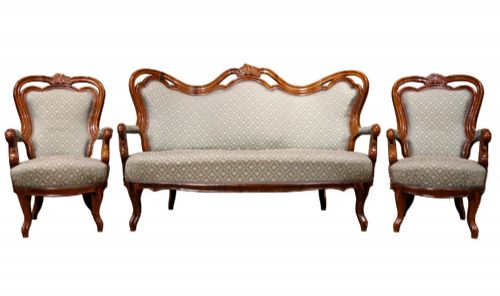
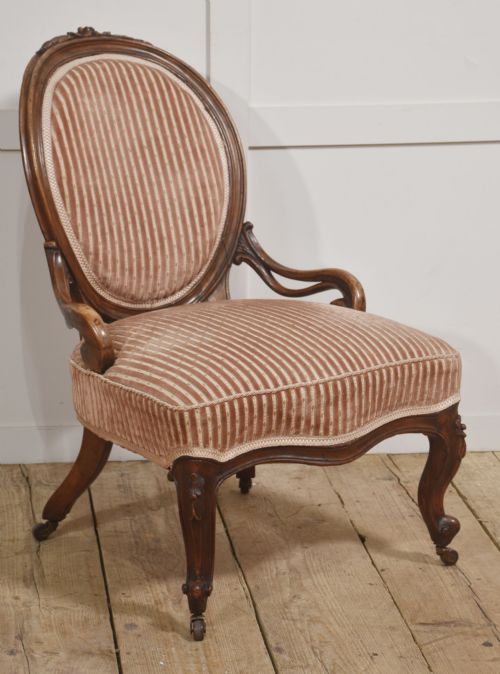


Rococo Revival Armchairs
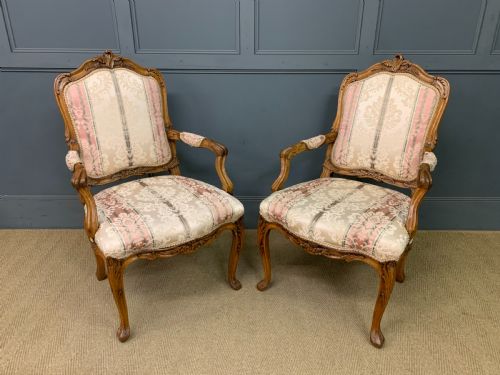
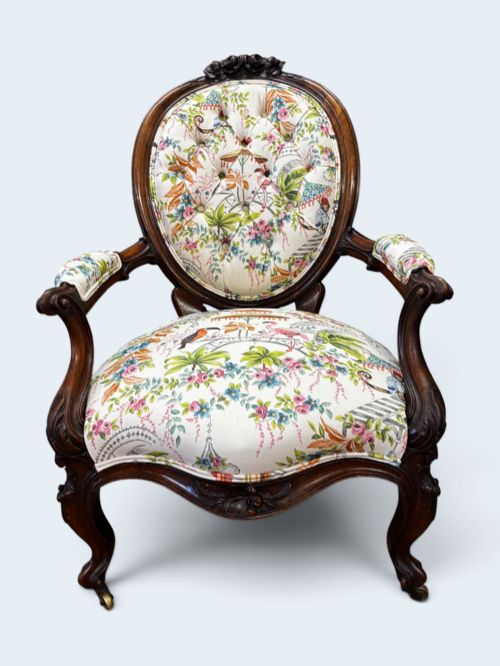
Rococo revival armchairs are heavily carved Victorian and nineteenth-century seating pieces that bring theatrical French curves and opulent warmth into a drawing room.
What Rococo Revival Armchairs Are
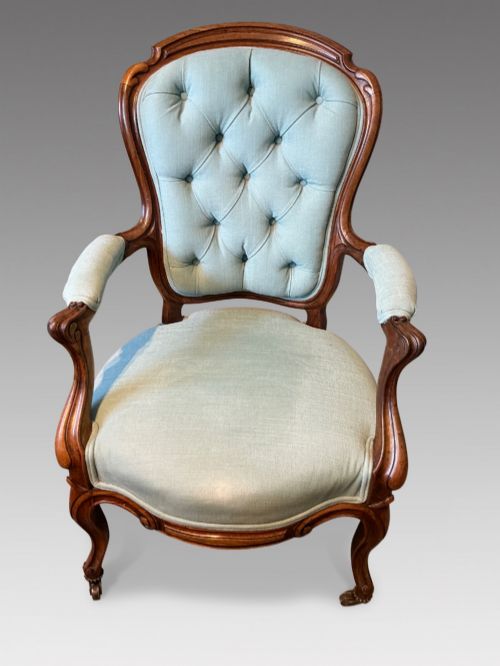
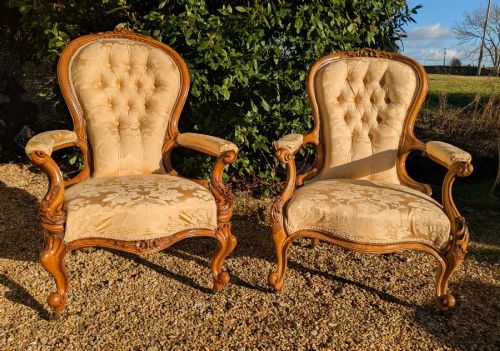
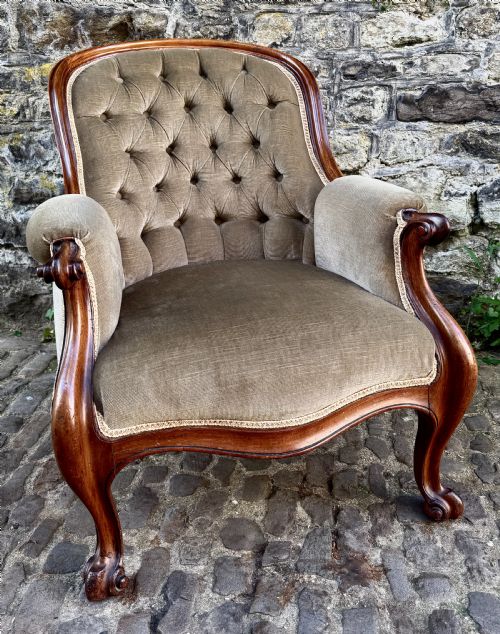
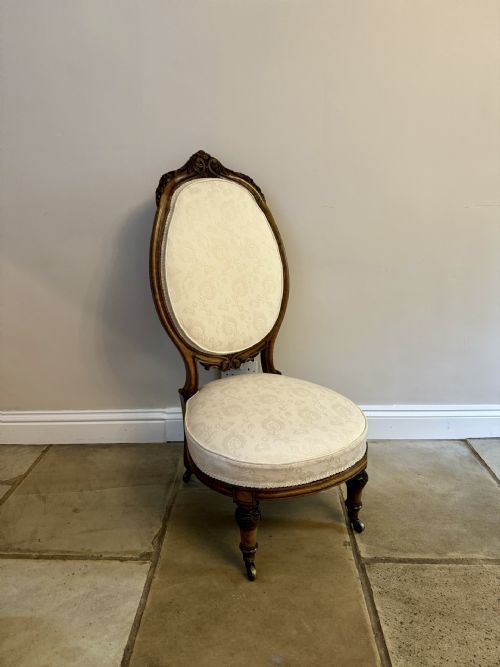
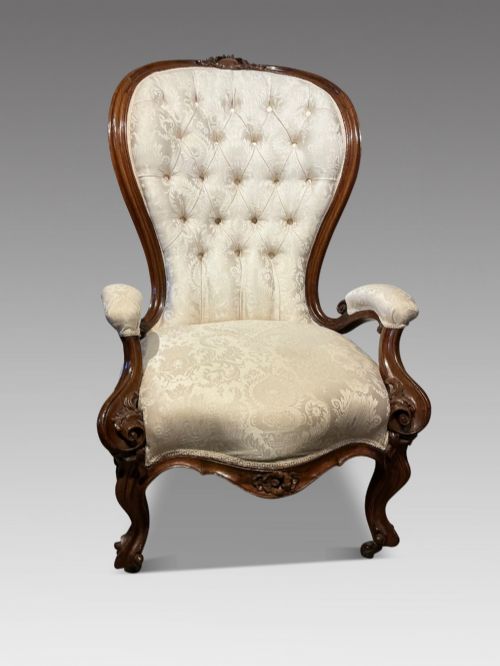
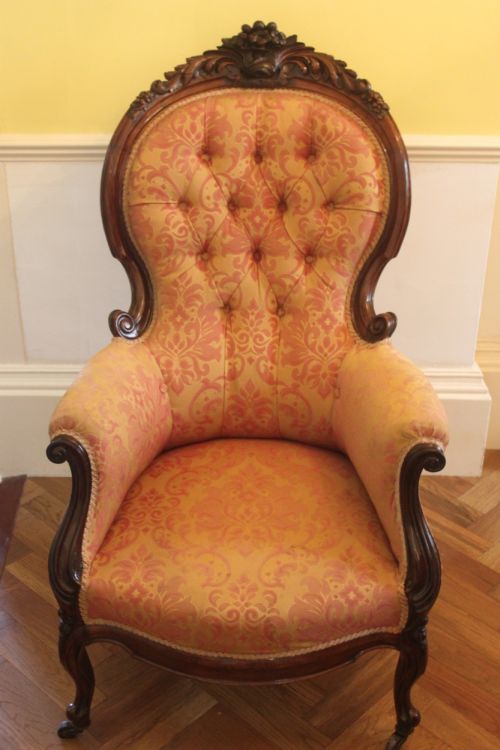
When you search for rococo revival armchairs, you encounter nineteenth-century salon and library seating defined by exuberant asymmetrical lines, scrolling foliage and deep buttoned upholstery. These pieces were designed to mimic the extravagant fluidity of eighteenth-century French royal furniture while serving the formal entertaining needs of Victorian households.
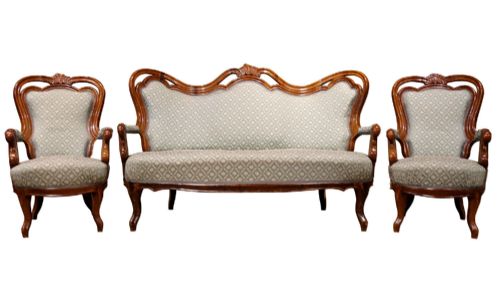
The versions you meet most frequently on this page date from the Victorian era and the broader nineteenth century, spanning decades from eighteen-sixty to eighteen-seventy-five. They appear singly, as pairs, as sets of four, or as his and hers chair groupings intended for formal parlour spaces.
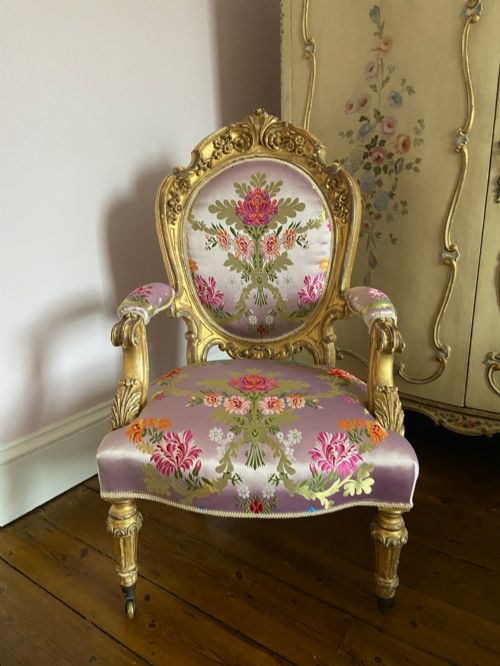
Makers shaped these frames from dense domestic and exotic timbers including mahogany, walnut, and rosewood, alongside gilded and painted wood. They paired these richly carved wooden skeletons with luxurious textile coverings such as damask and traditional upholstery fabric.
How They Were Made
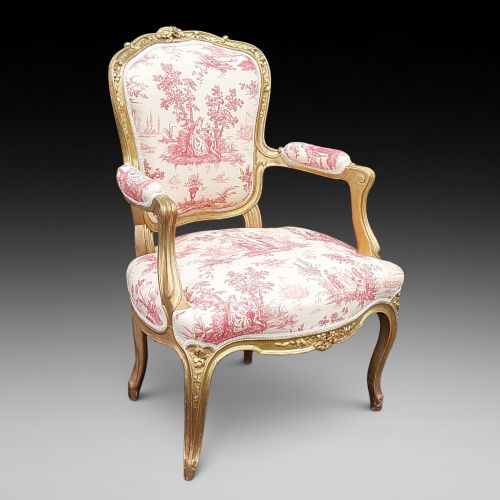
Cabinetmakers constructed these seating forms using sturdy timbers like walnut, mahogany, and rosewood, which possessed the structural strength required for deep carving. Artisans also utilised giltwood and painted finishes to achieve the shimmering, gilded surfaces characteristic of French salon aesthetics.
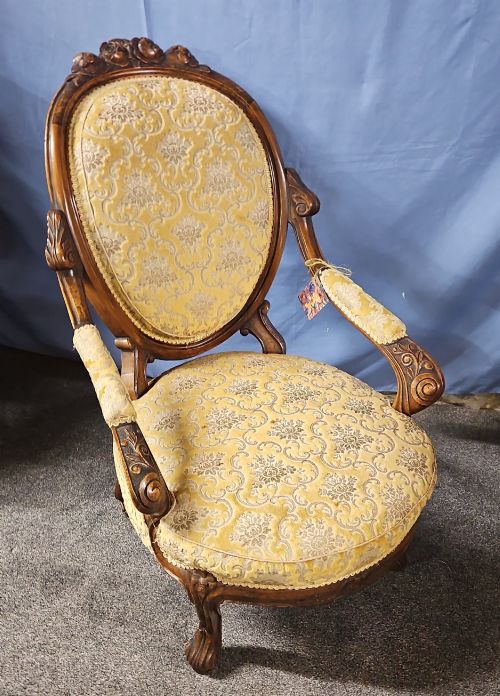
Craftsmen carved high-relief floral motifs, scrolls, and serpentine outlines directly into the solid wood frames by hand. They then integrated traditional upholstery techniques, securing fabric and damask over supportive stuffing to create comfortable, sprung seats and padded armrests.
Retail Price Guide 2026
Typical UK retail prices for rococo revival armchairs, calculated from the Sellingantiques database of over a million retail prices indexed since 2003. This retail price guide relies exclusively on Sellingantiques data; no external sources or auction records are used, so the figures do not describe the wider market.
What Varies in Quality
The distinction between ordinary and exceptional examples lies in the depth and crispness of the hand carving on the wooden frames. Superior pieces exhibit deeply undercut foliage and finely detailed scrolls that retain their sharpness, whereas lesser items show shallow, mechanically smoothed ornamentation.
Choice of primary timber also dictates the tier of the piece, with richly figured rosewood and giltwood commanding greater visual presence than standard mahogany or walnut. The integrity of the surviving fabric, whether damask or traditional upholstery, influences how successfully the chair retains its original nineteenth-century character.
The Rococo Revival Armchairs Glossary
- Rococo Revival
- A nineteenth-century design movement that reinterpreted the curving, ornate motifs of the eighteenth-century French royal court. This style favours asymmetrical scrolls and naturalistic flower carvings.
- Damask
- A reversible figured fabric traditionally woven with patterns that catch the light. It frequently appears as the upholstery choice on formal nineteenth-century salon seating.
- Giltwood
- Timber coated with a thin layer of gold leaf or gilt paint. This technique creates a brilliant, reflective surface often seen on French-influenced salon chairs.
- His and Hers Chairs
- A matched pair of Victorian parlor seats featuring complementary proportions designed for gentlemen and ladies. They typically comprise a larger armchair and a slightly smaller companion seat.
Frequently Asked Questions
Where were these armchairs used?
These seating pieces belonged primarily in formal Victorian reception rooms, drawing rooms, and private libraries where guests were entertained. Their decorative frames and luxurious coverings signalled social standing and refined taste.
Today, they function equally well as statement pieces in contemporary living spaces, adding textural contrast and historical character to a room.
How do I identify a Victorian piece?
You can date these items by examining the combination of dense timbers like walnut or rosewood with characteristic nineteenth-century construction methods and carving styles. The presence of Victorian upholstery materials provides further chronological clues.
Comparing the specific floral motifs and frame shapes to documented nineteenth-century examples helps confirm their period origin.
Are they comfortable for daily use?
Many nineteenth-century salon chairs offer surprisingly supportive seating thanks to traditional internal springing and padded armrests. However, their upright proportions and deep squabs are tailored for formal sitting rather than relaxed lounging.
Living with them involves appreciating their dual role as sculptural works of art and functional household furniture.
Why do some have painted finishes?
Gilt and painted surfaces on nineteenth-century salon chairs were applied to emulate the opulent French court aesthetic popularised during the reign of Louis the Fifteenth. These finishes brightened dimly lit Victorian drawing rooms by reflecting candlelight and gaslight.
They represent a deliberate stylistic choice to move away from dark, unadorned timber toward lighter, more theatrical decoration.