

French Salon Chair
A french salon chair brings formal elegance to a room, offering carved wooden frames and period upholstery.
What a french salon chair is
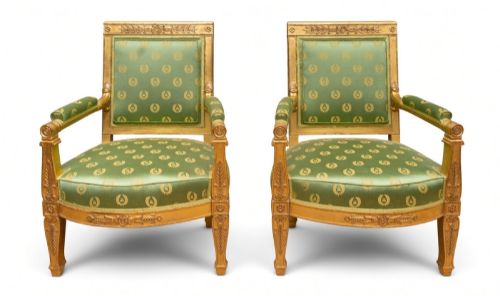
When you search for a french salon chair, you are looking at formal seating designed for entertaining in historic drawing rooms and reception spaces. The pieces available span from the eighteenth century to the twentieth century, encompassing revival styles and provincial variants.
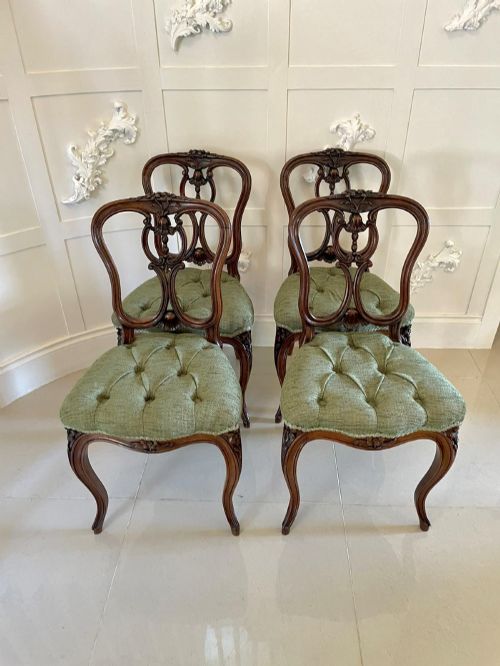
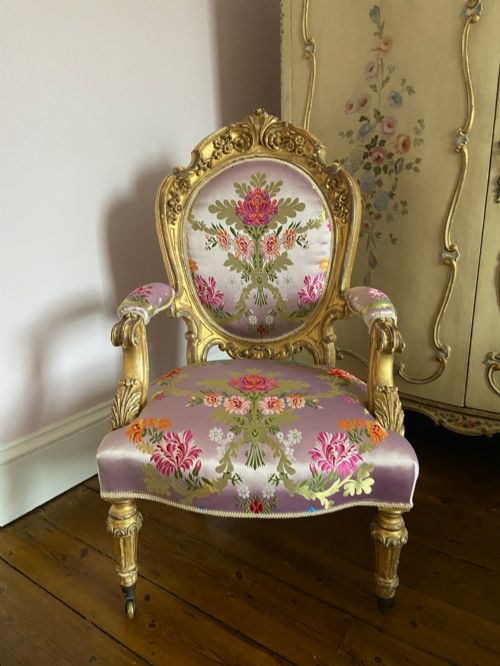
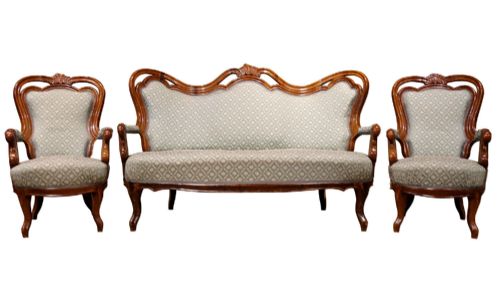
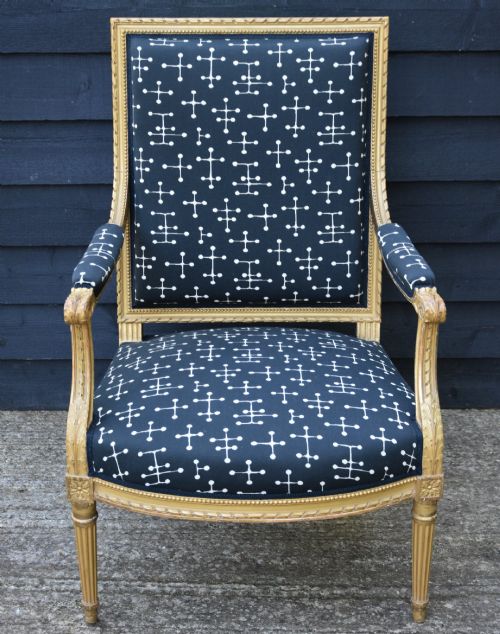
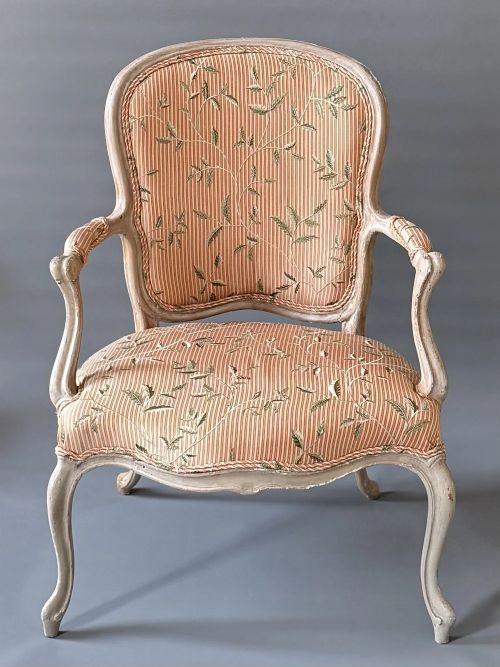
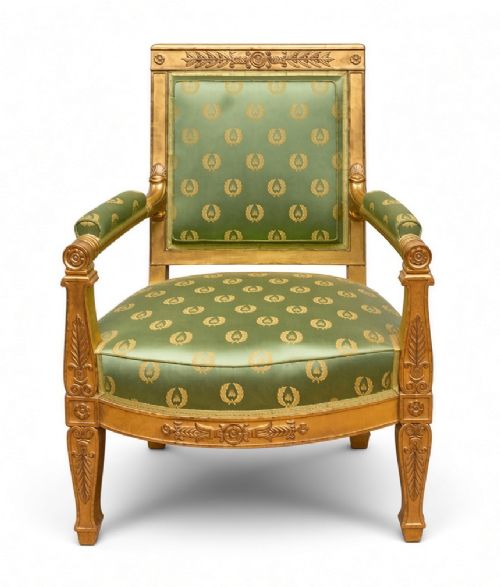
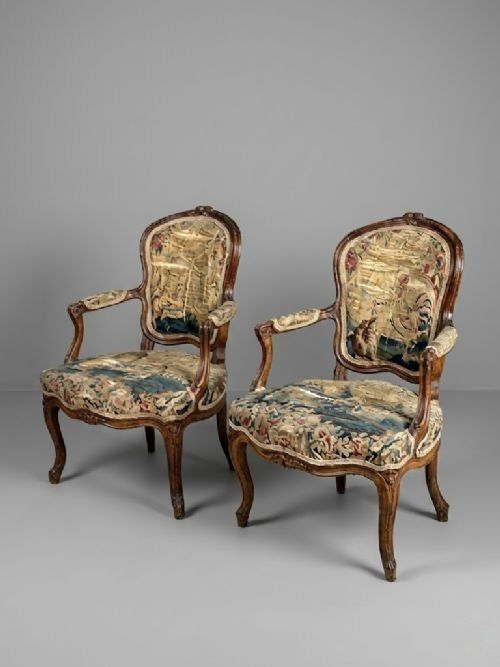
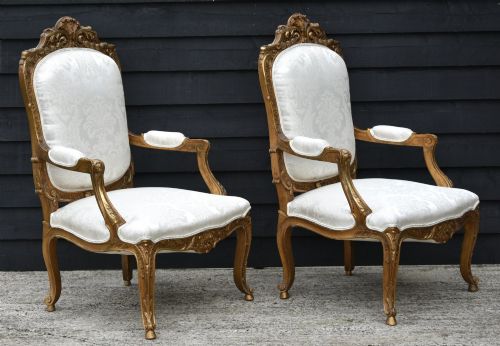
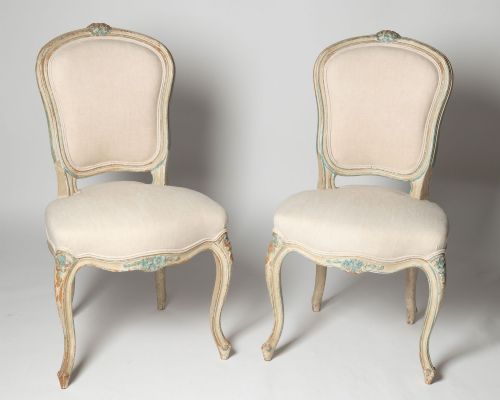
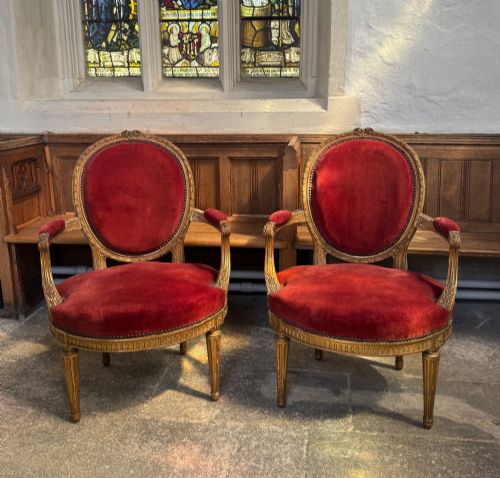
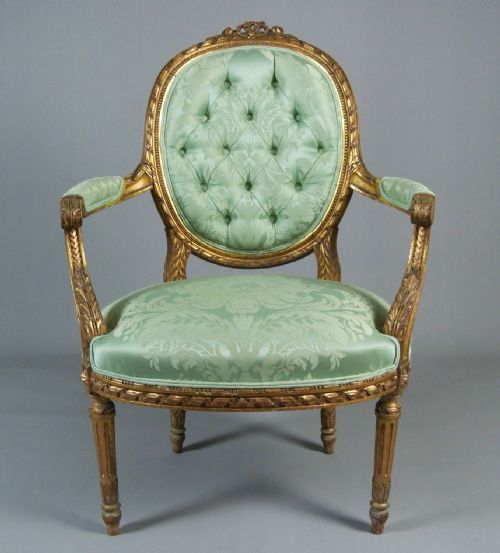
You will most frequently meet giltwood and walnut frames with open arms, often described as fauteuils or bergères. These armchairs reflect distinct historic design movements, including Louis XVI, Napoleon III, and French Restauration periods.
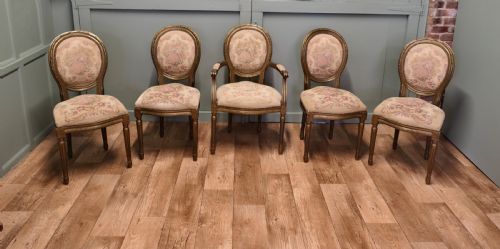
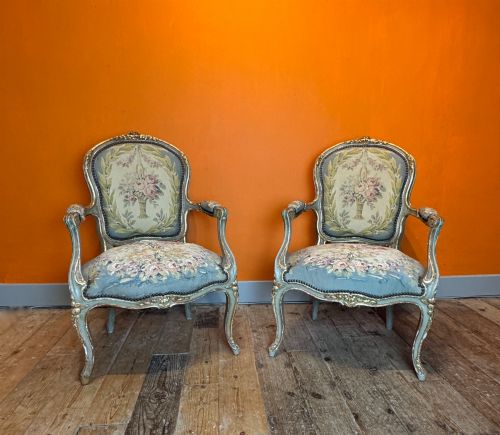
The inventory ranges from ornate gilded reception seating to simpler walnut and beechwood provincial models. Upholstery choices run from needlepoint tapestry and silk to modern calico and hessian ready for recovering.
How they were made
Makers shaped structural frames primarily from solid walnut, beechwood, and oak, alongside softwoods designated for receiving heavy gilding or paint. Carvers worked directly into the timber to execute floral motifs, scrolling foliage, and classical architectural details.
Giltwood pieces received layers of gesso before gold leaf application, while painted examples utilised flat or distressed pigments. Joinery relied on traditional mortise and tenon construction to support the open arm forms.
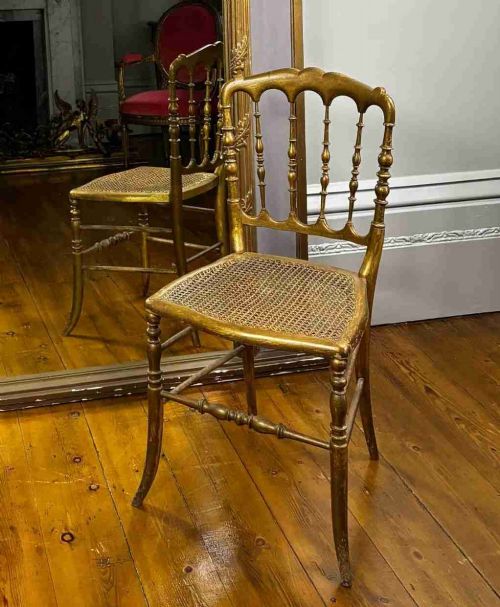
Upholstery involved webbing, stuffing materials, and hand-tacked textiles including wool tapestry, silk, damask, and cane panels. Canework was woven directly through drilled holes in the wooden seat rails.
Retail Price Guide 2026
Typical UK retail prices for french salon chair, calculated from the Sellingantiques database of over a million retail prices indexed since 2003. This retail price guide relies exclusively on Sellingantiques data; no external sources or auction records are used, so the figures do not describe the wider market.
Several miniature children's salon chairs appear in the archive, proving that historic french elites started networking early.
What varies in quality
The distinction between standard examples and top-tier pieces rests on the crispness of the wood carving and the depth of the gilding. High-quality frames display sharply defined hand-carved ornament rather than soft, moulded contours.
Original surface treatments elevate a piece, especially intact period gilding or authentic patinated walnut without later overpainting. The integrity of the original joinery and the presence of period textiles or traditional stuffing methods further separate finer items from ordinary ones.
Jacob-Desmalter
The French Salon Chair Glossary
- Fauteuil
- An open-arm armchair with upholstered back and seat, typically featuring exposed wooden framework. These chairs were staples of formal French reception rooms.
- Giltwood
- Timber coated with thin gold leaf over a prepared gesso ground. This finish provided brilliant reflection under candle or gas lighting in historic salons.
- Canework
- Woven cane panels utilised for seats and backs to offer breathable support. It appears frequently on lighter seating types.
- Needlepoint
- Stitched canvas embroidery executed in wool or silk threads, often depicting floral or figurative scenes. It survives as a durable decorative upholstery medium.
- Restauration
- A design period spanning the early nineteenth century that bridged neoclassical restraint and emerging revival tastes. Pieces from this era often feature restrained classical lines.
Frequently Asked Questions
How do I identify a Louis XVI style salon chair?
Look for straight tapered legs, often fluted, and geometric framework shapes such as ovals or squares on the backrest. These design elements reflect neoclassical influences distinct from earlier curves.
Carvings on these chairs typically feature ribbons, beaded moulding, and classical acanthus leaves rather than asymmetrical rococo scrolls.
Were these chairs meant for everyday sitting?
Salon chairs were originally built for formal entertaining, receiving guests, and light social use in reception rooms rather than heavy daily lounging. Their open arms and upright proportions encouraged formal posture.
While sturdy in construction, their historical upholstery and delicate carved frames suit gentle daily use or display purposes today.
Can I use a salon chair in a modern bedroom?
These chairs function effectively as occasional seating in bedrooms, dressing areas, or studies, adding historical texture to contemporary interiors. Their compact proportions allow them to fit easily into corners or beside dressing tables.
Pairing a gilded or walnut frame with neutral walls creates a striking visual contrast in modern settings.