



French Chateau Armchair
These french chateau armchair examples bring nineteenth-century salon seating into modern rooms through carved frames and traditional upholstery.
French Chateau Armchair
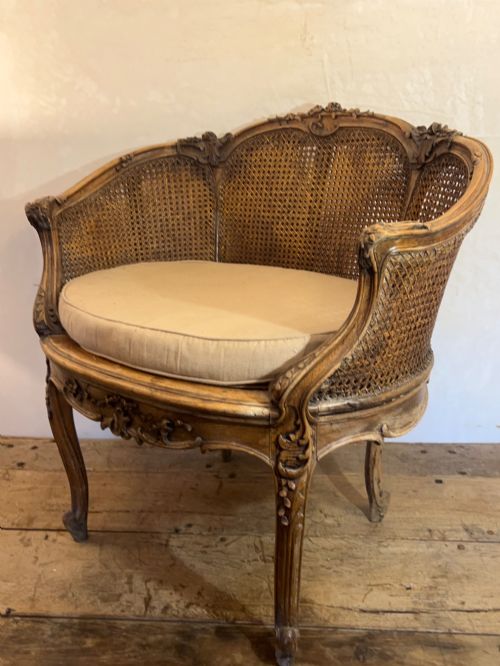
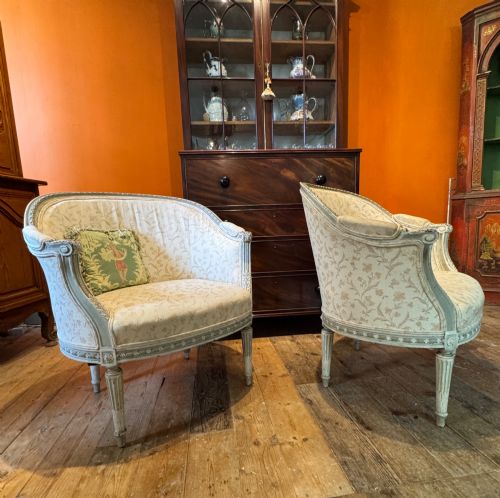
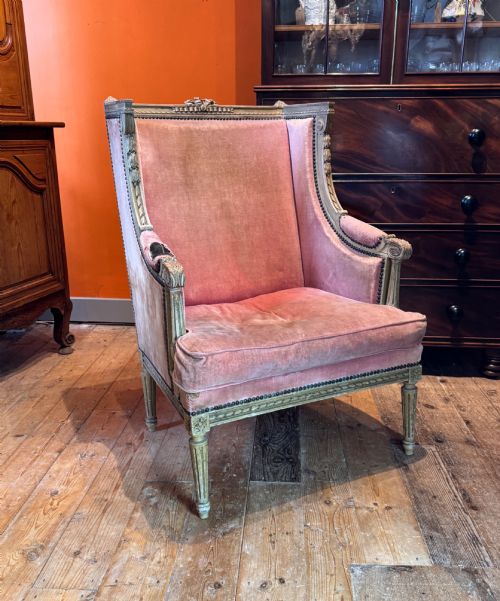
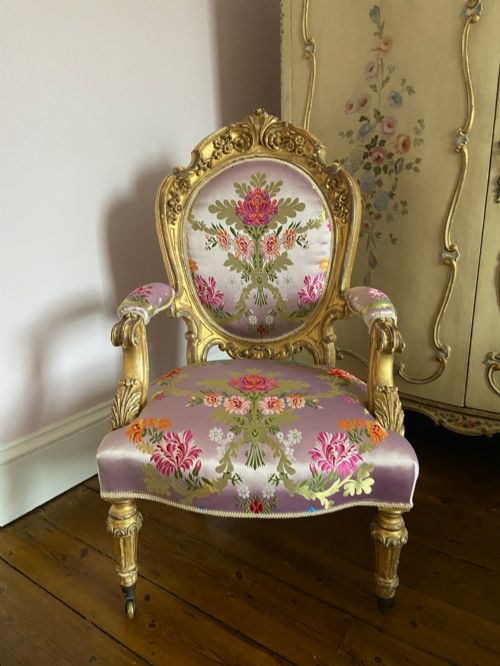
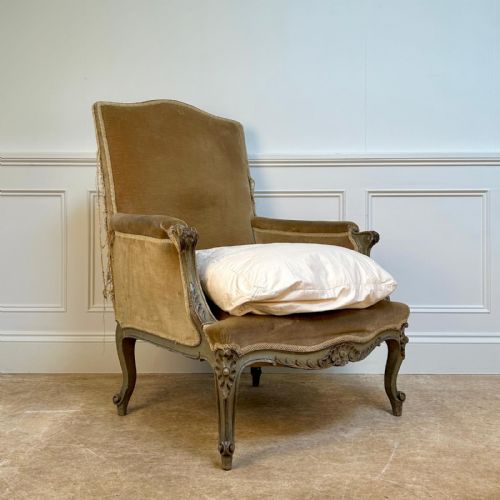
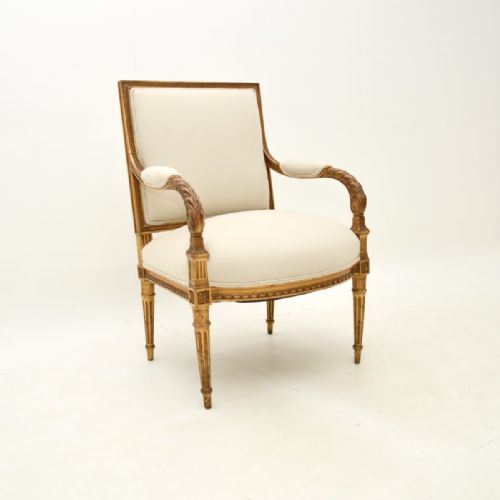
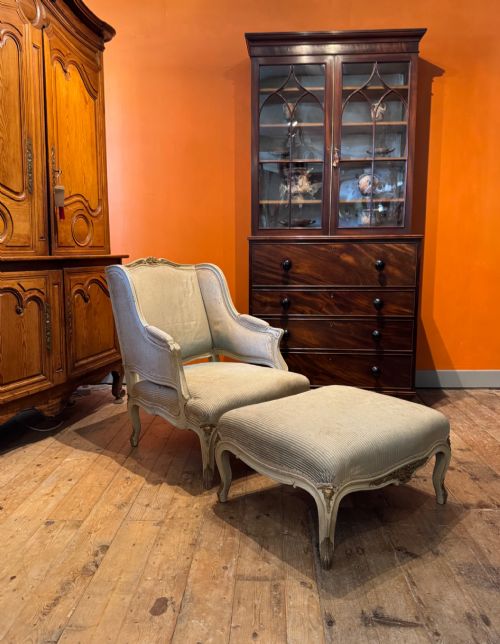
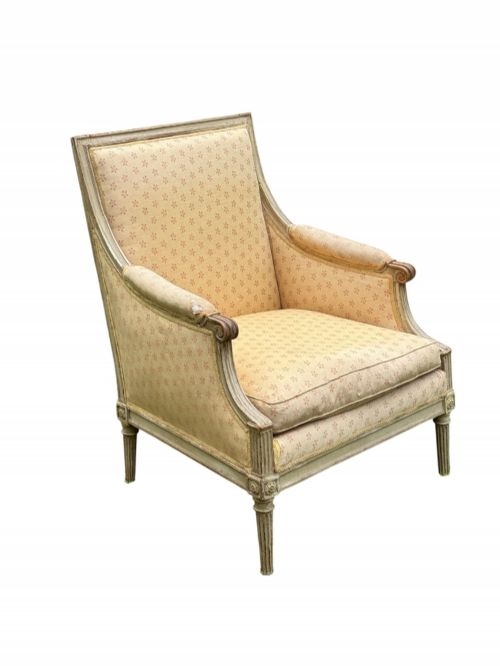
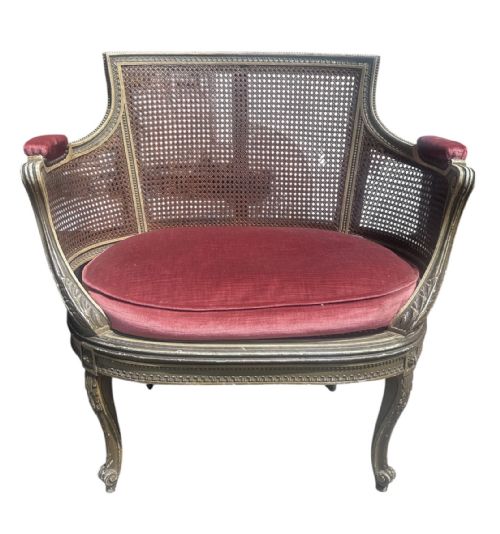
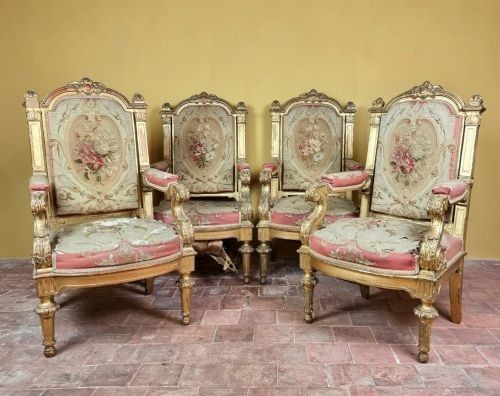
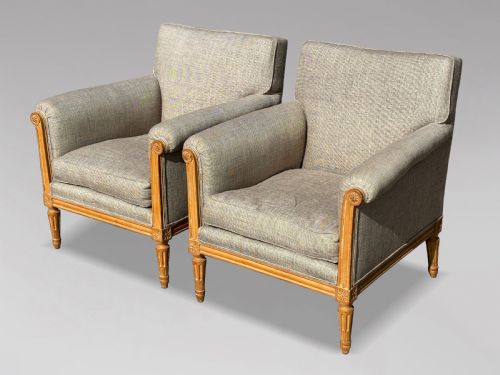
A french chateau armchair search uncovers nineteenth-century seating reflecting earlier royal aesthetics through Louis XV and Louis XVI revivals. The form emerges most often as a painted or gilded fauteuil alongside enclosed bergère tub chairs.
Makers and makers of smaller sets shaped these pieces across the eighteenth, nineteenth, and early twentieth centuries. Surviving pieces incorporate related salon forms including settees and chaise longues alongside standard armchairs.
The aesthetic relies heavily on French Chateau and Louis revival design vocabularies. Pieces span from eighteenth-century originals to later revival interpretations dated into the nineteen-thirties.
Materials and construction
Frames rely upon traditional hardwoods including beech, walnut, and oak carved into curved cabriole legs or straight fluted supports. Gilding and original paint finish the wooden structures alongside exposed natural grain.
Upholstery incorporates materials such as velvet, silk, fabric, and needlework with occasional deep buttoning. Caning provides another common panel treatment within bergère and open armchair frames.
French Chateau Armchair Retail Price Guide 2026
Typical asking prices for french chateau armchair among the pieces listed under this phrase on Sellingantiques today, from the lower quarter to the upper quarter. They describe what is for sale here now, not the wider market.
Needlework upholstery on eighteenth-century chairs preserves hand-stitched details completed long before electricity illuminated the French salon.
Judging the work
The crispness of the hand-carved wooden ornament distinguishes standard production from finer examples. Deep relief work on giltwood and painted frames shows the hand of a skilled maker.
Surface preservation dictates overall character, particularly where original paint or historical gilding remains intact beneath later wear. The integrity of internal upholstery foundations and traditional fabric choices completes the assessment.
Henri Jacob
The French Chateau Armchair Glossary
- Fauteuil
- An open-armed wooden armchair originating in France with upholstered back and arm pads. These typically display exposed carved wooden framing around the perimeter.
- Bergère
- An enclosed upholstered armchair featuring solid sides filled with upholstery or cane panels. A loose seat cushion sits atop a supportive base.
- Giltwood
- Timber coated with a thin layer of gold leaf or gilt paint. This finish appears frequently on formal nineteenth-century salon seating.
- Louis XV Style
- A decorative aesthetic defined by asymmetrical curves, scrolling foliage, and cabriole legs. It draws inspiration from the mid-eighteenth-century French court.
- Louis XVI Style
- A neoclassical design language characterised by straight lines, fluted legs, and geometric symmetry. It reflects late eighteenth-century tastes.
French Chateau Armchair: Frequently Asked Questions
What is a bergere armchair?
A bergere is an enclosed upholstered armchair featuring solid sides filled with cane work or fabric panels. It typically includes a loose seat cushion resting inside the wooden frame.
These chairs date primarily to the nineteenth century and offer a more enclosed seating position than open-framed fauteuils.
How do I spot Louis XV style?
Louis XV style pieces rely upon asymmetrical curves, scrolling foliage, and cabriole legs. The design emphasises natural flowing lines rather than straight geometric shapes.
Revival pieces from the nineteenth century reproduce these curved frameworks using beech or walnut.
What distinguishes original paint finishes?
Original paint surfaces show authentic age-related wear, craquelure, and patina acquired across decades of domestic use. They sit directly on the wood without modern chemical stripping underneath.
These untouched surfaces contrast with pieces that received later decorative repainting during subsequent centuries.
Where were salon chairs used?
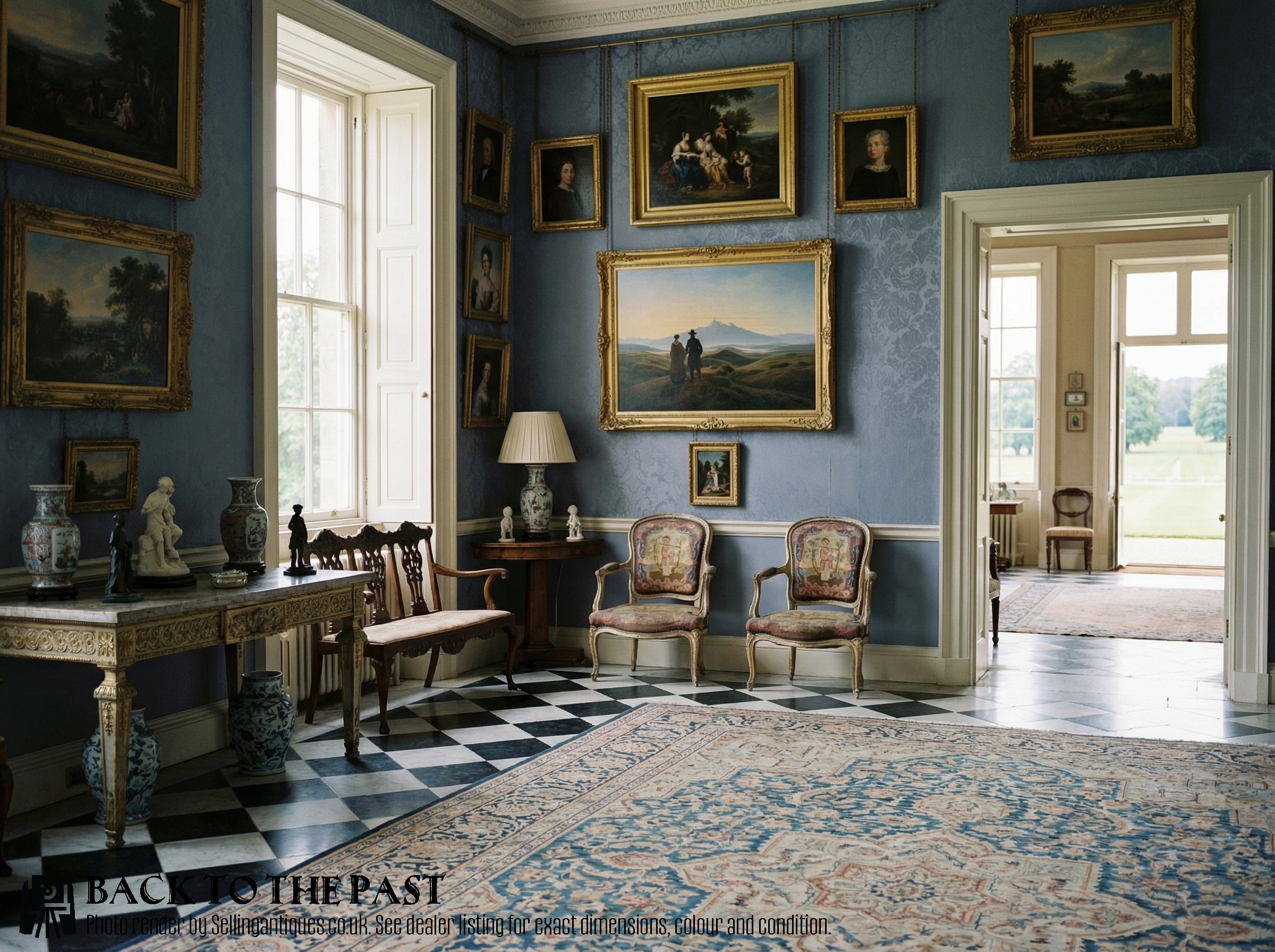
Salon chairs functioned as portable seating within formal reception rooms and drawing rooms of large houses. They allowed residents to arrange conversational groups around the interior.
Their decorative backs meant they looked correct when viewed from any angle in an open room.