

French Crapaud Chair
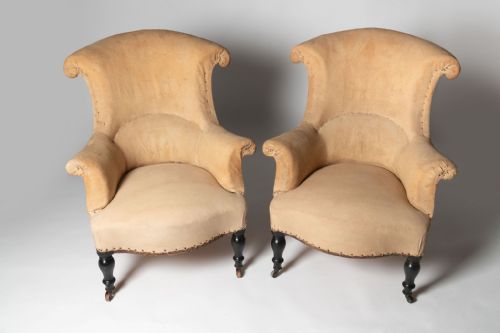
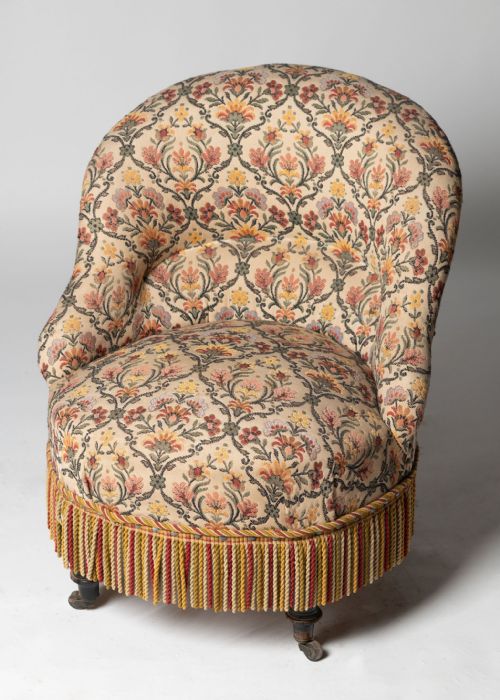
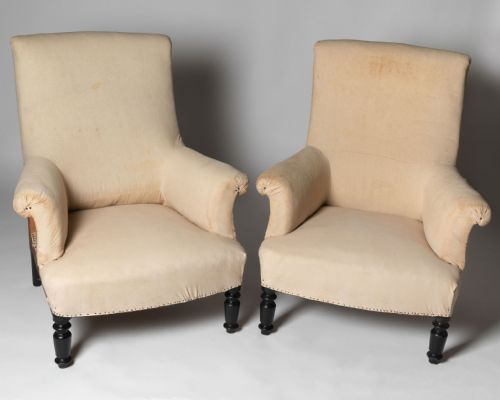
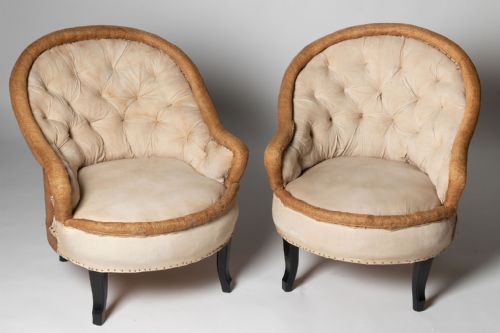
A french crapaud chair offers low-slung, fully upholstered comfort with a distinctively coiled shape suited to intimate rooms.
French Crapaud Chair
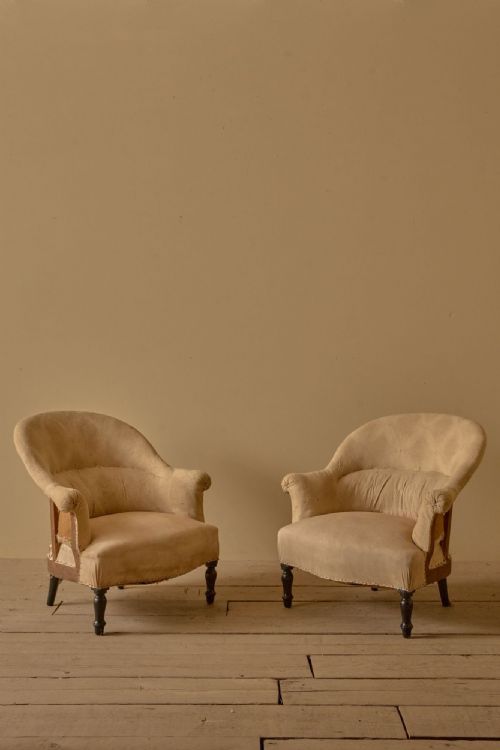
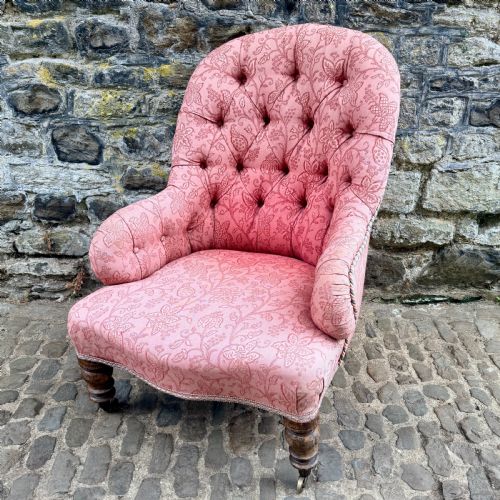
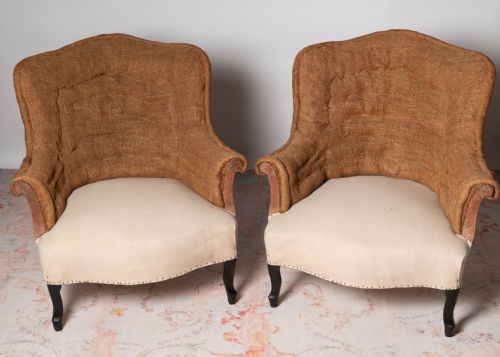
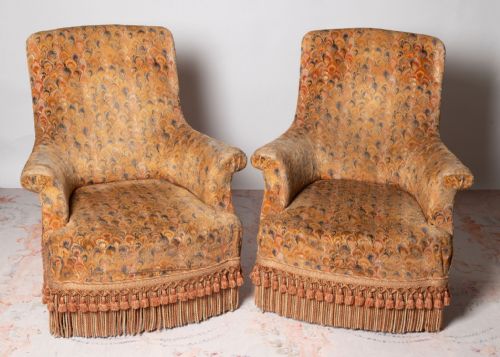
A french crapaud chair is a compact, low armchair designed for deep, enclosed seating. Most examples date from the nineteenth century, particularly the Napoleon III period, alongside occasional pieces from nineteen hundred and nineteen thirty.
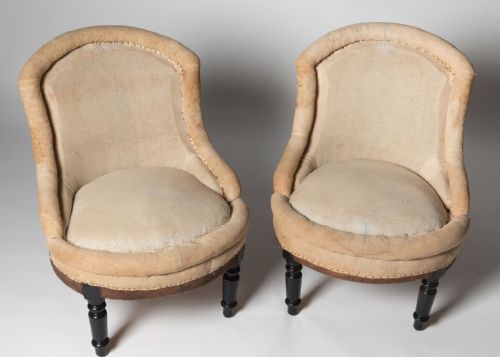
Originating in France, these armchairs range from provincial seating to refined salon pieces. They appear singly or as pairs, serving as versatile accent chairs across domestic interiors.
Materials and Construction
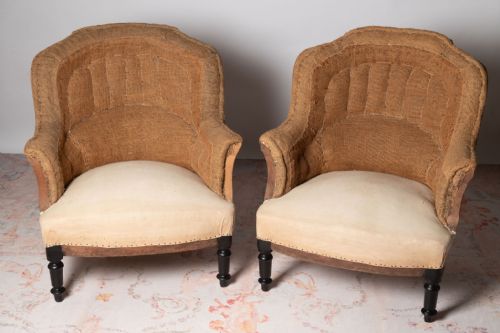
Construction relies on timber frames, with beech frequently utilised for structural support. These sturdy wooden carcasses are shaped to form the signature low-slung tub or square profiles.
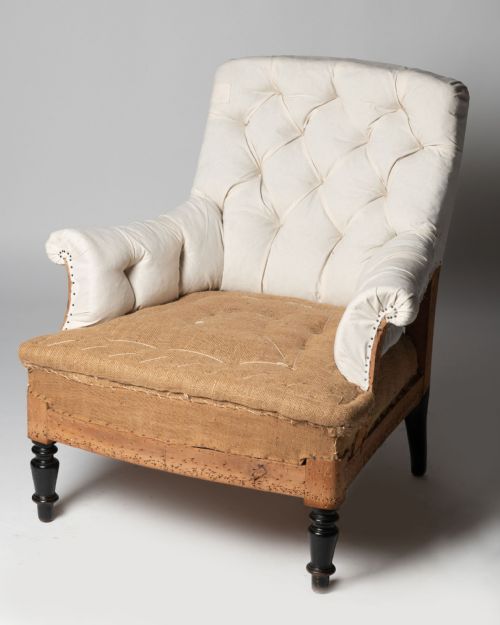
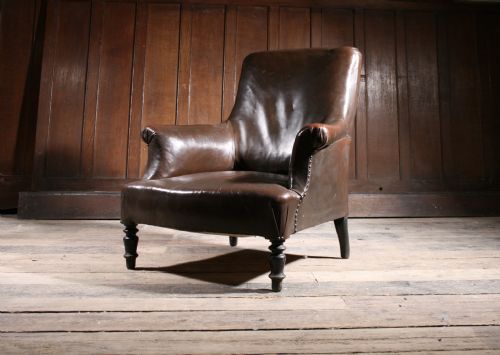
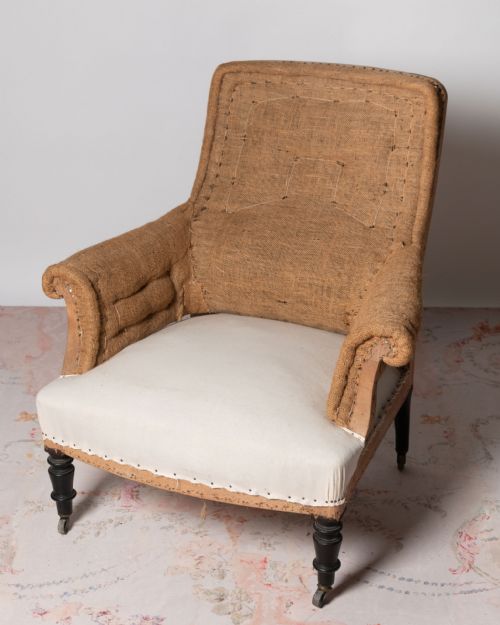
Traditional upholstery methods involve internal webbing and stuffing secured with hessian and calico. Outer coverings span cotton, linen, leather, and brass detailing, often finished with decorative tacks.
French Crapaud Chair Retail Price Guide 2026
Typical asking prices for french crapaud chair among the pieces listed under this phrase on Sellingantiques today, from the lower quarter to the upper quarter. They describe what is for sale here now, not the wider market.
Named after the French word for toad because of their squat posture, these chairs quietly invite you to squat down and stay awhile.
Evaluating Proportion and Originality
Quality rests in the integrity of the wooden frame and the purity of the original silhouette. The best examples maintain their balanced proportions without structural timber replacement.
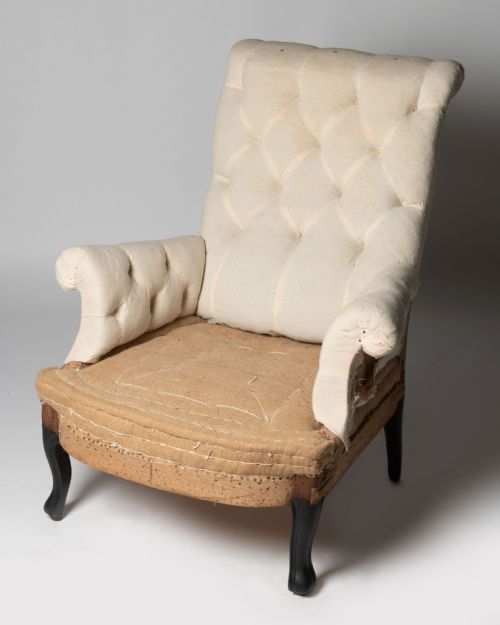
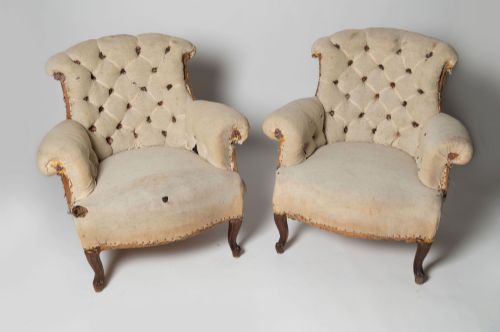
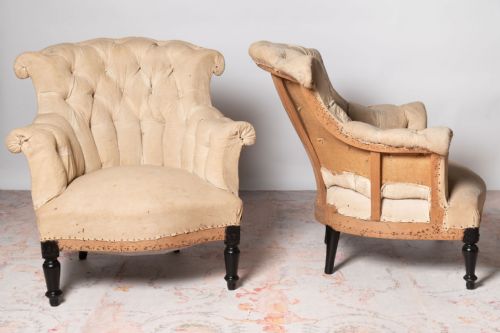
The execution of the upholstery foundation, from the hand-tied springs to the density of the stuffing, dictates the comfort and durability of the piece. Untouched frames awaiting new covers offer clear insight into the underlying craftsmanship.
The French Crapaud Chair Glossary
- Crapaud
- A low, fully upholstered French armchair with a rounded or tub-shaped back. The name translates from the French word for toad, describing its squat posture.
- Napoleon III
- A nineteenth-century French design period known for eclectic revivals and deep upholstery. Pieces from this era often feature sprung backs and concealed wooden frames.
- Tub chair
- An armchair with a continuous curved back and arms forming a single enclosing shape. This form prioritises enveloping comfort.
- Hessian
- A coarse woven fabric typically utilised as foundational scrim beneath final upholstery layers. It provides essential tension for internal padding.
- Calico
- A plain-woven cotton cloth frequently used as an underlying tight cover before top fabrics are applied. It ensures a smooth surface for finishing.
French Crapaud Chair: Frequently Asked Questions
What is a french crapaud chair?
A french crapaud chair is a low, fully upholstered armchair characterised by an enclosed tub or square back. These pieces originated primarily in nineteenth-century France during the Napoleon III era.
They are designed for compact, deep seating with minimal visible wood. Many historical examples survive fully padded or stripped back for new covers.
How do I identify a Napoleon III armchair?
Napoleon III armchairs are defined by heavy, enveloping upholstery that almost entirely conceals the beech timber frame. They frequently feature sprung curved backs, low profiles, and turned wooden legs.
Details like brass tacks and structured buttoning often distinguish pieces from this nineteenth-century epoch.
Are these chairs comfortable for daily use?
These armchairs are built for deep, relaxed seating due to their low-slung posture and padded arms. Their compact proportions make them suitable for sitting rather than reclining.
Comfort depends on the firmness of the internal sprung foundation and the quality of the padding.
Why do some chairs require upholstery?
Many historical frames survive with worn fabric or stripped down to the hessian and calico layers. This allows owners to select textiles that match modern interiors.
Raw frames also reveal the true condition of the internal timber and webbing before final finishing.