
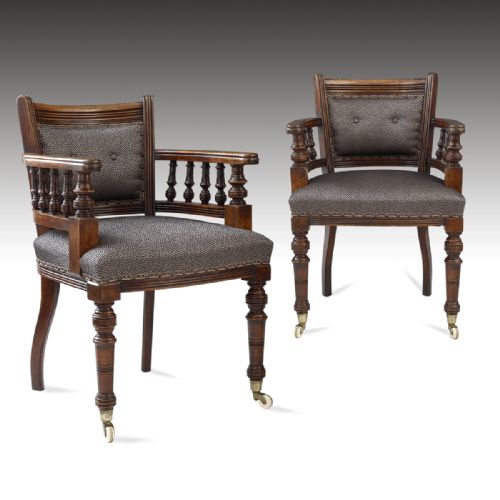
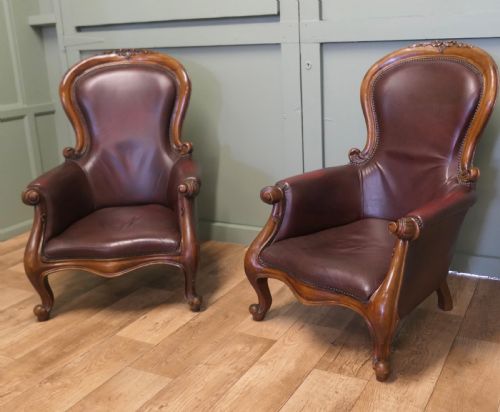
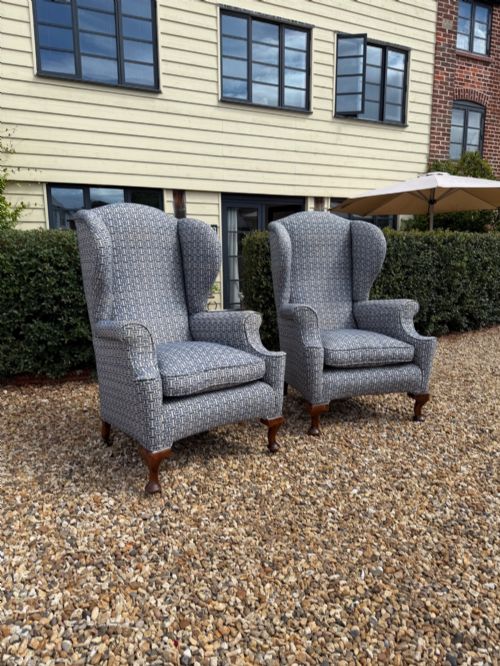
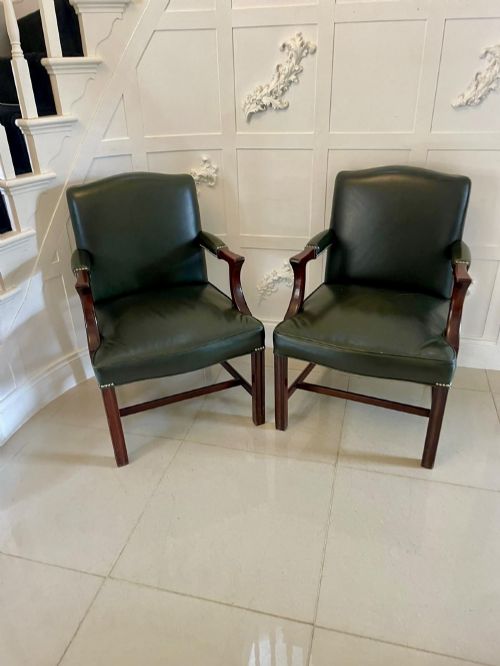
Mahogany Armchair Pair
A mahogany armchair pair brings matched seating of dense timber into a room, offering functional comfort and historical presence.
Defining the mahogany armchair pair
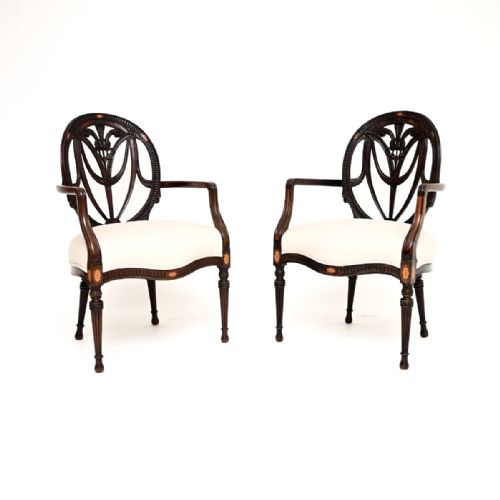
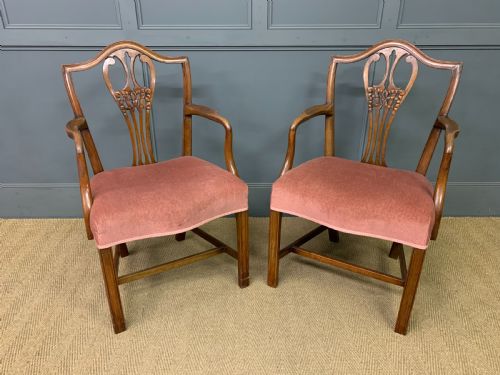
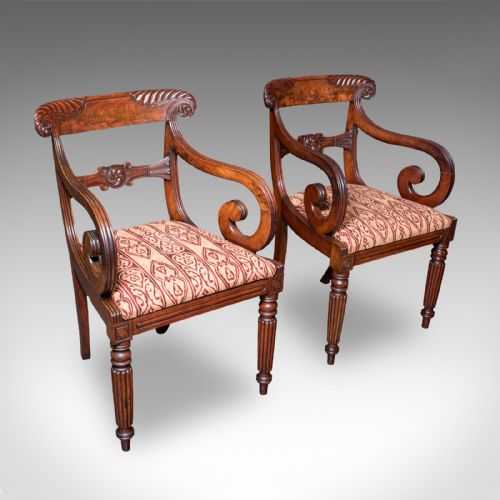
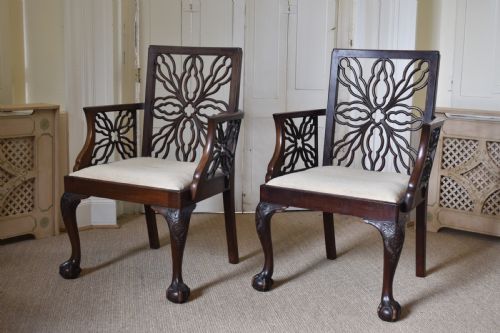
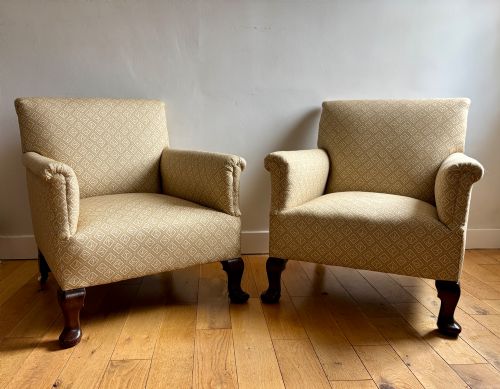
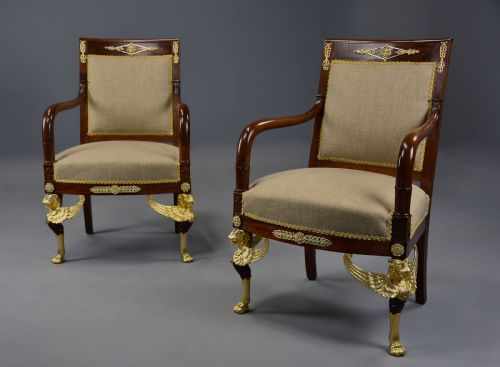
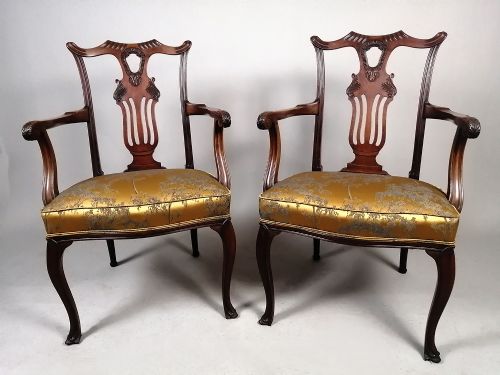
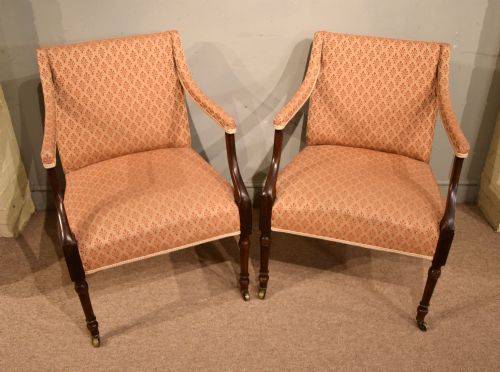
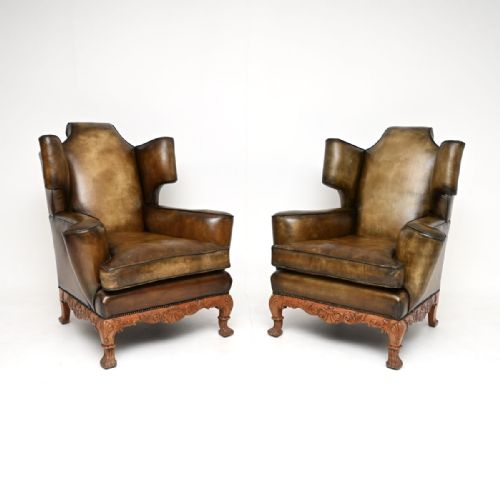
A mahogany armchair pair comprises two matched seats fashioned from heavy tropical hardwood, historically built for formal sitting rooms, libraries, and parlours. These seats appear in various historical iterations, including Victorian, Edwardian, and Regency designs, alongside French revival forms.
The pieces on this page span the nineteenth and early twentieth centuries, encompassing styles from plain upholstered frames to inlaid Edwardian tub chairs. Buyers encounter open armchairs, carvers, and library seats designed to match domestic seating arrangements of their respective eras.
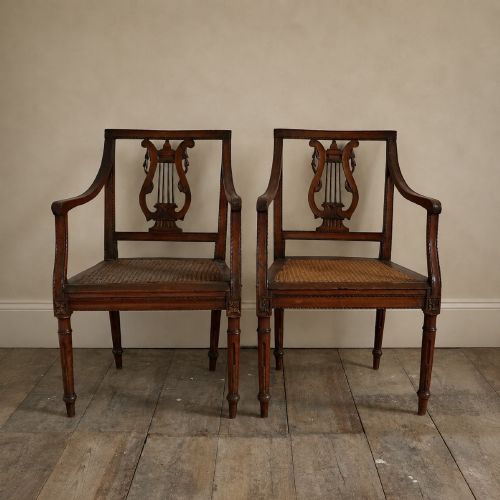
Originating across British, French, and Swedish workshops, these pairs demonstrate the enduring popularity of dark timber in domestic seating. The forms range from simple carved woodwork to elaborate neoclassical and rococo revivals.
Materials and construction methods
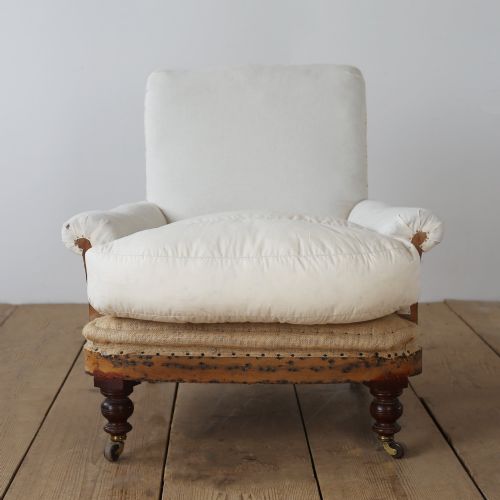
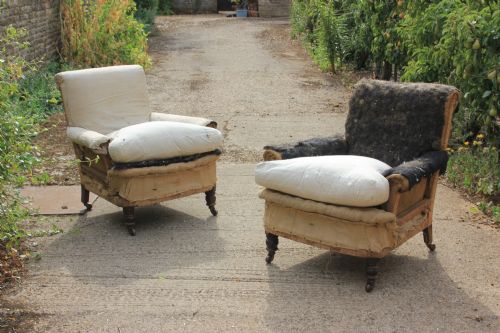
Makers utilised solid mahogany, frequently augmented with satinwood inlay, brass mounts, and cane seating panels. Upholstered variants relied on internal webbing, hessian, calico, and fabric coverings to support the sitter.
Joinery methods combined traditional tenon and mortise framing with hand-carved decorative flourishes on the arms and legs. Metal elements such as brass inlay and fittings provided structural contrast to the dark timber grain.
Retail Price Guide 2026
Typical UK retail prices for mahogany armchair pair, calculated from the Sellingantiques database of over a million retail prices indexed since 2003. This retail price guide relies exclusively on Sellingantiques data; no external sources or auction records are used, so the figures do not describe the wider market.
Some Edwardian chairs arrived with maker stamps hidden beneath the seat rails, leaving silent trade signatures for future finders.
Distinctions in craftsmanship
The distinction between standard production and superior examples lies in the precision of the timber carving and the fidelity of the stylistic revival. Finer pieces display crisp botanical or geometric inlay and substantial timber scantlings rather than thin veneer.
Upholstered integrity and the retention of original internal stuffing materials differentiate better-preserved examples. Superior pairs maintain structural rigidity in the arm supports and joinery without relying on modern stabilizing hardware.
The Mahogany Armchair Pair Glossary
- Mahogany
- A durable tropical hardwood prized for its reddish-brown colour and fine grain. It forms the primary structural material for these chairs.
- Tub armchair
- A seating form characterised by a continuous curved back and armrest enclosing the sitter. These appear frequently in Edwardian and French revival styles.
- Carver
- An armchair designed to sit at the head of a dining table or function as a standalone seat. They typically feature open arms to accommodate formal dress.
- Inlay
- A decorative technique inserting contrasting woods such as satinwood into the mahogany surface. This creates geometric or floral patterns along the frame.
- Bergere
- An enclosed armchair with cane webbing on the back and sides. These seats often incorporate upholstered loose cushion pads.
Frequently Asked Questions
Where were these armchairs placed originally?
These seating pairs occupied formal reception rooms, libraries, and parlours where matched furniture demonstrated domestic standing.
In dining settings, armcarvers sat at the head of the table while library variants stood beside desks and bookcases.
How do I identify a Victorian pair?
Victorian examples display heavier proportions and often incorporate robust carving influenced by earlier revival styles.
Dark finishes and substantial upholstered frames distinguish these pieces from lighter Edwardian alternatives.
Can I use these chairs daily?
These historical seats accommodate regular daily use provided the internal webbing and joints remain sound.
Placing them away from direct heat sources protects the timber and underlying upholstery from premature drying.
What distinguishes Edwardian pairs?
Edwardian versions typically feature lighter timber scantlings and delicate satinwood inlay work.
Many examples adopt neoclassical or revival shapes with cane panels or simplified tub configurations.