

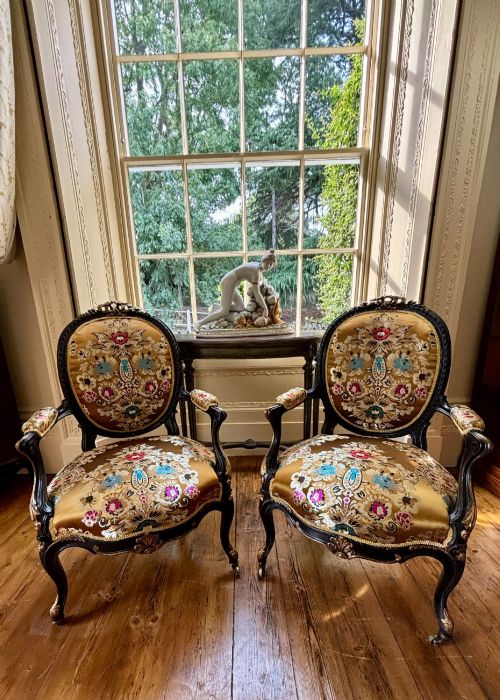
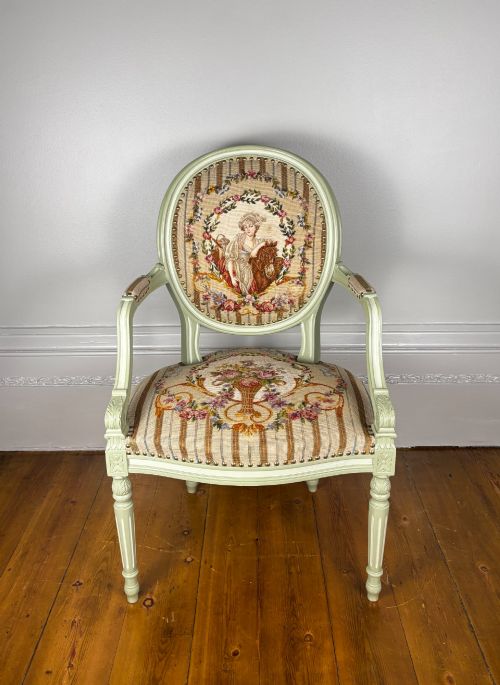
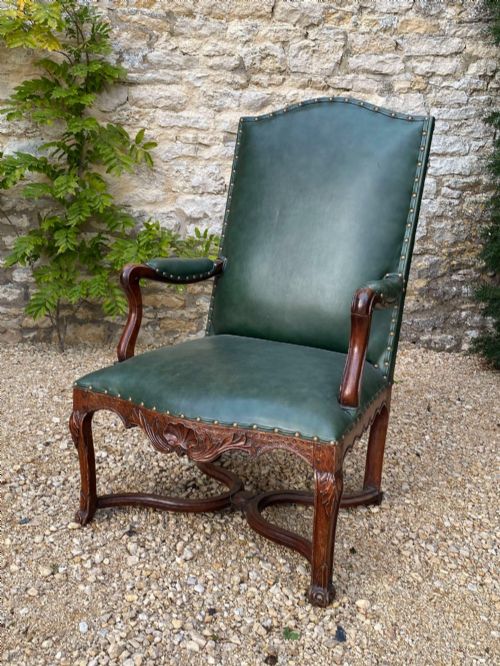
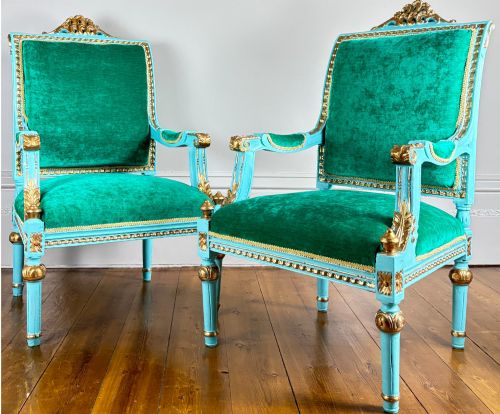
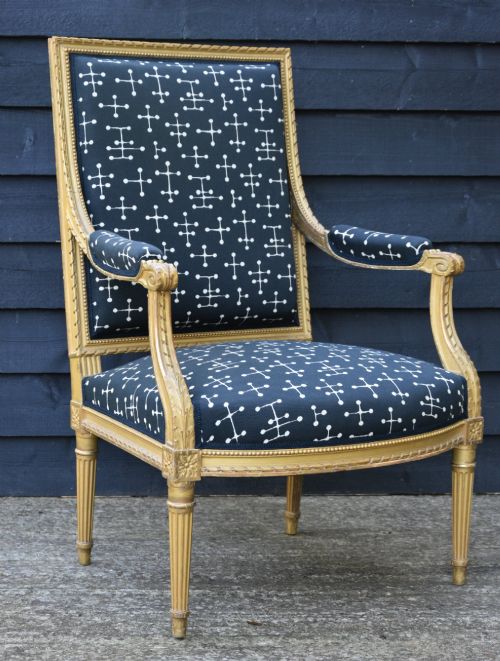
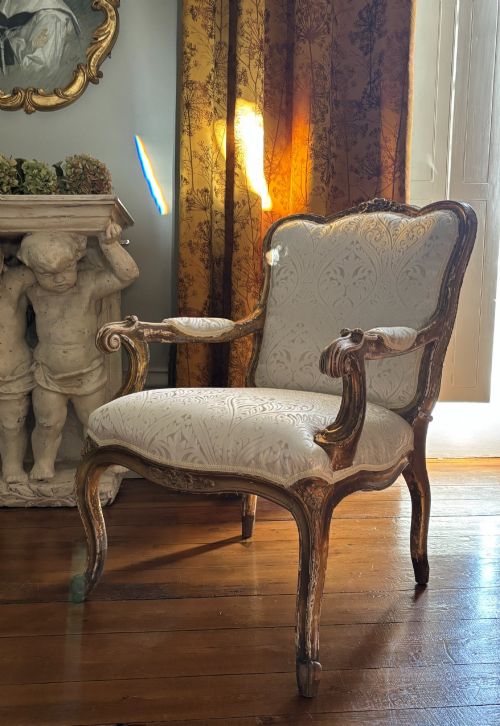
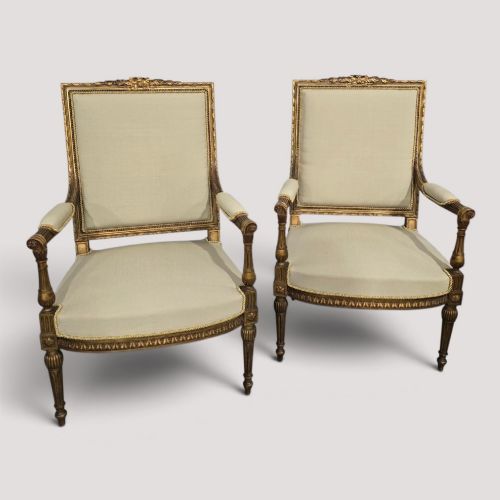
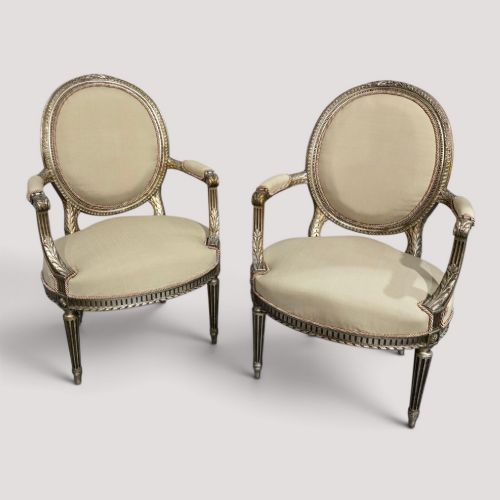

Antique French Open Armchairs
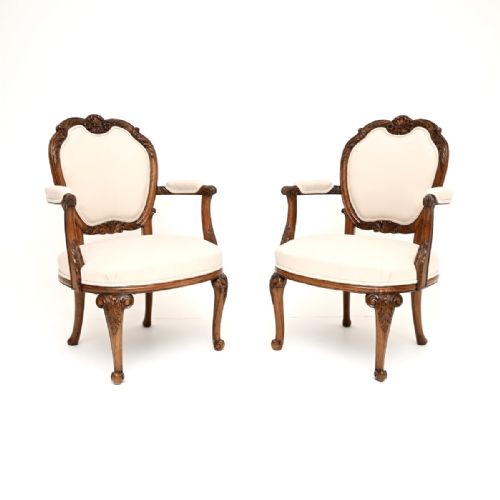
Antique French open armchairs bring lightness and classical proportion to a room, offering generous seats paired with exposed timber frames.
Antique French Open Armchairs
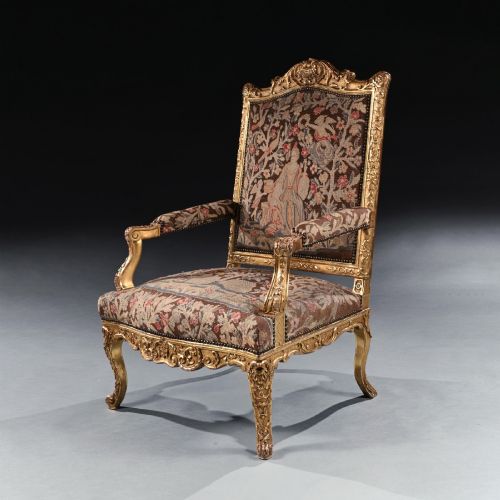
When you search for antique french open armchairs, you encounter nineteenth-century seating that ranges from nineteenth-century oak and Victorian rosewood to giltwood and painted finishes. These pieces include eighteenth-century Louis XVI style revivals, Louis XV and Rococo revivals, and French Empire designs.
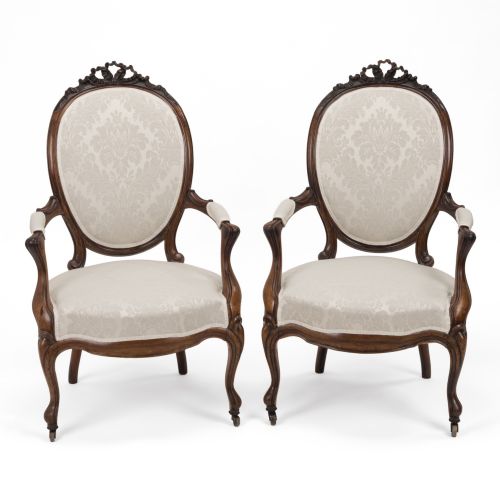
The most common forms on this page are matched pairs of fauteuils and salon chairs. They combine open wooden arms with upholstered seats and backs, drawing on historic French design vocabularies.
Origins span the nineteenth century, including specific dates such as eighteen-eighty, alongside Victorian interpretations. The underlying structures employ beech, oak, walnut, rosewood, and giltwood.
Materials and construction methods
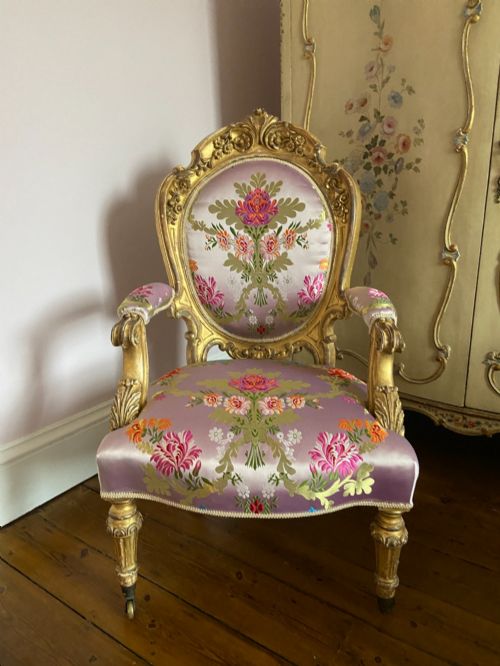
Makers shaped these frames from hardwoods like beech, oak, walnut, and rosewood, applying carved detail, gilding, or paint directly to the timber. Giltwood surfaces show layers of gold leaf over preparation grounds, while painted variants display crackle finishes or original pigment.
Upholstery relies on traditional techniques utilising hessian, textile, and fabric secured with metal studs. Frames incorporate joined construction methods suited to supporting open arm structures.
Antique French Open Armchairs Retail Price Guide 2026
Typical asking prices for french open armchairs among the pieces listed under this phrase on Sellingantiques today, from the lower quarter to the upper quarter. They describe what is for sale here now, not the wider market.
Listings feature nineteenth-century seating constructed from beech, oak, walnut, rosewood, and giltwood, finished with painted surfaces or textile upholstery.
Distinctions in quality
The distinction between standard and superior pieces rests on the crispness of the wood carving and the integrity of the original surface finish, whether giltwood, paint, or polished hardwood. Finely sculpted details on the arms and crest rails reflect the artisan's skill.
The preservation of original upholstery materials, such as early textiles and Hessian supported by metal studs, adds depth to a piece. Proportion and balance in the revival styles dictate the overall visual success of the chair.
The Antique French Open Armchairs Glossary
- Fauteuil
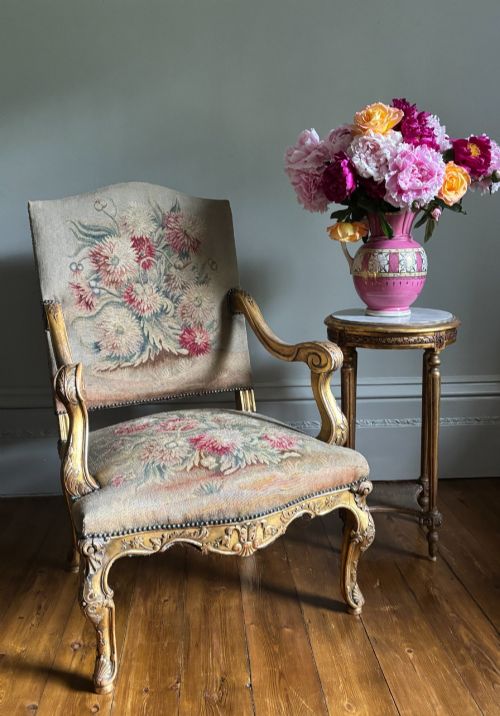
- An open-armed upholstered armchair with an exposed wooden frame originating in France. These chairs typically feature padded armrests designed to accommodate voluminous period dress.
- Giltwood
- Timber coated with a thin layer of gold leaf or powder. This finish was used extensively on formal salon seating.
- Louis XVI style
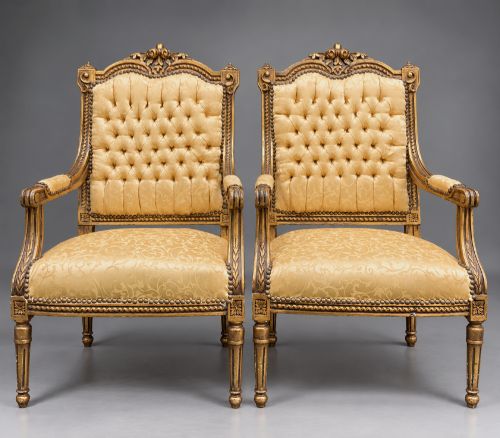
- A neoclassical design aesthetic characterised by straight tapered legs, geometric symmetry, and restrained classical carving. It experienced significant revivals during the nineteenth century.
- Pie crust
- A decorative edge moulding featuring undulating, scalloped curves reminiscent of pastry crusts. This detail appears on the carved wooden frames of certain open armchairs.
Antique French Open Armchairs: Frequently Asked Questions
What is a fauteuil?
A fauteuil is a traditional French open-armed armchair featuring an exposed wooden frame and upholstered back and seat. The sides remain open beneath the armrests, distinguishing them from fully upholstered armchairs.
These chairs were designed for formal reception rooms and parlours, combining decorative carved timber with comfortable seating.
How do I date an antique French armchair?
Dating relies on examining the timber species, construction methods, tool marks, and stylistic revival indicators. Nineteenth-century pieces often emulate earlier Louis reigns while using nineteenth-century secondary woods and assembly techniques.
Surface finishes such as original crackle paint or nineteenth-century gilding also help establish the chronological context of the piece.
What is the difference between Louis XV and Louis XVI styles?
Louis XV style embraces asymmetry, sweeping curves, and organic Rococo motifs such as acanthus leaves and scrollwork. Frames feature flowing lines with minimal straight edges.
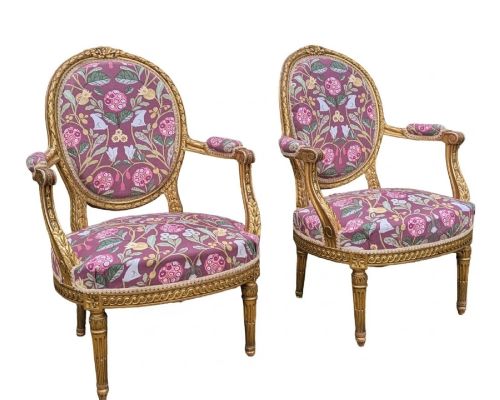
Louis XVI style shifts toward neoclassical symmetry, featuring straight tapered legs, fluted columns, and rectilinear or oval structural forms.
Where were these armchairs placed historically?
Historically, open armchairs served in formal salons, withdrawing rooms, and grand libraries for seating guests or reading. Their decorative backs made them suitable for placement where the rear of the chair remained visible.
Pairs were often arranged symmetrically around fireplaces or against panelled walls within French chateaux and Victorian townhouses.
Are these chairs comfortable for modern use?
These chairs provide an upright, supportive sit intended for formal conversation rather than lounging. The open arm design accommodates various postures while maintaining a compact footprint compared to modern armchairs.
Their ergonomics reflect nineteenth-century standards of posture and domestic life.