
French Rococo Armchairs
French rococo armchairs bring exuberant curves and carved flourishes into a room, offering both dramatic silhouette and inviting seating.
What french rococo armchairs are
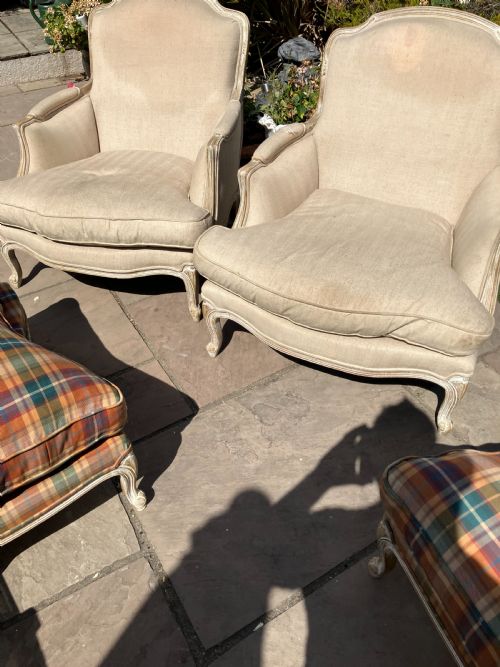
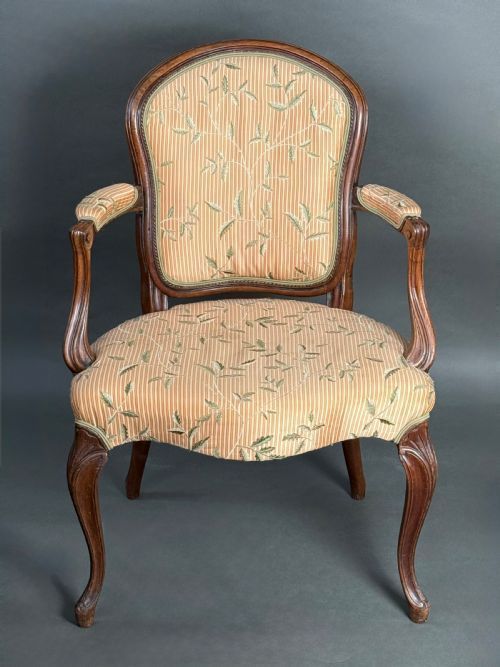
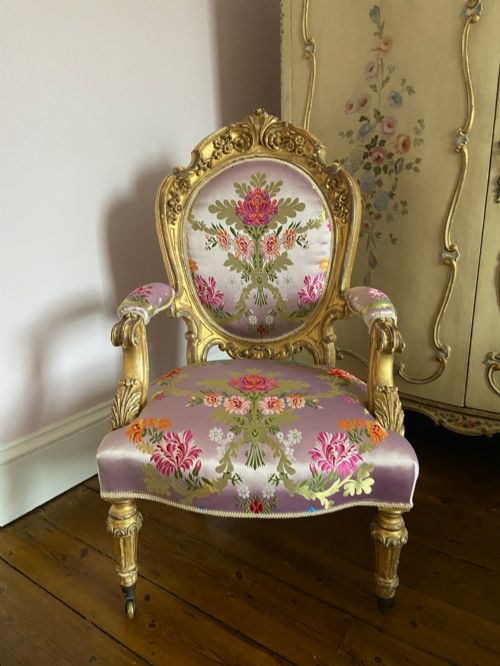
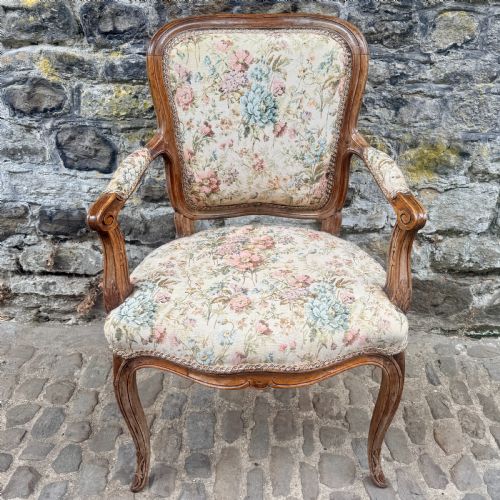
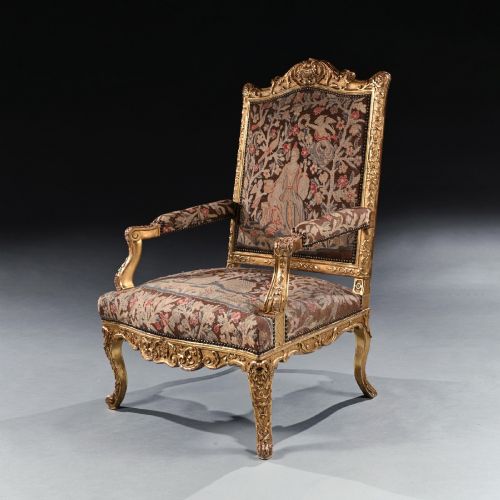
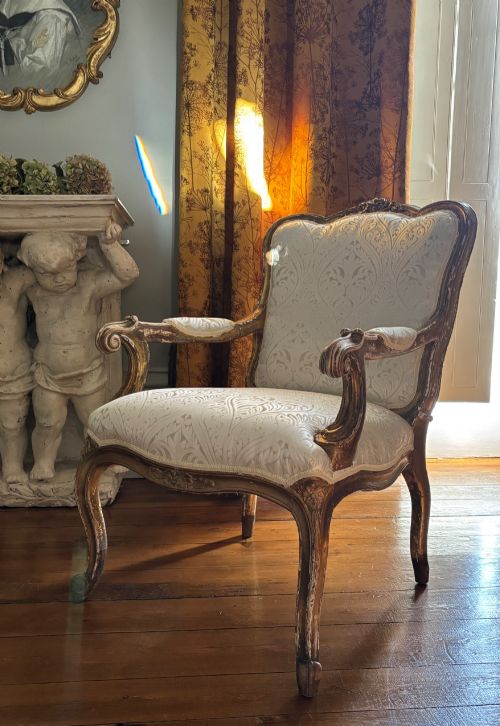
When you search for french rococo armchairs, you encounter seating shaped by flowing asymmetrical lines and carved ornamentation. The examples recorded here span the nineteenth century, the Victorian era, and the nineteen thirties, encompassing both revival periods and later interpretations.
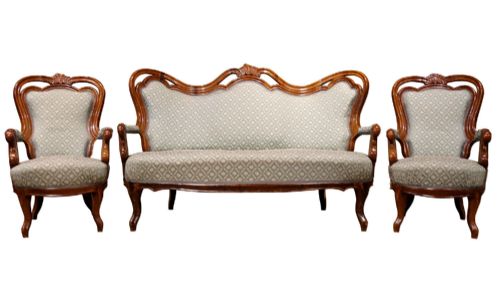
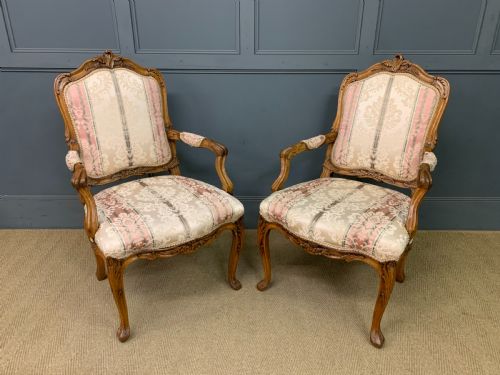
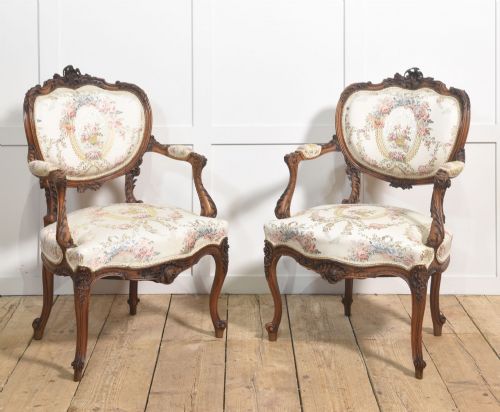
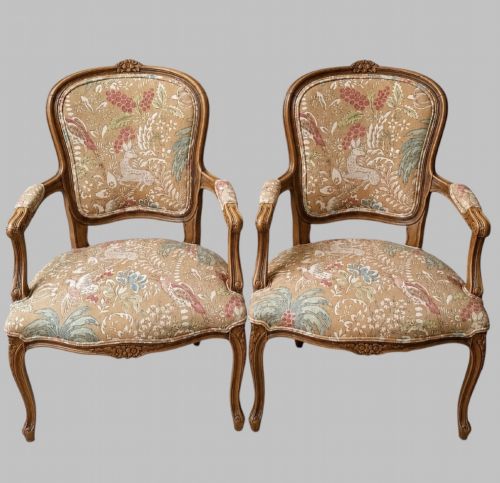
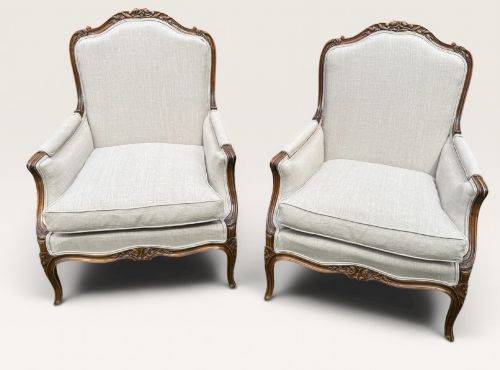
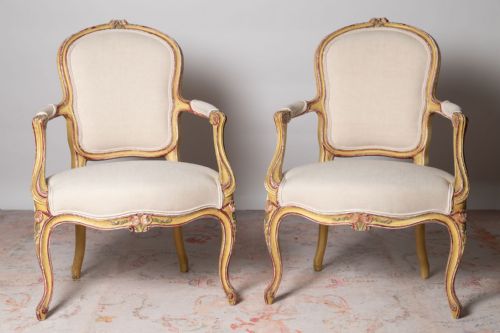
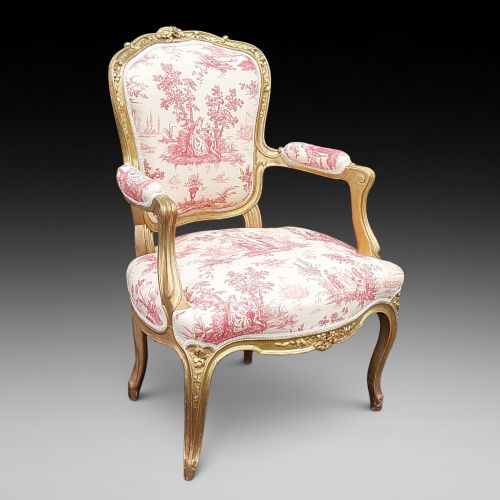
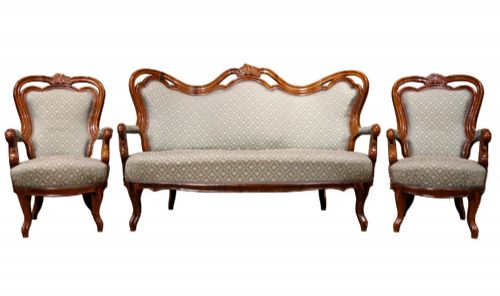
Most pieces appearing on this page emerge as pairs, often described as open armchairs, salon chairs, or fauteuils. Their forms draw heavily upon the Louis XV and Louis XVI repertoires, executed through later nineteenth century revivals and mid twentieth century cabinetmaking.
The styles recorded across current and archive listings range from neo-rococo and French chateau to Louis XV style and rococo revival. These designations point to seats designed for formal parlours and drawing rooms, retaining their characteristic curved frames and upholstered comfort.
How they were made
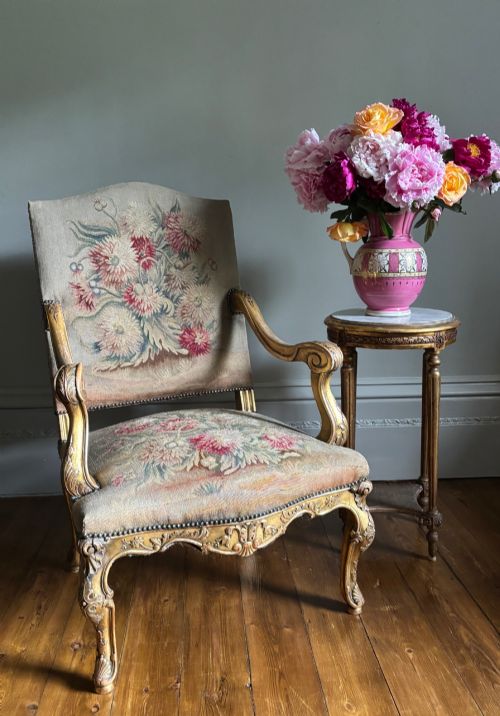
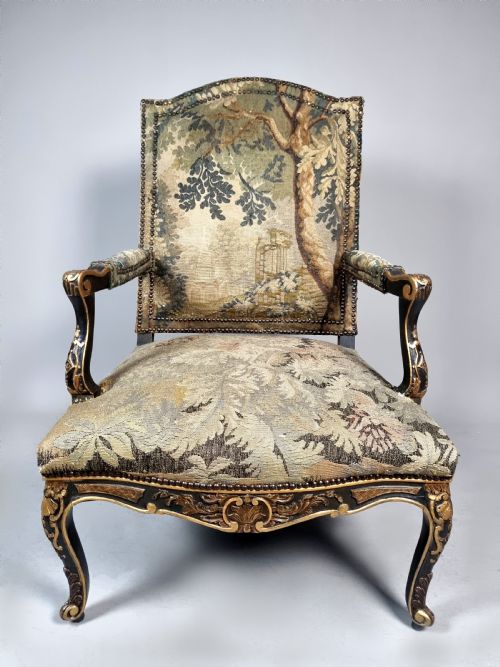
The framework of these seats relies upon hardwoods such as walnut, rosewood, and giltwood, alongside painted wood surfaces. Carvers shaped these timbers to create the characteristic flowing contours and organic motifs associated with the style.
Upholstery forms an essential component of the construction, utilising tapestry upholstery, linen, and varied fabric coverings. These materials are applied to padded frames designed to support the seated figure while displaying decorative textiles.
Retail Price Guide 2026
Typical UK retail prices for french rococo armchairs, calculated from the Sellingantiques database of over a million retail prices indexed since 2003. This retail price guide relies exclusively on Sellingantiques data; no external sources or auction records are used, so the figures do not describe the wider market.
Listings feature walnut, rosewood, and giltwood alongside painted wood frames.
What varies in quality
The distinction between tiers rests upon the crispness of the carved woodwork and the fidelity of the stylistic revival. Pieces rendered in solid rosewood or walnut with deep, detailed carving command greater attention than simpler painted versions.
Another measure of distinction lies in the integrity of the frame construction and the quality of the textile coverings. Original or period-appropriate tapestry and upholstery fabric enhance the cohesion of the piece significantly.
The French Rococo Armchairs Glossary
- Fauteuil
- An open-framed armchair with upholstered back and armrests, typically featuring exposed wood. This form originated in France during the eighteenth century and remained popular in later revivals.
- Giltwood
- Timber treated with a thin layer of gold leaf or gilt finish. This treatment highlights the carved details of formal salon seating.
- Rococo Revival
- A nineteenth-century stylistic movement that revived the curved lines and ornamentation of the mid-eighteenth century. Pieces from this era emulate earlier royal French aesthetics.
- Neo-Rococo
- A later interpretation of rococo design principles, appearing on pieces from the nineteen thirties. It adapts historical curves for twentieth-century interiors.
Frequently Asked Questions
What is a fauteuil?
A fauteuil is an open-sided armchair featuring upholstered back and seat pads with exposed wooden arms. This traditional French form provides comfortable seating while displaying decorative woodwork.
Such chairs were designed for formal parlours and drawing rooms. Their open construction keeps the piece visually light within a room.
How do I date these armchairs?
Dating relies on examining the timber species, construction methods, and stylistic cues present in the carving. Revival pieces often display nineteenth-century manufacturing techniques beneath their historical styling.
Reference points include Victorian production methods and nineteen thirties interpretations. Comparing the framing timber and upholstery tacking helps narrow the period of creation.
Where should I place them?
These armchairs suit reception rooms, drawing rooms, and bedrooms where their curved silhouettes can be appreciated from multiple angles. They function well as statement seating pairs.
Because they feature finished backs and decorative carving, they do not need to be pushed directly against a wall. Placing them in open spaces highlights their sculptural frames.
Are they comfortable for daily use?
Most examples provide supportive upright seating designed for formal conversation rather than lounging. The padded backrests and upholstered seats offer firm support.
Upholstery condition varies across individual items, so checking the internal padding and spring or webbing support is advisable if frequent sitting is intended.