


Gilded Wood Armchair
A gilded wood armchair brings grand European architectural presence into a room, offering sculptural carved detail and luxurious upholstered comfort.
Gilded Wood Armchair
When you search for a gilded wood armchair, you encounter seating designed for formal reception rooms, drawing rooms and private chambers across several centuries. These pieces range from authentic eighteenth-century examples to later revival models created in the nineteenth and early twentieth centuries.
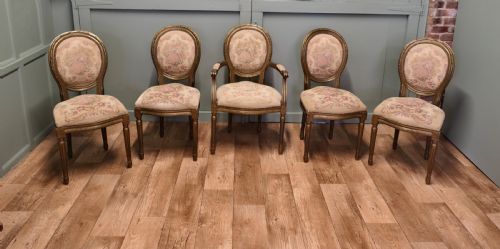
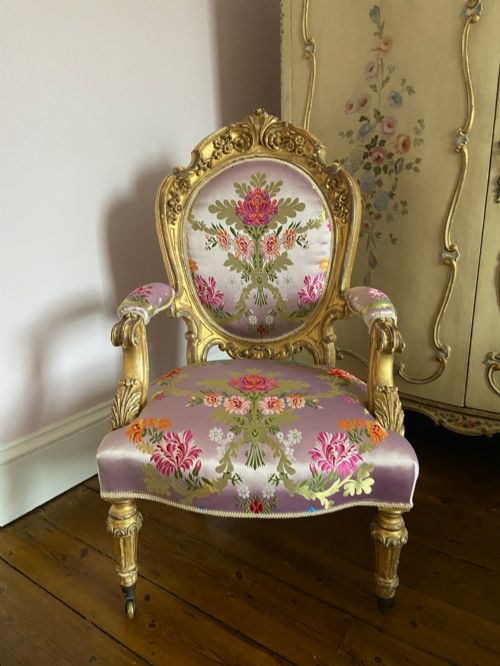
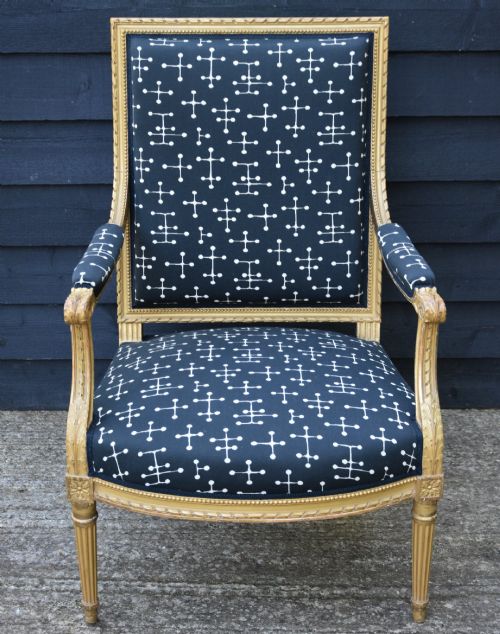
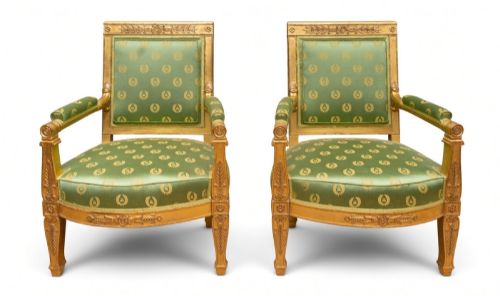
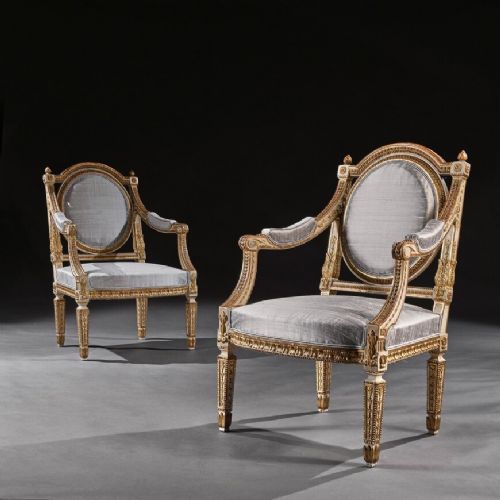
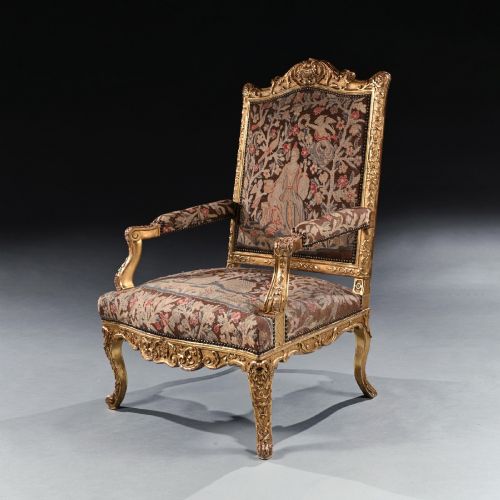
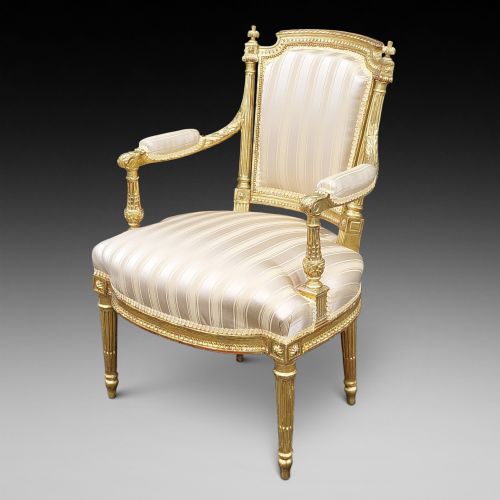
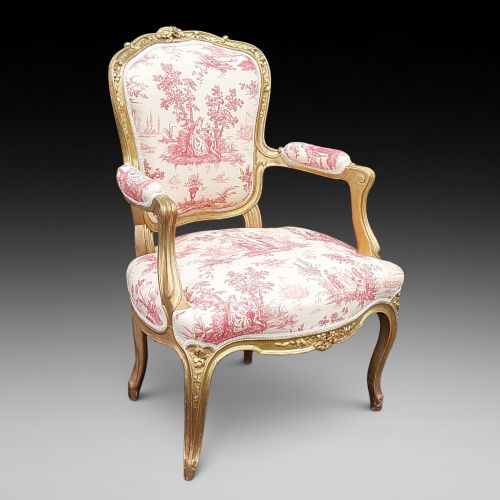
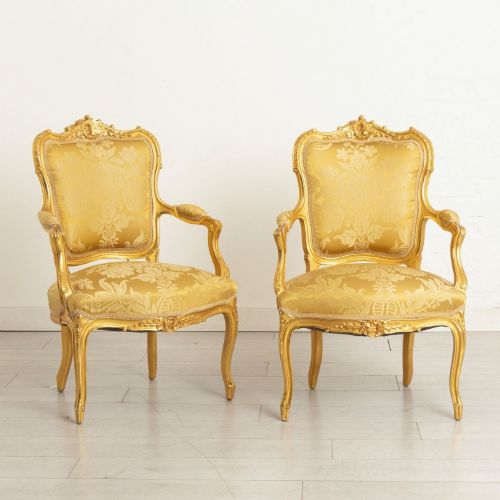
The most common versions on this page are French salon chairs and fauteuils following Louis XVI, Rococo and Baroque styles. They typically combine carved wooden frames with exposed gold leaf or gilt finishes and upholstered seats or backs.
How they were made
Cabinetmakers shaped the structural frames primarily from hardwoods such as beech and walnut, carving intricate floral, scroll or architectural motifs directly into the timber. Artisans then applied thin sheets of gold leaf or paint over a prepared ground layer to achieve the characteristic shimmering surface.
Textiles completed the construction, with historical frames receiving coverings of silk, velvet, tapestry or silk damask. Traditional upholstery methods secured these fabrics over webbing and stuffing to provide a supportive seat.
Several diminutive children's salon chairs survive alongside full-sized suites, proving that tiny aristocrats also required gilded seating.
What varies in quality
The standard of a piece rests heavily on the crispness and depth of the wood carving. Skilled carvers produced lively, well-defined motifs with sharp undercut details, whereas lower-quality examples show soft, shallow, or mechanically rounded ornamentation.
The integrity of the surface finish also dictates value. Original gilding that has aged naturally with subtle patination demonstrates superior craftsmanship compared to crude, later overpainting that obscures the carved contours beneath.
Jacob-Desmalter
The Gilded Wood Armchair Glossary
- Giltwood
- Wood that has been decorated with gold leaf applied over a gesso ground. This finish catches the light and defines carved architectural details.
- Fauteuil
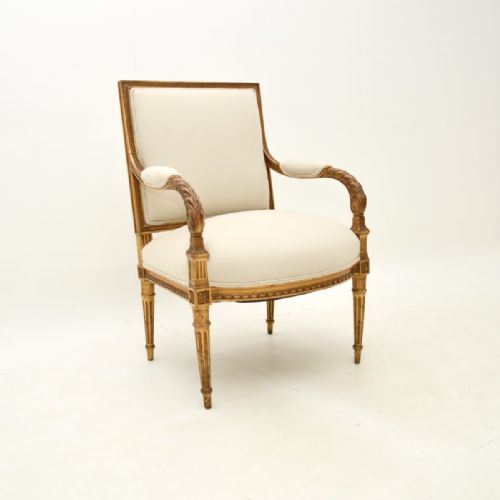
- An open-framed armchair with upholstered back and armrests, originating in France. These seats typically feature exposed wooden arms.
- Bergere
- A closed armchair featuring an upholstered back and sides, often with an exposed wooden frame and a loose cushion. The style provides a more enclosed seating position.
- Duchesse brisee
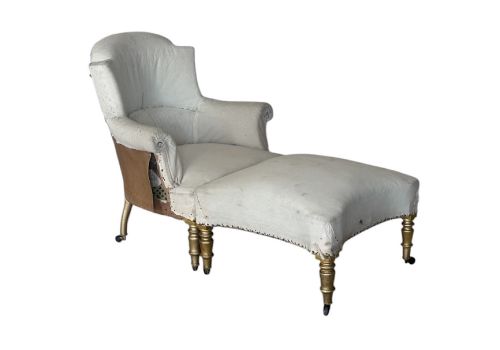
- A multi-part chaise longue comprising an armchair and one or two footstools that lock together to form a continuous daybed. This form served grand nineteenth-century chambers.
- Louis XVI Style
- A neoclassical design vocabulary characterised by straight tapered legs, geometric forms and classical architectural ornaments. This aesthetic revival dominated nineteenth-century seating production.
Gilded Wood Armchair: Frequently Asked Questions
What is a fauteuil?
A fauteuil is a traditional French open-arm armchair designed with upholstered back and seat pads. The wooden armrests typically feature padded elbow rests.
These chairs were built for formal salons and drawing rooms, where guests sat in upright comfort during social gatherings.
How do I identify Louis XVI style?
Louis XVI style pieces display straight, fluted legs, symmetrical geometric shapes, and neoclassical carved details such as ribbon twists and acanthus leaves. They contrast with the curved, asymmetrical lines of earlier Rococo designs.
Makers revived this classical vocabulary frequently during the nineteenth century for high-end salon seating.
How should I care for gilded wood?
Dust gilded surfaces gently with a soft, dry cloth and keep the chair away from direct sunlight and moisture. Avoid all commercial polishes, as harsh chemicals strip the delicate gold leaf.
Stable indoor humidity prevents the underlying wood and gesso layers from cracking or shifting over time.
What is a duchesse brisee?
A duchesse brisee is a reclining daybed constructed by joining an armchair with one or two matching footstools. The pieces assemble to form a single resting platform.
Nineteenth-century households placed these grand items in bedrooms and private boudoirs for daytime lounging.