

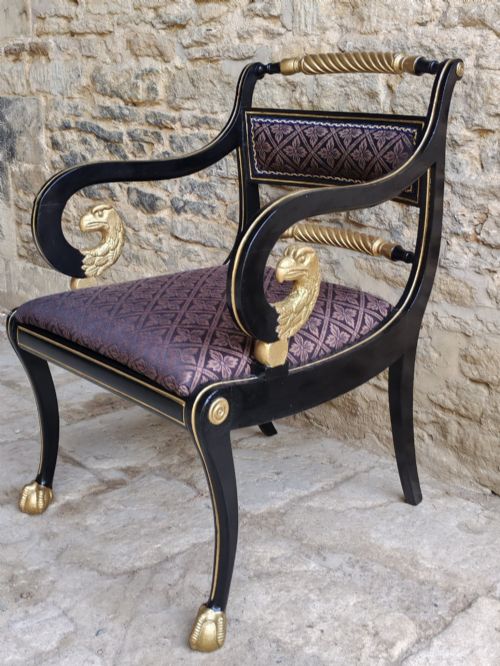
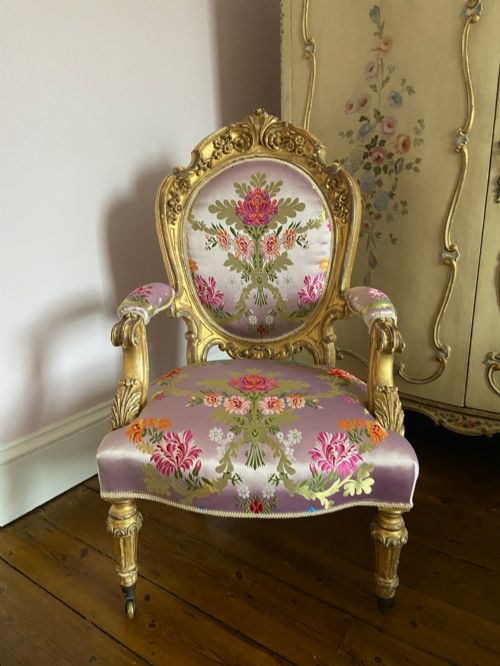
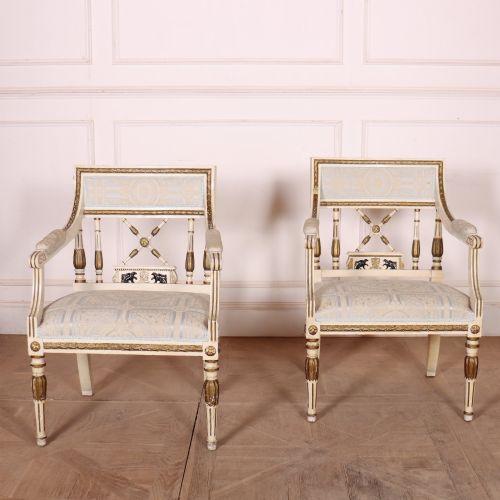
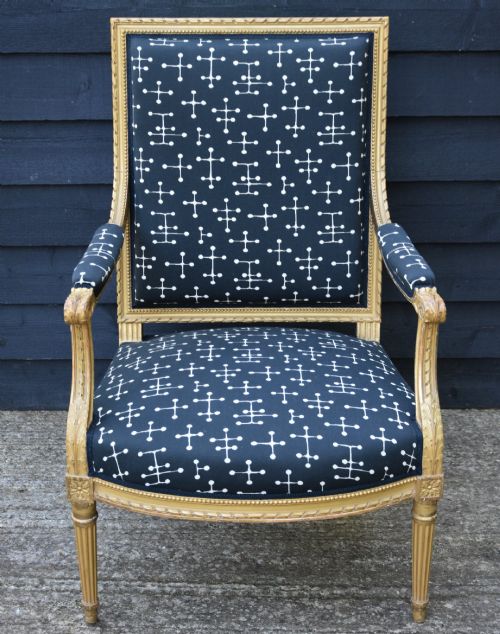
Carved Gold Accent Chair
A carved gold accent chair brings grand French and English seating traditions into a room, offering gilded timber frames and historic upholstery.
Carved Gold Accent Chair
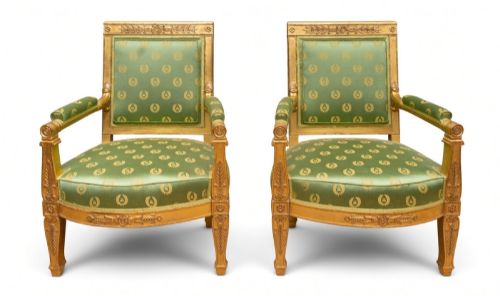
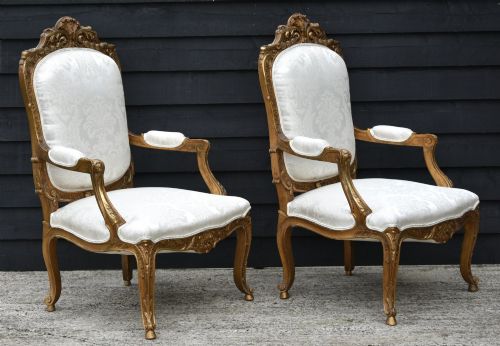
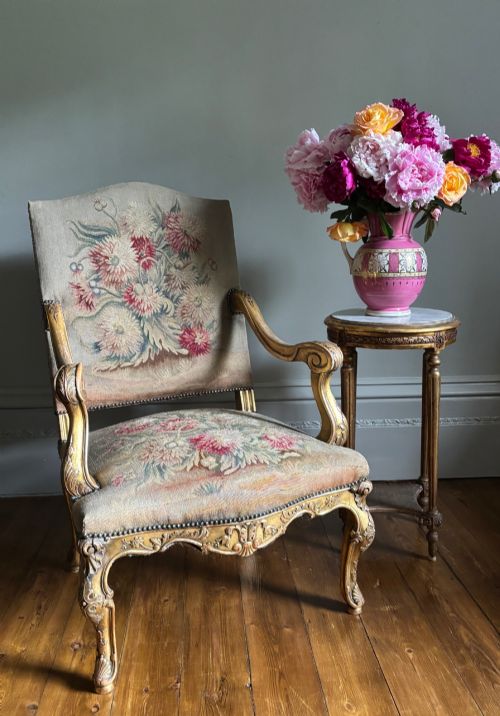
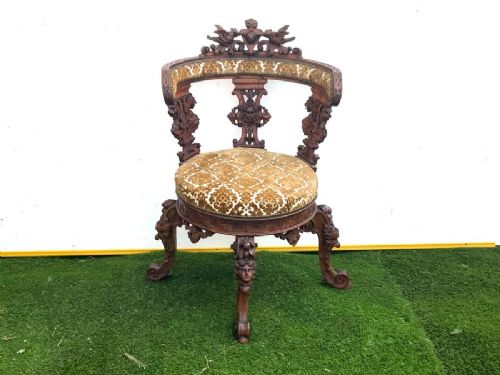
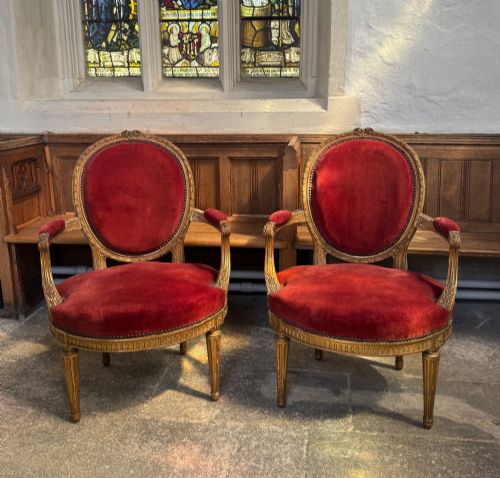
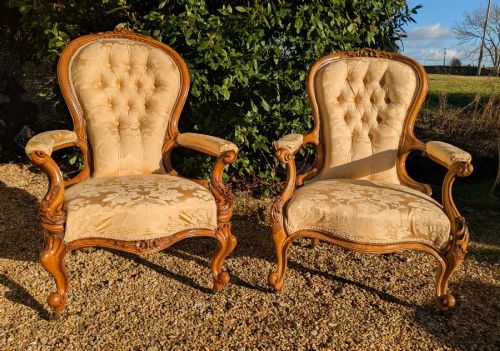
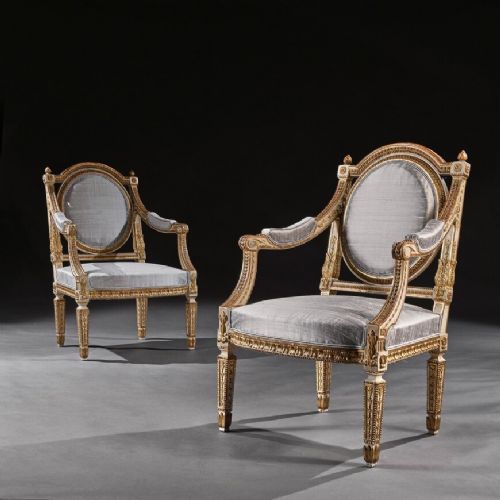
When you search for a carved gold accent chair, you encounter a variety of seating forms originating from the seventeenth to the early twentieth century. Armchairs, salon chairs, bergères, and occasional chairs dominate the selection, often reflecting French revival aesthetics such as Louis XVI and Rococo.
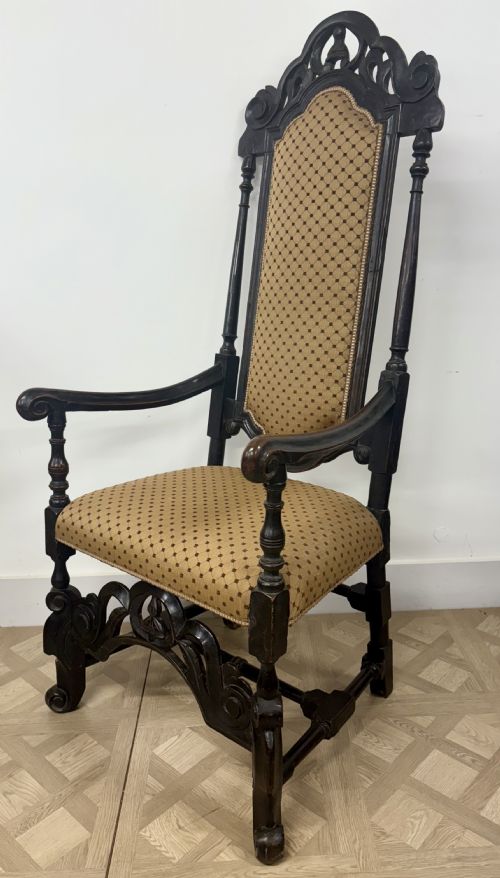
The pieces span periods including Victorian, nineteenth-century adaptations, and eighteenth-century originals, constructed across English, French, Swedish, and Italian workshops. Forms range from large throne chairs and library armchairs down to smaller fireside, nursing, and side chairs.
Buyers frequently find pairs or sets alongside individual statement pieces, allowing for both matching arrangements and single decorative placements. Each item utilises carved timber frames finished with gold leaf or gilt details, paired with various fabric coverings.
Materials and construction methods
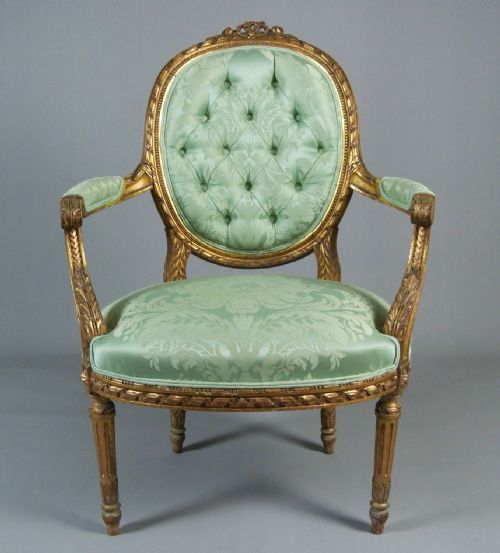
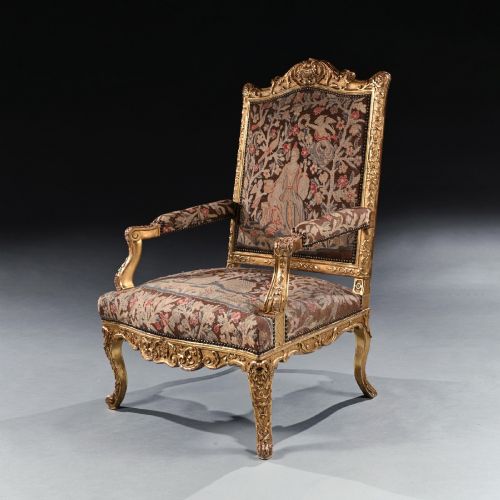
Makers shaped the structural frames of these chairs from hardwoods such as walnut, beech, and general wood, applying hand-carved ornamentation to the crest rails, arms, and cabriole legs. Guilds and cabinetmakers utilised giltwood or applied a gilt finish to highlight the detailed scrollwork, floral motifs, and classical moulding.
Upholstery materials selected for the seats and backs include silk, velvet, fabric, and occasional brass decorative elements for structural reinforcement or detailing. Over generations, many frames have received updated textile coverings while retaining their foundational timber carcases.
Several chairs formerly resided in the Palais de Tuileries, whispering of imperial French court life from their corner.
Factors determining quality
The distinction between standard decorative seating and superior examples rests upon the crispness and depth of the hand-carving on the wooden frame. Sharply defined acanthus leaves, fluted legs, and balanced proportions signal skilled craftsmanship rather than mass-produced uniformity.
Originality of the gilding and the integrity of the underlying timber joints heavily influence the standing of a piece. Chairs that retain their original giltwood surfaces and sturdy joinery demonstrate enduring construction that distinguishes museum-grade items from later reproductions.
Jacob-Desmalter·Thomas Chippendale·Blaise Maucuy
The Carved Gold Accent Chair Glossary
- Giltwood
- Timber coated with gold leaf or a gold-coloured finish. This surface treatment defines the luminous appearance of classical European seating frames.
- Fauteuil
- An open-framed upholstered armchair with exposed wooden arms. Originating in France, it provides a lighter silhouette than the closed bergère.
- Showwood
- Polished or gilded wood left visible on the frame of an upholstered chair. It showcases the craftsmanship of the carpenter alongside the fabric.
- Spoonback
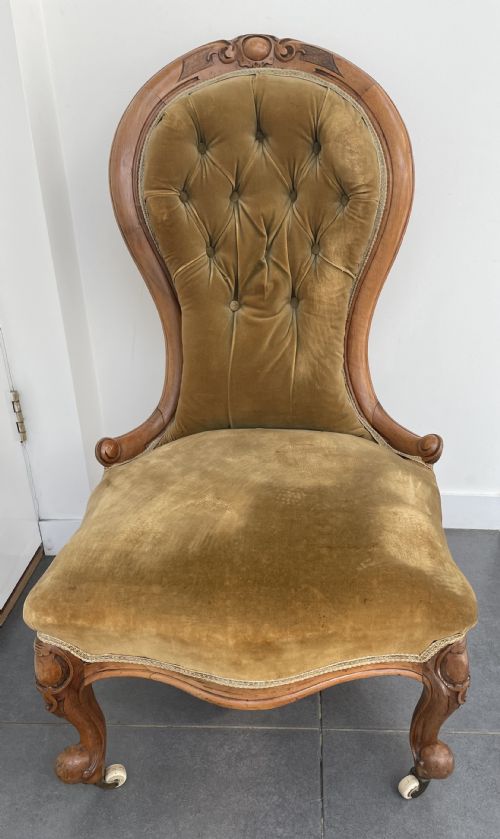
- An upholstered chair back shaped in a concave oval resembling the bowl of a spoon. This ergonomic contour gained popularity during the Victorian era.
Carved Gold Accent Chair: Frequently Asked Questions
Are these chairs suitable for daily seating?
Most antique gilded chairs were built for formal salons and reception rooms rather than heavy, everyday lounging. Their historic frames and delicate carvings require considerate use.
Placing them in low-traffic areas or utilising them as accent pieces preserves their structural integrity.
How do I identify a Louis XVI style frame?
Louis XVI style frames are characterised by straight, fluted legs, symmetrical geometric lines, and classical neoclassical motifs. They contrast sharply with the curving asymmetry of earlier Rococo designs.
Carvings often include ribbon twists, beaded mouldings, and acanthus leaves.
Can I reupholster an antique gold accent chair?
Many antique chairs have been reupholstered multiple times over their lifespan to match changing interior aesthetics. Professional upholsterers can replace worn fabrics while preserving the historic timber frame.
Selecting traditional textiles like silk or velvet helps maintain the period character of the piece.