


Vintage Rococo Seating
These vintage rococo seating pieces bring exuberant carved woodwork and curving lines into a room, offering both historical character and comfortable lounging.
Vintage Rococo Seating
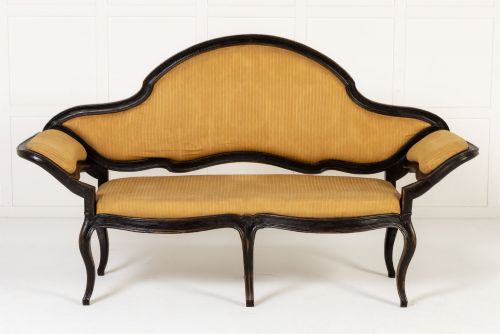
Vintage rococo seating encompasses armchairs, settees, side chairs, and stools shaped by the asymmetrical curves and decorative flourishes of the eighteenth-century French style and its later revivals. When exploring vintage rococo seating on this page, a buyer encounters pieces originating from the eighteenth, nineteenth, and early twentieth centuries, reflecting both continental European workshops and British cabinet-making traditions.
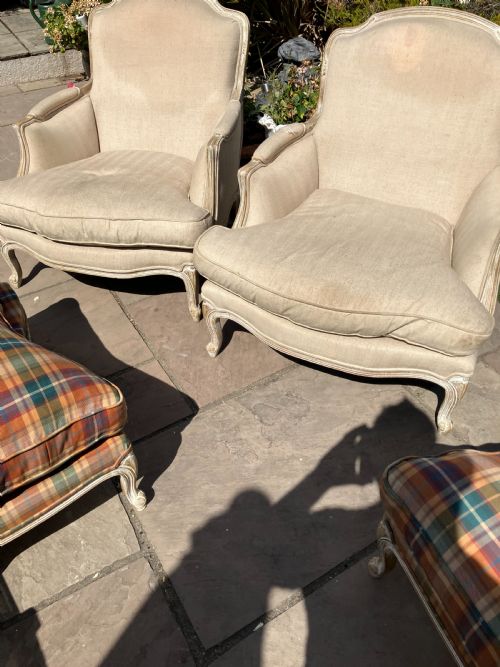
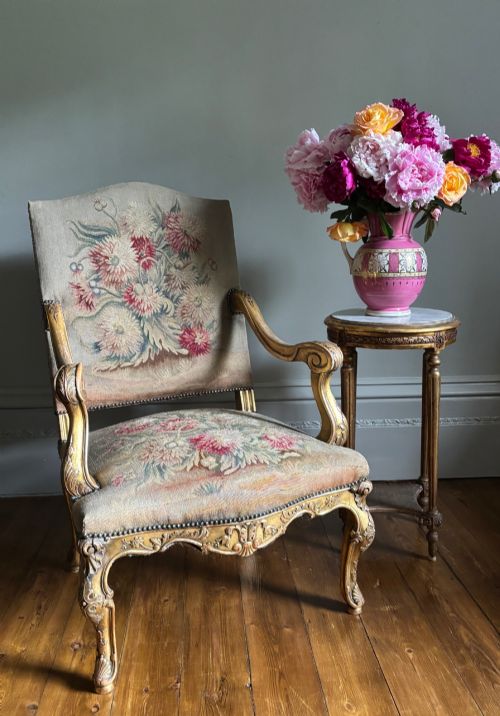
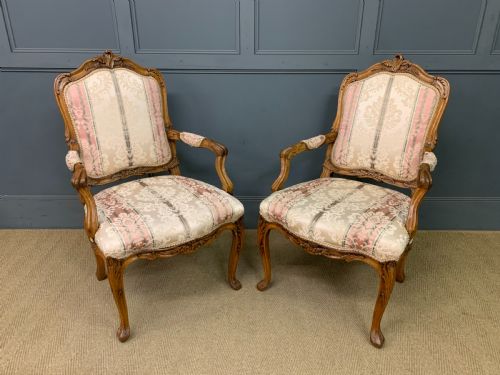
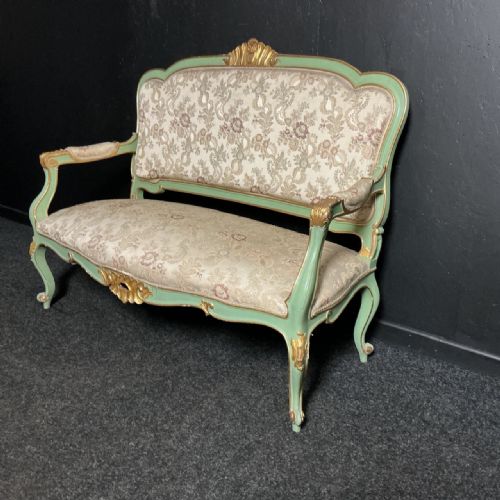
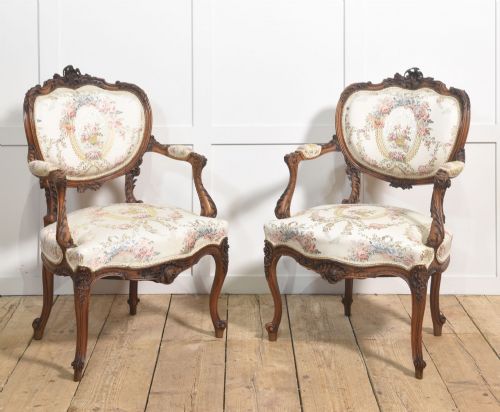
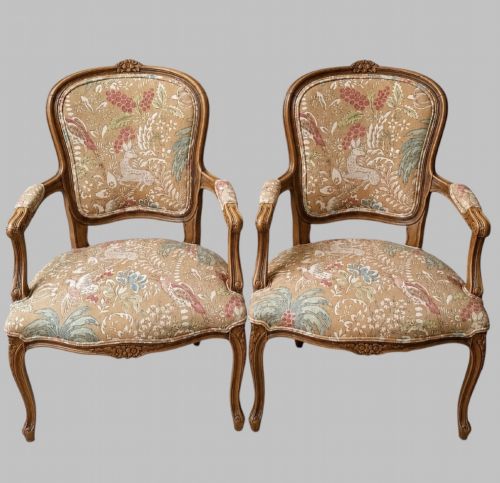
The selection ranges from grand giltwood open armchairs and carved walnut fauteuils to painted two-seat sofas and intimate salon chairs upholstered in velvet or patterned fabric. Many examples demonstrate the enduring appeal of Louis XV and Régence designs through scrolled frames, cabriole legs, and elaborate floral carvings.
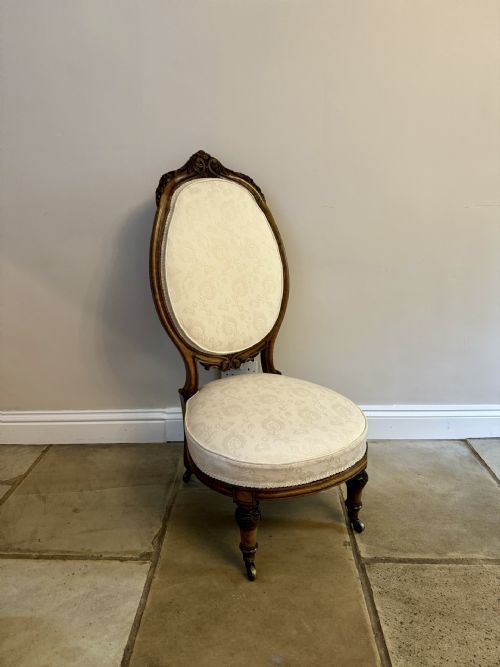
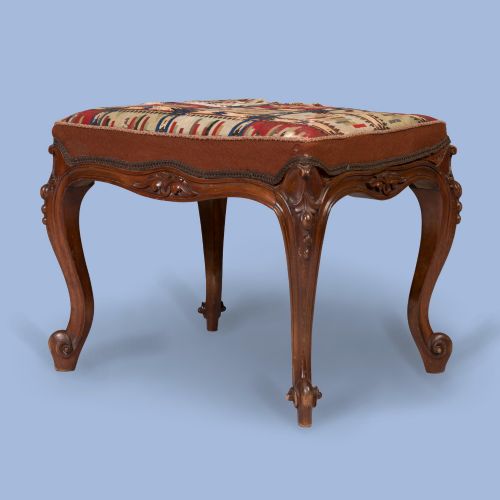
Smaller forms like window seats, nursing chairs, and dressing stools also appear, bringing ornamental woodwork into bedrooms and hallways. Whether formed as a matched pair or discovered as a single statement sofa, these items anchor a room with period presence.
Materials and construction
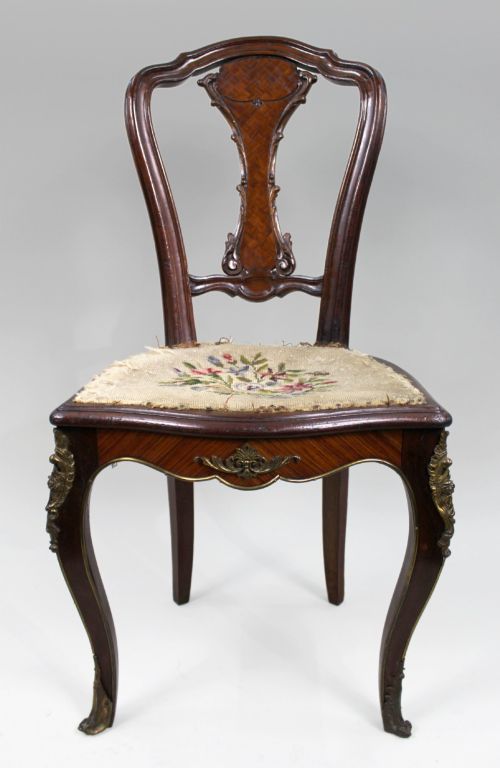
Makers shaped these frames from solid timbers such as walnut, mahogany, kingwood, and rosewood, selected for their strength and grain when subjected to deep carving. Workshops often applied giltwood, paint, or ebonisation to the wooden surfaces, sometimes adding ormolu mounts for extra visual weight.
Upholstery techniques involved traditional stuffing applied over webbing or springs, enclosed in fabrics ranging from plain velvet to decorative brocades and needlework. Skilled carvers executed the characteristic rococo scrollwork and floral motifs directly into the timber by hand.
Listings feature periods spanning from the eighteenth century through the Victorian era to the nineteen-thirties, utilising walnut, mahogany, and giltwood.
Markers of quality
Quality rests in the crispness and depth of the carved woodwork, where hand-chiseled details retain sharp contours rather than soft, moulded edges. Superior pieces display harmonious proportions across the cabriole legs, arms, and crest rails, with joinery that remains tight and stable under daily use.
The treatment of surface finishes - whether genuine period gilding, layered paint, or polished walnut - distinguishes finer outputs from simpler production. Original upholstery systems and high-grade textile choices further elevate a piece, though many examples have received sensitive re-covering to preserve their utility.
The Vintage Rococo Seating Glossary
- Fauteuil
- An open-arm armchair with upholstered back and seat, typically featuring exposed wooden arms and a carved frame originating in France.
- Cabriole leg
- A furniture leg that curves out in a convex arc at the top and tapers inward in a concave arc below, ending in a pad or scroll foot.
- Giltwood
- Timber that has been coated with a thin layer of gold leaf or gold paint to provide a bright, reflective metallic surface.
- Ormolu
- Cast and chased bronze that has been gilded, frequently employed as decorative mounts on eighteenth and nineteenth-century furniture.
- Settee
- A medium-length upholstered seat with a back and arms, designed to accommodate two or more people comfortably.
Vintage Rococo Seating: Frequently Asked Questions
Can I use vintage rococo armchairs for everyday seating?
Most sturdy frames are structurally sound enough for daily relaxation, provided the internal webbing and joints have been checked or restored. Walnut and mahogany frames offer robust support, though delicate open arms require sensible handling.
Pairing historic seating with modern interior placement ensures they function as practical reading chairs or salon seats rather than strictly decorative objects.
What is the difference between a fauteuil and a bergère?
A fauteuil is an open-arm chair featuring exposed wooden sides between the upholstered back and seat. A bergère is a closed-arm chair with upholstered panels filling the space beneath the armrests.
Both styles share the characteristic curved lines and low profiles typical of rococo seating, but the bergère provides a more enclosed and cushioned seating experience.
How should I care for giltwood and painted chair frames?
Giltwood and painted surfaces require gentle dusting with a dry, soft cloth to prevent abrasive particles from scratching the delicate finish. Avoid using modern chemical polishes, water, or damp cloths, which can lift the gold leaf or degrade historic paint layers.
Keeping such pieces away from direct sunlight and excessive humidity protects both the fragile surface coatings and the underlying carved wood.