
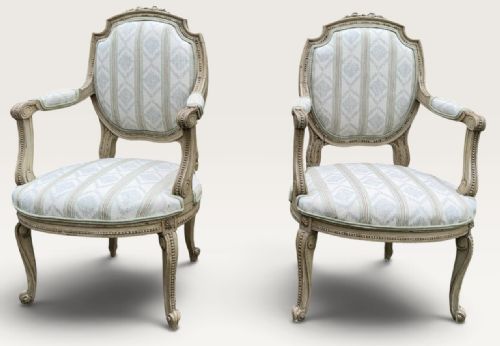
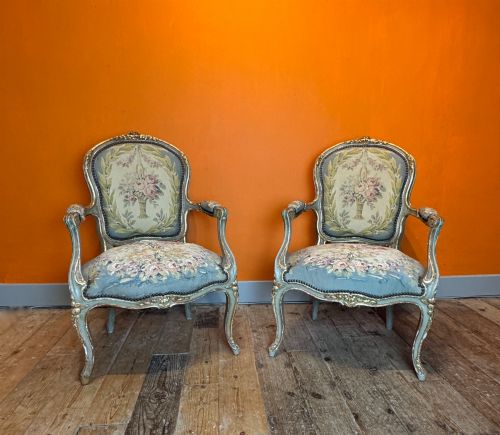
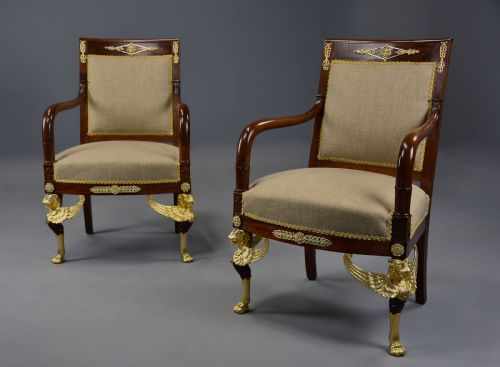
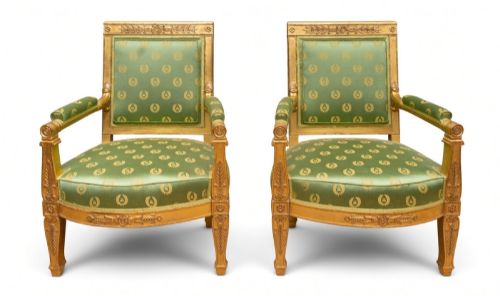
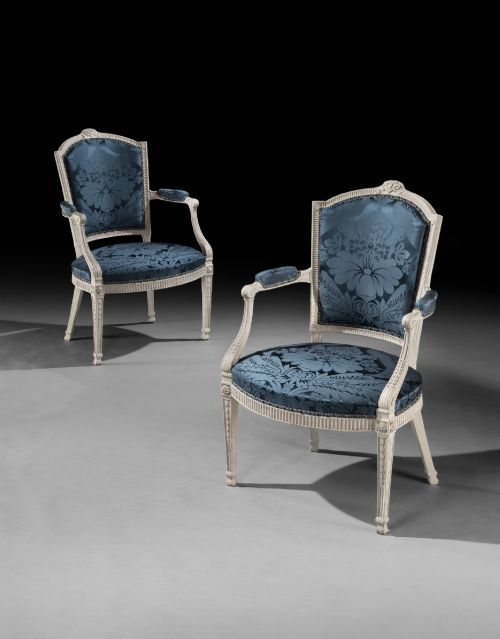
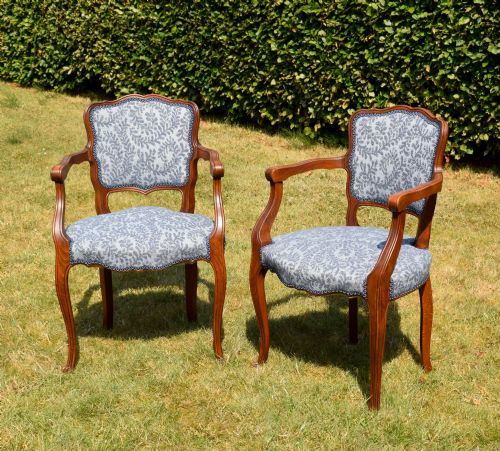
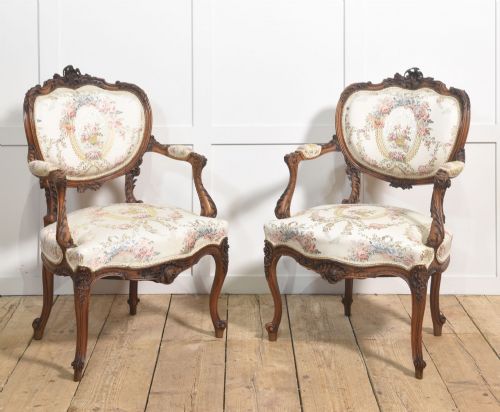
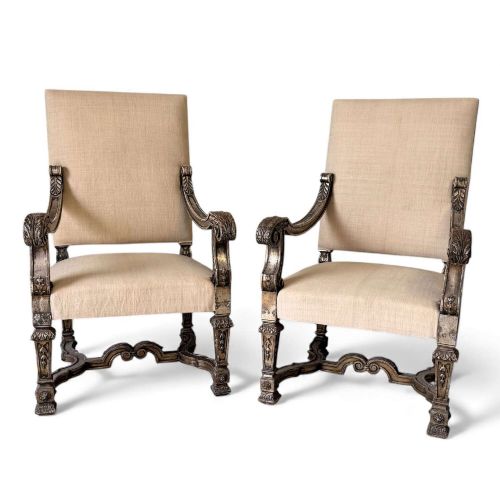
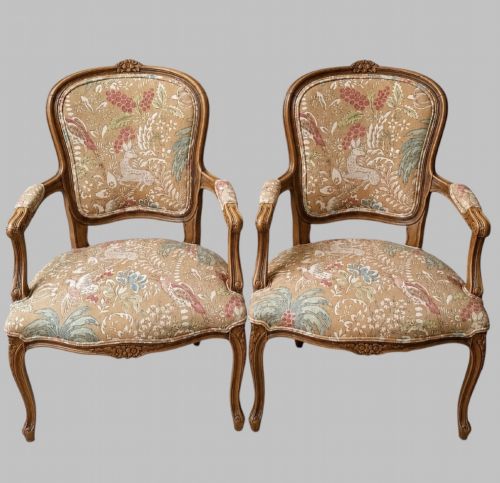
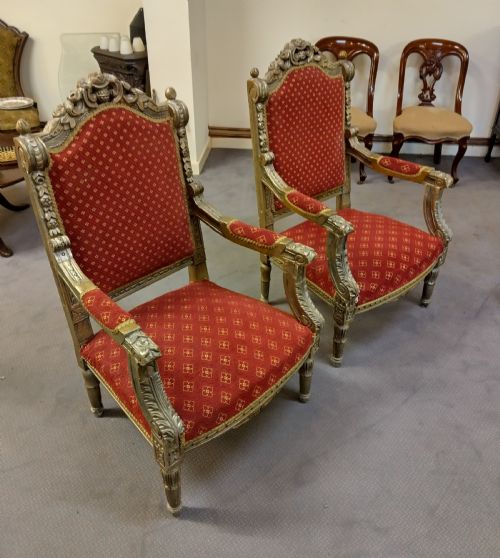
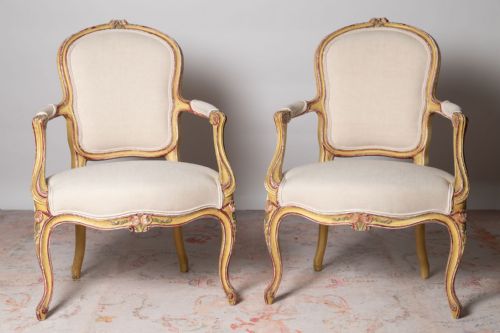
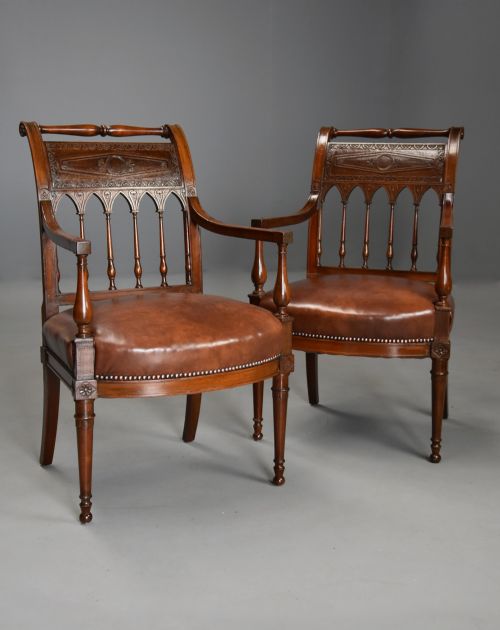
Pair French Open Armchairs
Pair french open armchairs offer matching historical seating designed for formal rooms, combining carved wooden frames with period upholstery.
Pair French Open Armchairs
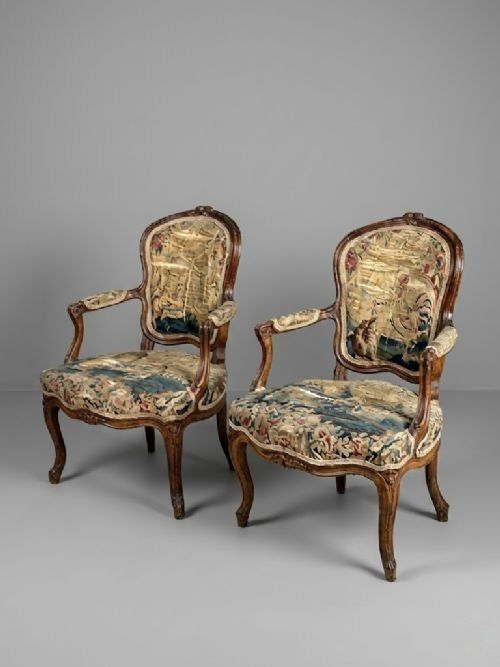
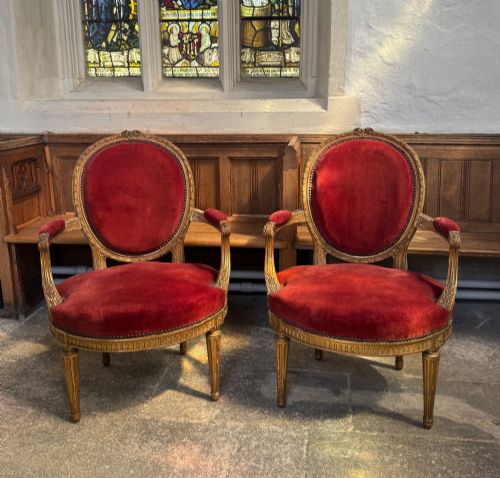
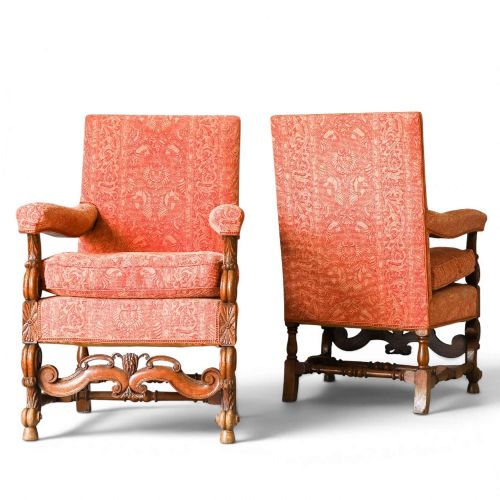
Pair french open armchairs emerge from centuries of cabinet-making, spanning the 18th, 19th and early 20th centuries. These matched seats appear in styles ranging from Louis XV and Louis XVI to Empire and Renaissance Revival.
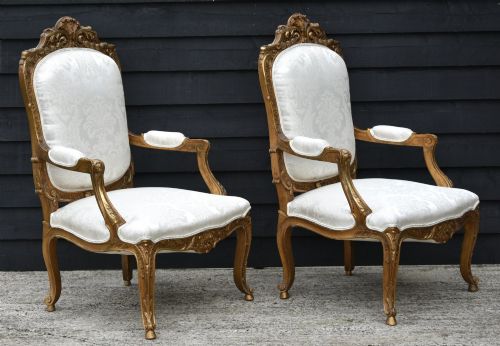
Forms include classic fauteuils with upholstered armrests, larger throne chairs, and library or salon seating. Buyers encounter pieces originating from French chateaux and provincial workshops alike.
How They Were Made
Frames are constructed from dense hardwoods like walnut, beech, oak and mahogany, often carved by hand with floral motifs, scrolls or classical details. Many examples receive a giltwood finish, parcel gilding, or historic paint layers.
Upholstery relies on traditional textile applications using silk, velvet, tapestry, needlepoint and leather. Materials are secured to the wooden frameworks with attention to structural longevity and historical accuracy.
The inventory includes examples from the 18th century, the 19th century, and the early 20th century.
What Varies In Quality
The crispness of the hand-carved wood elements dictates much of the visual standard, where deep relief work separates basic production from superior craftsmanship. Timber selection also matters, as well-figured walnut or dense mahogany provide greater durability.
The integrity of the frame construction and the survival of original gilding, paint, or period upholstery influence the standing of an individual pair. Documented maker attribution further separates standard regional seating from high-workshop production.
Jacob Desmalter·Holland and Sons
The Pair French Open Armchairs Glossary
- Fauteuil
- An open-armed upholstered armchair with exposed wooden framing, typical of French seating design. The armrests usually feature padded elbow rests known as manchettes.
- Giltwood
- Timber coated with gold leaf or gold paint over a prepared gesso ground. This finish appears frequently on formal salon seating.
- Tapestry
- A thick hand-woven textile featuring pictorial scenes or botanical patterns, often utilised for period upholstery. Aubusson examples represent a specific woven tradition.
- Parcel Gilt
- A decoration method where only specific carved portions of a painted or stained wooden surface are highlighted with gold leaf.
Pair French Open Armchairs: Frequently Asked Questions
What is a fauteuil?
A fauteuil is an upholstered wooden armchair featuring open sides, where the structural frame remains visible. These seats were designed for domestic parlours and formal salons.
The style originates from French design traditions, differing from fully upholstered English armchairs by keeping the carved wooden arms exposed.
How do I date an armchair?
Dating relies on examining the timber species, the style of the hand-carvings, and construction methods. Structural joints and tool marks provide clues to the period of manufacture.
Stylistic markers such as cabriole legs point toward Louis XV forms, while straight tapered legs align with Louis XVI designs.
Are these chairs comfortable?
These seats are built with upright proportions intended for formal sitting rather than lounging. The open armrests and supportive back rails encourage an upright posture.
Upholstery depth and padding vary depending on whether the piece was made for a salon, a library, or a bedroom.
How should I care for the upholstery?
Period textiles require gentle surface cleaning and protection from direct sunlight to prevent fading. Silk and tapestry fabrics benefit from professional textile conservation.
Wooden frames should be dusted with a dry cloth, avoiding harsh chemical polishes that might damage historic finishes.