

Painted Open Armchairs
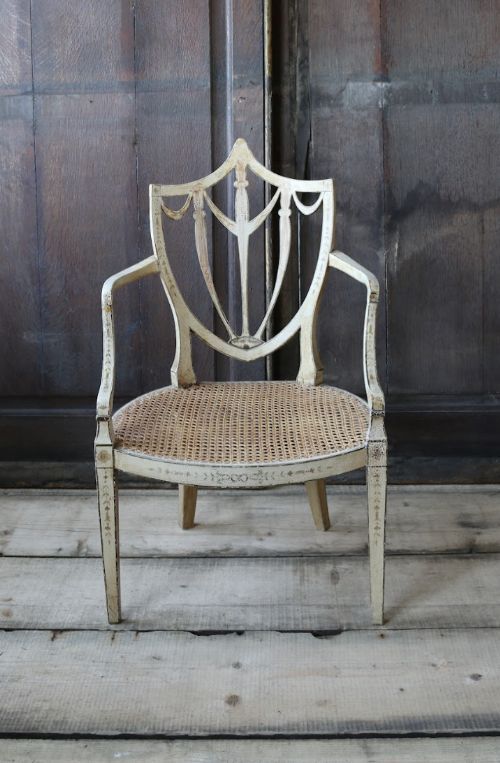
Painted open armchairs bring lightness and decorative colour to a room through exposed wooden frames finished with pigment, gilt, or gesso.
Painted Open Armchairs
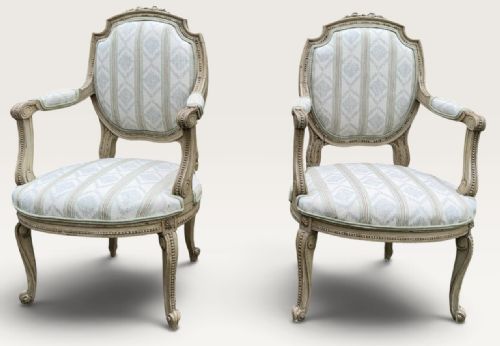
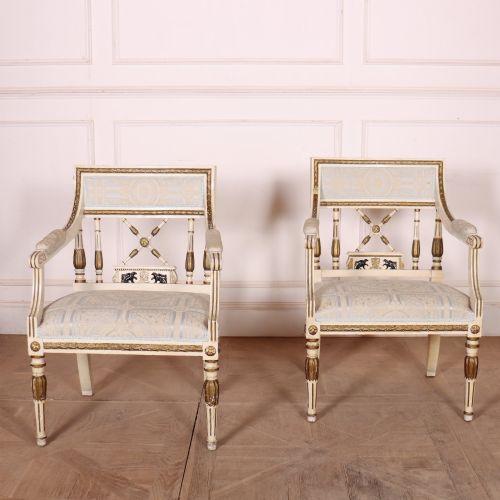
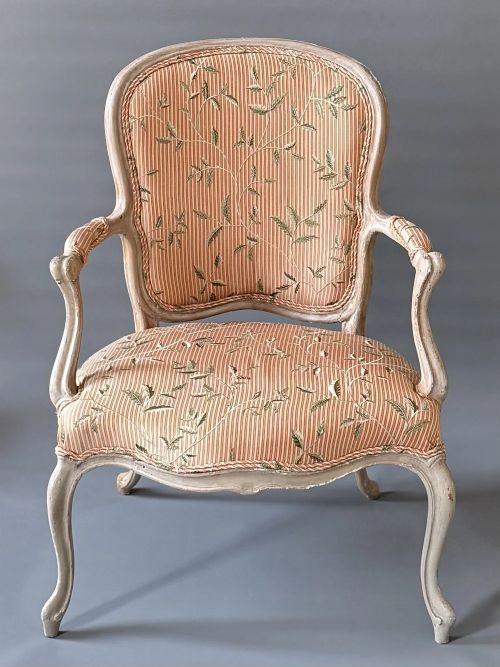
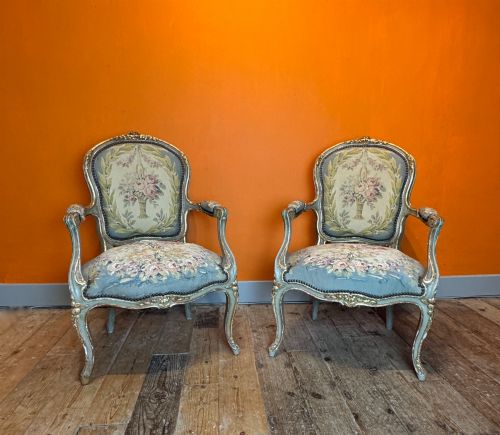
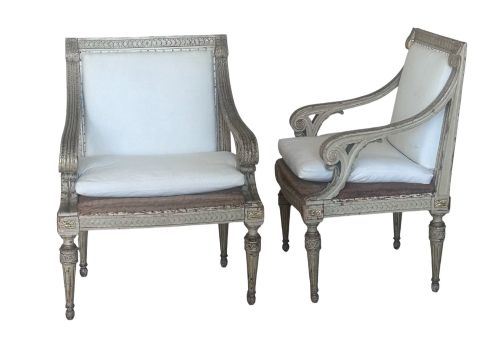
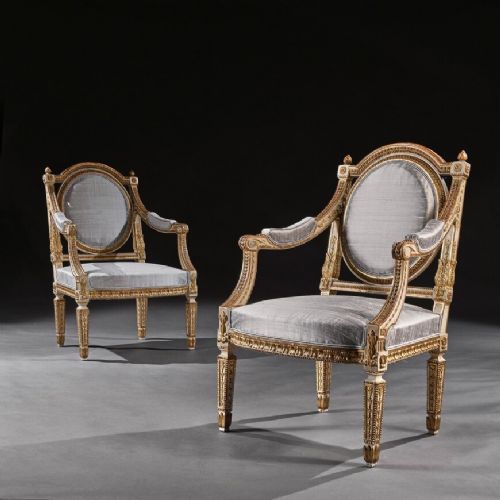
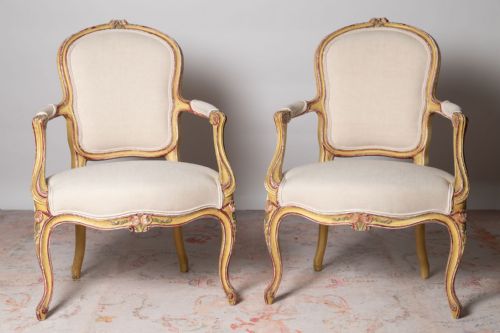
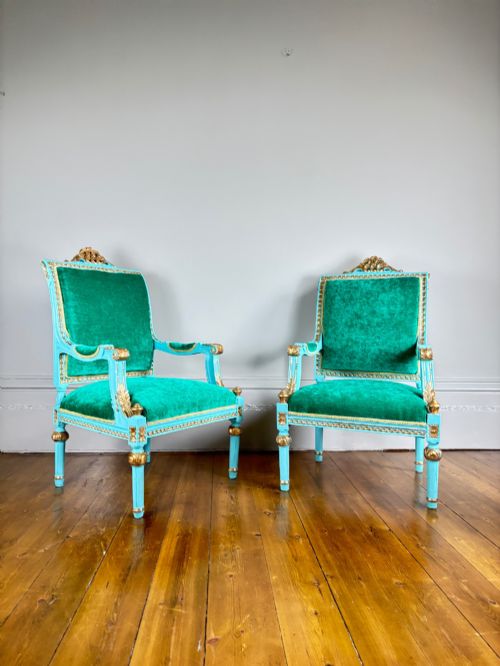
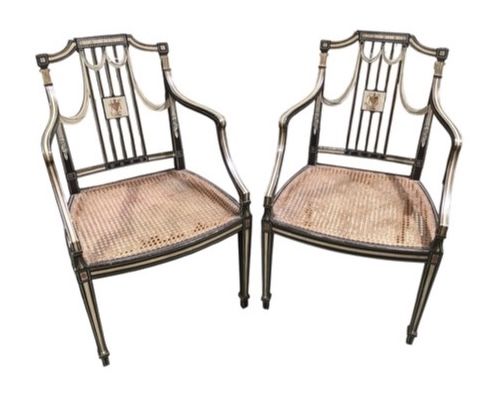
When searching for painted open armchairs, a buyer looks at seating constructed with structural wooden arms and open sides, finished with decorative paint rather than polished timber. These pieces span the eighteenth, nineteenth, and early twentieth centuries, drawing heavily on French and English design vocabularies.
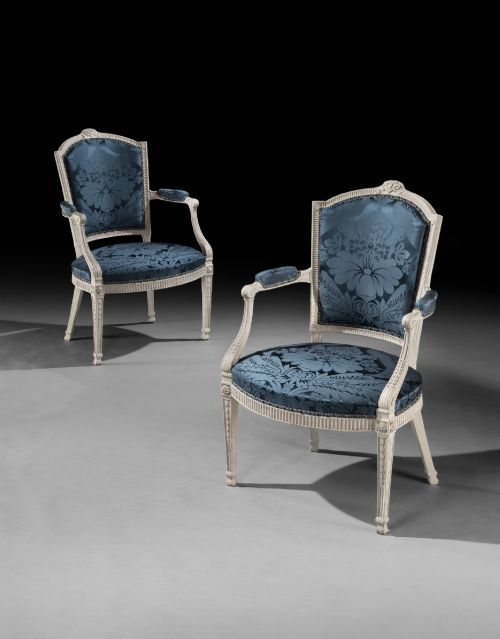
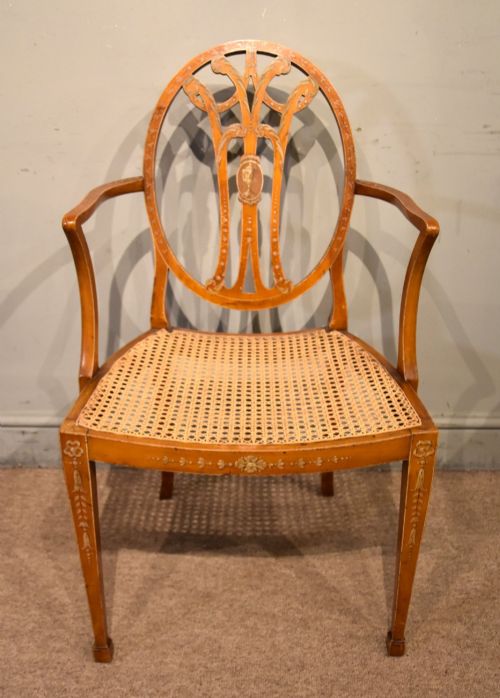
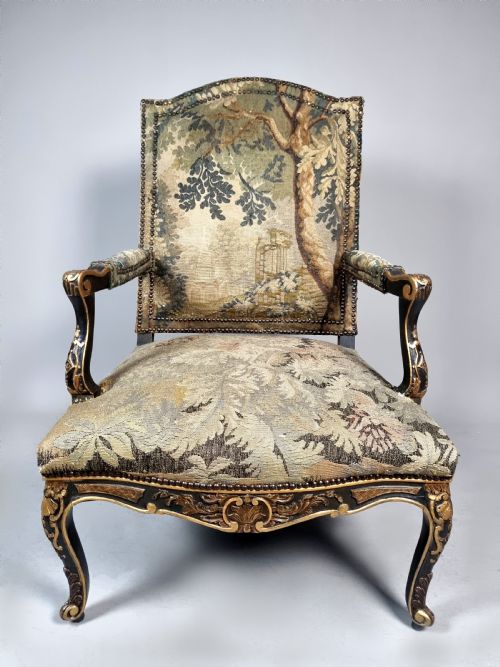
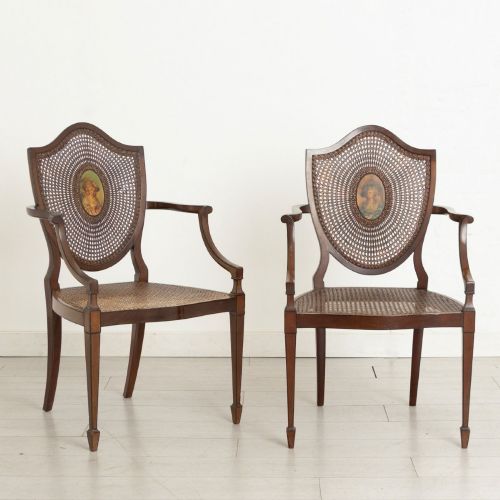
The versions met most frequently on this page are French fauteuils and English Georgian or Regency elbow chairs. Many examples appear in pairs, originating from salon suites or drawing room sets produced in periods such as Louis XVI, Sheraton, and the Regency.
Makers utilised various regional interpretations, from Italian and Piedmontese workshops to provincial French cabinet makers. The forms include shield-backs, medallion backs, and rectangular frames upholstered in tapestry, needlepoint, or plain fabric.
How they were made
The primary frame construction relies on solid woods such as beech, walnut, and satinwood, shaped by hand using traditional joinery. Carvers worked directly into the timber to create moulded rails, fluted legs, and applied ornamentation before the surface preparation began.
Finishing involved applying layers of gesso as a ground for paint, which allowed craftsmen to achieve smooth monochrome surfaces or polychrome decoration. Parcel gilt details were frequently added, using thin sheets of gold leaf applied to raised carved elements to catch the light.
Painted Open Armchairs Retail Price Guide 2026
Typical asking prices for painted open armchairs among the pieces listed under this phrase on Sellingantiques today, from the lower quarter to the upper quarter. They describe what is for sale here now, not the wider market.
Listings feature beech, satinwood, and walnut frames, finished with gesso, gold leaf, and original paint across eighteenth and nineteenth-century periods.
What varies in quality
Quality rests principally in the crispness of the carving and the integrity of the original paint surface. Pieces retaining their first decorative scheme display a depth and softness that later overpainting obscures.
Structural refinement separates standard production from finer examples. Balanced proportions in the open arms, subtle curves in the back rail, and harmonious integration of parcel gilding indicate the hand of a skilled workshop.
Liberty of London
The Painted Open Armchairs Glossary
- Fauteuil
- An open-framed armchair with upholstered back and seat, originating in France. The wooden armrests typically feature padded elbow rests.
- Gesso
- A plaster-like mixture applied to wood frames to provide a smooth surface for painting or gilding. It allows for sharp definition in carved details.
- Parcel Gilt
- A method where specific portions of a painted or wood surface are highlighted with gold leaf. This technique emphasises carved motifs and mouldings.
- Caning
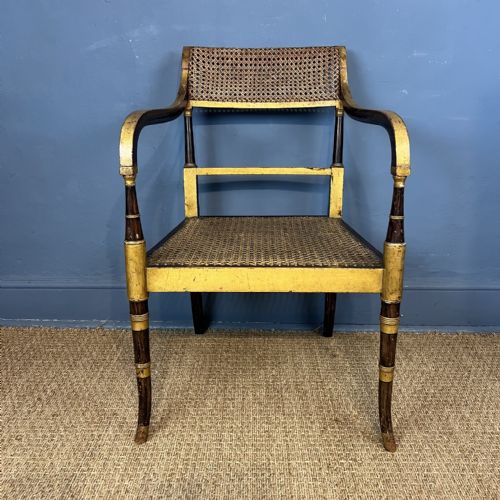
- Woven rattan or split cane used to form seats or backs. It offers lightweight flexibility and decorative open texture.
- Neoclassical
- A style drawing inspiration from classical antiquity, characterised by symmetry, straight lines, and restrained ornamentation. It dominates late eighteenth-century furniture design.
Painted Open Armchairs: Frequently Asked Questions
How do I care for painted wood?
Painted wooden frames require gentle treatment with a dry or very slightly damp cloth to remove dust. Avoid harsh chemical cleaners or modern polishes that can soften or lift historic paint layers.
Keep the chairs away from direct sunlight and strong heat sources to prevent the wood from shrinking and the gesso from cracking.
Are these chairs comfortable for daily use?
These chairs were built for social seating rather than lounging, offering upright support through firm cushioning and structured backs. The open arms sit at a height intended for resting elbows rather than sinking into.
While suitable for reading or sitting at a desk, their historic frames benefit from careful use rather than heavy daily wear.
How do I tell Regency from earlier styles?
Regency chairs, dating around the early nineteenth century, favour bolder contrasts such as faux rosewood finishes alongside simpler, classical lines. They often incorporate sabre legs and distinct horizontal top rails influenced by ancient Greek models.
Earlier eighteenth-century pieces, such as those from the George III period, display lighter cabriole legs, carved ribbon motifs, or delicate shield-shaped backs.