
Neoclassical Accent Chairs
Neoclassical accent chairs bring architectural restraint and classical proportion to a room, offering enduring seating with clean lines and formal presence.
Neoclassical Accent Chairs
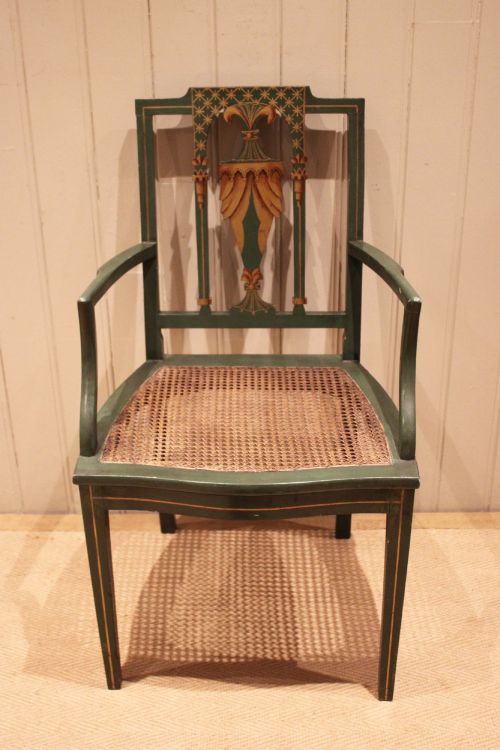
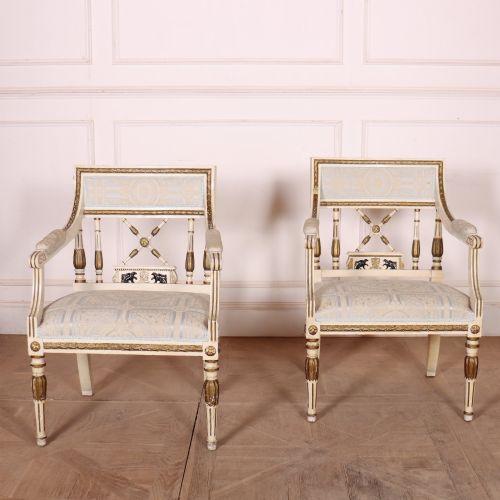
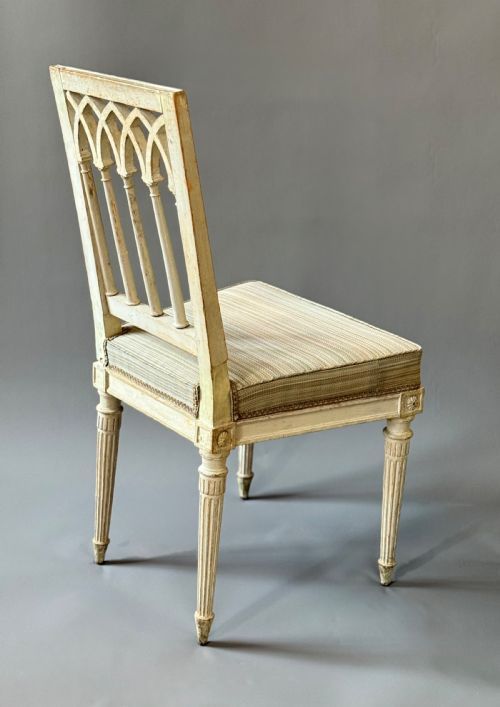
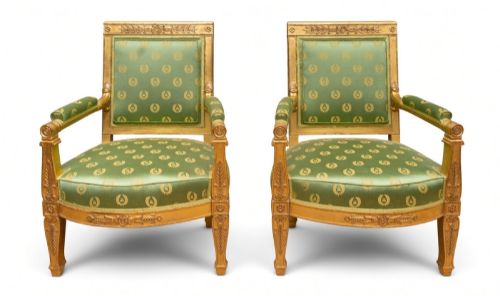
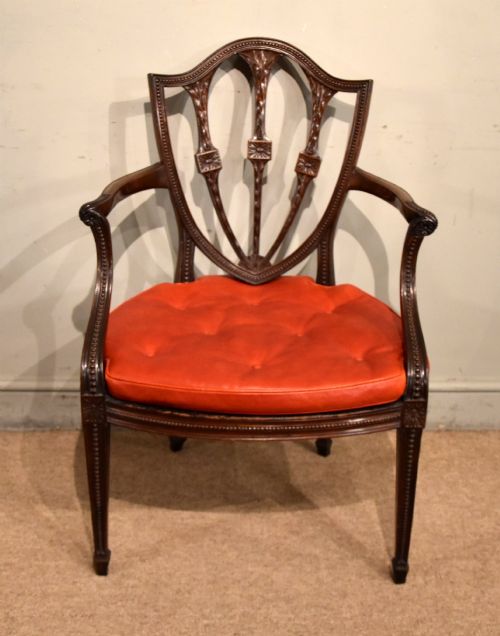
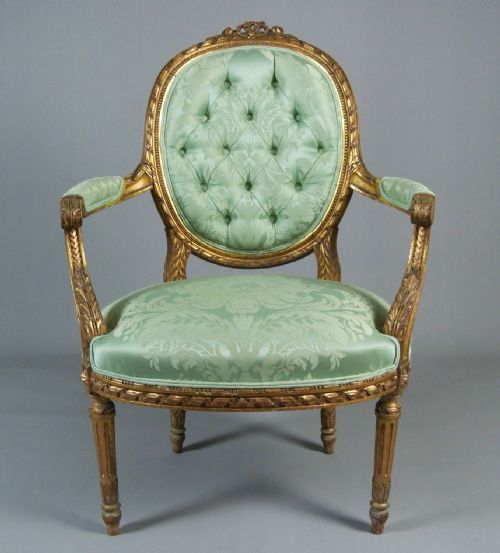
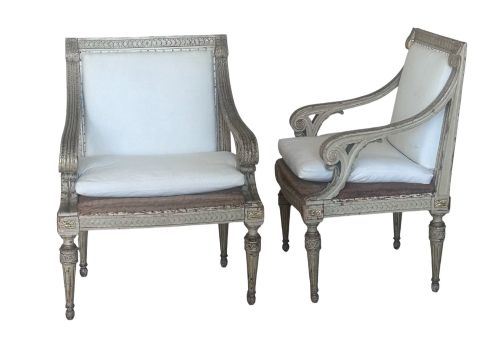
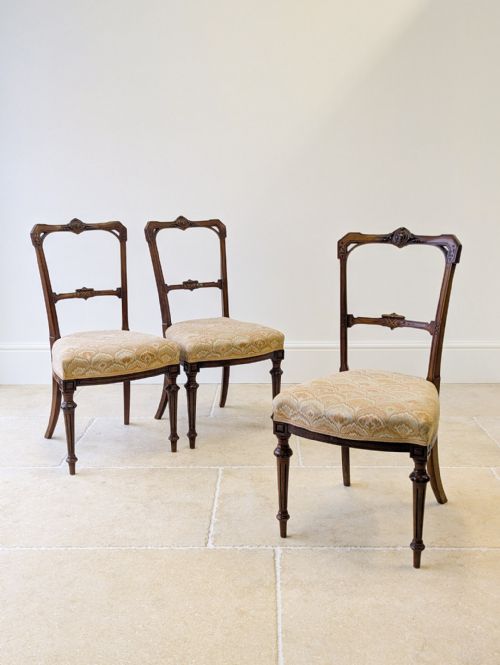
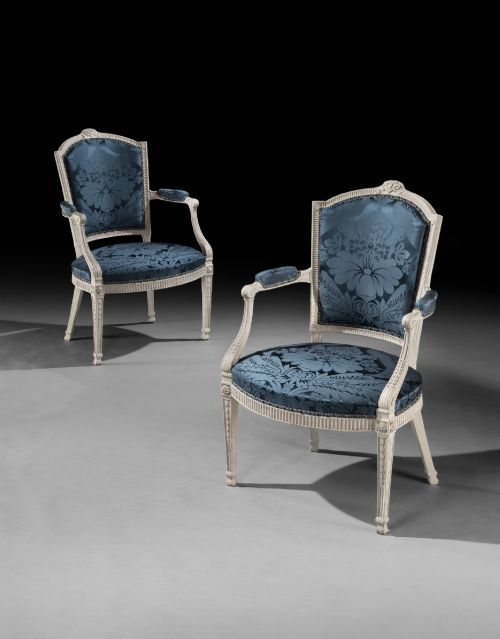
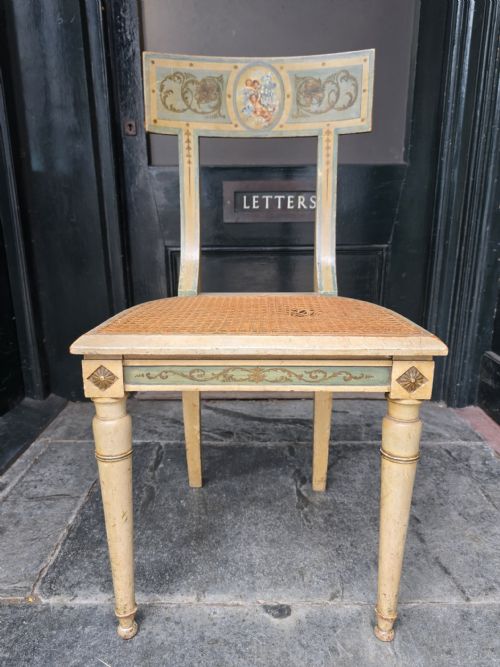
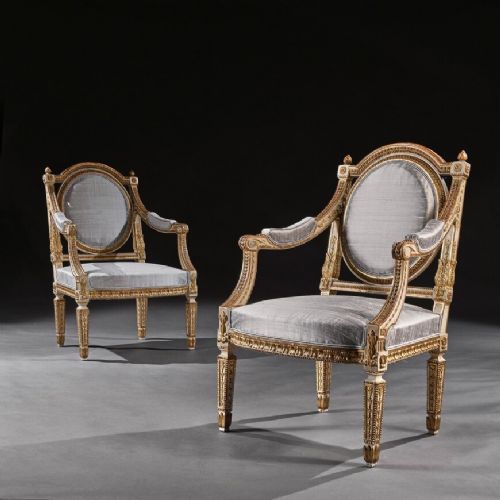
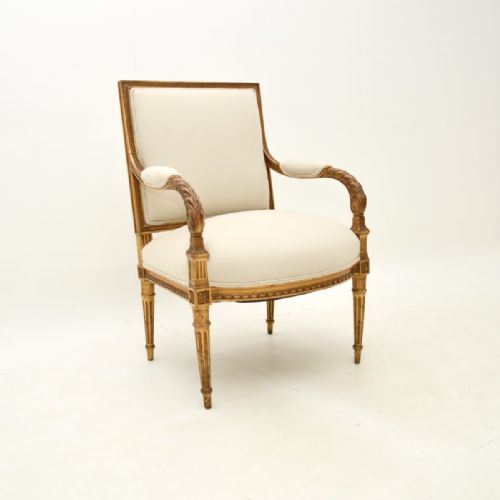
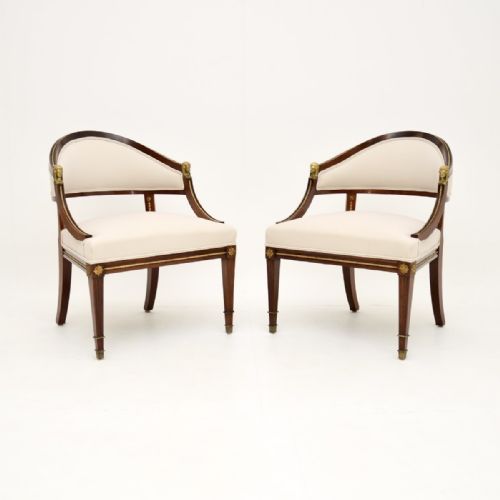
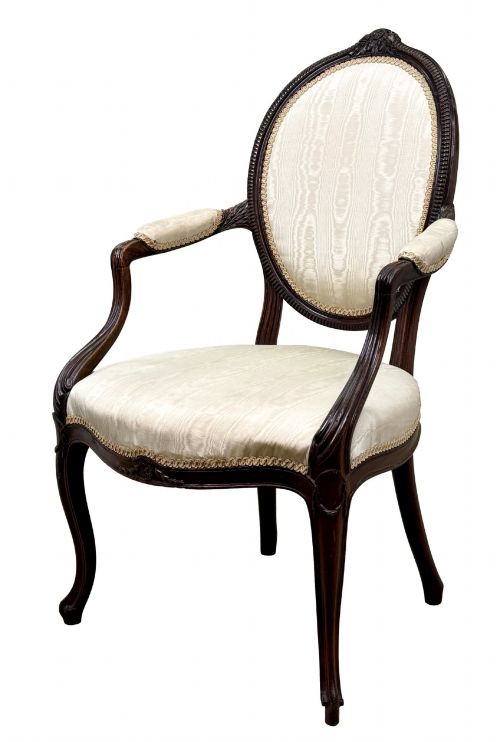
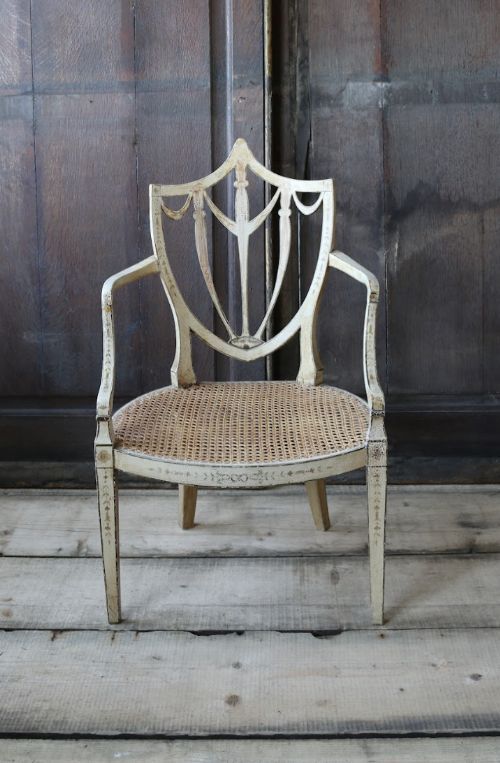
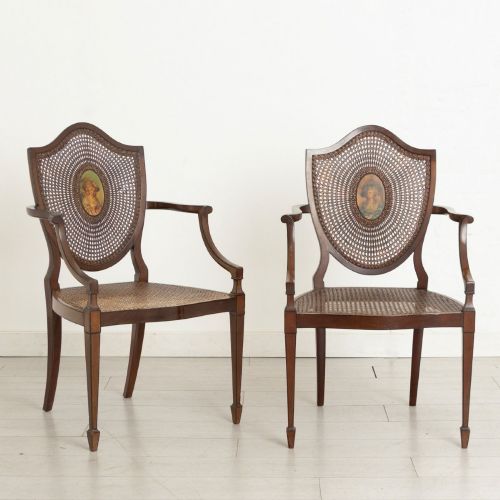
Neoclassical accent chairs draw on classical antiquity through restrained carving, symmetry, and architectural motifs. These seats appear in various forms across this selection, including open armchairs, salon chairs, and side chairs.
The pieces listed reflect diverse regional interpretations of the style, spanning Swedish, French, and English workshops from the eighteenth century into the early twentieth century. Buyers will encounter both period originals and later revivals sharing the same classical vocabulary.
Mahogany, giltwood, and painted wood dominate the construction, often paired with cane or upholstered textile seats. These materials support the lighter, more elegant proportions that succeeded heavier baroque designs.
Materials and construction
Cabinetmakers utilised solid timbers such as mahogany, birch, and elm to build sturdy frames capable of supporting delicate-looking carved details. Frame construction relied on traditional joinery to maintain stability across open armchairs and side chairs.
Surface decoration frequently involved gilding, parcel gilding, or applied paint finishes over carved wood. Textile upholstery and woven cane added textural contrast to the hard wooden structures.
Listings span from the 18th century through the 1920s, showing enduring demand for classical forms.
Distinguishing quality
Quality rests in the crispness of the wood carving and the proportional harmony of the frame. Skilled makers achieved a balance between structural strength and visual lightness.
The integrity of the original surface finish, whether aged paint, gilding, or polished mahogany, significantly influences the character of each piece. Surviving period surfaces demonstrate deeper patina than later revivals.
Jacob-Desmalter·Thomas Chippendale
The Neoclassical Accent Chairs Glossary
- Fauteuil
- An open-framed upholstered armchair originating in France, typically featuring exposed wooden arms and a padded backrest. This form is common in French provincial and court seating.
- Giltwood
- Timber coated with a thin layer of gold leaf or gesso, providing a bright, reflective surface. It appears frequently on formal salon chairs.
- Klismos
- An ancient Greek chair design characterised by curved, sweeping legs and a concave backrest. Revival versions translate these ancient proportions into nineteenth-century seating.
- Medallion chair
- A chair with an oval or circular padded backrest framed in carved wood. This shape is a hallmark of Louis XVI seating design.
Neoclassical Accent Chairs: Frequently Asked Questions
What defines a neoclassical accent chair?
These chairs draw inspiration from Greek and Roman antiquities, showing straight tapered legs, urn motifs, and symmetrical framing. They rejected heavy curves in favour of balanced, architectural proportions.
Craftsmen applied these classical rules to various seating forms, creating understated furniture designed to anchor a room visually.
How do I identify a revival piece?
Revival chairs, such as those from the nineteenth or early twentieth century, imitate eighteenth-century aesthetics using period-appropriate timber and joinery techniques. Examining the wood ageing and construction methods helps distinguish them from eighteenth-century originals.
Many skilled cabinetmakers reproduced these classical styles during later stylistic revivals, resulting in high-quality seating with distinct historical context.
Where should I place an accent chair?
These chairs work well in sitting rooms, studies, or bedrooms where their distinct silhouettes can function as focal points. Their relatively open arm designs prevent them from crowding smaller spaces.
Pairing matching armchairs near a fireplace or window enhances their symmetrical qualities and provides functional seating.
How do I care for painted wooden frames?
Painted and gilded surfaces require gentle dusting with a dry, soft cloth to prevent abrasive wear on the finish. Avoid commercial polishes or moisture, which can degrade historic paint layers.
Keeping the chairs away from direct sunlight and dramatic humidity changes protects the wood beneath from warping and cracking.